
PULA: Koporase Ya Rona
Prize(s):
WINNER 2026 Multimedia Design / Website Design | Honorable Mention 2026 Print & Digital / Corporate Identity
School / University Name:Greenside Design Center
Lead Designer(s) Name(s):Koorapetse Segaetsho
Professor Name(s):Robin Turner, Caitlin Paige, Carla Saunders, Richardt Strydom
Project Location:Molopolole (Botswana)
Design Status:Concept
Video URL:View
Project Description:
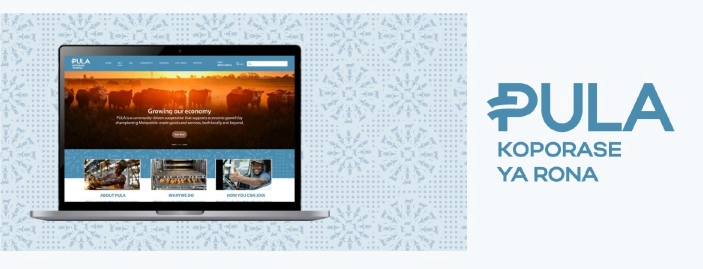
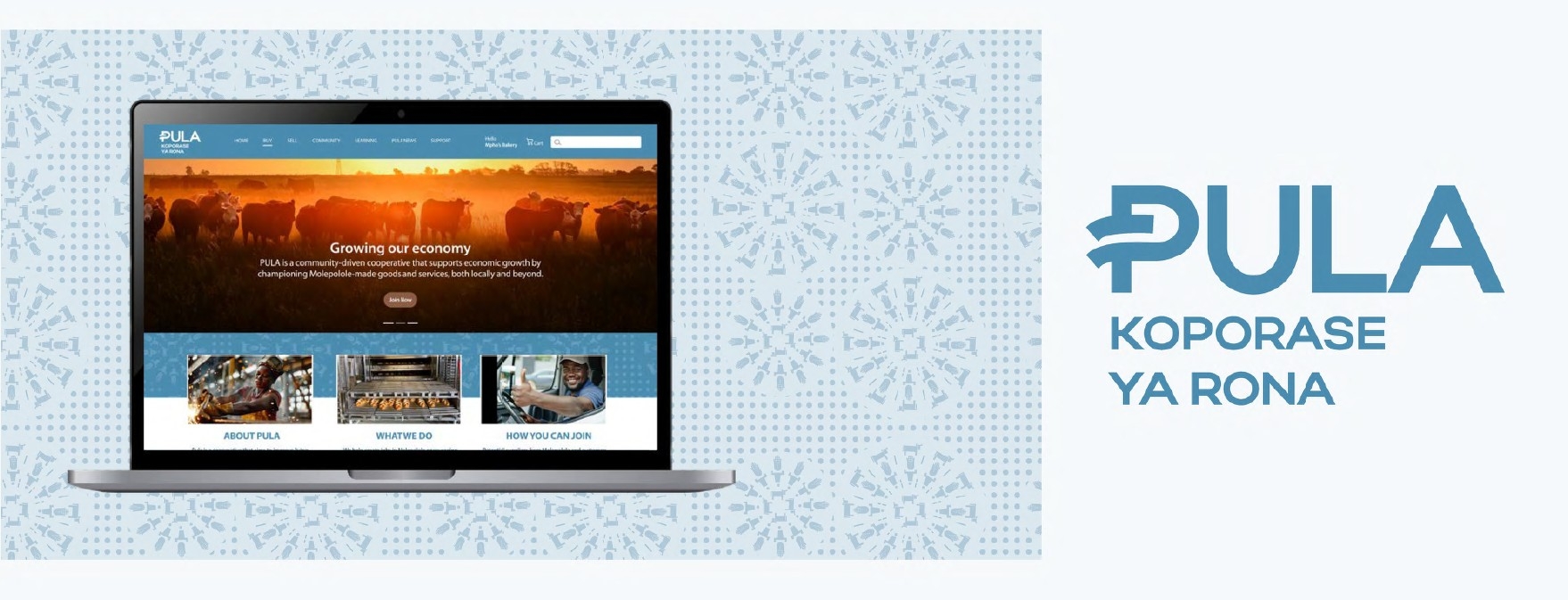
This project aims to reduce Molepolole’s reliance on imports from Gaborone by promoting local trade and enabling the export of village-made products. Strengthening local production and market access will stimulate economic growth, create jobs, and improve living standards. Molepolole, with a population of about 74,000, currently depends heavily on goods from the city, limiting local economic activity and income opportunities. The target audience includes farmers, entrepreneurs, small businesses, and the wider community. The primary users are those who want to trade and sell locally produced goods, while the broader community supports the initiative by buying local products and services. The project will deliver an e-commerce platform where residents can register, connect, and trade goods and services such as farm produce, baked items, transport, and other locally made products.
This project aims to reduce Molepolole’s reliance on imports from Gaborone by promoting local trade and enabling the export of village-made products. Strengthening local production and market access will stimulate economic growth, create jobs, and improve living standards. Molepolole, with a population of about 74,000, currently depends heavily on goods from the city, limiting local economic activity and income opportunities. The target audience includes farmers, entrepreneurs, small businesses, and the wider community. The primary users are those who want to trade and sell locally produced goods, while the broader community supports the initiative by buying local products and services. The project will deliver an e-commerce platform where residents can register, connect, and trade goods and services such as farm produce, baked items, transport, and other locally made products.
Project Innovation / Specification:
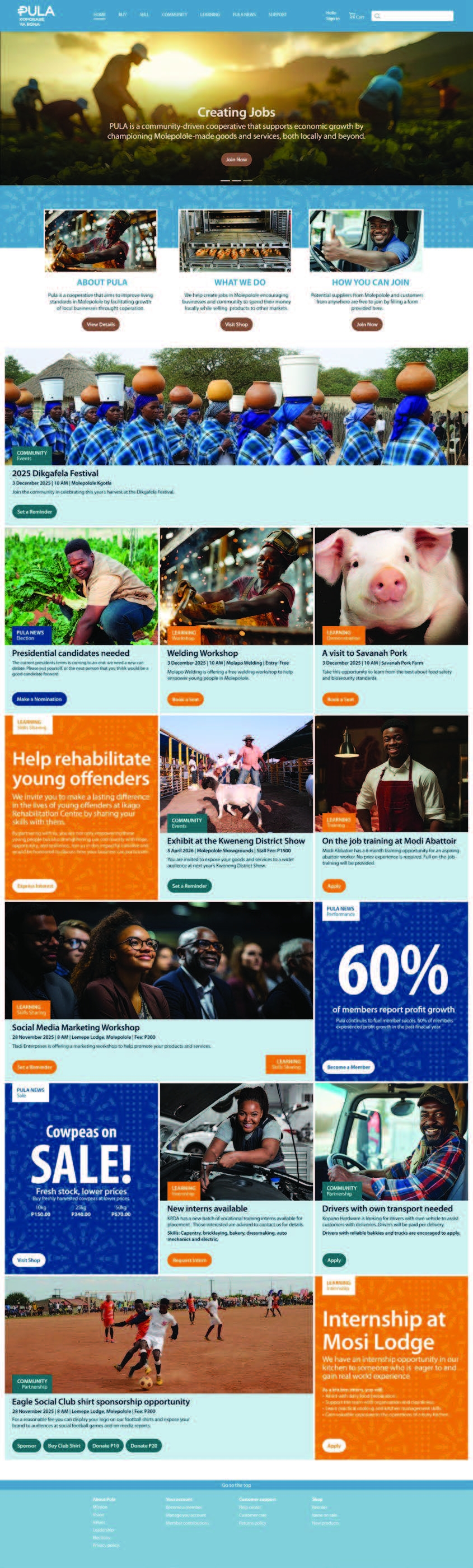
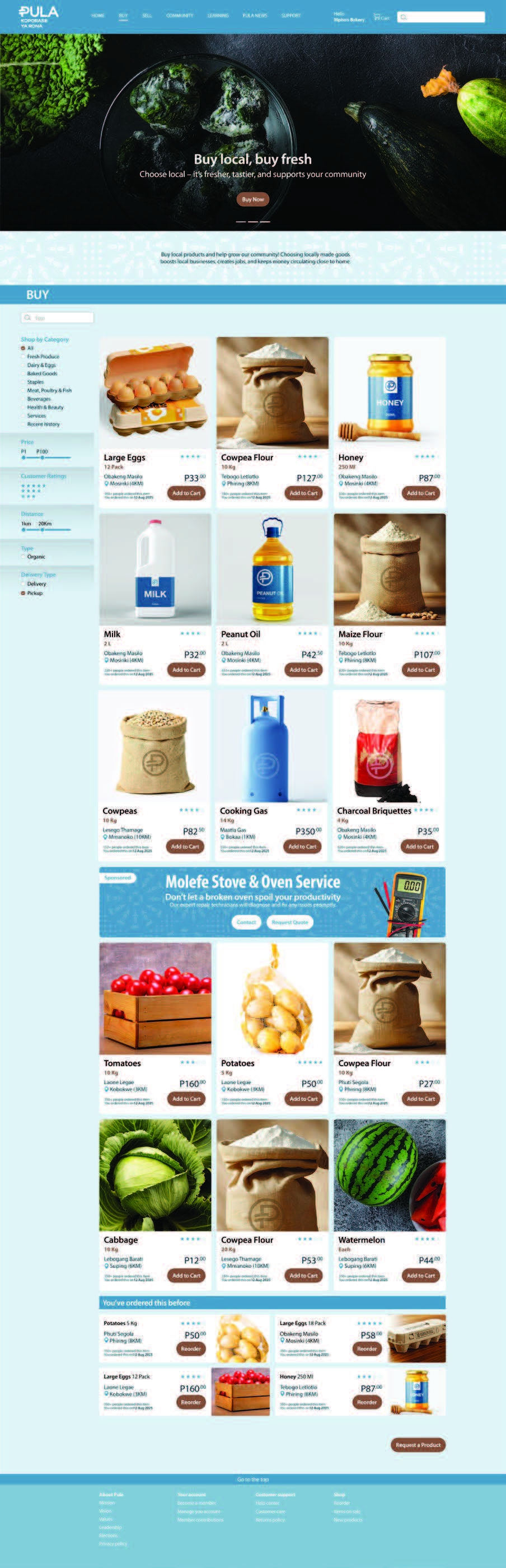
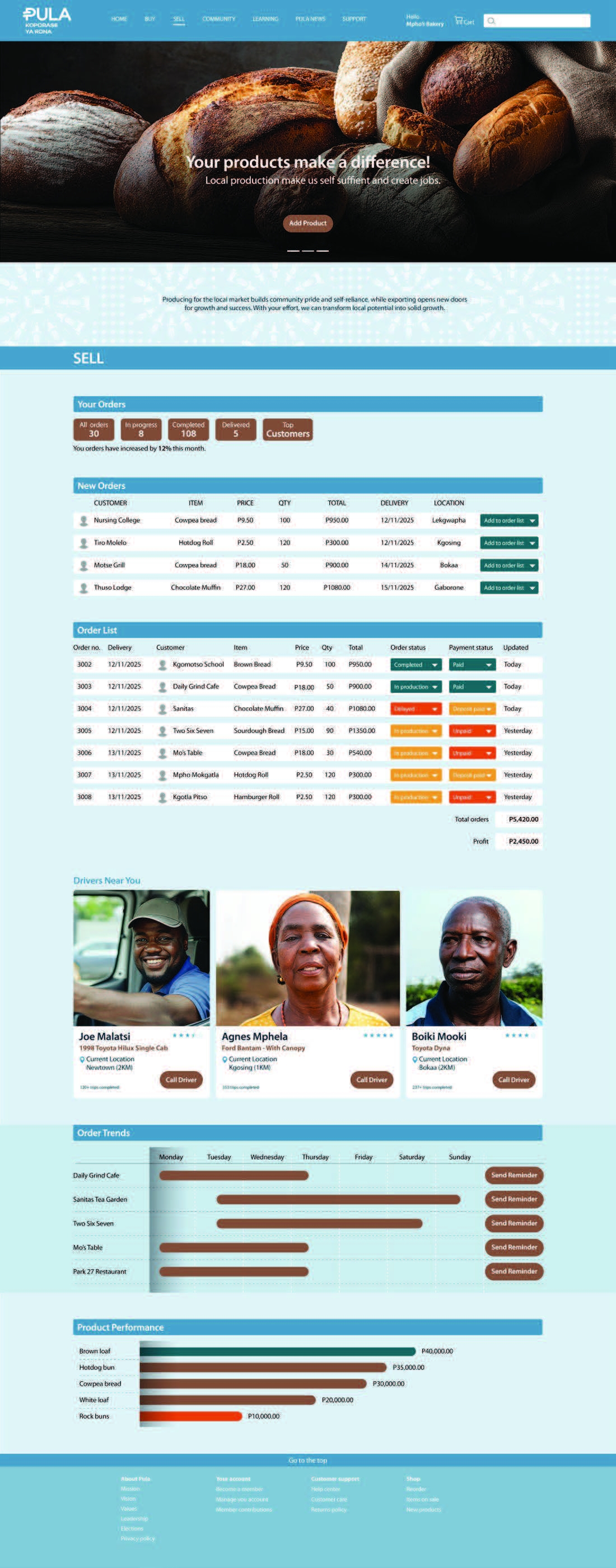
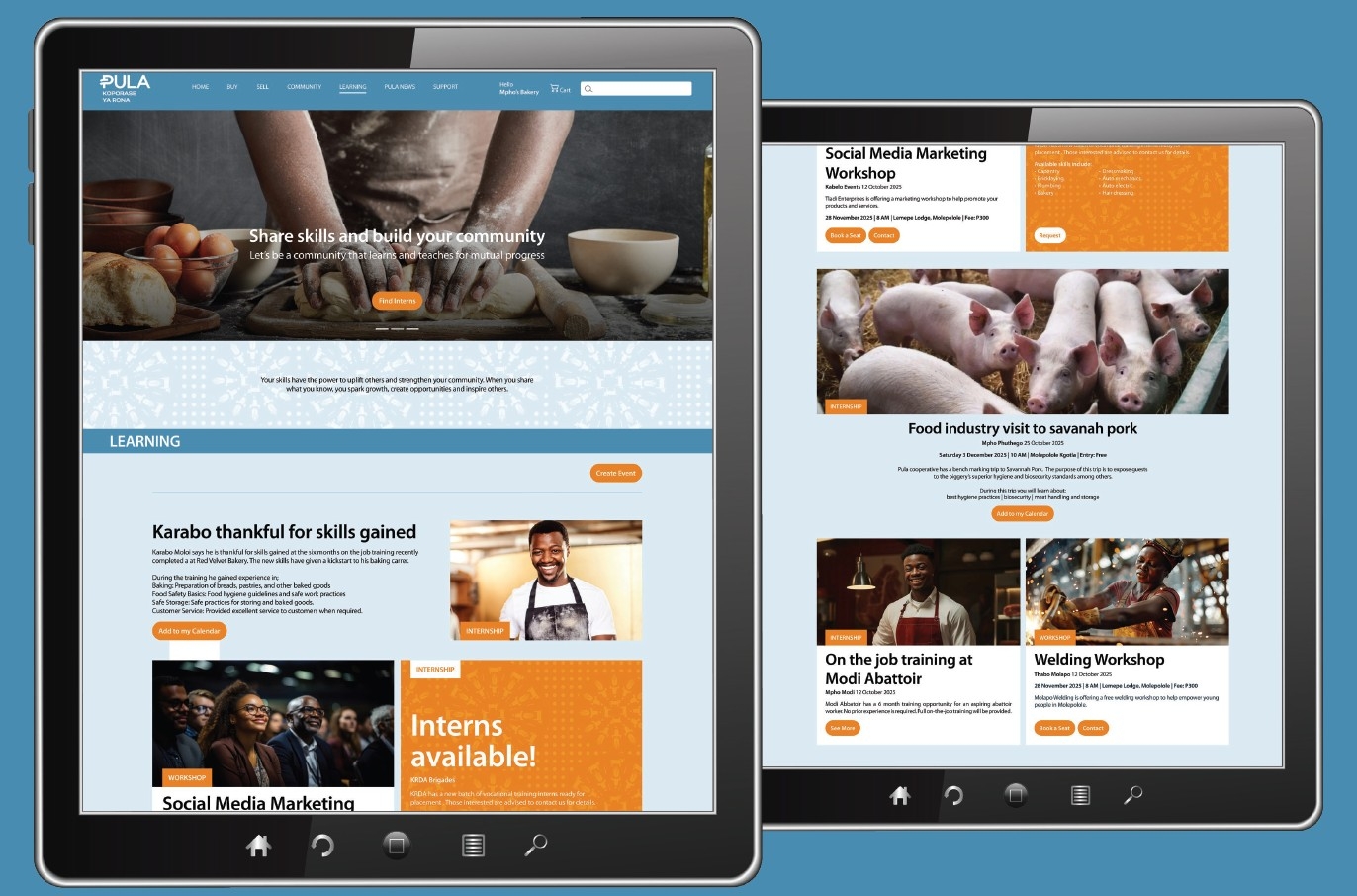
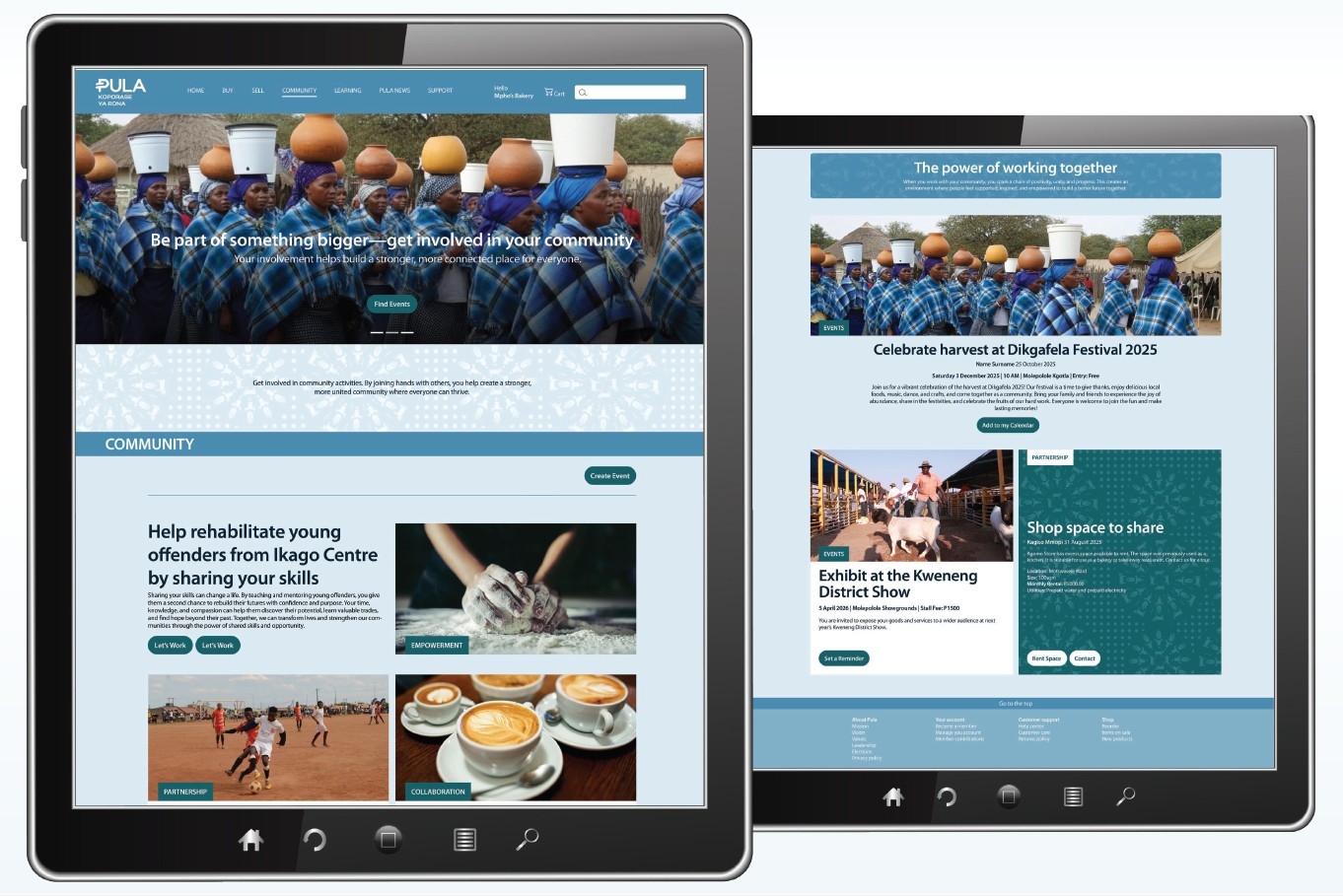
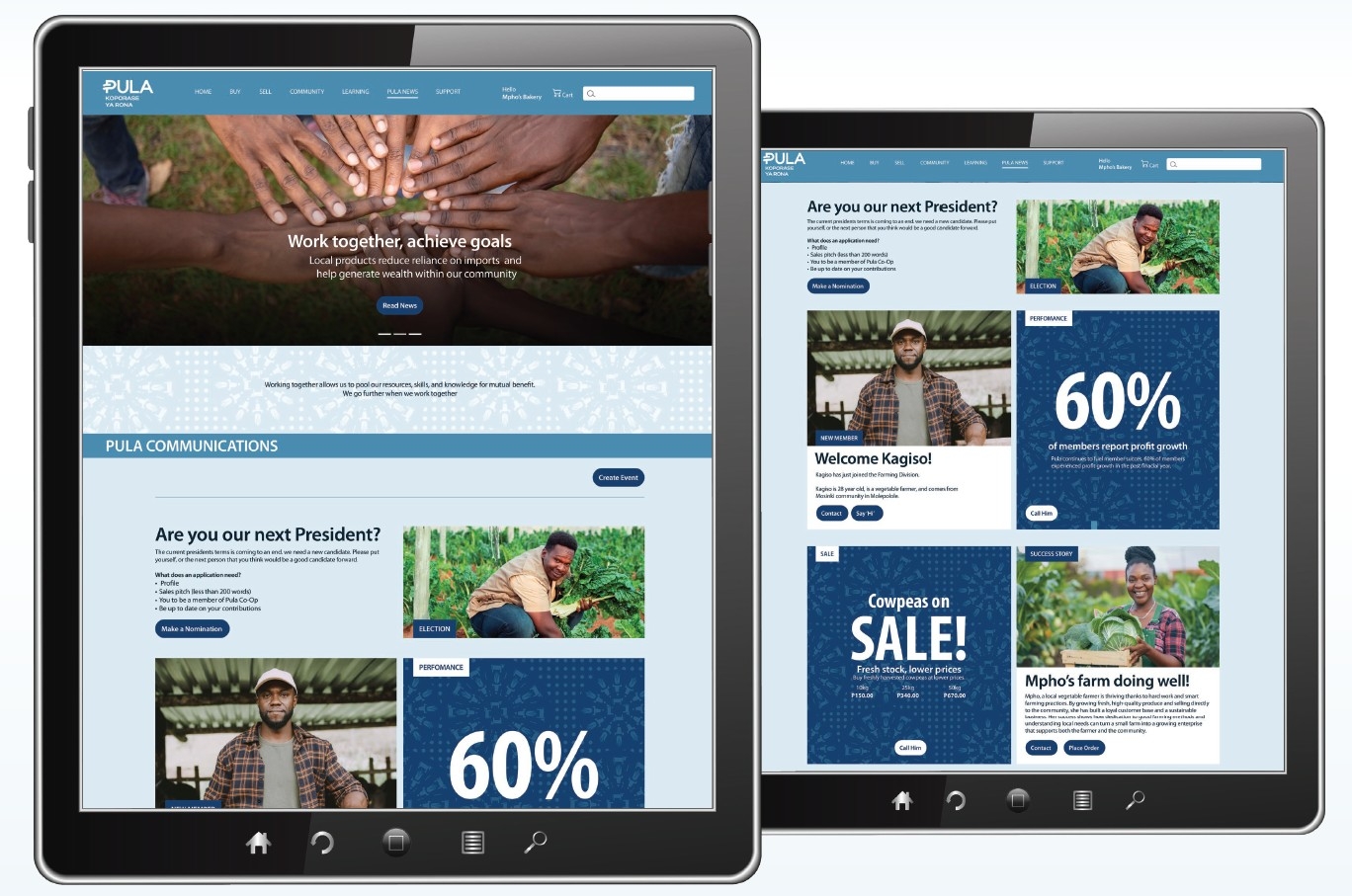
Pula is a community-driven cooperative that empowers local producers, reduces import reliance, and unlocks new trade opportunities. By turning local resources into high-value goods — such as cowpea bread (produced by local bakers, with produce supplied by local subsistence farmers) supplied to city cafés — the initiative creates new income streams and market access. Its online marketplace connects local sellers and buyers in one easy platform. Businesses and individuals can register to sell products and services, with seller memberships supporting the cooperative, while buyers join for free. Users receive a personalised dashboard featuring training, promotions, partnerships, and community news. Sellers can list and manage products, track orders, analyse performance, and identify customer trends — giving them the tools to grow sustainably and competitively. Additionally, the solution supports the broader community, by providing internship programmes, and community sponsorships and supports a local gig economy (for example - anyone with a vehicle can subscribe to be come a local delivery person)
Pula is a community-driven cooperative that empowers local producers, reduces import reliance, and unlocks new trade opportunities. By turning local resources into high-value goods — such as cowpea bread (produced by local bakers, with produce supplied by local subsistence farmers) supplied to city cafés — the initiative creates new income streams and market access. Its online marketplace connects local sellers and buyers in one easy platform. Businesses and individuals can register to sell products and services, with seller memberships supporting the cooperative, while buyers join for free. Users receive a personalised dashboard featuring training, promotions, partnerships, and community news. Sellers can list and manage products, track orders, analyse performance, and identify customer trends — giving them the tools to grow sustainably and competitively. Additionally, the solution supports the broader community, by providing internship programmes, and community sponsorships and supports a local gig economy (for example - anyone with a vehicle can subscribe to be come a local delivery person)
Project Sustainability Approach:
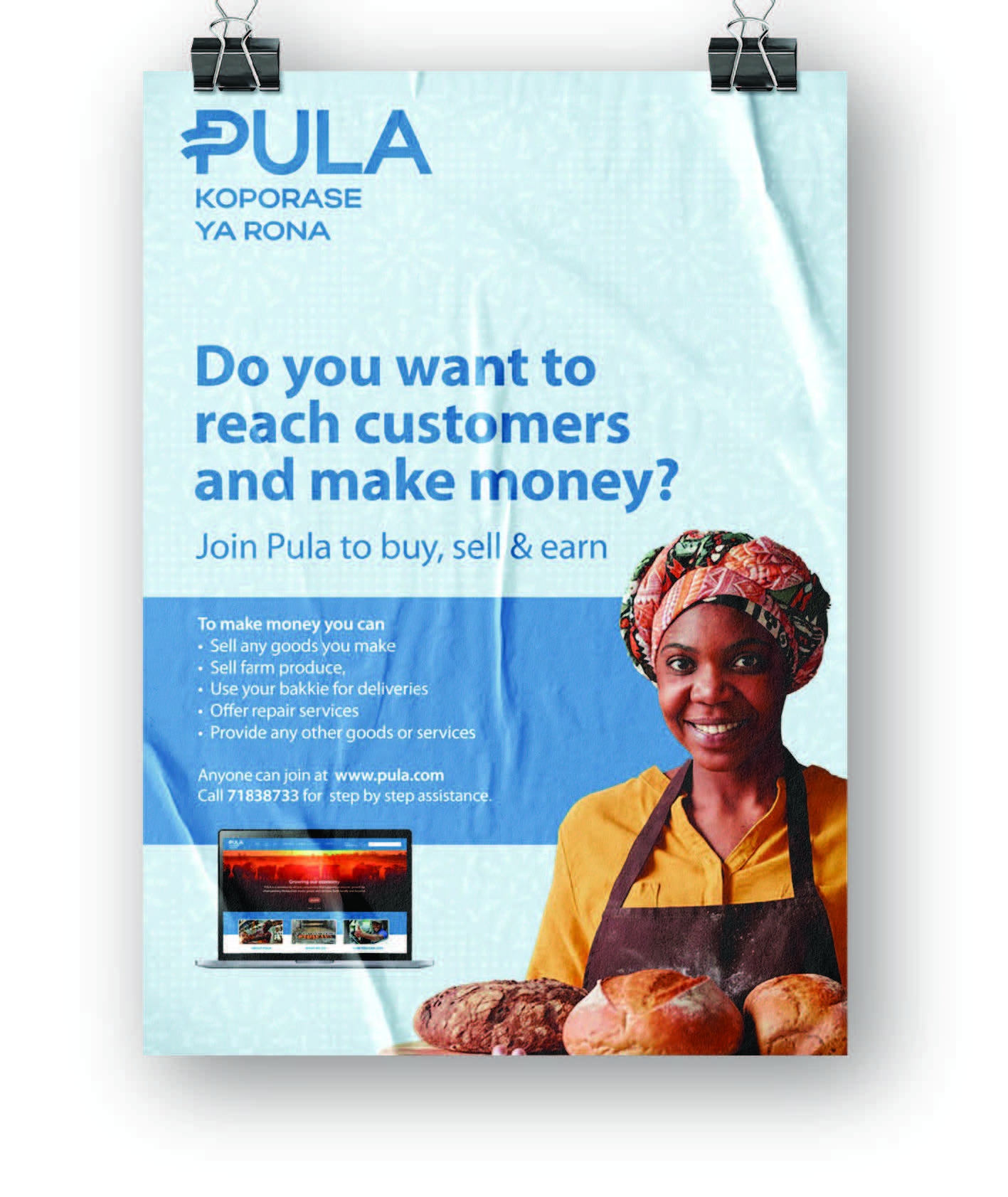
To minimise environmental impact, the project will operate primarily online, with most communication delivered through the website and social media notifications. A small number of posters will be printed and displayed in high-traffic public spaces such as clinics and post offices. Advantages of a digital-first approach; 1 - Reduces paper use, easing pressure on natural resources 2 - Minimises waste from discarded printed materials 3 - Cuts down ink and chemical waste from printing processes 4 - Enables content updates and sharing without physical waste 5 - Lowers carbon emissions linked to printing, transport, and distribution Posters will convey enduring messages, reducing the need for frequent updates or reprints. By displaying them primarily in institutions like clinics, their condition can be monitored, and they can be responsibly disposed of when damaged or no longer needed
To minimise environmental impact, the project will operate primarily online, with most communication delivered through the website and social media notifications. A small number of posters will be printed and displayed in high-traffic public spaces such as clinics and post offices. Advantages of a digital-first approach; 1 - Reduces paper use, easing pressure on natural resources 2 - Minimises waste from discarded printed materials 3 - Cuts down ink and chemical waste from printing processes 4 - Enables content updates and sharing without physical waste 5 - Lowers carbon emissions linked to printing, transport, and distribution Posters will convey enduring messages, reducing the need for frequent updates or reprints. By displaying them primarily in institutions like clinics, their condition can be monitored, and they can be responsibly disposed of when damaged or no longer needed
Local and Regional Impacts of the Project:
Local impact This project reduces reliance on imports while boosting local economic activity. It creates jobs and improves living standards, providing small and informal producers with better market access and income opportunities. Community training further strengthens the viability and profitability of local businesses. Regional impact The project increases the supply of locally produced goods to wider markets, promoting regional economic integration and diversification. It also provides a model for other villages to enhance their own local-trade and economic performance.
Local impact This project reduces reliance on imports while boosting local economic activity. It creates jobs and improves living standards, providing small and informal producers with better market access and income opportunities. Community training further strengthens the viability and profitability of local businesses. Regional impact The project increases the supply of locally produced goods to wider markets, promoting regional economic integration and diversification. It also provides a model for other villages to enhance their own local-trade and economic performance.