Dar Al Wasl
Prize(s):
Honorable Mention 2026 INTERIOR DESIGN / Residential Interior
Lead Designer(s) Name(s):Sahar Samir Elghoul
Architecture Firm:The design code
Interior Designer:Sahar Samir Elghoul
Client Name:The design code
Project Location:Arabic harsh climate countries
Design Status:Concept
Website: View
Project Description:
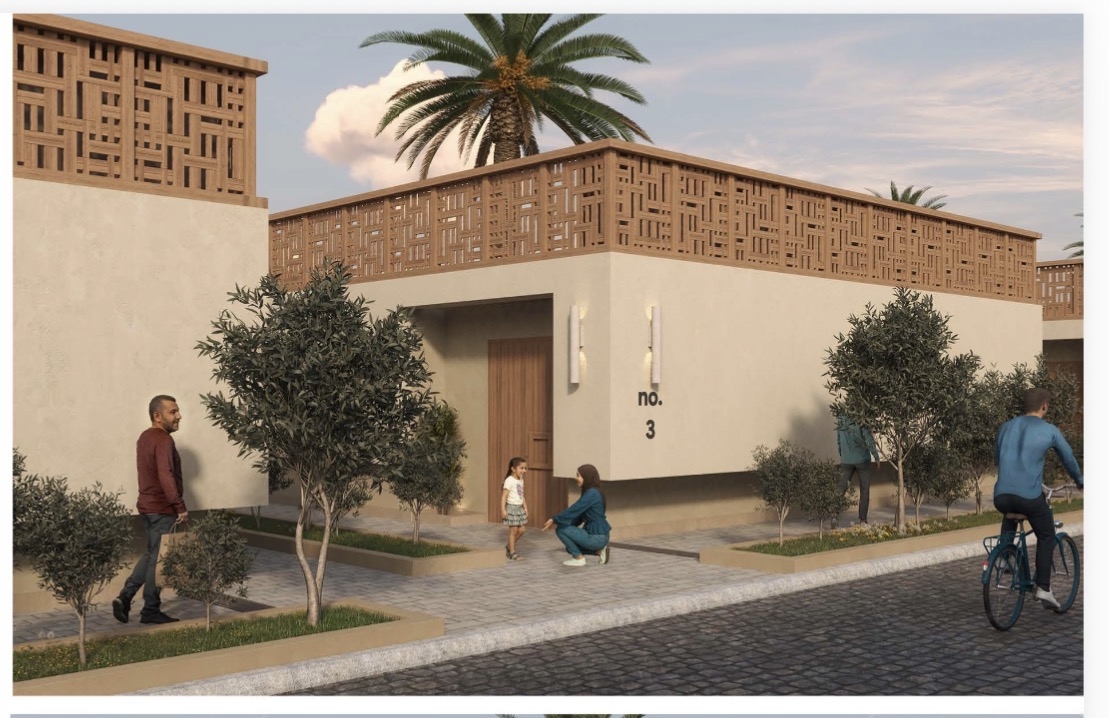
Dar Al-Wasl is more than a shelter — it is a space that reconnects people with each other, their community, and their environment. Designed for low-income families in the Arab region, the house balances affordability with sustainability and cultural values.
Dar Al-Wasl is more than a shelter — it is a space that reconnects people with each other, their community, and their environment. Designed for low-income families in the Arab region, the house balances affordability with sustainability and cultural values.
Project Innovation / Specification:
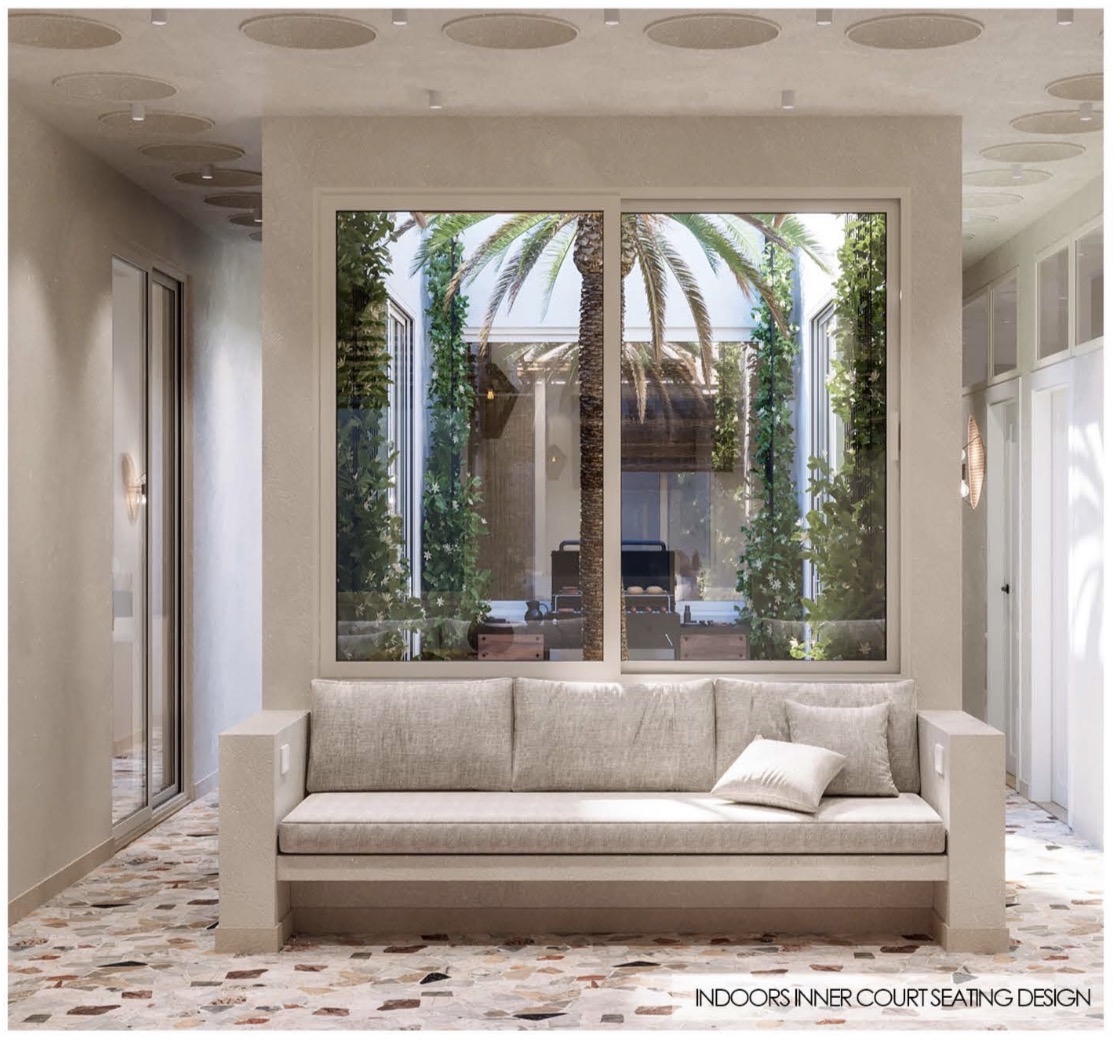
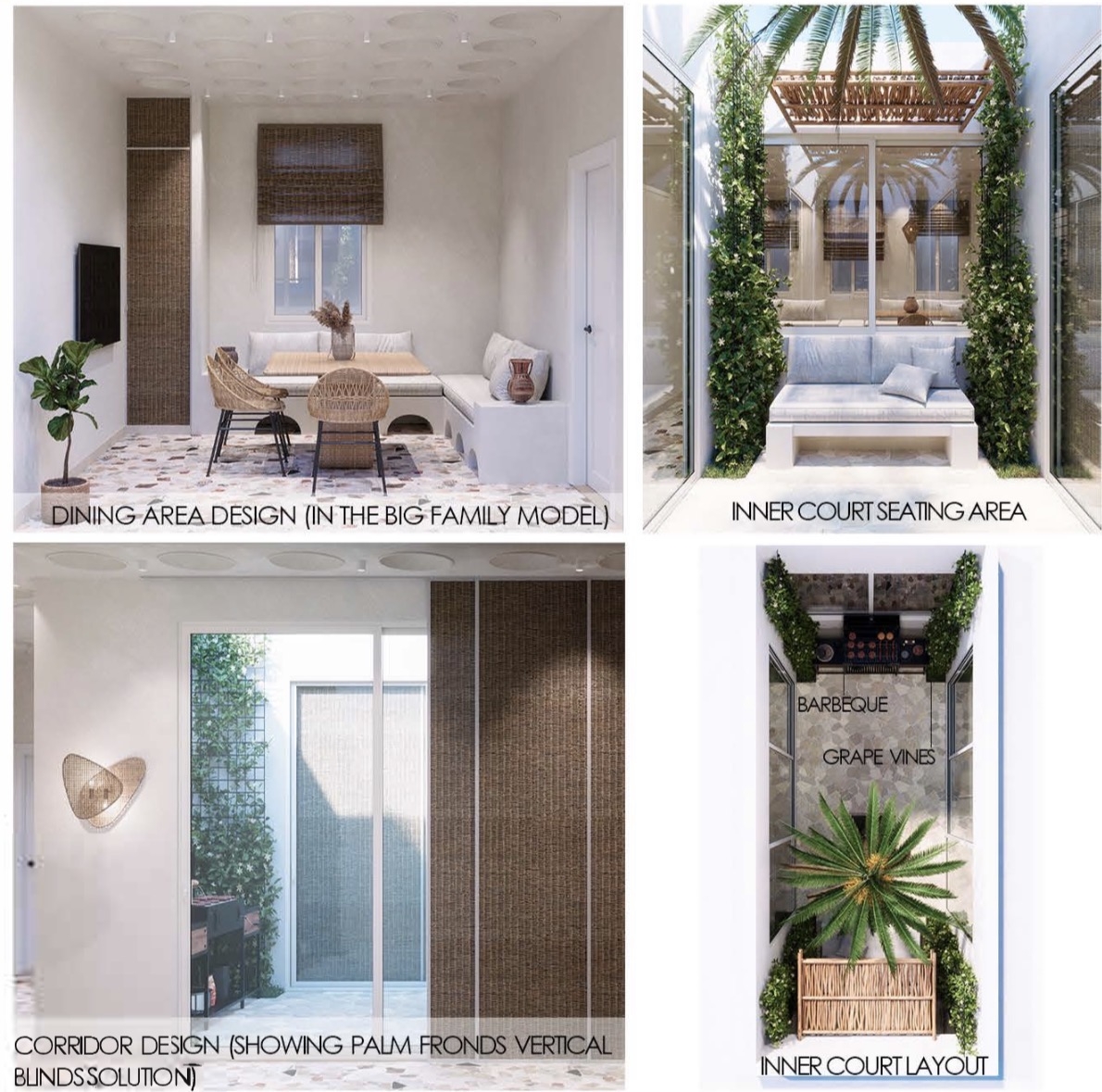
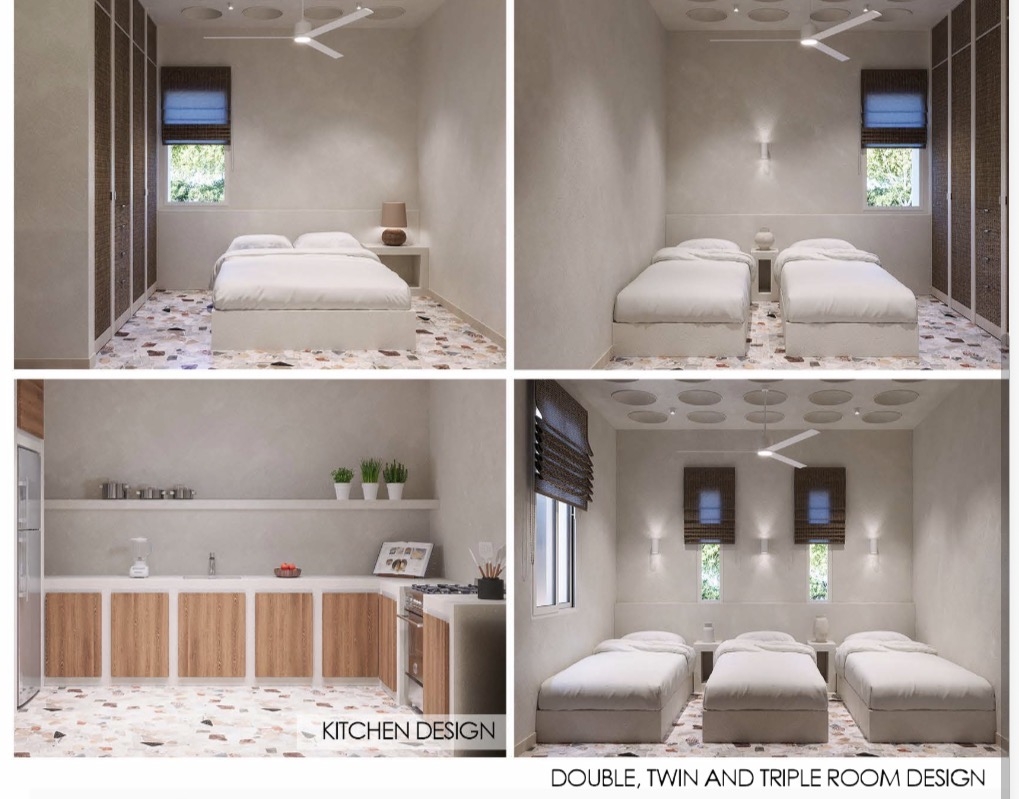
flooring: the flooring throughout the house is finished with reused ceramic tiles from leftover project materials, offering a cost-effective and eco-friendly solution. the mixed colors of the tiles were carefully balanced by using neutral wall colors and simple finishes, creating a unique character throughout the whole house. furniture, curtains and lighting: palm frond weave (khoos) was used throughout the house's interior in tables, seating, lighting, cabinet doors, and vertical blinds, as a locally available, low-cost material. its natural texture and warm tone enhance the space with an earthy, handcrafted feel, reflecting the project's commitment to sustainability and cultural authenticity. using 90% built-in furniture solutions ensures durability in a home designed for low-income families while significantly reducing costs. walls painting: gypplast material is a fast, cost-effective alternative to traditional plaster, offering a smooth, insulated final finish with reduced labor and material use. ceiling: the ceiling uses the filling slab system, which not only reduces construction costs but also adds a unique character and distinctive aesthetic to the home.
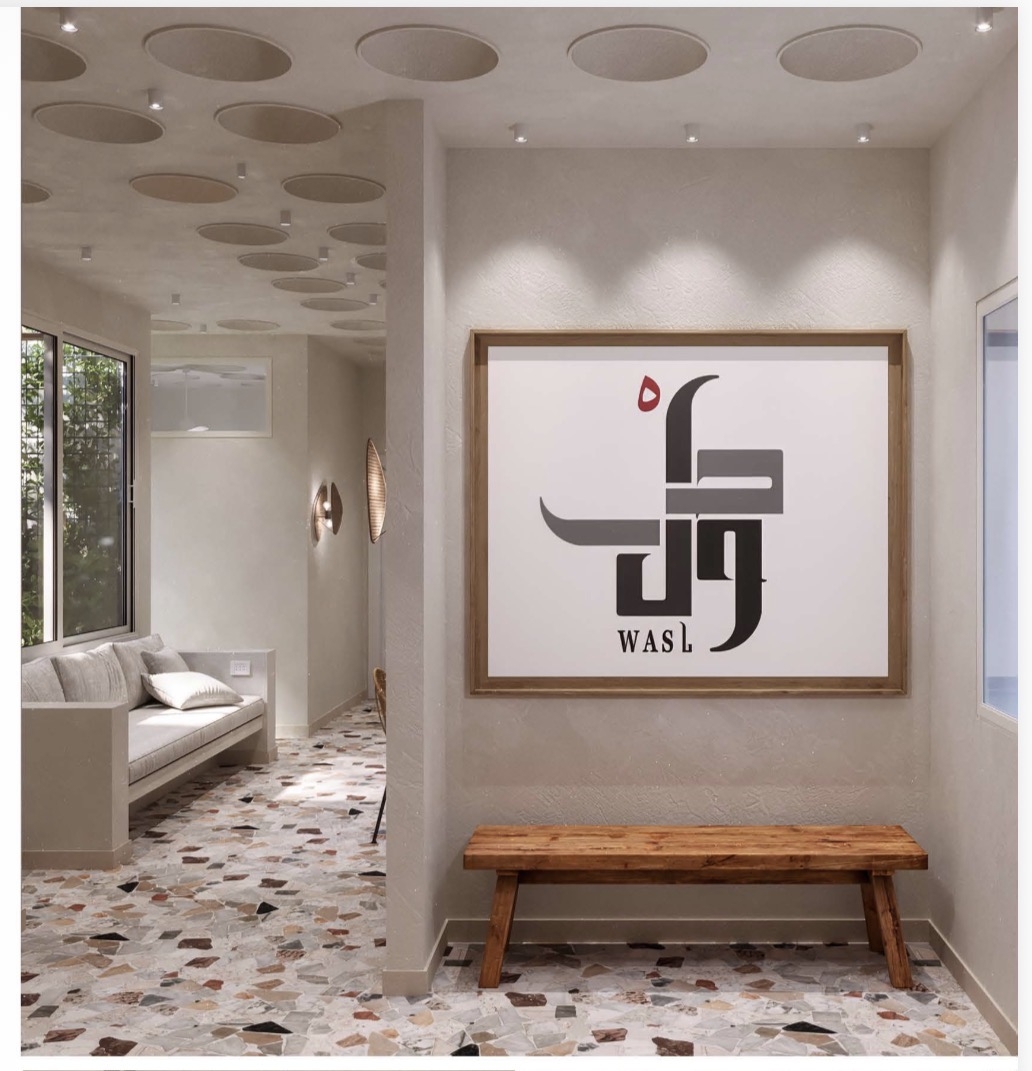
flooring: the flooring throughout the house is finished with reused ceramic tiles from leftover project materials, offering a cost-effective and eco-friendly solution. the mixed colors of the tiles were carefully balanced by using neutral wall colors and simple finishes, creating a unique character throughout the whole house. furniture, curtains and lighting: palm frond weave (khoos) was used throughout the house's interior in tables, seating, lighting, cabinet doors, and vertical blinds, as a locally available, low-cost material. its natural texture and warm tone enhance the space with an earthy, handcrafted feel, reflecting the project's commitment to sustainability and cultural authenticity. using 90% built-in furniture solutions ensures durability in a home designed for low-income families while significantly reducing costs. walls painting: gypplast material is a fast, cost-effective alternative to traditional plaster, offering a smooth, insulated final finish with reduced labor and material use. ceiling: the ceiling uses the filling slab system, which not only reduces construction costs but also adds a unique character and distinctive aesthetic to the home.
Project Sustainability Approach:
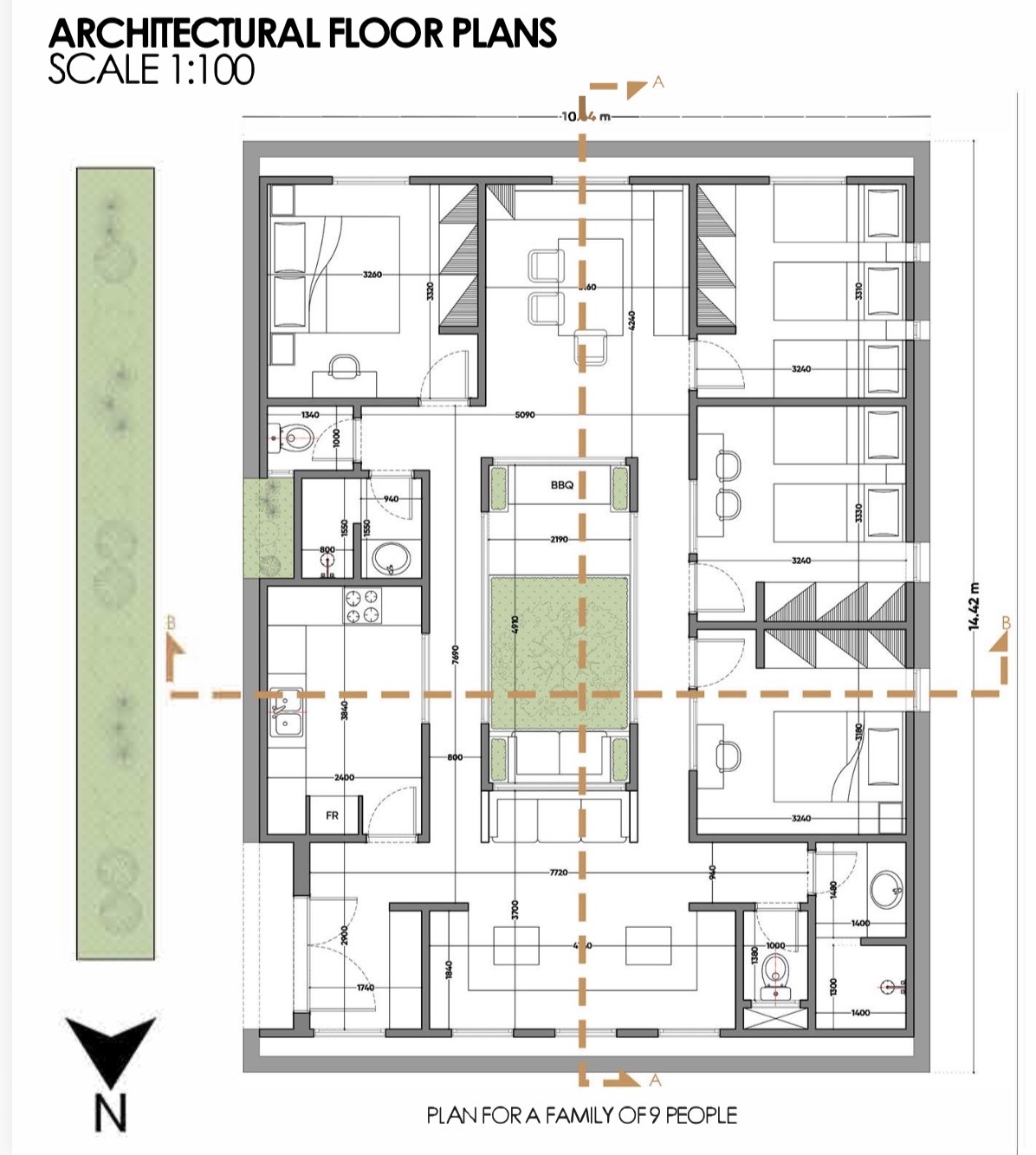
With simple yet smart solutions like the filling slab roof, climbing greenery, and rainwater reuse, the house stays cool, affordable, and connected to nature. solar energy further enhances sustainability while keeping expenses low. A home that belongs anywhere—designed to adapt to any country. local materials, suitable plants, and optimal orientation to prevailing winds ensure a cost-efficient and sustainable build wherever it is realized. The building is a single-story structure featuring a modern interpretation of the traditional malqaf (wind catcher), spanning the north and south façades.
With simple yet smart solutions like the filling slab roof, climbing greenery, and rainwater reuse, the house stays cool, affordable, and connected to nature. solar energy further enhances sustainability while keeping expenses low. A home that belongs anywhere—designed to adapt to any country. local materials, suitable plants, and optimal orientation to prevailing winds ensure a cost-efficient and sustainable build wherever it is realized. The building is a single-story structure featuring a modern interpretation of the traditional malqaf (wind catcher), spanning the north and south façades.
Local and Regional Impacts of the Project:
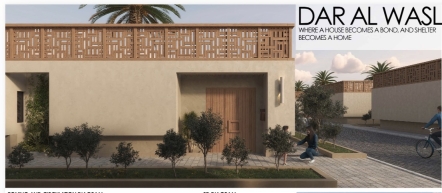
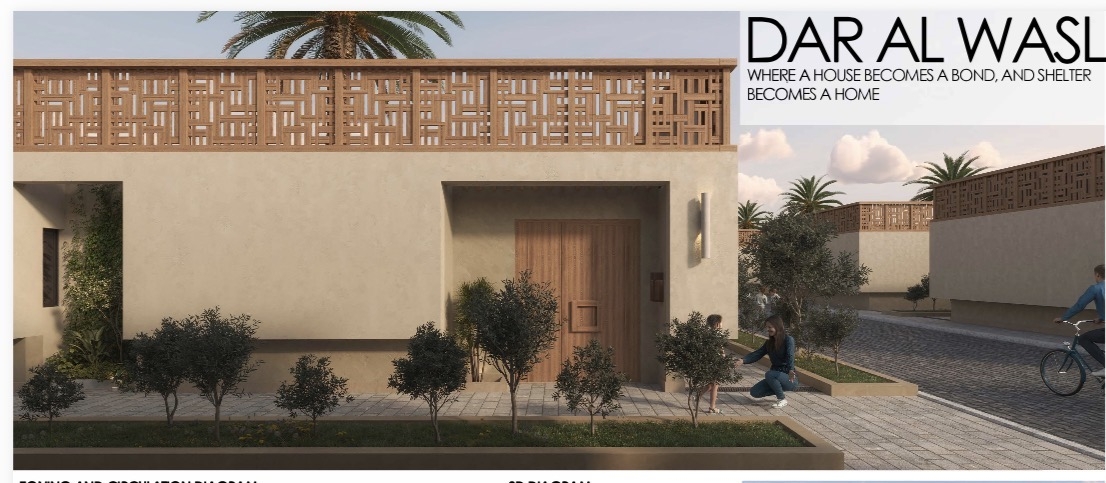
The malqaf is enclosed with recycled wooden panels arranged in a mafruka-inspired motif, which also tops the double-layered eastern and western walls. using reclaimed wood adds sustainability, and the motif can be adapted to reflect local identity.
The malqaf is enclosed with recycled wooden panels arranged in a mafruka-inspired motif, which also tops the double-layered eastern and western walls. using reclaimed wood adds sustainability, and the motif can be adapted to reflect local identity.
Lead Designer(s) Name(s):Sahar Samir Elghoul
Profile Description:
Sahar Samir Elghoul Architect & Interior Design Consultant Architect with over 20 years of experience specializing in interior design, landscape coordination, and architectural solutions for residential and commercial spaces. Skilled in creative direction, client engagement, and high-end spatial design. Also serves as a consultant for engineering and interior projects in various design studios and educational facilities.
Sahar Samir Elghoul Architect & Interior Design Consultant Architect with over 20 years of experience specializing in interior design, landscape coordination, and architectural solutions for residential and commercial spaces. Skilled in creative direction, client engagement, and high-end spatial design. Also serves as a consultant for engineering and interior projects in various design studios and educational facilities.
Previous Awards Won:
Cairo design award : 1- first place winner (unrealized interior architecture) 2025 2- first place winner (product design) 2025 Cairo design award : Honorable mention (realized interior architecture ) 2024 Shortlisted : Design et al (residential) 2023
Cairo design award : 1- first place winner (unrealized interior architecture) 2025 2- first place winner (product design) 2025 Cairo design award : Honorable mention (realized interior architecture ) 2024 Shortlisted : Design et al (residential) 2023