Three Pours
Prize(s):
WINNER 2026 INTERIOR DESIGN / Residential Interior
School / University Name:Greenside Design Center
Lead Designer(s) Name(s):Mubushra Patel
Design Team / Other designer(s):Mubushra Patel
Professor Name(s):Bongisa Msutu & Ilze Wessels
Photo Credit:Mubushra Patel
Project Location:Greenside, Johannesburg
Design Status:Concept
Project Description:
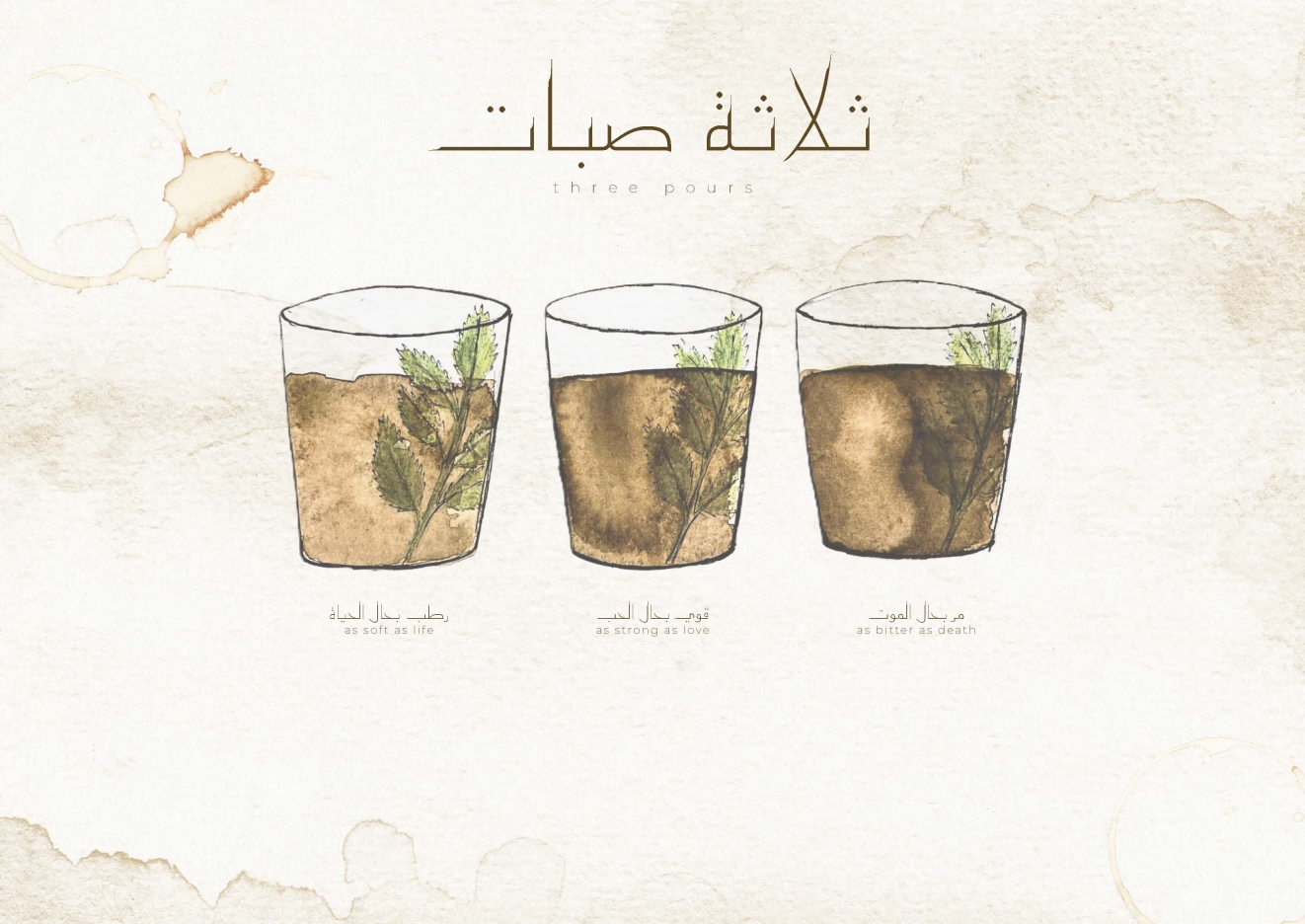
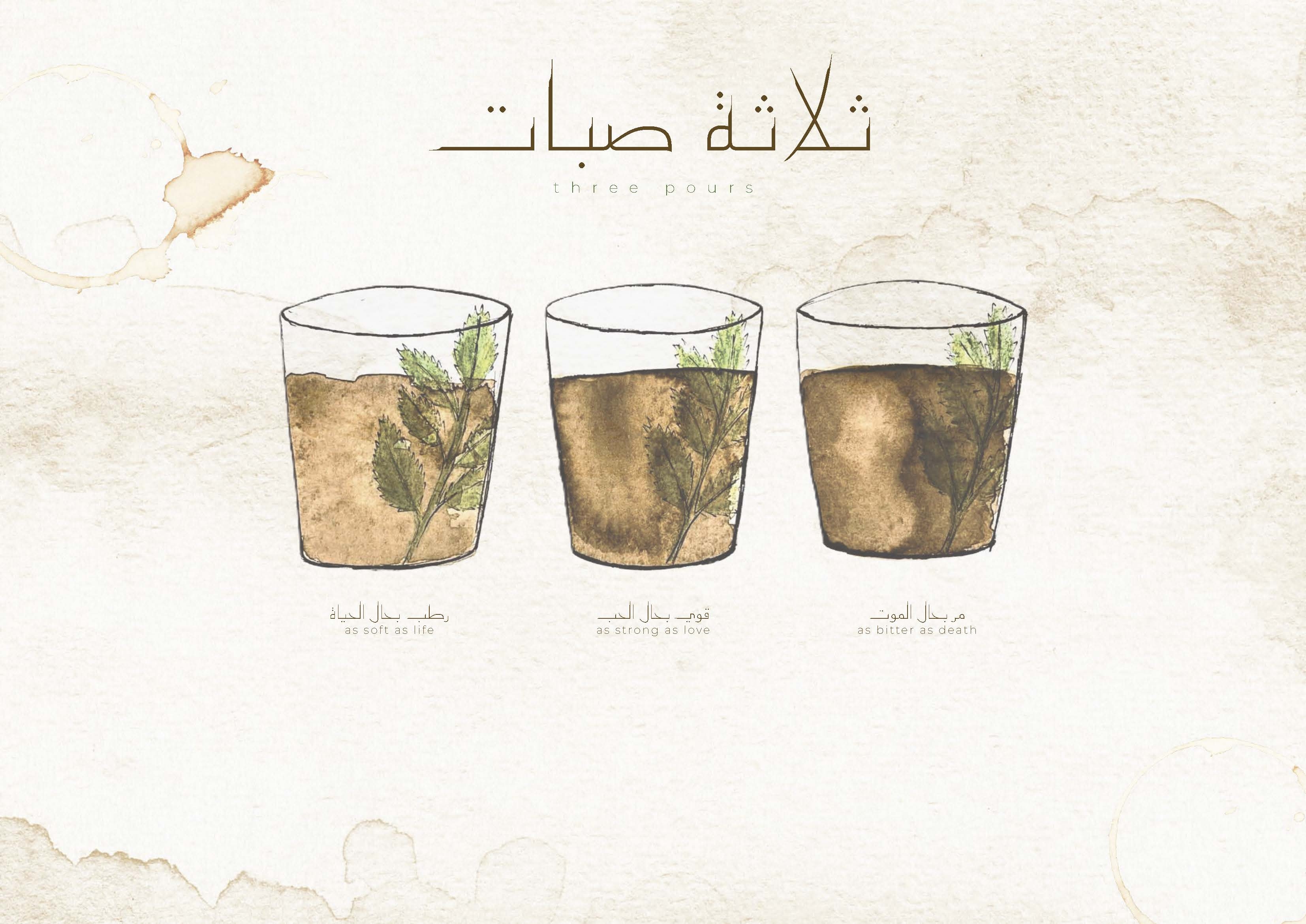
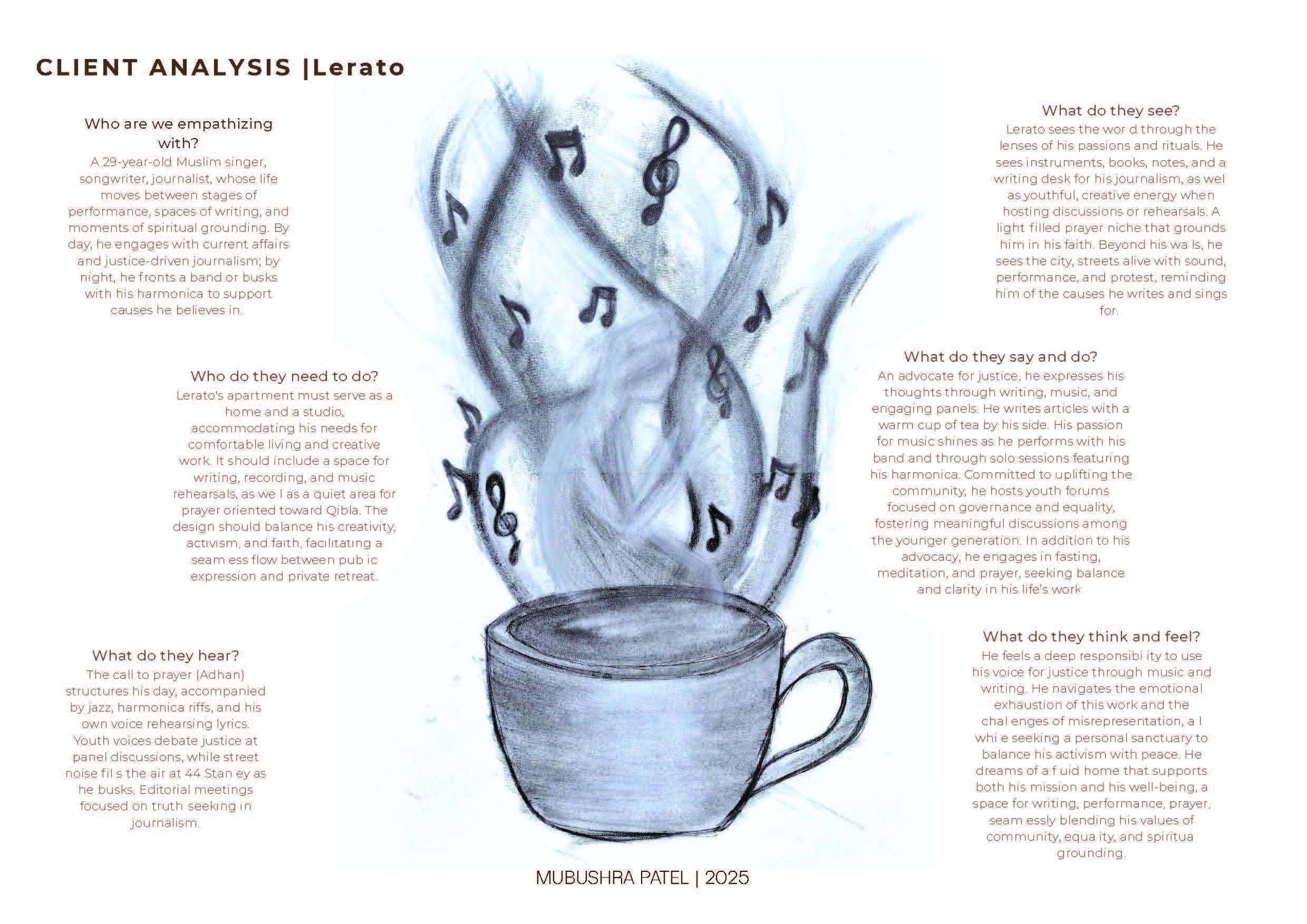
The apartment draws from the Moroccan tea ritual, where Atay, a mint tea made with Chinese gunpowder tea, sugar, and water. In Morocco, tea is a gesture of care and welcome. It’s served to guests in three rounds, each one carrying its own meaning: the first glass as gentle as life, the second as strong as love, and the third as bitter as death. This ritual is the structure of the design. Each floor lives as a pour of tea. Lerato, as a practicing Muslim, structures his days around the five daily prayers. In Islam,these prayers (salah) create a rhythm of pause, reflection, and connection to God. Similarly, tea reflects this cycle, providing moments of stillness amidst the busyness of daily life. Just as salah offers spiritual grounding throughout the day, tea adds an embodied ritual. Tea becomes a personal sanctuary and a communal gesture, harmonising with his prayer practice by offering pauses of reflection and gathering between moments of worship. The act of preparing tea, boiling water, steeping leaves, pouring, and sipping, is itself a ritual of care and mindfulness. Repeated daily, it creates a familiar rhythm that marks time, offering comfort and connection or retreat.
The apartment draws from the Moroccan tea ritual, where Atay, a mint tea made with Chinese gunpowder tea, sugar, and water. In Morocco, tea is a gesture of care and welcome. It’s served to guests in three rounds, each one carrying its own meaning: the first glass as gentle as life, the second as strong as love, and the third as bitter as death. This ritual is the structure of the design. Each floor lives as a pour of tea. Lerato, as a practicing Muslim, structures his days around the five daily prayers. In Islam,these prayers (salah) create a rhythm of pause, reflection, and connection to God. Similarly, tea reflects this cycle, providing moments of stillness amidst the busyness of daily life. Just as salah offers spiritual grounding throughout the day, tea adds an embodied ritual. Tea becomes a personal sanctuary and a communal gesture, harmonising with his prayer practice by offering pauses of reflection and gathering between moments of worship. The act of preparing tea, boiling water, steeping leaves, pouring, and sipping, is itself a ritual of care and mindfulness. Repeated daily, it creates a familiar rhythm that marks time, offering comfort and connection or retreat.
Project Innovation / Specification:
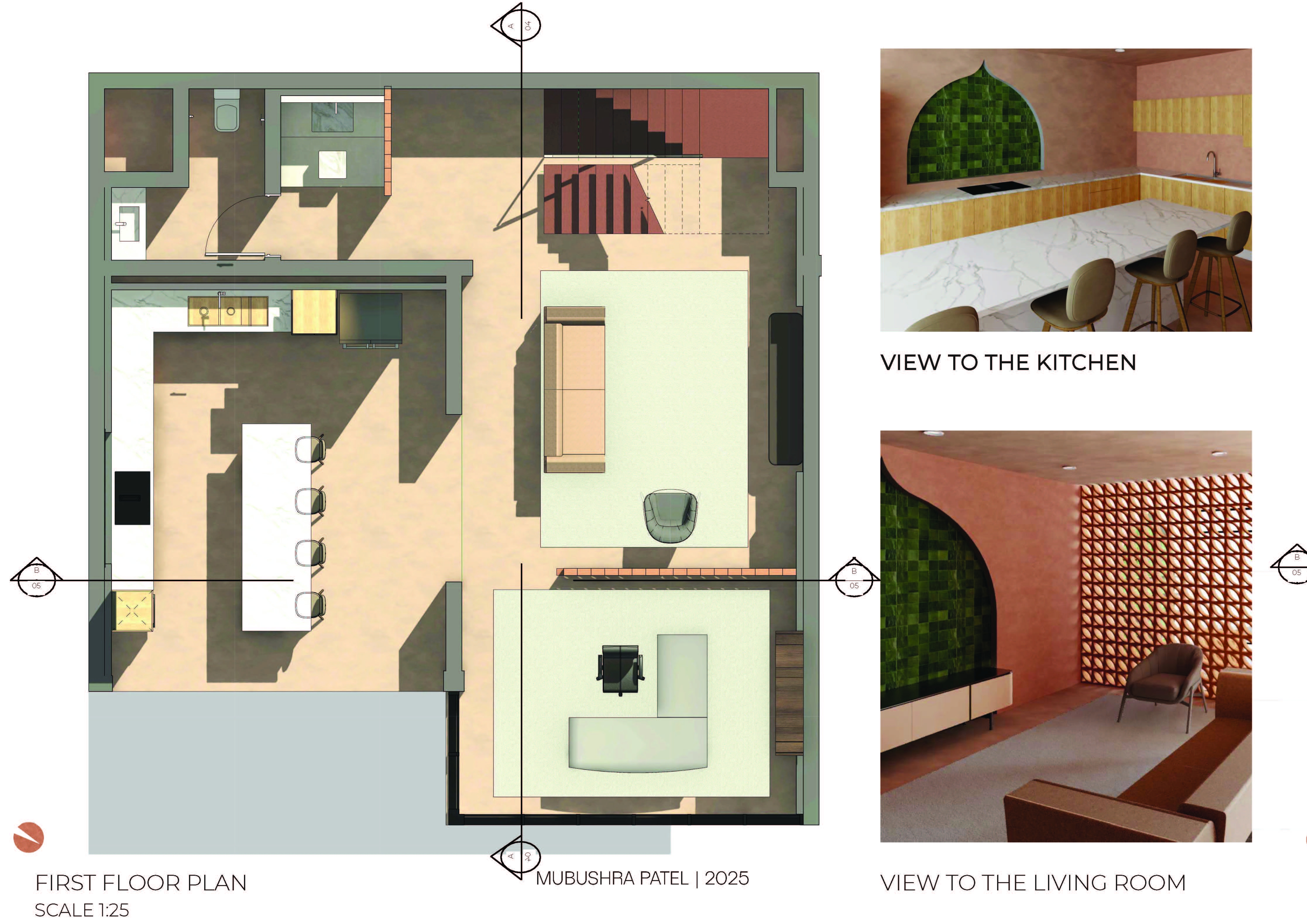
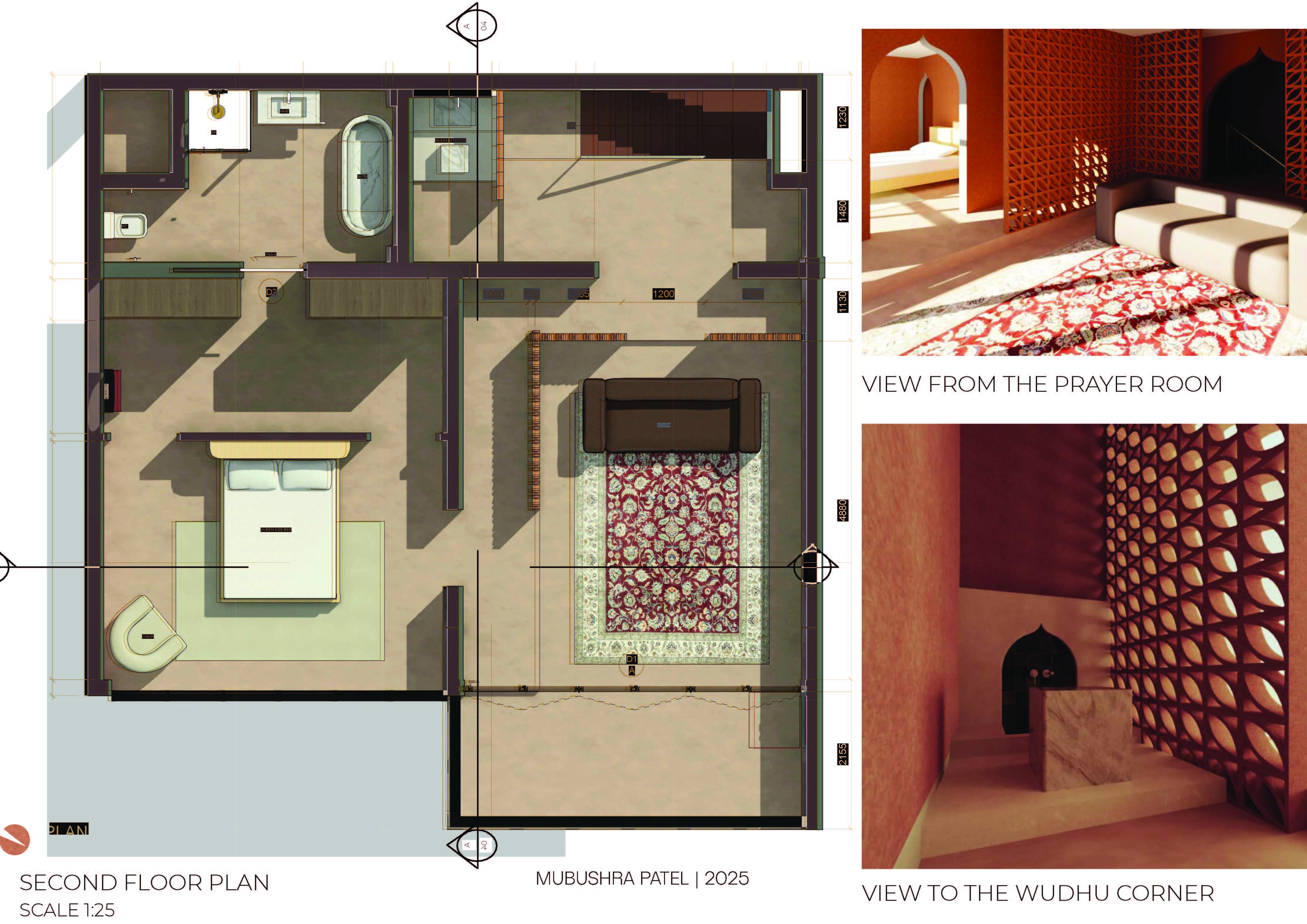
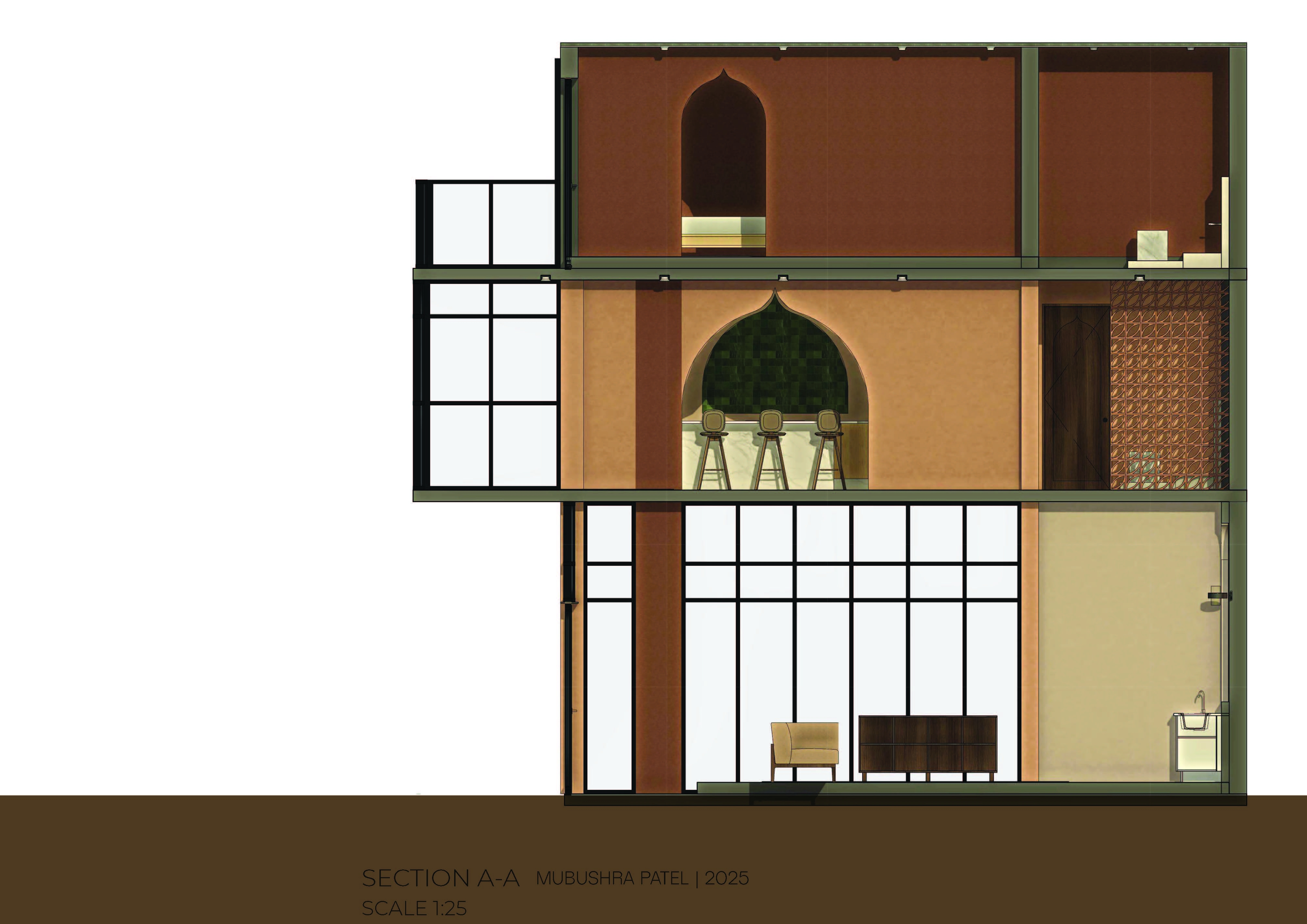
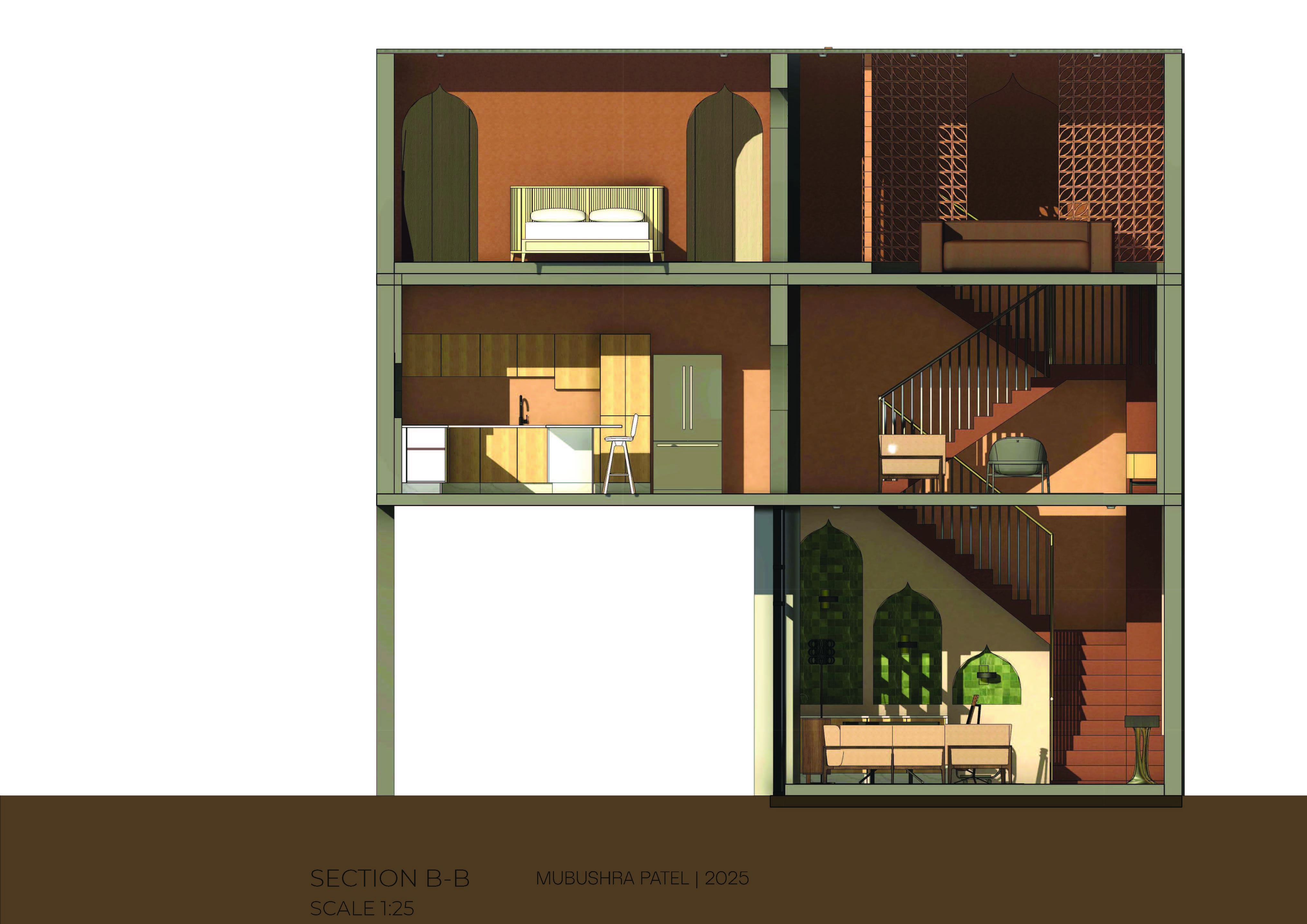
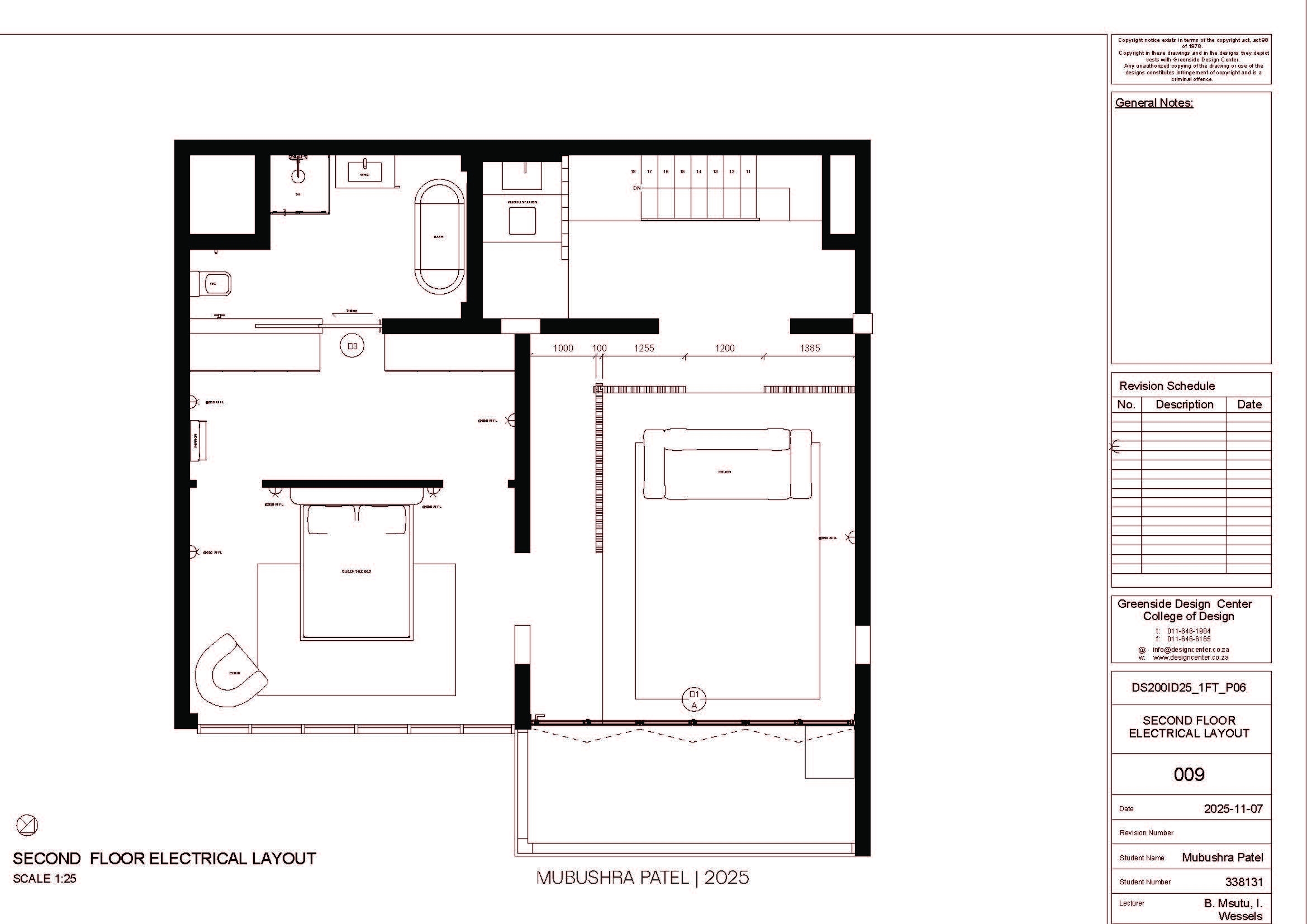
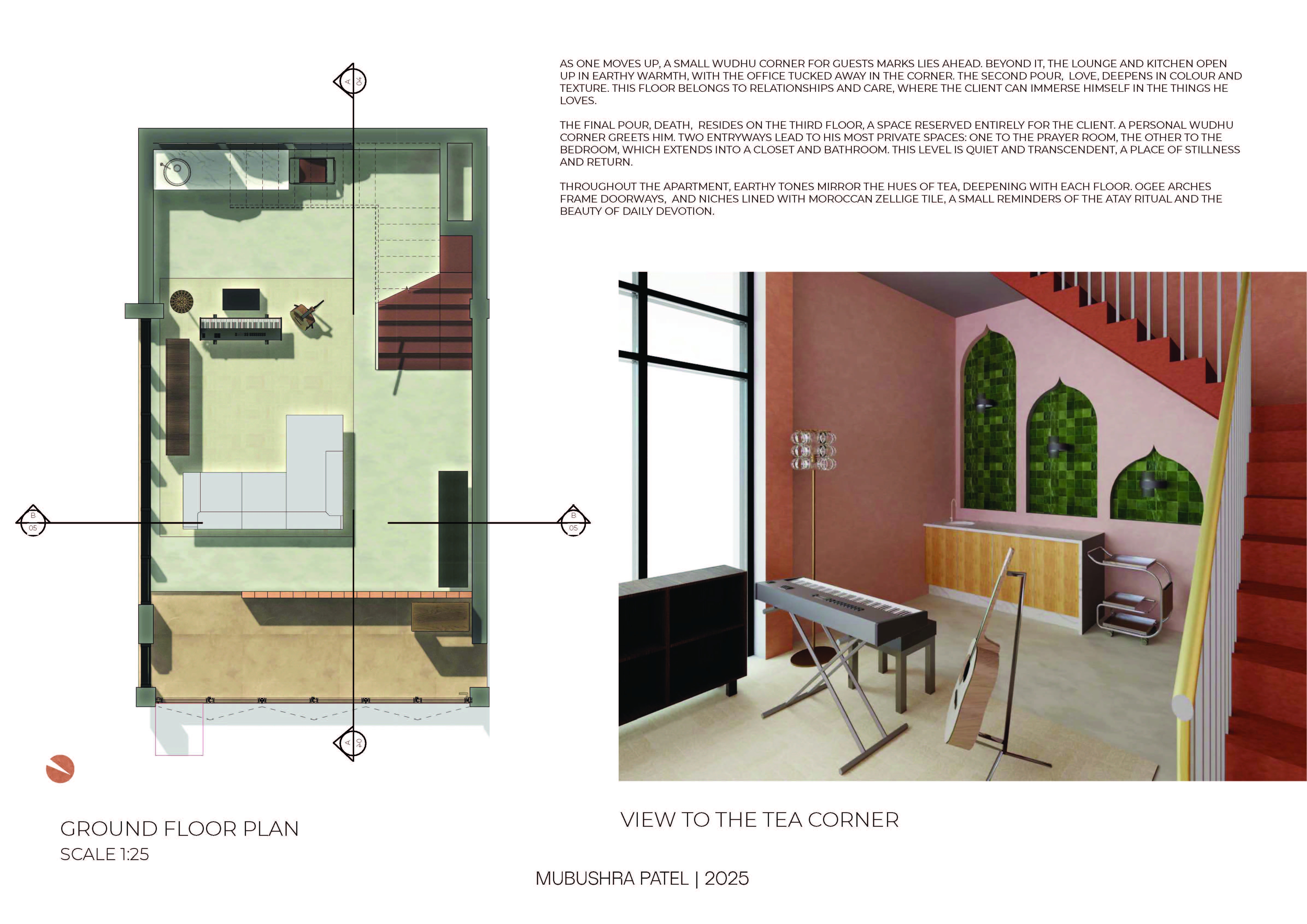
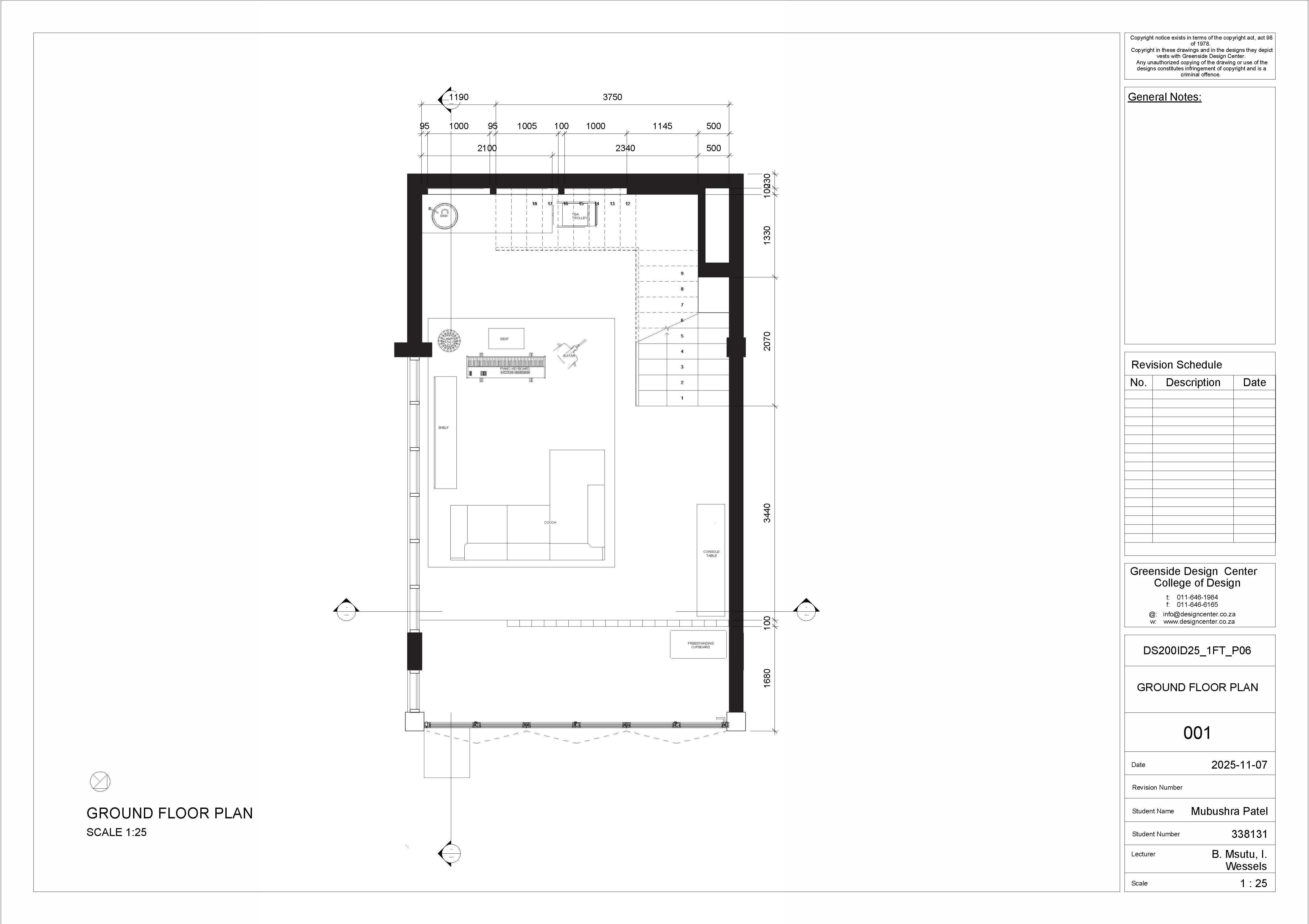
THE APARTMENT UNFOLDS LIKE THE THREE POURS OF MOROCCAN ATAY; EACH FLOOR A GLASS, EACH SPACE A DIFFERENT NOTE OF THE RITUAL.ON THE GROUND FLOOR, LIFE, HOLDS THE TEA ROOM AND MUSIC AREA. AN ENTRYWAY GUIDES GUESTS INTO THE SPACE, DOUBLING AS A MUD ROOM WHERE SHOES ARE LEFT BEHIND, HONOURING THE CLIENT’S ISLAMIC PRACTICE OF PURITY. The ground floor is a representation of life. Where the tearoom and music area sit, filled with movement and conversation. The entry doubles as a small mudroom, where guests remove their shoes, a nod to his religion, keeping the home clean and an acknowledgement of purity and respect. This floor holds energy, sound, and connection. The first floor is a representation of love, the second pour. It’s warmer and more personal, with the lounge, kitchen, and office close together. A wudhu corner and guest ablution are included. This is where Lerato gathers with family and friends. The second floor is death, not an end, but a return. It's a space for stillness, reflection and return. The second floor includes his own wudhu area, a prayer room, a bedroom, a closet, and a bathroom. It’s quiet and simple, a place to rest and retreat from the world.
THE APARTMENT UNFOLDS LIKE THE THREE POURS OF MOROCCAN ATAY; EACH FLOOR A GLASS, EACH SPACE A DIFFERENT NOTE OF THE RITUAL.ON THE GROUND FLOOR, LIFE, HOLDS THE TEA ROOM AND MUSIC AREA. AN ENTRYWAY GUIDES GUESTS INTO THE SPACE, DOUBLING AS A MUD ROOM WHERE SHOES ARE LEFT BEHIND, HONOURING THE CLIENT’S ISLAMIC PRACTICE OF PURITY. The ground floor is a representation of life. Where the tearoom and music area sit, filled with movement and conversation. The entry doubles as a small mudroom, where guests remove their shoes, a nod to his religion, keeping the home clean and an acknowledgement of purity and respect. This floor holds energy, sound, and connection. The first floor is a representation of love, the second pour. It’s warmer and more personal, with the lounge, kitchen, and office close together. A wudhu corner and guest ablution are included. This is where Lerato gathers with family and friends. The second floor is death, not an end, but a return. It's a space for stillness, reflection and return. The second floor includes his own wudhu area, a prayer room, a bedroom, a closet, and a bathroom. It’s quiet and simple, a place to rest and retreat from the world.
Project Sustainability Approach:
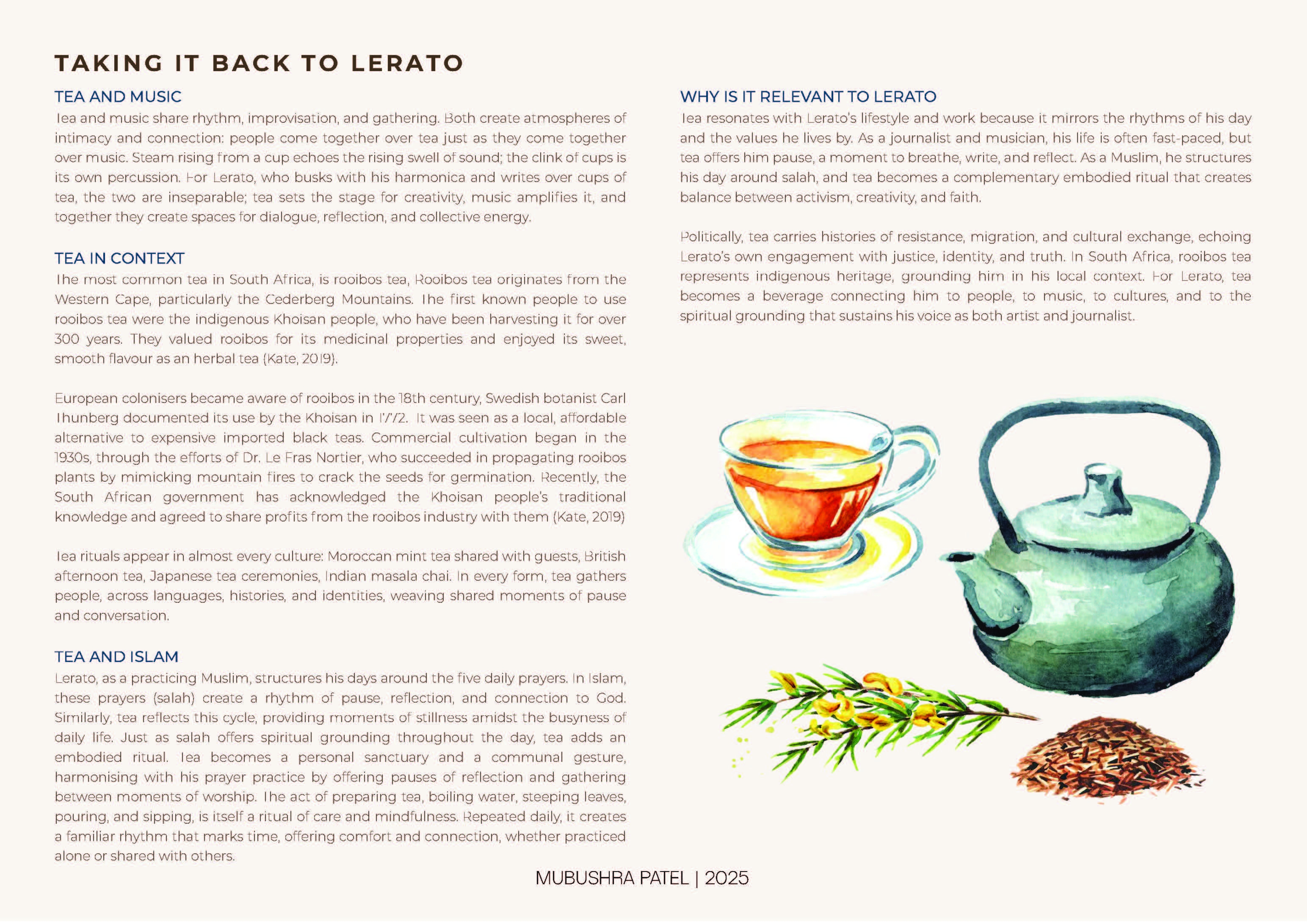
The materials carry with them the tea's earthy shades that grow deeper as you move upward, a translation of the atay, as its flavours intensify with each pour. Moroccan zellige tiles were chosen to reflect the freshness of mint and to tie the apartment back to Morocco, its culture, and its ritual of hospitality. Ogee arches soften movement through the spaces, tying back to Lerato's religion, as these arches are commonly used in Islamic architecture, shaping a calm and continuous flow. Using raw and refined materials linked to the tea-making process makes the ritual tangible. Materials can hold memory, labour, and culture, embodying the story of tea. ARCHITECTURE AS TIMEKEEPER. By responding to sun, wind, and landscape cycles, the house becomes an observatory of time and nature, a lesson in designing spaces that honour rhythm and temporality, like prayer or tea rounds.
The materials carry with them the tea's earthy shades that grow deeper as you move upward, a translation of the atay, as its flavours intensify with each pour. Moroccan zellige tiles were chosen to reflect the freshness of mint and to tie the apartment back to Morocco, its culture, and its ritual of hospitality. Ogee arches soften movement through the spaces, tying back to Lerato's religion, as these arches are commonly used in Islamic architecture, shaping a calm and continuous flow. Using raw and refined materials linked to the tea-making process makes the ritual tangible. Materials can hold memory, labour, and culture, embodying the story of tea. ARCHITECTURE AS TIMEKEEPER. By responding to sun, wind, and landscape cycles, the house becomes an observatory of time and nature, a lesson in designing spaces that honour rhythm and temporality, like prayer or tea rounds.
Local and Regional Impacts of the Project:
Tea resonates with Lerato’s lifestyle and work because it mirrors the rhythms of his day and the values he lives by. As journalist and musician, his life is often fast-paced, but tea offers him pause, a moment to breathe, write, and reflect. As a Muslim, he structures his day around salah, tea becomes a complementary embodied ritual that creates balance between activism, creativity, and faith.Politically, tea carries histories of resistance, migration, and cultural exchange, echoing Lerato’s own engagement with justice, identity, and truth. In South Africa, rooibos tea represents indigenous heritage, grounding him in his local context. For Lerato, tea becomes a beverage connecting him to people, to music, to cultures, and to the spiritual grounding that sustains his voice as an African.
Tea resonates with Lerato’s lifestyle and work because it mirrors the rhythms of his day and the values he lives by. As journalist and musician, his life is often fast-paced, but tea offers him pause, a moment to breathe, write, and reflect. As a Muslim, he structures his day around salah, tea becomes a complementary embodied ritual that creates balance between activism, creativity, and faith.Politically, tea carries histories of resistance, migration, and cultural exchange, echoing Lerato’s own engagement with justice, identity, and truth. In South Africa, rooibos tea represents indigenous heritage, grounding him in his local context. For Lerato, tea becomes a beverage connecting him to people, to music, to cultures, and to the spiritual grounding that sustains his voice as an African.