&Beyond Rare Digest
Prize(s):
Honorable Mention 2026 Print & Digital / Book and Magazine
Company Name:Fandam Studio
Lead Designer(s) Name(s):Sean Fandam
Client Name:&Beyond
Photo Credit:Sean Fandam
Project Location:Johannesburg
Design Status:Commercialized
Website: View
Project Description:
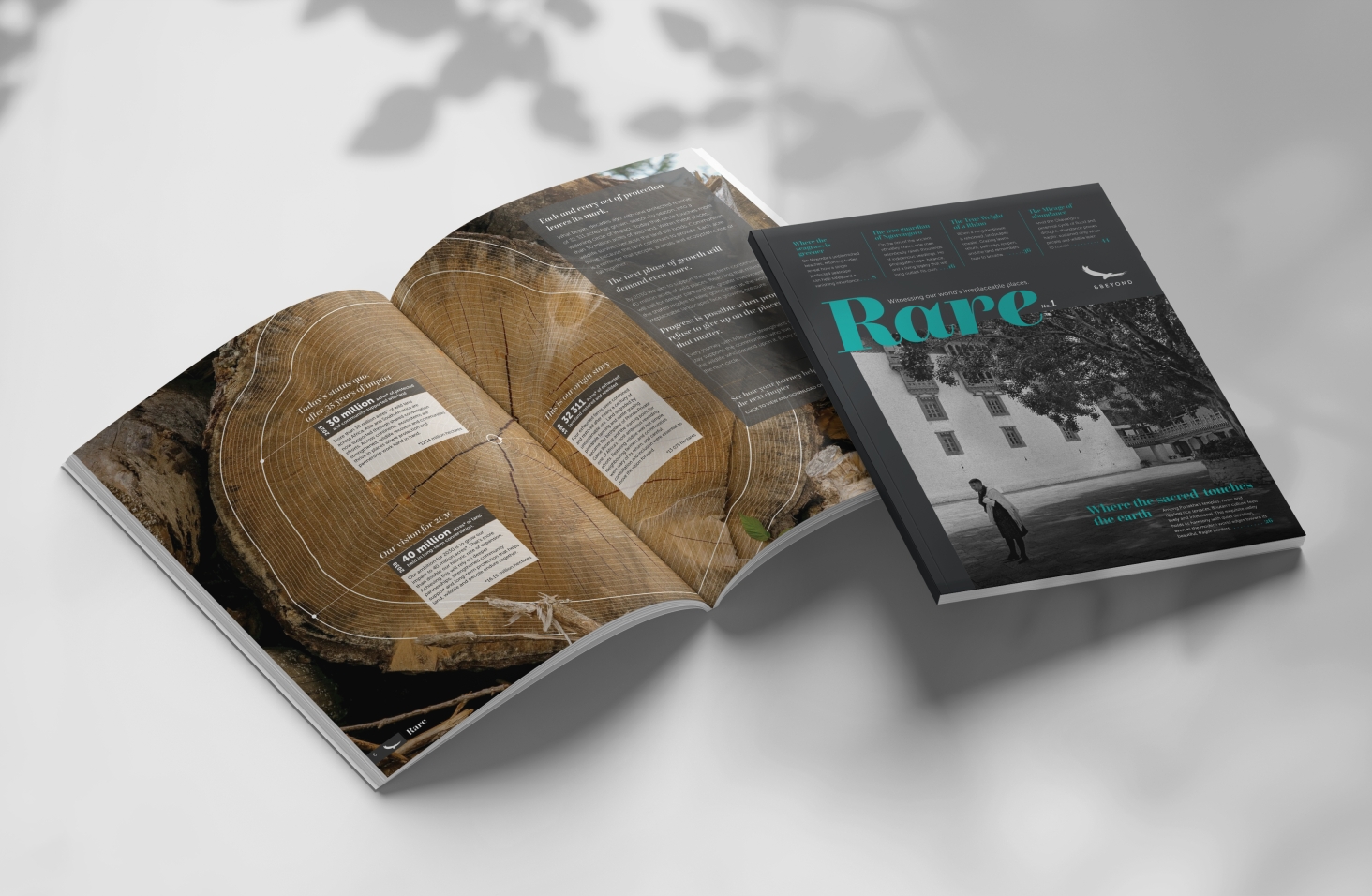
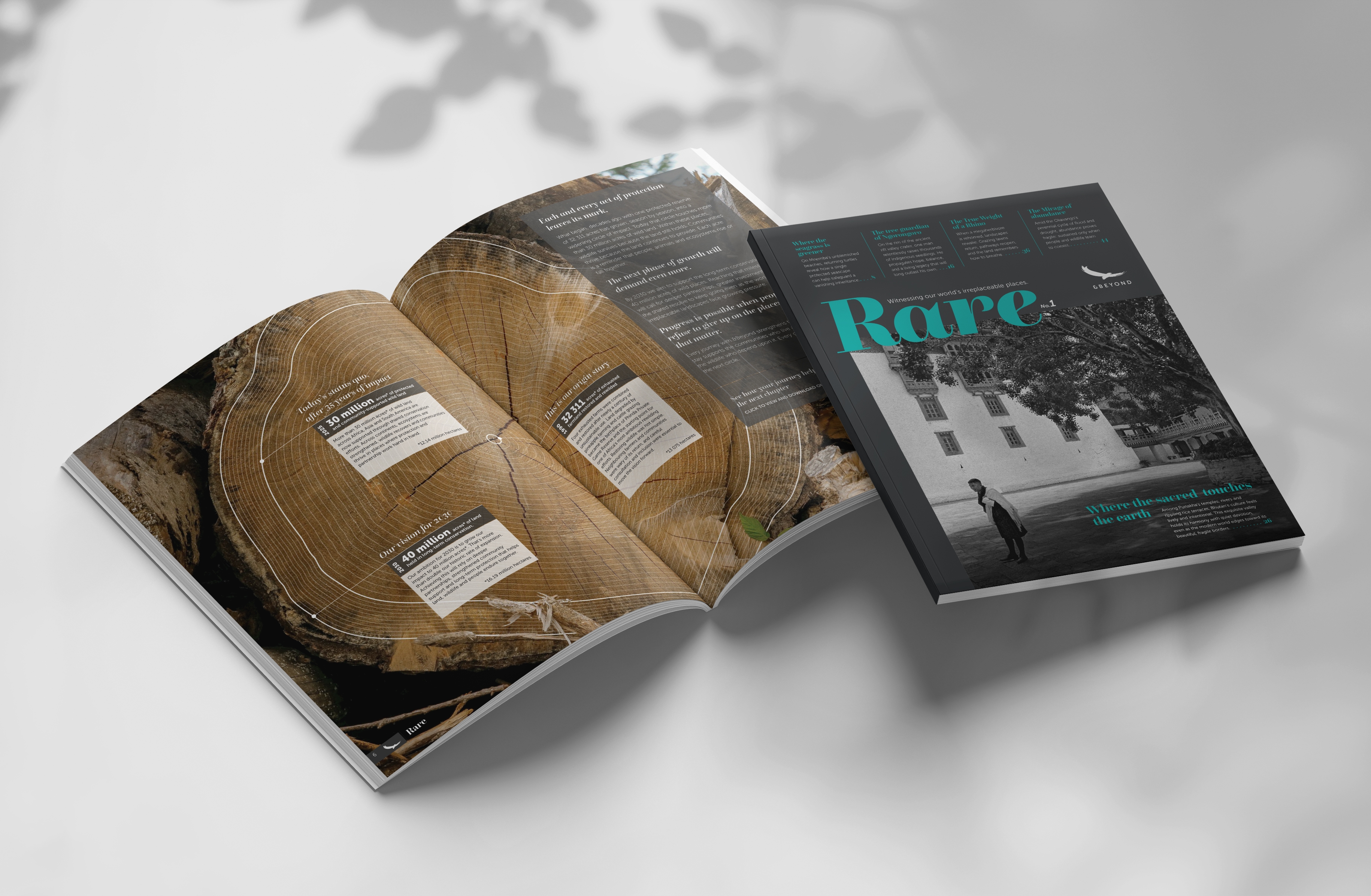
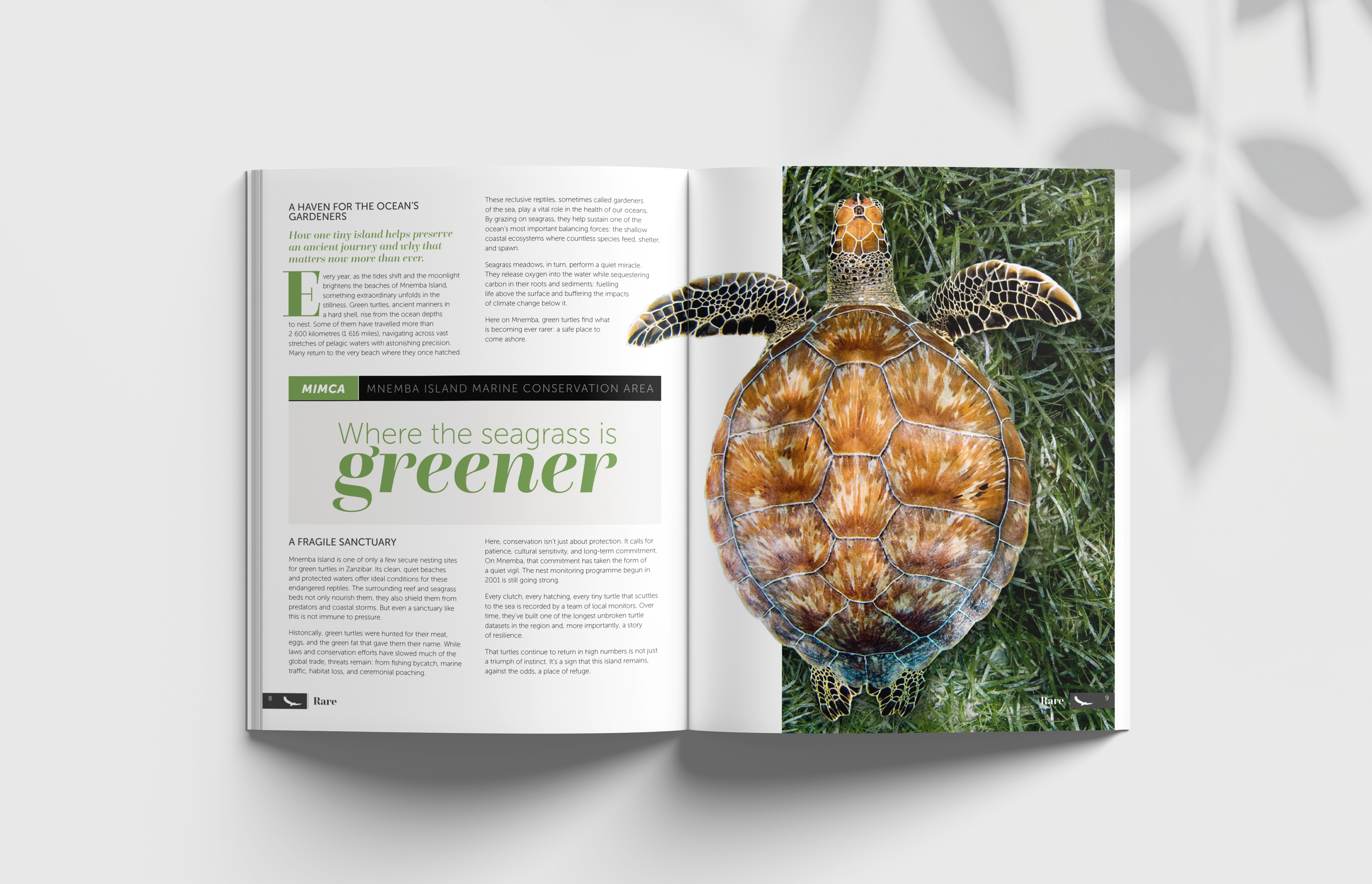
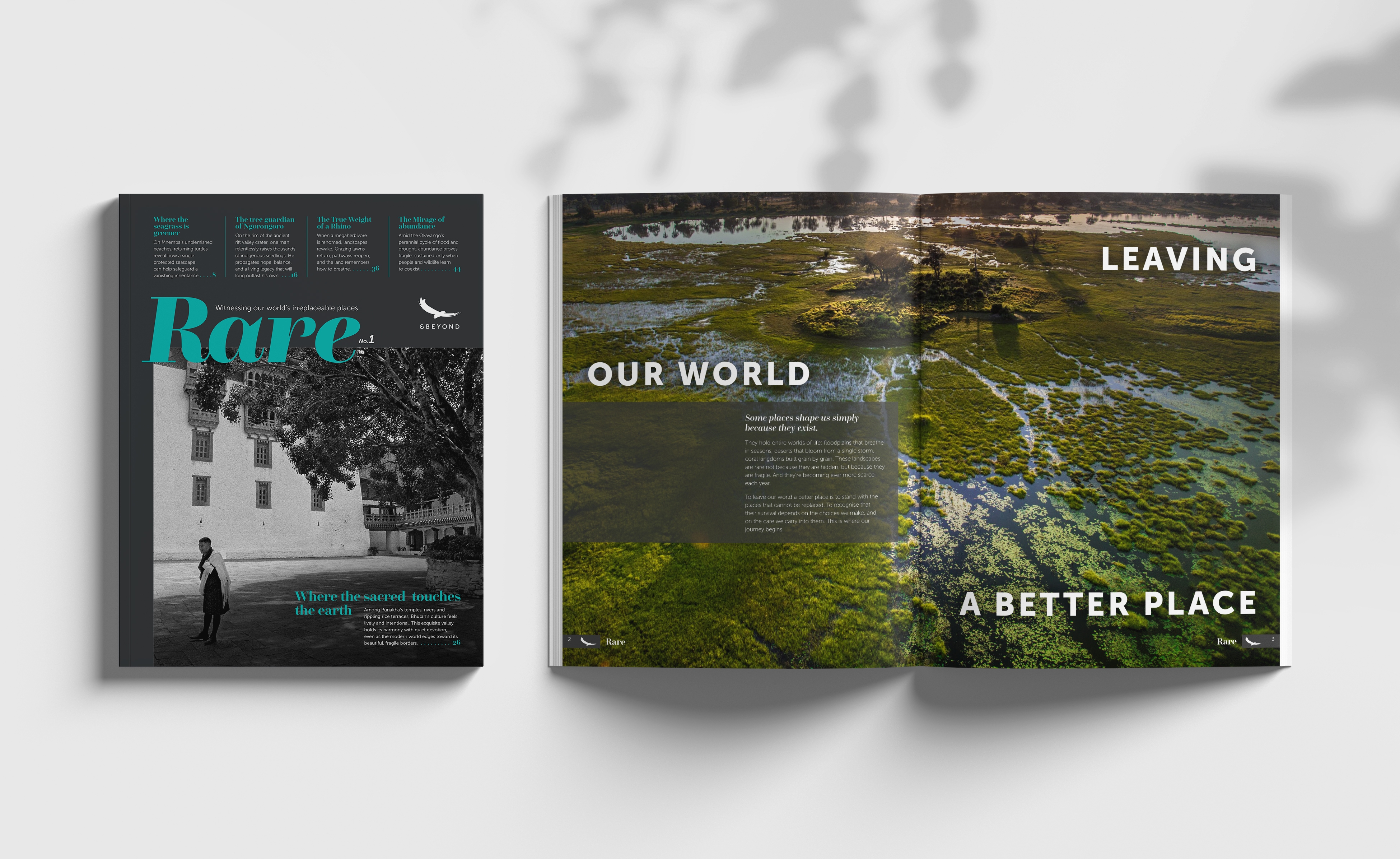
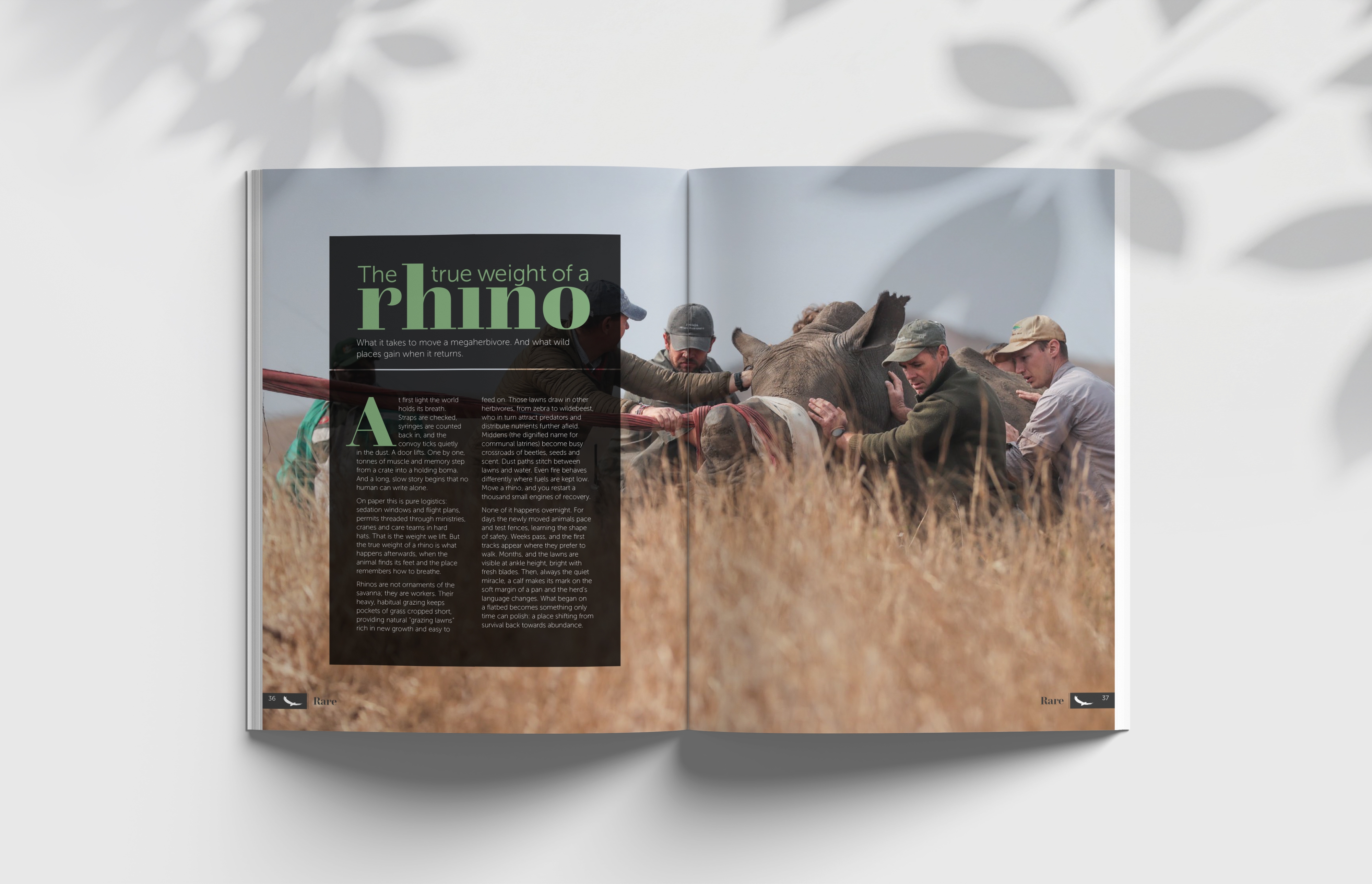
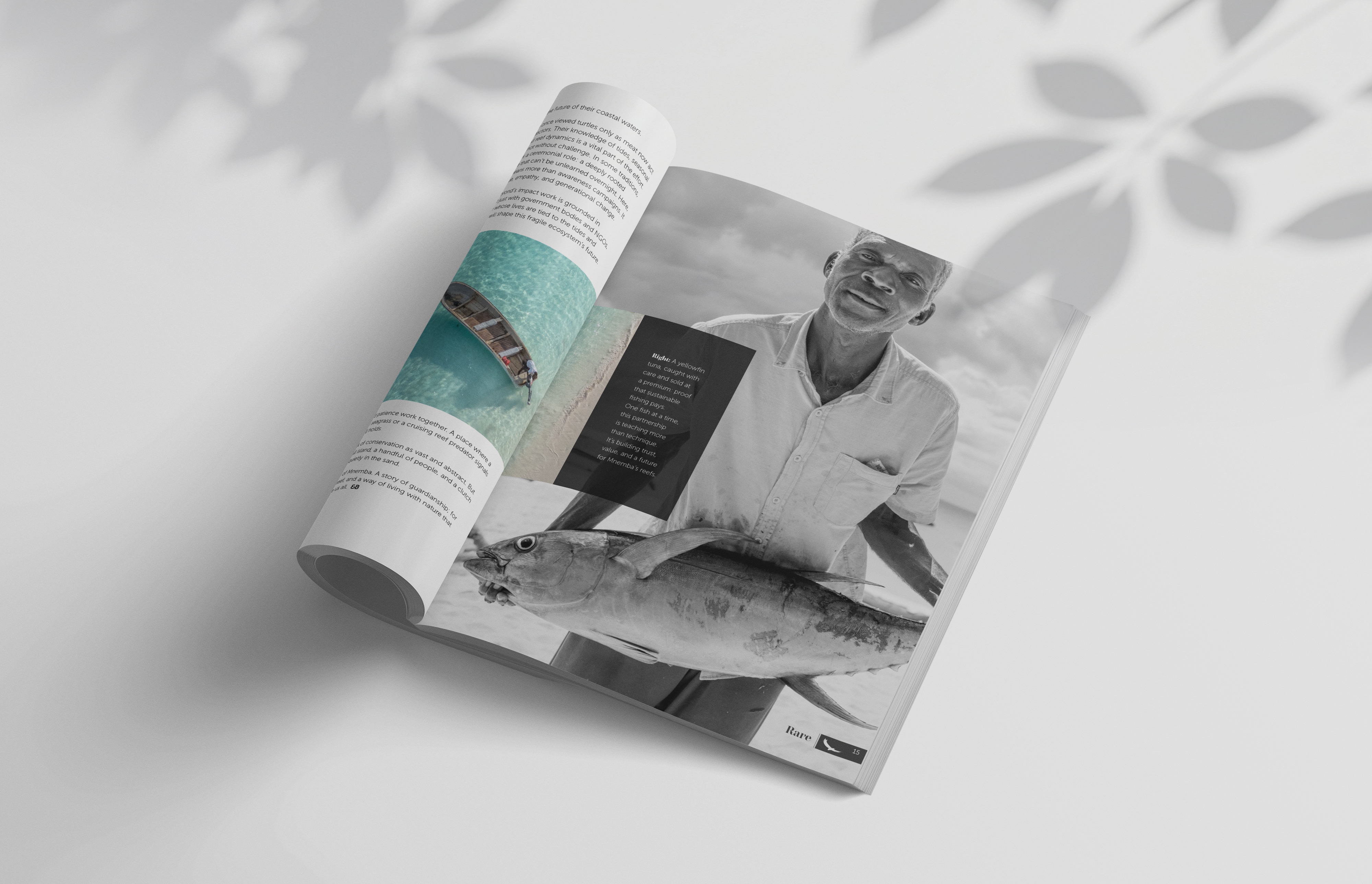
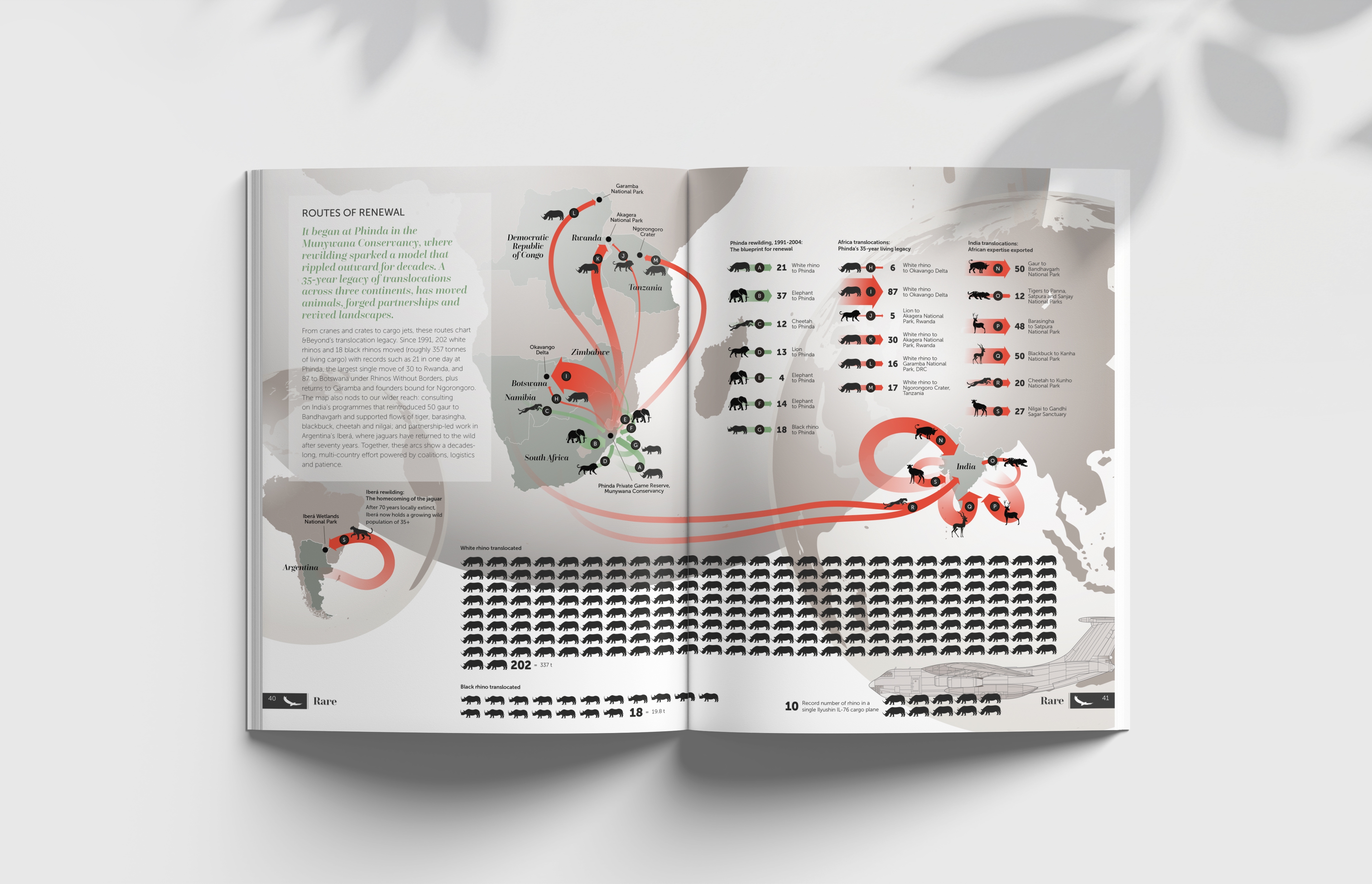
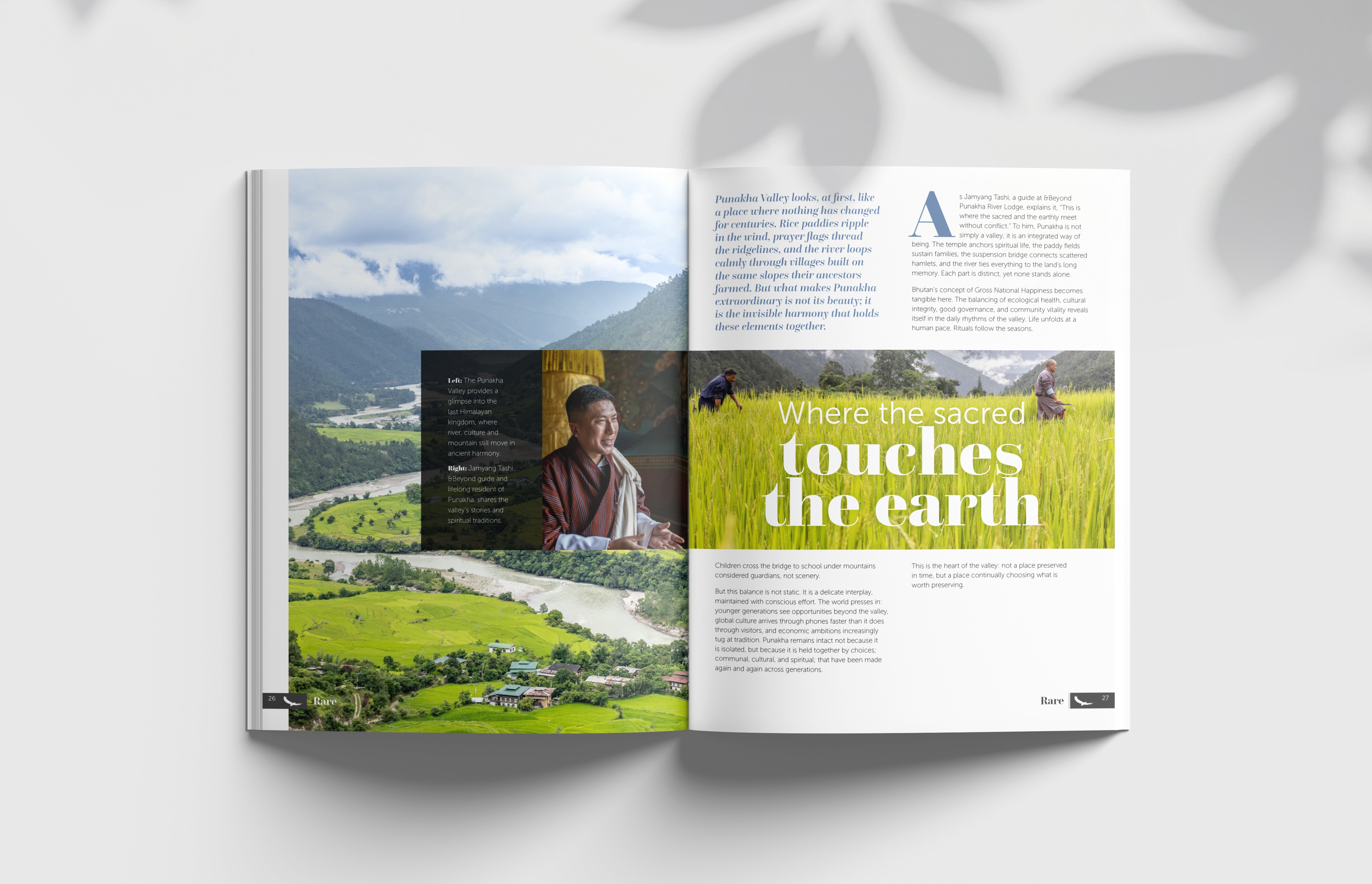
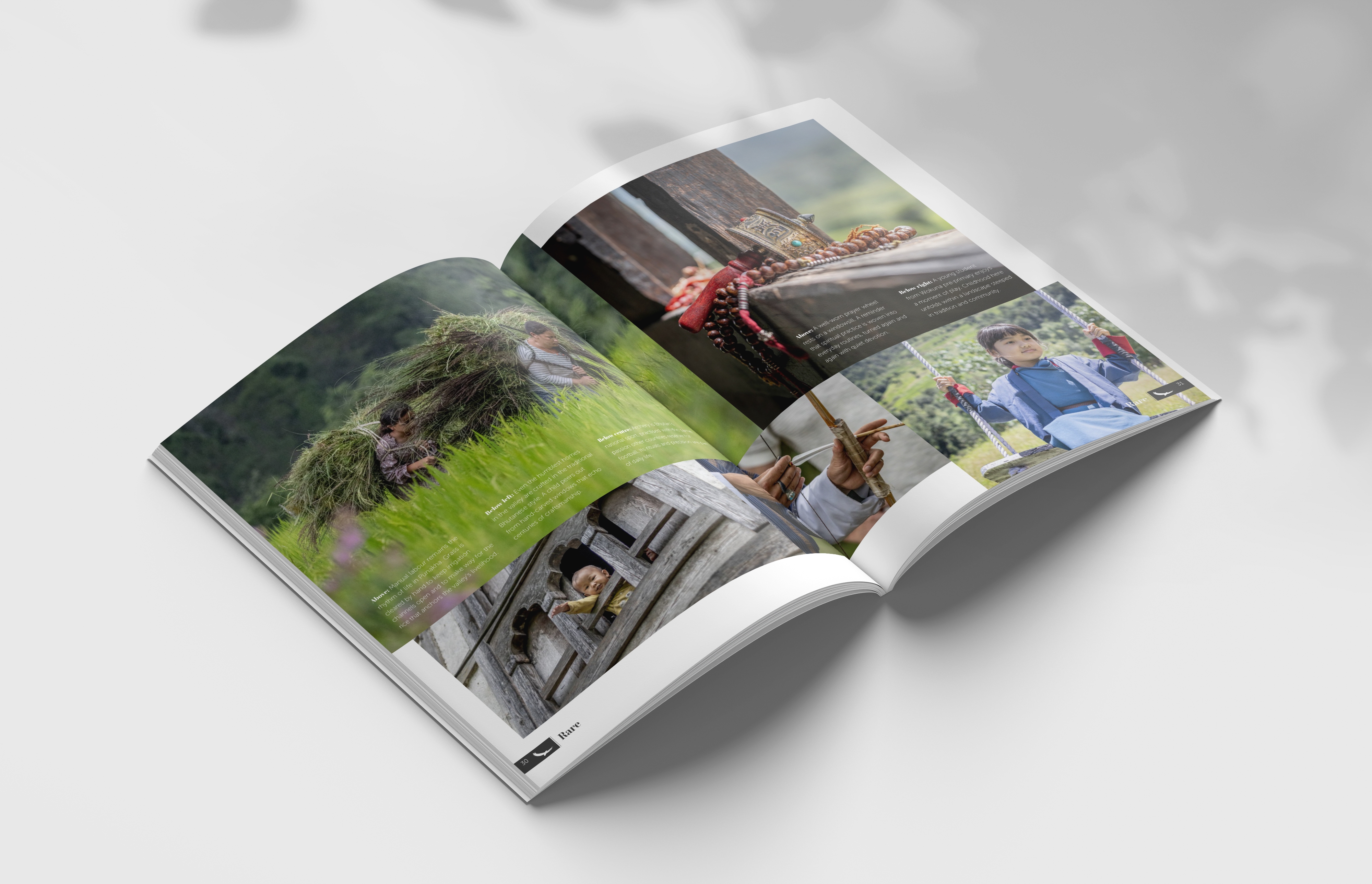
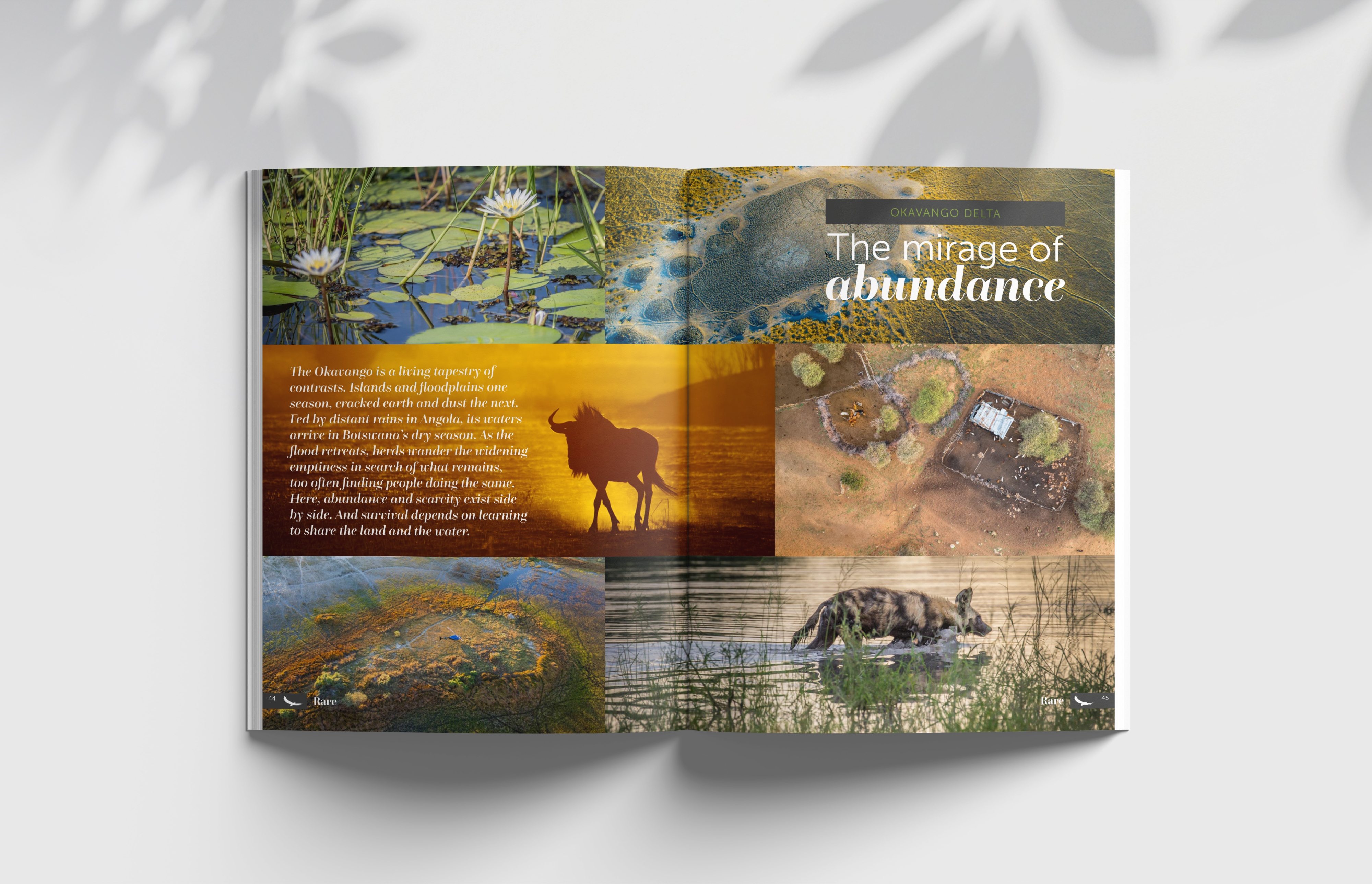
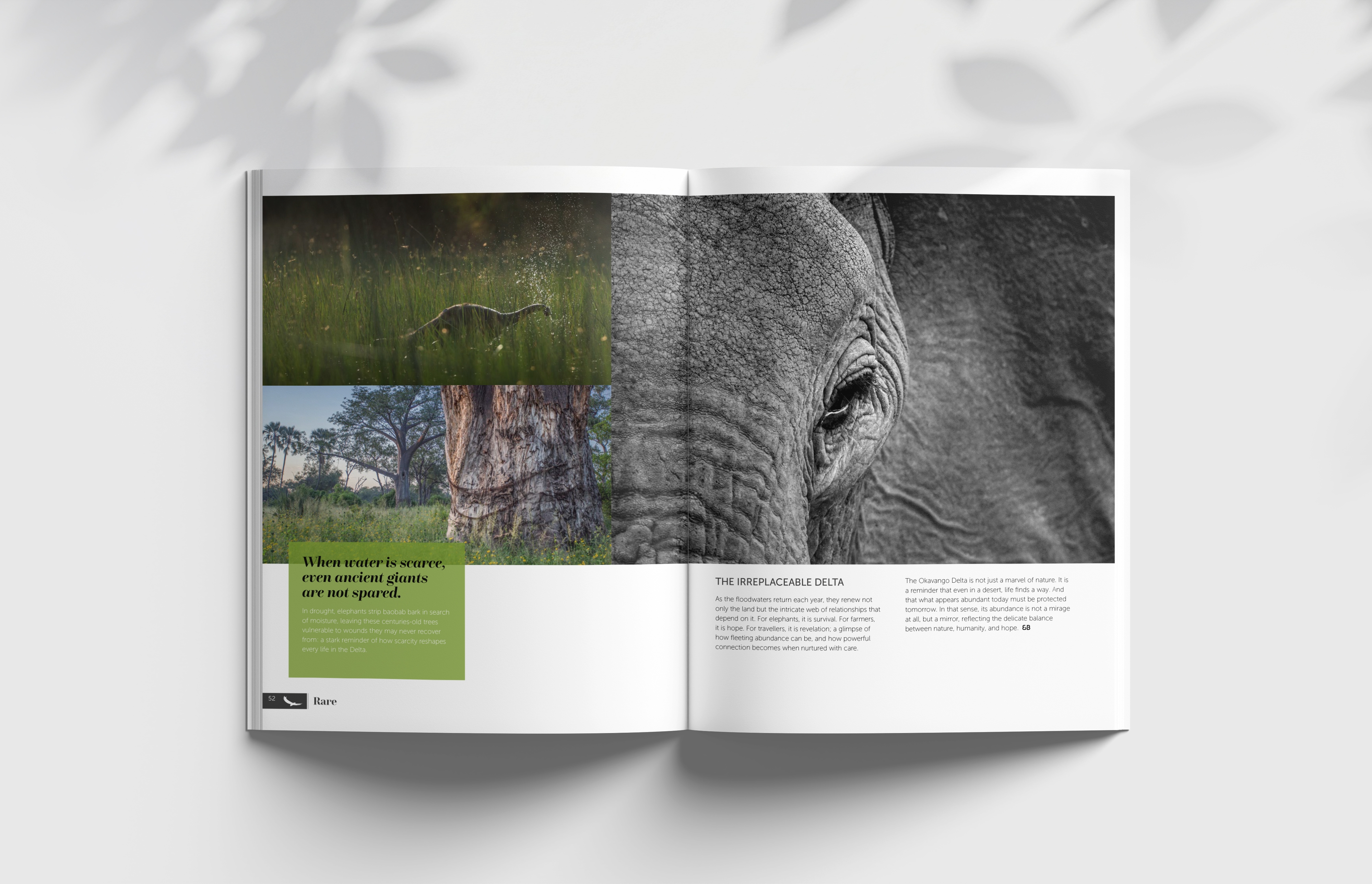
Rare is a guest-facing digest-sized magazine designed to transform passive interest into personal connection. Rather than reporting on conservation, it reveals it through story — inviting readers into rare and irreplaceable landscapes, and into the lives of the people working to protect them. Editorial in tone and immersive in structure, the magazine follows a narrative arc that places the reader inside real moments of challenge, care and change. It balances emotional storytelling with solid credibility, allowing facts to emerge through real-world experiences rather than boardroom theory. Distributed across 29 lodges on 3 continents, Rare becomes part of the &Beyond guest journey — a tactile, considered artefact that extends the experience beyond the stay. It is designed for bedside reading, but also as a keepsake: something to be taken home, revisited, and shared. In doing so, it carries the story forward — turning inspiration into ongoing awareness, advocacy and support.
Rare is a guest-facing digest-sized magazine designed to transform passive interest into personal connection. Rather than reporting on conservation, it reveals it through story — inviting readers into rare and irreplaceable landscapes, and into the lives of the people working to protect them. Editorial in tone and immersive in structure, the magazine follows a narrative arc that places the reader inside real moments of challenge, care and change. It balances emotional storytelling with solid credibility, allowing facts to emerge through real-world experiences rather than boardroom theory. Distributed across 29 lodges on 3 continents, Rare becomes part of the &Beyond guest journey — a tactile, considered artefact that extends the experience beyond the stay. It is designed for bedside reading, but also as a keepsake: something to be taken home, revisited, and shared. In doing so, it carries the story forward — turning inspiration into ongoing awareness, advocacy and support.
Project Innovation / Specification:
The innovation lies in reframing conservation communication from appeal to invitation. Rather than asking for support directly, the digest adopts a “soft sell” approach — prioritising meaning over messaging, and trust over persuasion. The content is deliberately crafted as a high-quality editorial experience. At digest-size, it is portable and convenient. It draws on the conventions of premium travel and narrative journalism — pacing, photography and story structure — to create something guests would choose to read, keep and share. This approach avoids the visual and verbal cues of fundraising. There are no overt calls for donations, no urgency-driven messaging, and no reduction of complex issues into simplified asks. Instead, it builds emotional proximity through real stories, allowing readers to arrive at their own sense of connection and responsibility. Physically, the publication is designed as a considered object — tactile, collectable, and enduring — reinforcing its role as a keepsake rather than collateral. It acts as a bridge between experience and action, extending the guest journey into a longer-term relationship with the precious landscapes it aims to protect.
The innovation lies in reframing conservation communication from appeal to invitation. Rather than asking for support directly, the digest adopts a “soft sell” approach — prioritising meaning over messaging, and trust over persuasion. The content is deliberately crafted as a high-quality editorial experience. At digest-size, it is portable and convenient. It draws on the conventions of premium travel and narrative journalism — pacing, photography and story structure — to create something guests would choose to read, keep and share. This approach avoids the visual and verbal cues of fundraising. There are no overt calls for donations, no urgency-driven messaging, and no reduction of complex issues into simplified asks. Instead, it builds emotional proximity through real stories, allowing readers to arrive at their own sense of connection and responsibility. Physically, the publication is designed as a considered object — tactile, collectable, and enduring — reinforcing its role as a keepsake rather than collateral. It acts as a bridge between experience and action, extending the guest journey into a longer-term relationship with the precious landscapes it aims to protect.
Project Sustainability Approach:
Sustainability was considered both in production and in purpose. The publication is printed on responsibly sourced paper, with careful attention to material choices that minimise environmental impact while maintaining a premium, long-lasting finish. More importantly, the project is designed to reduce waste through relevance and longevity. By creating an object of genuine value — editorially rich, visually compelling, and emotionally resonant — the magazine avoids the short lifecycle of typical printed materials. It is intended to be kept, not discarded. Content strategy also plays a critical role. By focusing on timeless storytelling rather than reporting, the digest creates a deeper emotional connection, encouraging guests to see conservation not as charity, but as shared responsibility. This approach aligns with a model where travel supports the protection of land, wildlife and communities — reinforcing the idea that meaningful engagement can extend well beyond the point of consumption.
Sustainability was considered both in production and in purpose. The publication is printed on responsibly sourced paper, with careful attention to material choices that minimise environmental impact while maintaining a premium, long-lasting finish. More importantly, the project is designed to reduce waste through relevance and longevity. By creating an object of genuine value — editorially rich, visually compelling, and emotionally resonant — the magazine avoids the short lifecycle of typical printed materials. It is intended to be kept, not discarded. Content strategy also plays a critical role. By focusing on timeless storytelling rather than reporting, the digest creates a deeper emotional connection, encouraging guests to see conservation not as charity, but as shared responsibility. This approach aligns with a model where travel supports the protection of land, wildlife and communities — reinforcing the idea that meaningful engagement can extend well beyond the point of consumption.
Local and Regional Impacts of the Project:
The digest strengthens the connection between guests and the landscapes and communities they visit, encouraging a deeper understanding of local conservation and community initiatives. By telling real stories of people on the ground, it brings visibility to regional challenges and successes, fostering pride and awareness. As guests take the magazine home, its impact extends globally — sustaining interest, encouraging advocacy, and supporting future funding for projects across Africa, Asia and South America. In this way, local stories gain international reach, helping to secure long-term support for precious landscapes that cannot be replaced.
The digest strengthens the connection between guests and the landscapes and communities they visit, encouraging a deeper understanding of local conservation and community initiatives. By telling real stories of people on the ground, it brings visibility to regional challenges and successes, fostering pride and awareness. As guests take the magazine home, its impact extends globally — sustaining interest, encouraging advocacy, and supporting future funding for projects across Africa, Asia and South America. In this way, local stories gain international reach, helping to secure long-term support for precious landscapes that cannot be replaced.