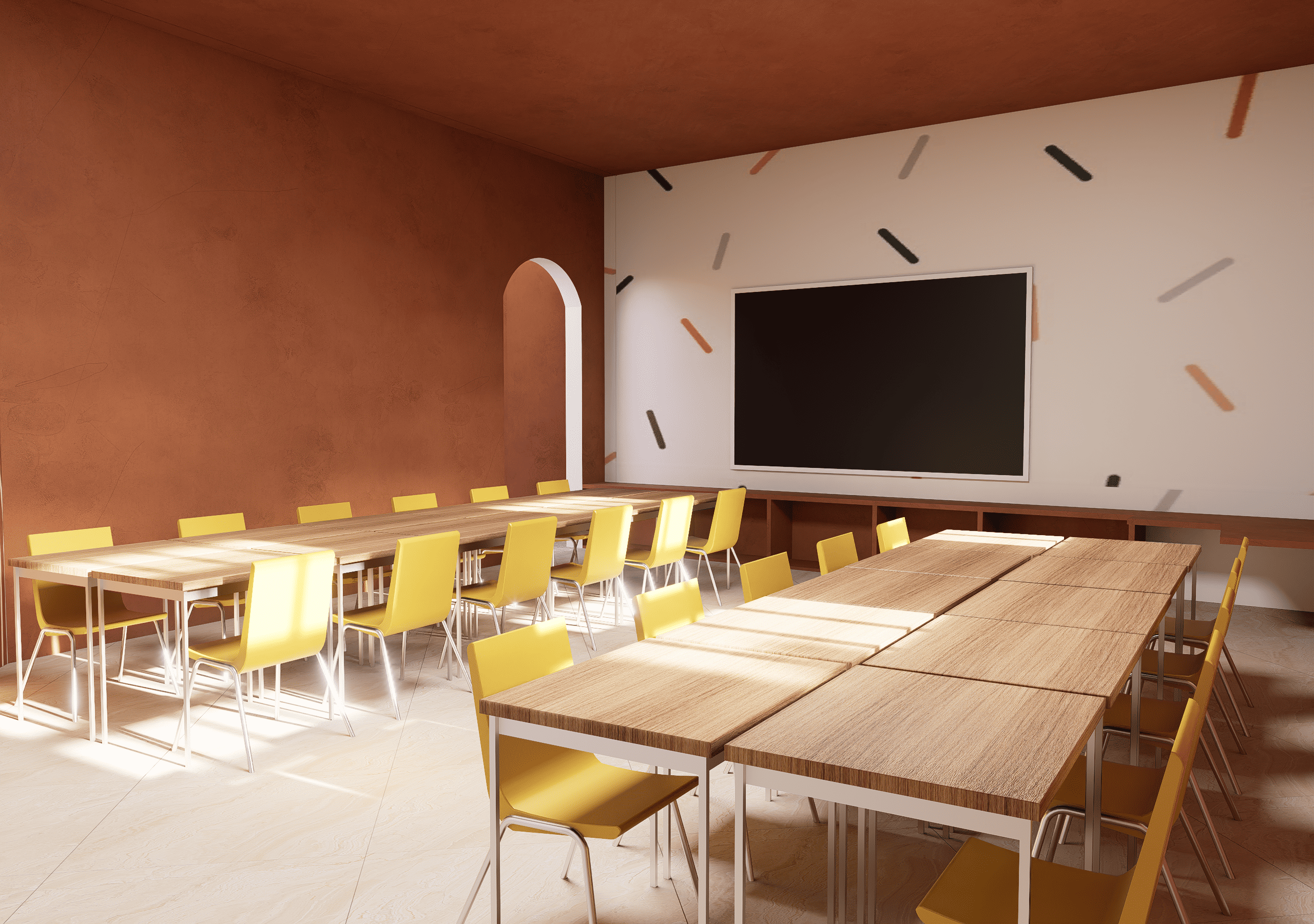
The Nursery School
Prize(s):
Honorable Mention 2026 INTERIOR DESIGN / Public Building Interior
School / University Name:Africa Design School
Lead Designer(s) Name(s):AKINDES Trinita, BODJRENOU Marie-Diane, SEDOGBO Elodie
Project Location:Dabo, Senegal
Design Status:Concept
Project Description:
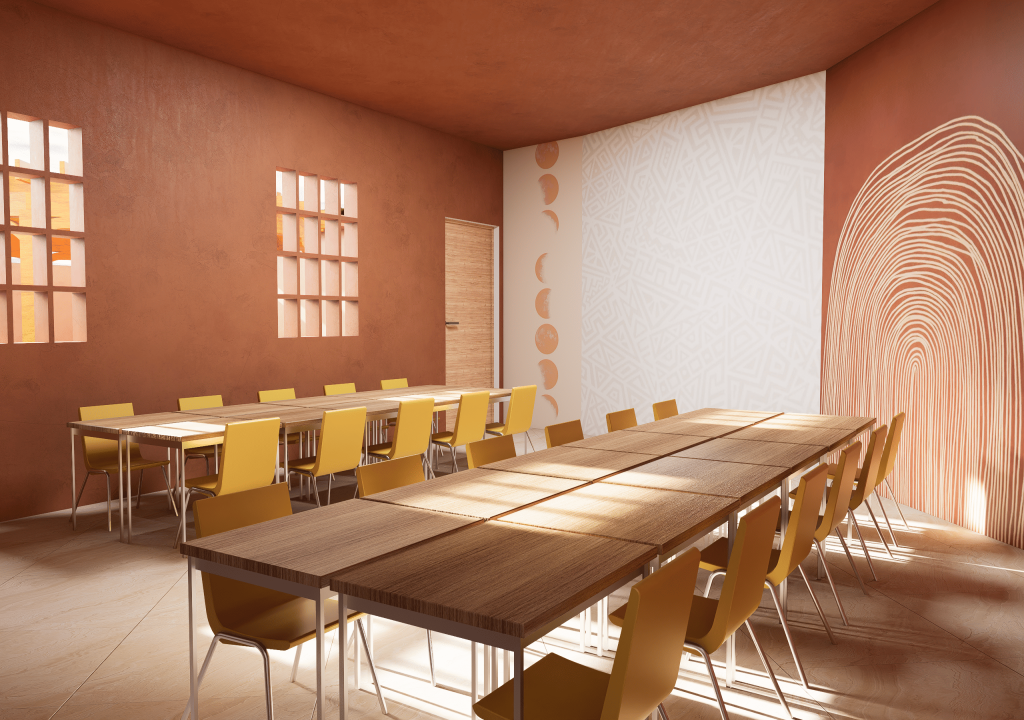
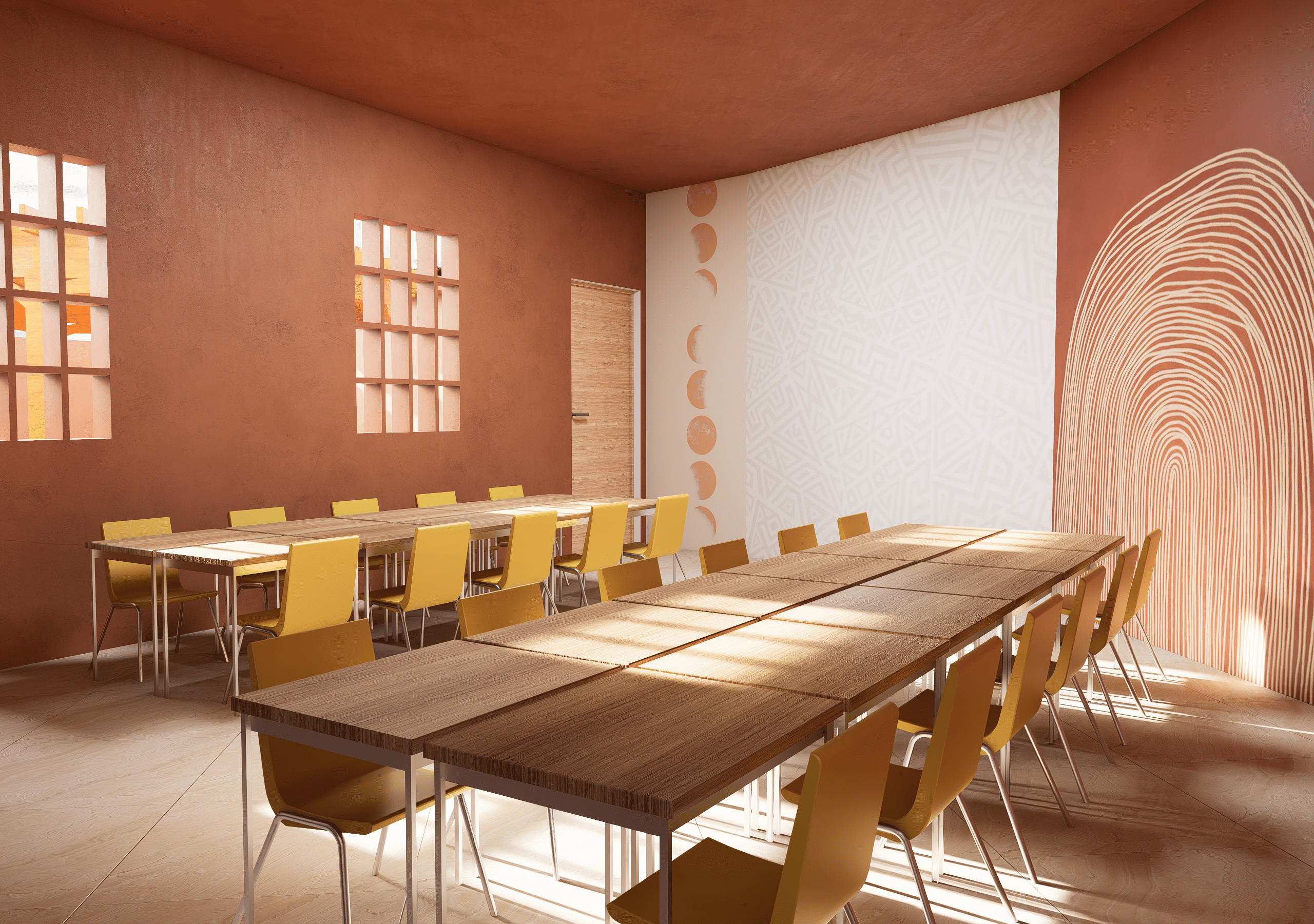
Preschool education remains a privilege in many rural areas of Sub-Saharan Africa. In Dabo, Senegal, no infrastructure dedicated to early childhood currently exists, despite sustained population growth and a predominantly young demographic. The region also faces harsh climatic conditions, with temperatures reaching up to 40°C and limited access to water and basic services. In this context, children grow up in environments that often hinder their educational and developmental opportunities. The project proposes the creation of a preschool designed to support the psychophysical development of children while remaining deeply rooted in local culture. Inspired by traditional architecture and vernacular building techniques, the design integrates flexible spaces adapted to learning, play, and collective activities. “La Maison des Maternelles” is conceived as more than a school: it recreates the warmth and safety of a home-like environment where children can grow, learn, and interact in a nurturing setting that supports their physical, emotional, and cognitive development.
Preschool education remains a privilege in many rural areas of Sub-Saharan Africa. In Dabo, Senegal, no infrastructure dedicated to early childhood currently exists, despite sustained population growth and a predominantly young demographic. The region also faces harsh climatic conditions, with temperatures reaching up to 40°C and limited access to water and basic services. In this context, children grow up in environments that often hinder their educational and developmental opportunities. The project proposes the creation of a preschool designed to support the psychophysical development of children while remaining deeply rooted in local culture. Inspired by traditional architecture and vernacular building techniques, the design integrates flexible spaces adapted to learning, play, and collective activities. “La Maison des Maternelles” is conceived as more than a school: it recreates the warmth and safety of a home-like environment where children can grow, learn, and interact in a nurturing setting that supports their physical, emotional, and cognitive development.
Project Innovation / Specification:
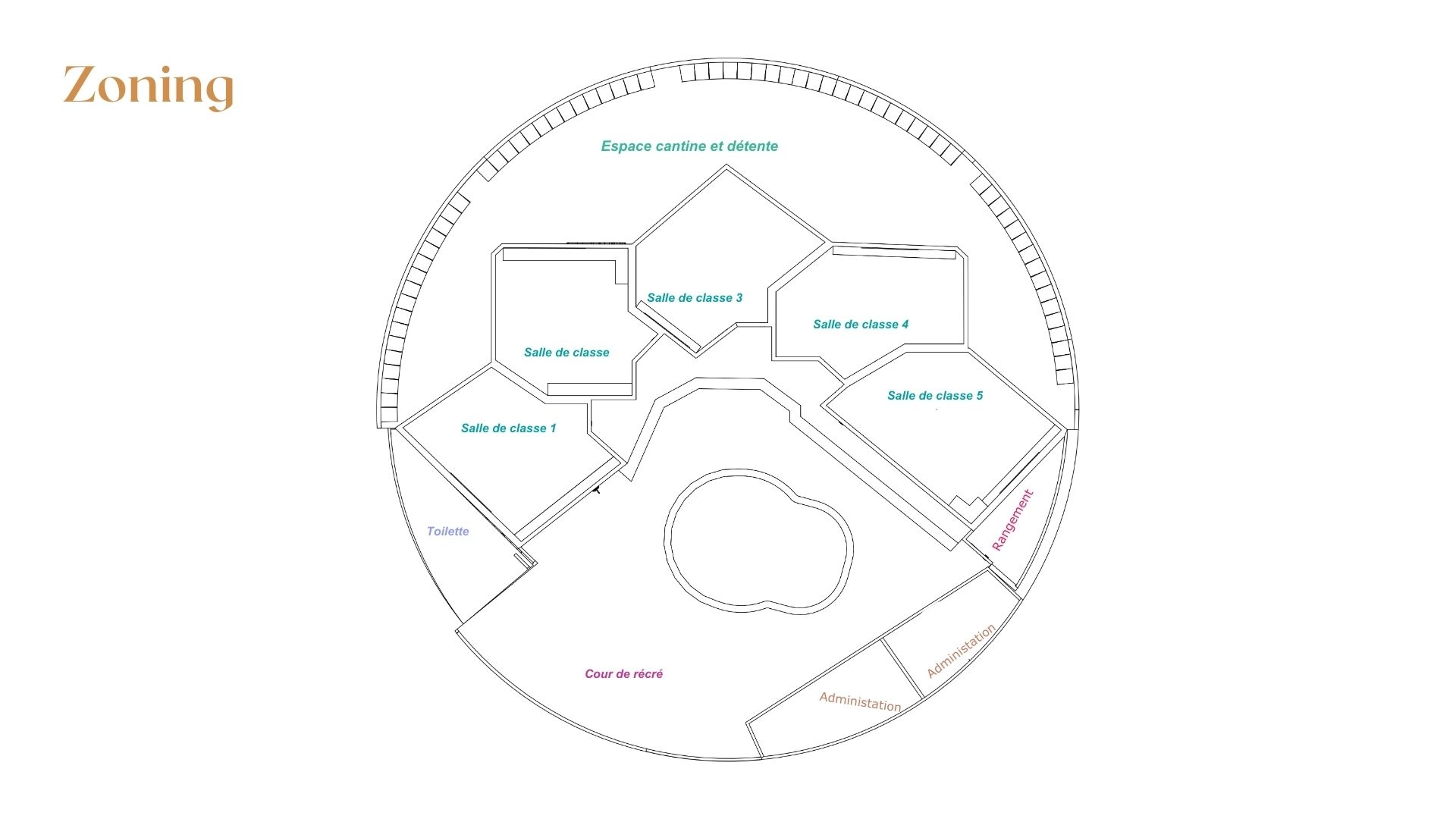
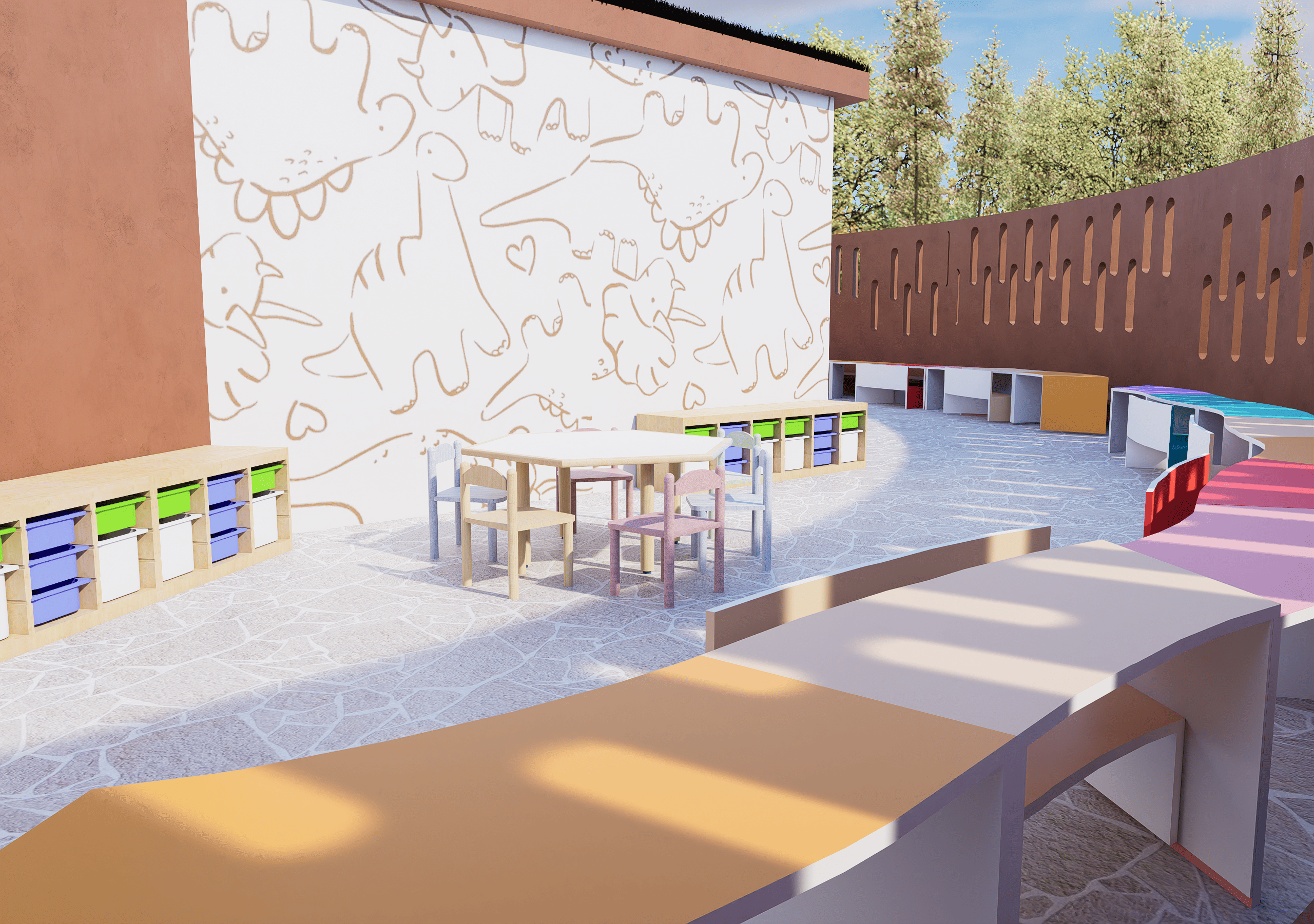
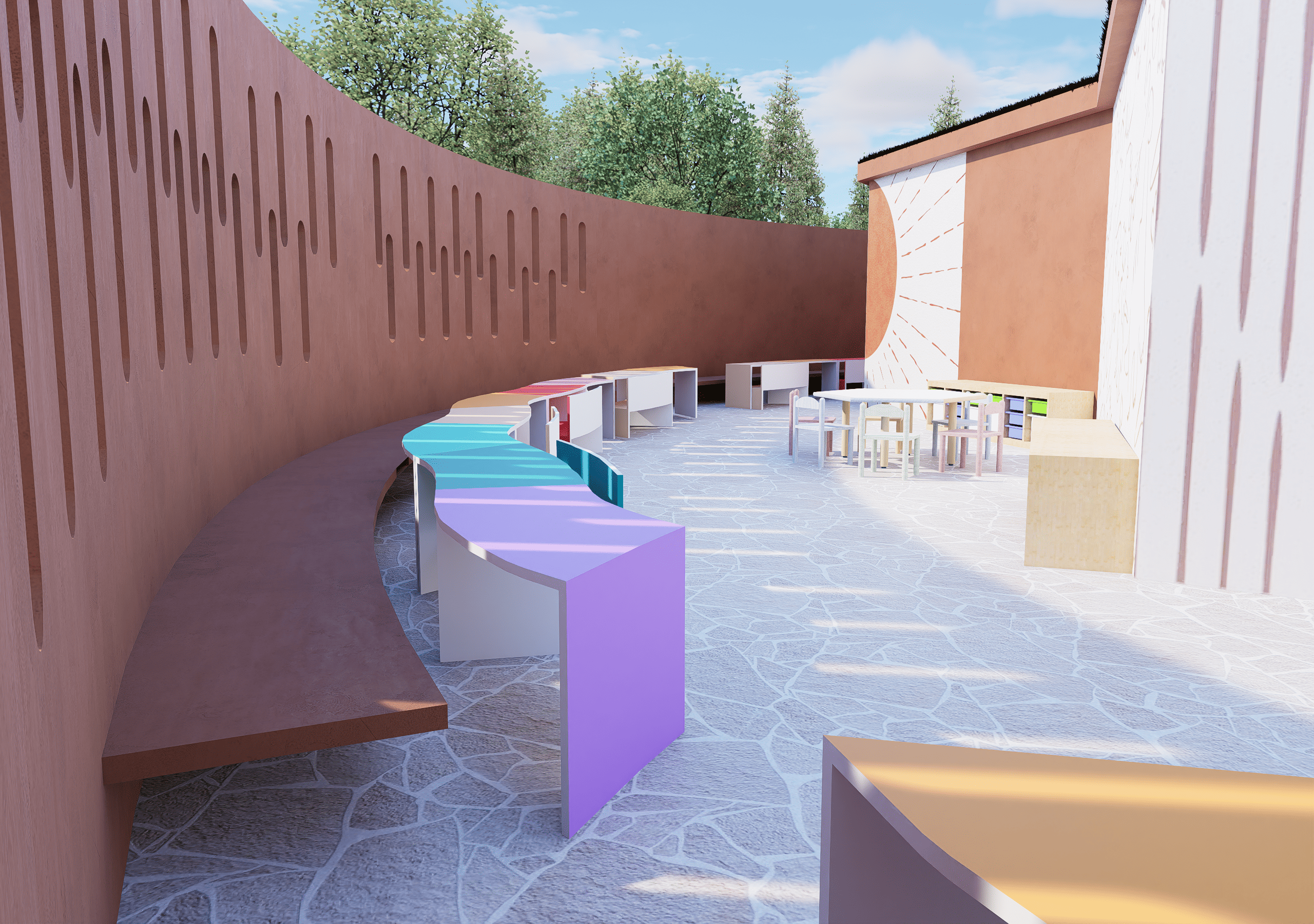
The project introduces an innovative approach to early childhood education by combining architecture, culture, and pedagogy. Instead of a conventional institutional model, the preschool is conceived as a “home for learning,” inspired by the spatial qualities of traditional dwellings. This approach creates an environment that feels familiar, safe, and welcoming for young children. The spatial organization encourages exploration, autonomy, and social interaction through flexible and multifunctional spaces such as reading corners, play areas, and collective activity zones. By drawing inspiration from local construction knowledge and adapting it to contemporary educational needs, the project reinterprets vernacular architecture in a way that is both culturally meaningful and functionally suited to early childhood development.
The project introduces an innovative approach to early childhood education by combining architecture, culture, and pedagogy. Instead of a conventional institutional model, the preschool is conceived as a “home for learning,” inspired by the spatial qualities of traditional dwellings. This approach creates an environment that feels familiar, safe, and welcoming for young children. The spatial organization encourages exploration, autonomy, and social interaction through flexible and multifunctional spaces such as reading corners, play areas, and collective activity zones. By drawing inspiration from local construction knowledge and adapting it to contemporary educational needs, the project reinterprets vernacular architecture in a way that is both culturally meaningful and functionally suited to early childhood development.
Project Sustainability Approach:
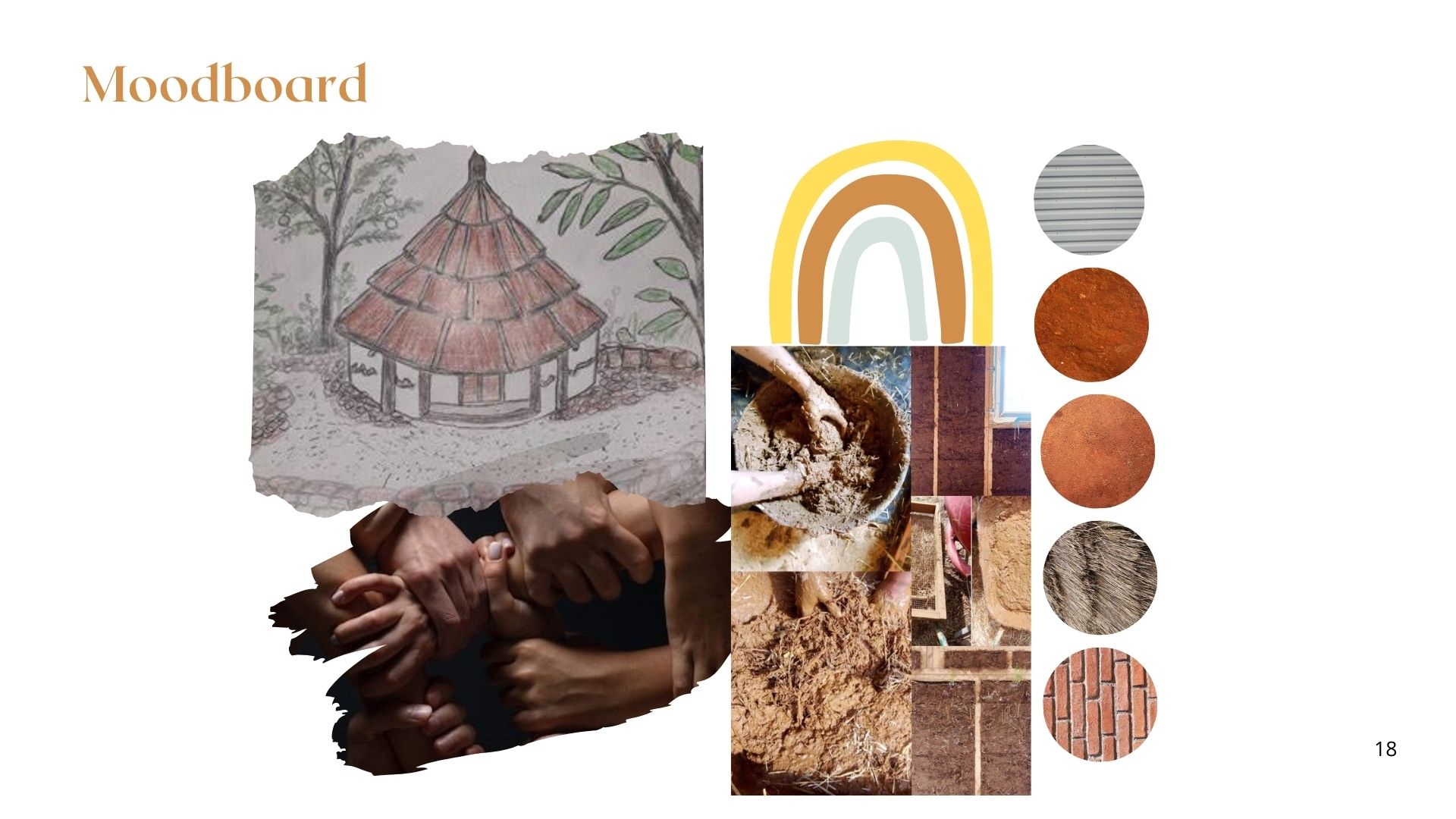
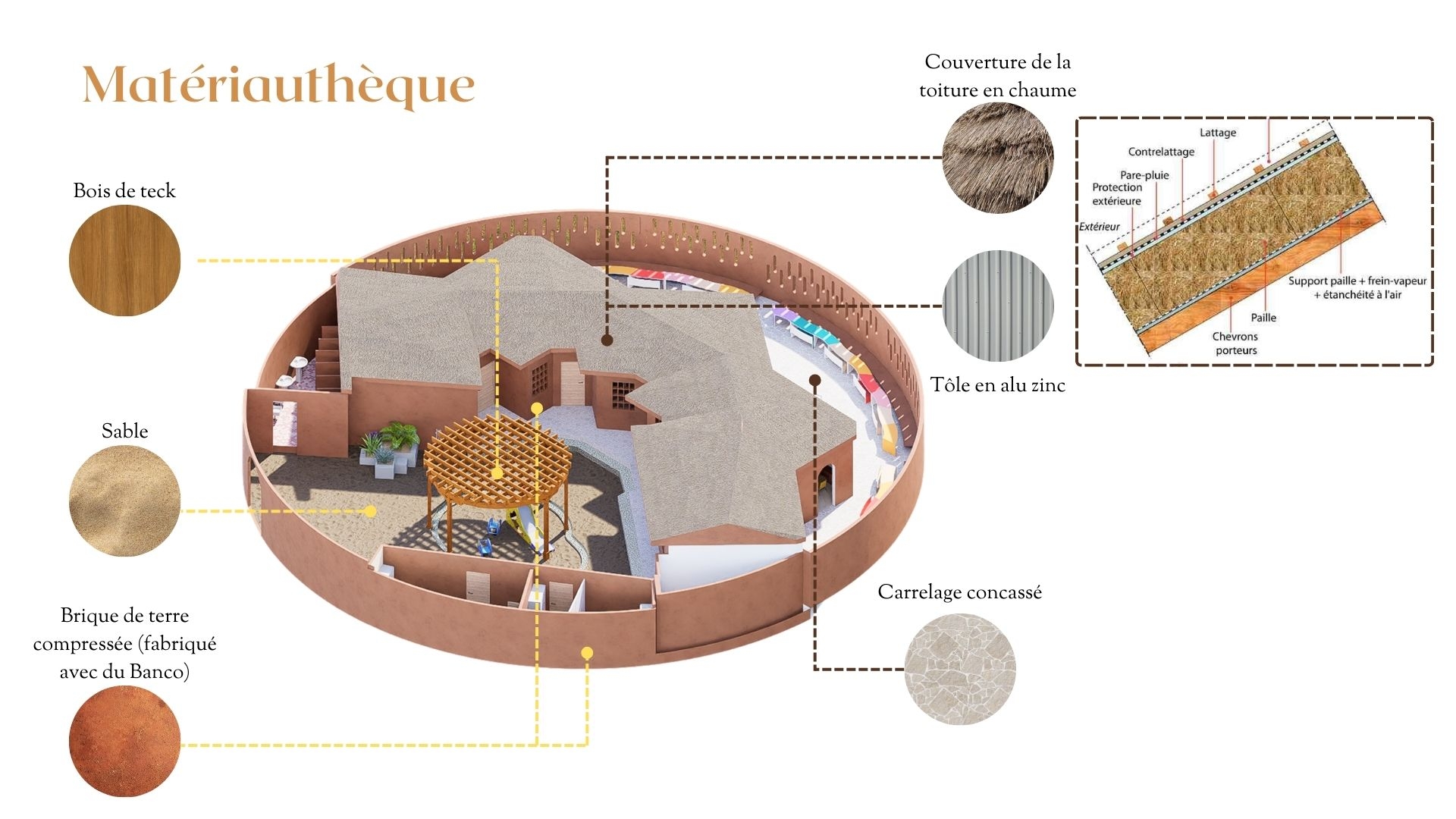
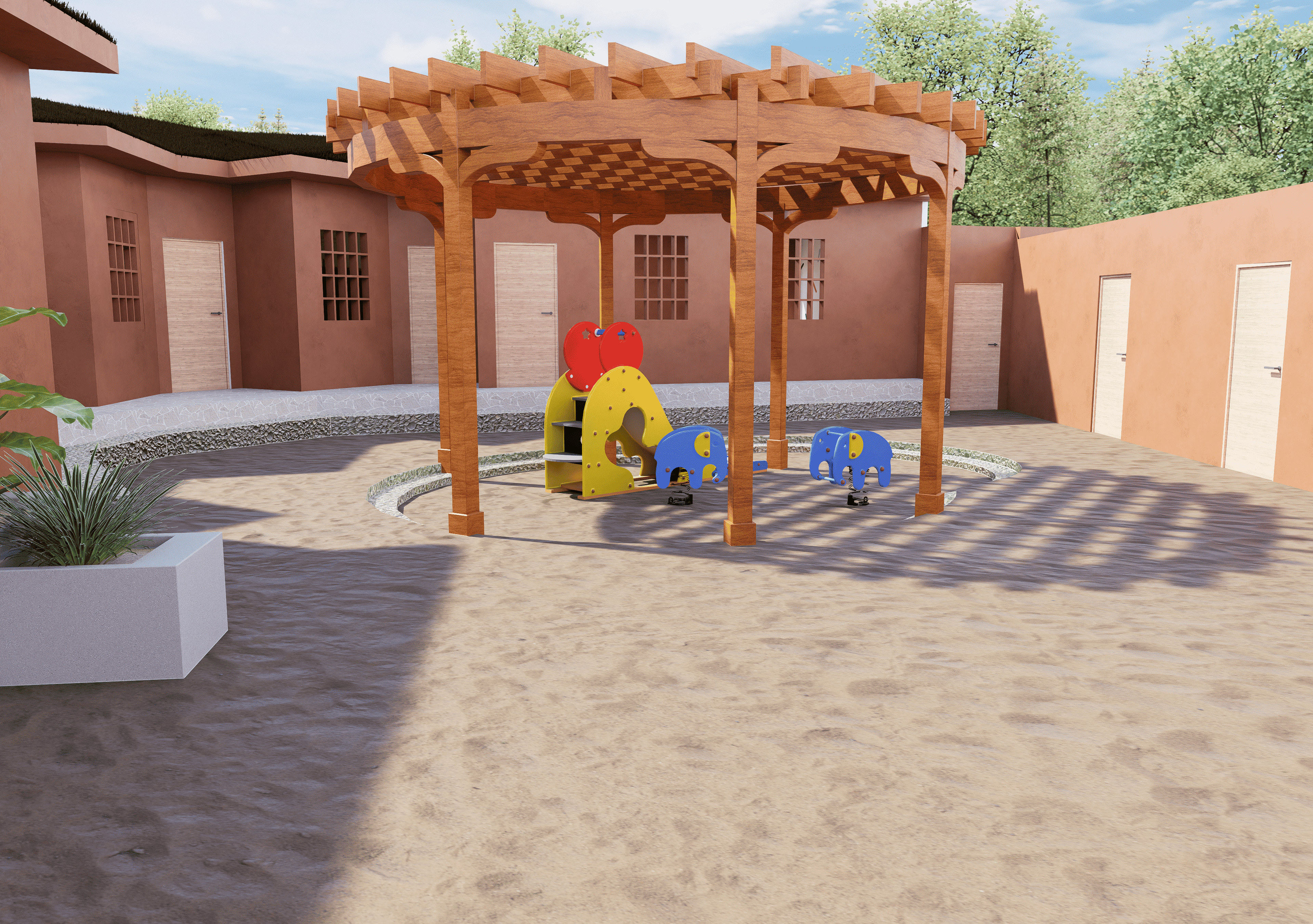
The sustainability strategy of the project relies on climate-responsive design and the use of local materials and construction techniques. Inspired by traditional building methods, the school incorporates compressed earth walls, thatch weaving, and natural materials such as banco, wood, and laterite. These materials reduce the environmental footprint of construction while strengthening the connection between architecture and local identity. Their thermal properties also help regulate indoor temperatures, an essential factor in a region where temperatures can reach 40°C. The design prioritizes natural ventilation and shaded outdoor areas to create a comfortable and healthy environment for children. By relying on locally available resources and passive environmental strategies, the project promotes a sustainable and resilient architectural approach adapted to the climatic and social context.
The sustainability strategy of the project relies on climate-responsive design and the use of local materials and construction techniques. Inspired by traditional building methods, the school incorporates compressed earth walls, thatch weaving, and natural materials such as banco, wood, and laterite. These materials reduce the environmental footprint of construction while strengthening the connection between architecture and local identity. Their thermal properties also help regulate indoor temperatures, an essential factor in a region where temperatures can reach 40°C. The design prioritizes natural ventilation and shaded outdoor areas to create a comfortable and healthy environment for children. By relying on locally available resources and passive environmental strategies, the project promotes a sustainable and resilient architectural approach adapted to the climatic and social context.
Local and Regional Impacts of the Project:
The project aims to improve access to early childhood education in Dabo by providing a safe and stimulating learning environment for young children. Beyond education, the school is designed as a community asset that can strengthen social ties and support local development. By using local materials and traditional construction techniques, the project also encourages the involvement of local craftsmen and promotes the transmission of vernacular knowledge. At a broader scale, the project proposes a replicable model for sustainable preschool infrastructure that could be adapted to other rural communities facing similar climatic and social challenges.
The project aims to improve access to early childhood education in Dabo by providing a safe and stimulating learning environment for young children. Beyond education, the school is designed as a community asset that can strengthen social ties and support local development. By using local materials and traditional construction techniques, the project also encourages the involvement of local craftsmen and promotes the transmission of vernacular knowledge. At a broader scale, the project proposes a replicable model for sustainable preschool infrastructure that could be adapted to other rural communities facing similar climatic and social challenges.