Afrika Hub Brand Identity
Prize(s):
WINNER 2026 Print & Digital / Logo, Trademark and Symbol Design
Lead Designer(s) Name(s):Taurai Valerie Mtake
Design Status:Concept
Project Description:
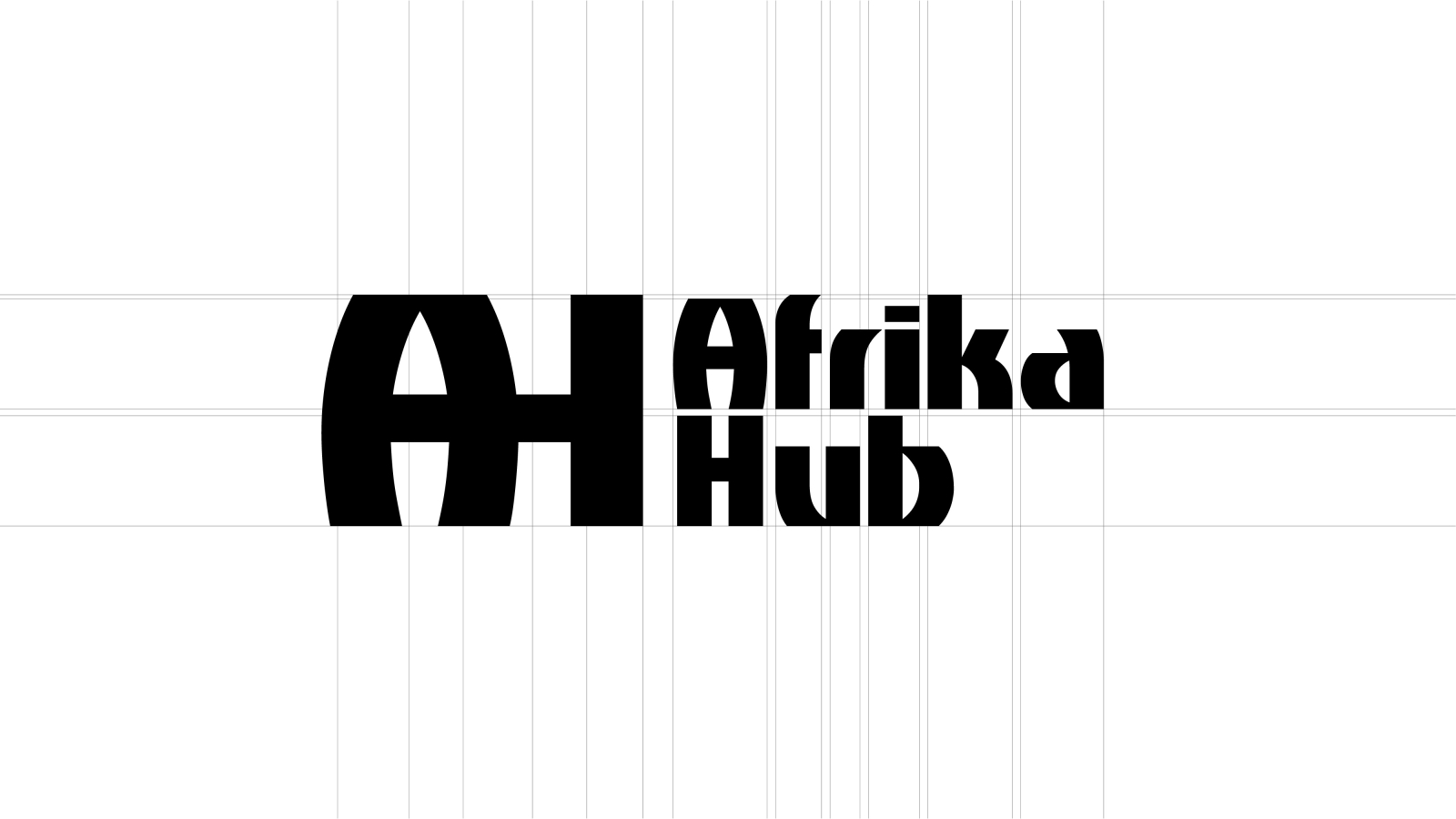
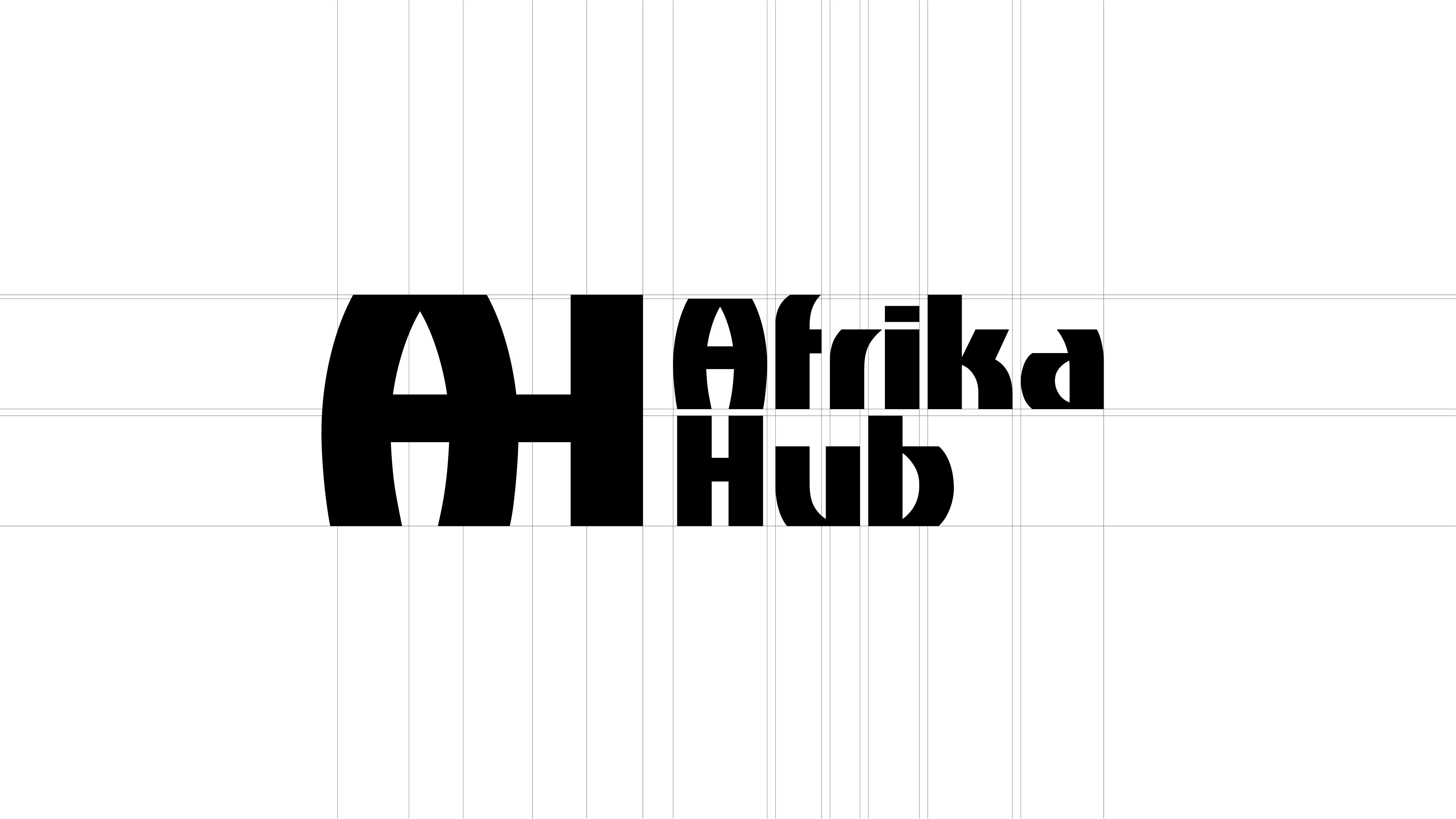
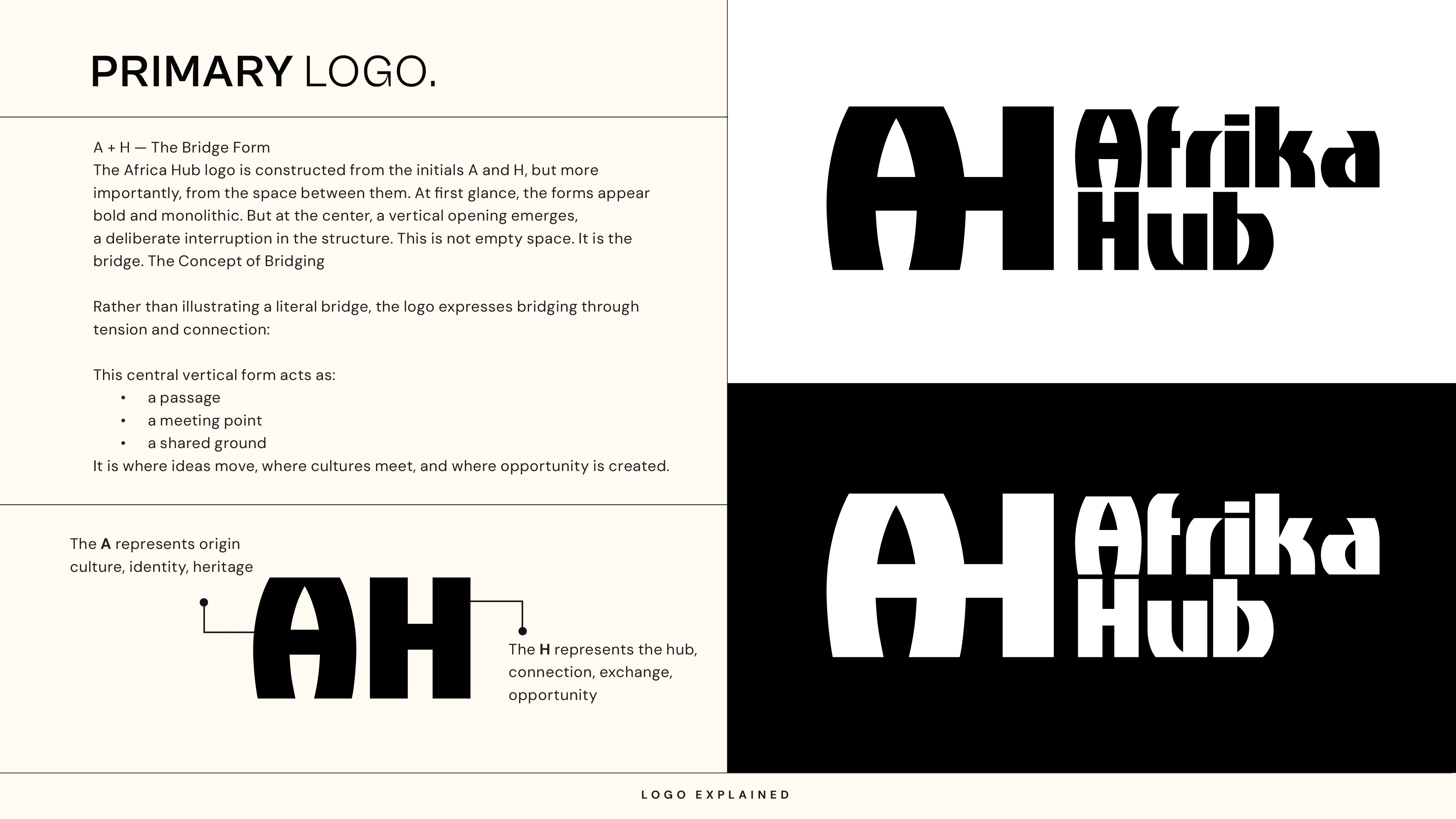
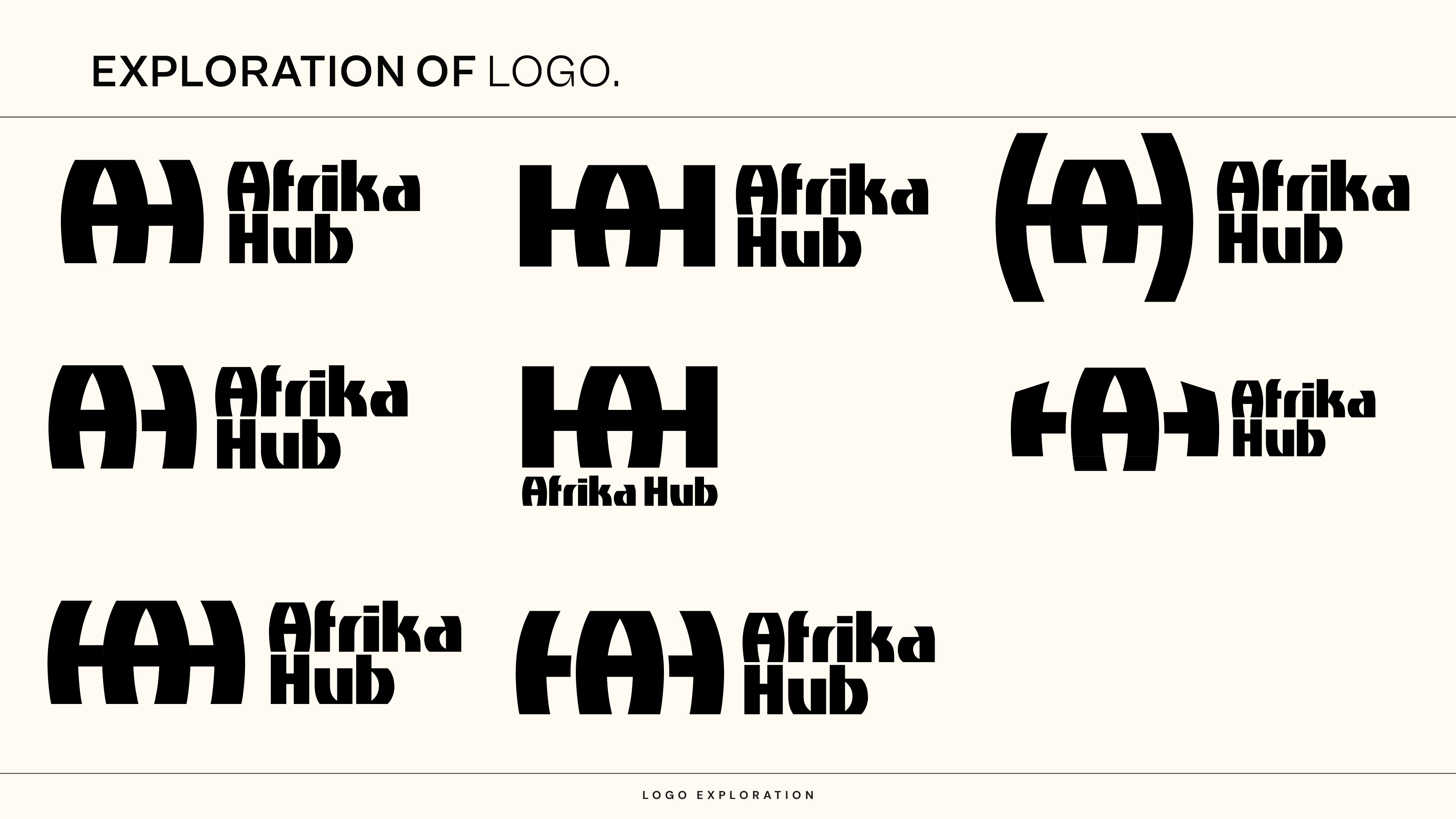
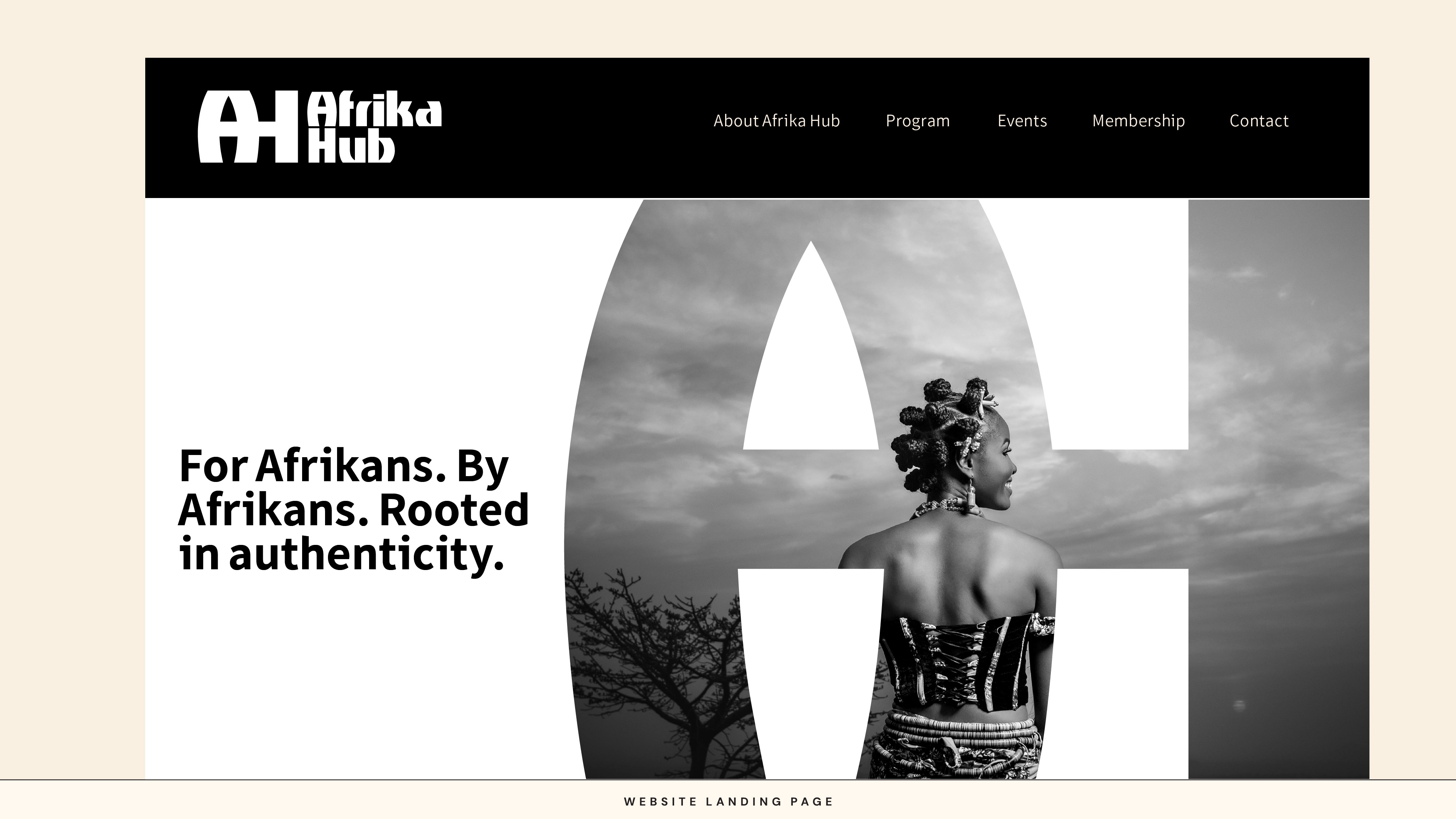
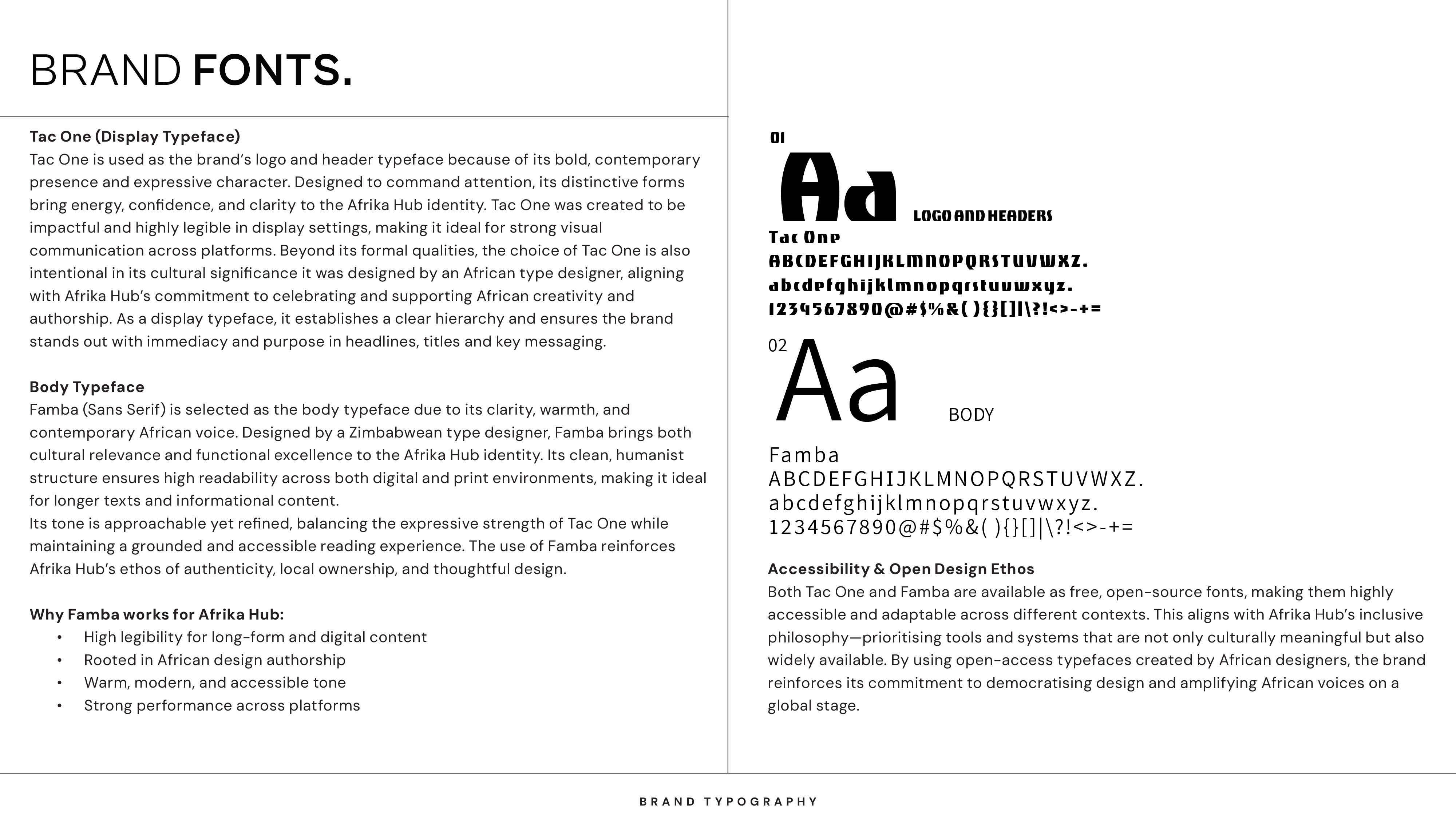
Afrika Hub is a brand identity and strategic platform designed to connect Afrika and its diaspora through knowledge, culture, and opportunity. Positioned as both a cultural and advisory hub, the project facilitates authentic engagement with Afrika—bridging those on the continent and those seeking to connect, invest, or collaborate meaningfully. The visual identity is built around the concept of “the bridge,” expressed through the interplay of the initials A and H. A central vertical opening forms a symbolic passage representing connection, exchange, and movement between worlds. Minimal yet intentional, the system reflects clarity, structure, and trust, while carrying cultural depth. Afrika Hub becomes more than a brand—it is an interface for dialogue, positioning Africa as a central voice in shaping its narratives and global relationships.
Afrika Hub is a brand identity and strategic platform designed to connect Afrika and its diaspora through knowledge, culture, and opportunity. Positioned as both a cultural and advisory hub, the project facilitates authentic engagement with Afrika—bridging those on the continent and those seeking to connect, invest, or collaborate meaningfully. The visual identity is built around the concept of “the bridge,” expressed through the interplay of the initials A and H. A central vertical opening forms a symbolic passage representing connection, exchange, and movement between worlds. Minimal yet intentional, the system reflects clarity, structure, and trust, while carrying cultural depth. Afrika Hub becomes more than a brand—it is an interface for dialogue, positioning Africa as a central voice in shaping its narratives and global relationships.
Project Innovation / Specification:
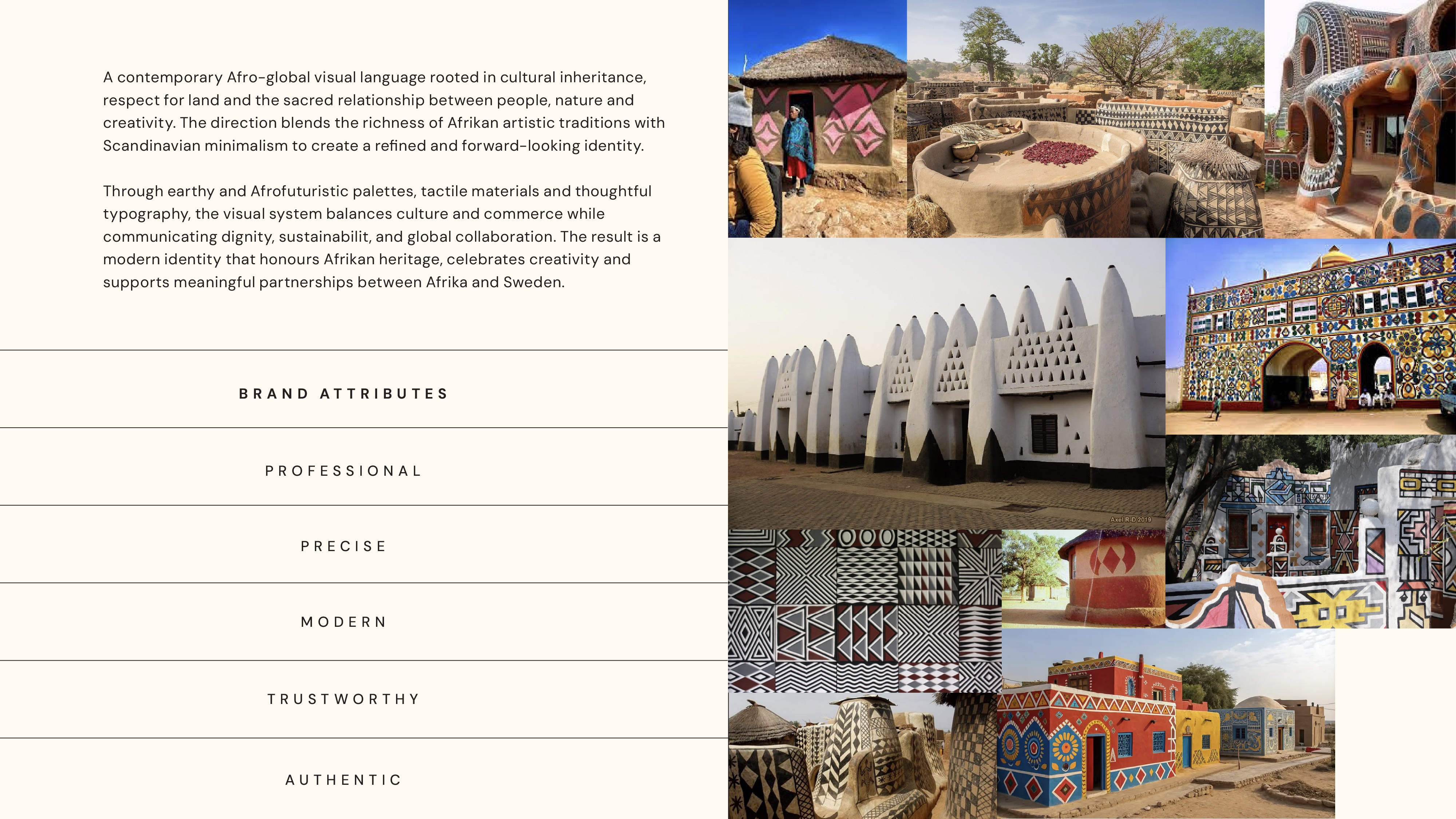
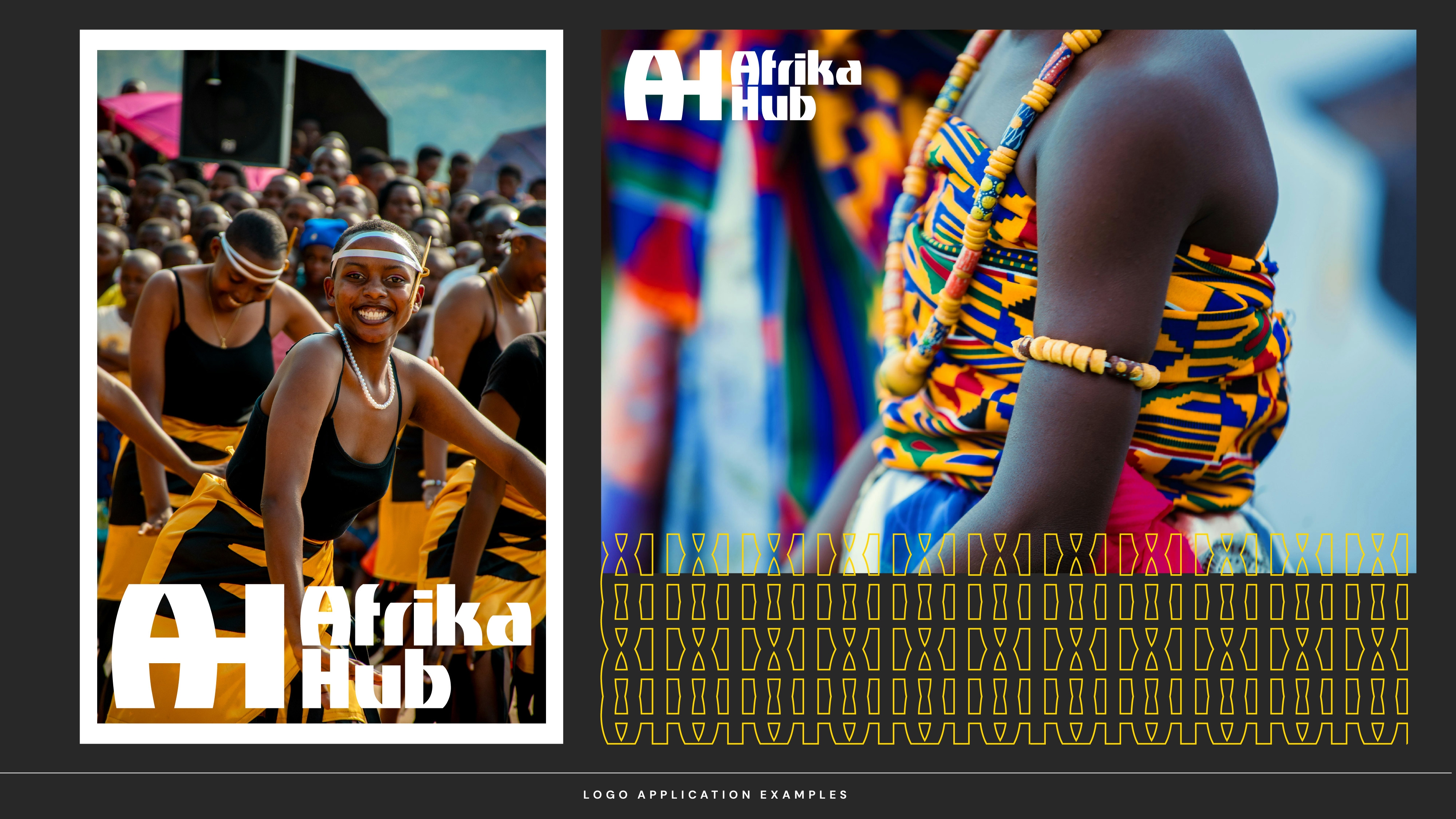
The project introduces a design system rooted in conceptual symbolism rather than literal representation. The logo’s construction from A and H forms a bridge through negative space transforming absence into meaning and function. This approach extends into a broader identity system that emphasizes structure, alignment, and clarity, reflecting the role of Afrika Hub as both connector and advisor. The visual language avoids stereotypical African aesthetics, instead proposing a refined, globally competitive identity grounded in intention. A key innovation lies in merging branding with strategy. The identity is not only visual but positional designed to communicate trust, authority, and cultural intelligence. It creates a flexible framework adaptable across partnerships, knowledge sharing platforms, and advisory services, reinforcing Afrika Hub’s role as a mediator between diverse audiences.
The project introduces a design system rooted in conceptual symbolism rather than literal representation. The logo’s construction from A and H forms a bridge through negative space transforming absence into meaning and function. This approach extends into a broader identity system that emphasizes structure, alignment, and clarity, reflecting the role of Afrika Hub as both connector and advisor. The visual language avoids stereotypical African aesthetics, instead proposing a refined, globally competitive identity grounded in intention. A key innovation lies in merging branding with strategy. The identity is not only visual but positional designed to communicate trust, authority, and cultural intelligence. It creates a flexible framework adaptable across partnerships, knowledge sharing platforms, and advisory services, reinforcing Afrika Hub’s role as a mediator between diverse audiences.
Project Sustainability Approach:
Afrika Hub approaches sustainability through cultural integrity, knowledge exchange, and long-term relevance. By creating a platform that prioritizes authentic engagement with Africa, the project counters extractive narratives and promotes informed, respectful collaboration. The identity system is designed for longevity minimal, adaptable and not trend-dependent—reducing the need for frequent redesign while maintaining consistency across applications. At a broader level, the project contributes to sustainable ecosystems by encouraging value exchange rather than value extraction. It supports a shift toward partnerships that are rooted in mutual understanding, cultural awareness and shared growth, ensuring that Afrikan perspectives remain central in global conversations.
Afrika Hub approaches sustainability through cultural integrity, knowledge exchange, and long-term relevance. By creating a platform that prioritizes authentic engagement with Africa, the project counters extractive narratives and promotes informed, respectful collaboration. The identity system is designed for longevity minimal, adaptable and not trend-dependent—reducing the need for frequent redesign while maintaining consistency across applications. At a broader level, the project contributes to sustainable ecosystems by encouraging value exchange rather than value extraction. It supports a shift toward partnerships that are rooted in mutual understanding, cultural awareness and shared growth, ensuring that Afrikan perspectives remain central in global conversations.
Local and Regional Impacts of the Project:
Afrika Hub strengthens connections between local African communities and the global diaspora by creating a trusted platform for engagement. It encourages more informed interactions with Afrika whether cultural, creative, or economic—grounded in authenticity rather than assumption. Regionally, the project contributes to repositioning Africa as an active participant in global systems, not a passive recipient. It supports knowledge sharing, collaboration, and access to opportunities while maintaining cultural agency. By framing Africa as both source and partner, Afrika Hub fosters a more balanced narrative one that empowers local voices and builds bridges that are equitable, intentional, and future-focused.
Afrika Hub strengthens connections between local African communities and the global diaspora by creating a trusted platform for engagement. It encourages more informed interactions with Afrika whether cultural, creative, or economic—grounded in authenticity rather than assumption. Regionally, the project contributes to repositioning Africa as an active participant in global systems, not a passive recipient. It supports knowledge sharing, collaboration, and access to opportunities while maintaining cultural agency. By framing Africa as both source and partner, Afrika Hub fosters a more balanced narrative one that empowers local voices and builds bridges that are equitable, intentional, and future-focused.

Lead Designer(s) Name(s):Taurai Valerie Mtake