BETWEEN MEMORY & DESIGN: A SENSITIVE EXPLORATION OF BAMUN CULTURE
Prize(s):
Honorable Mention 2026 Multimedia Design / Interactive Media
School / University Name:Université Toulouse Jean Jaurès
Lead Designer(s) Name(s):Darlene Tchuinda Douni
Project Location:France
Design Status:Prototype
Project Description:
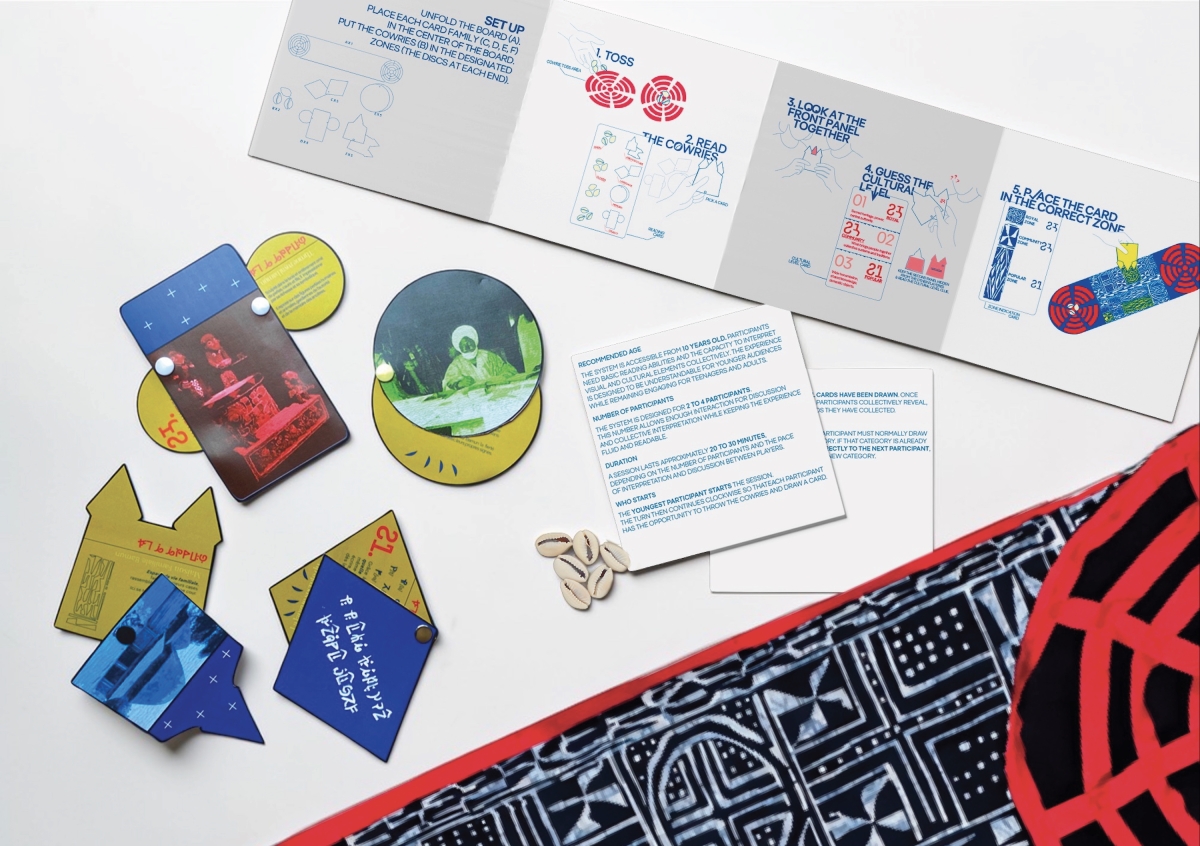
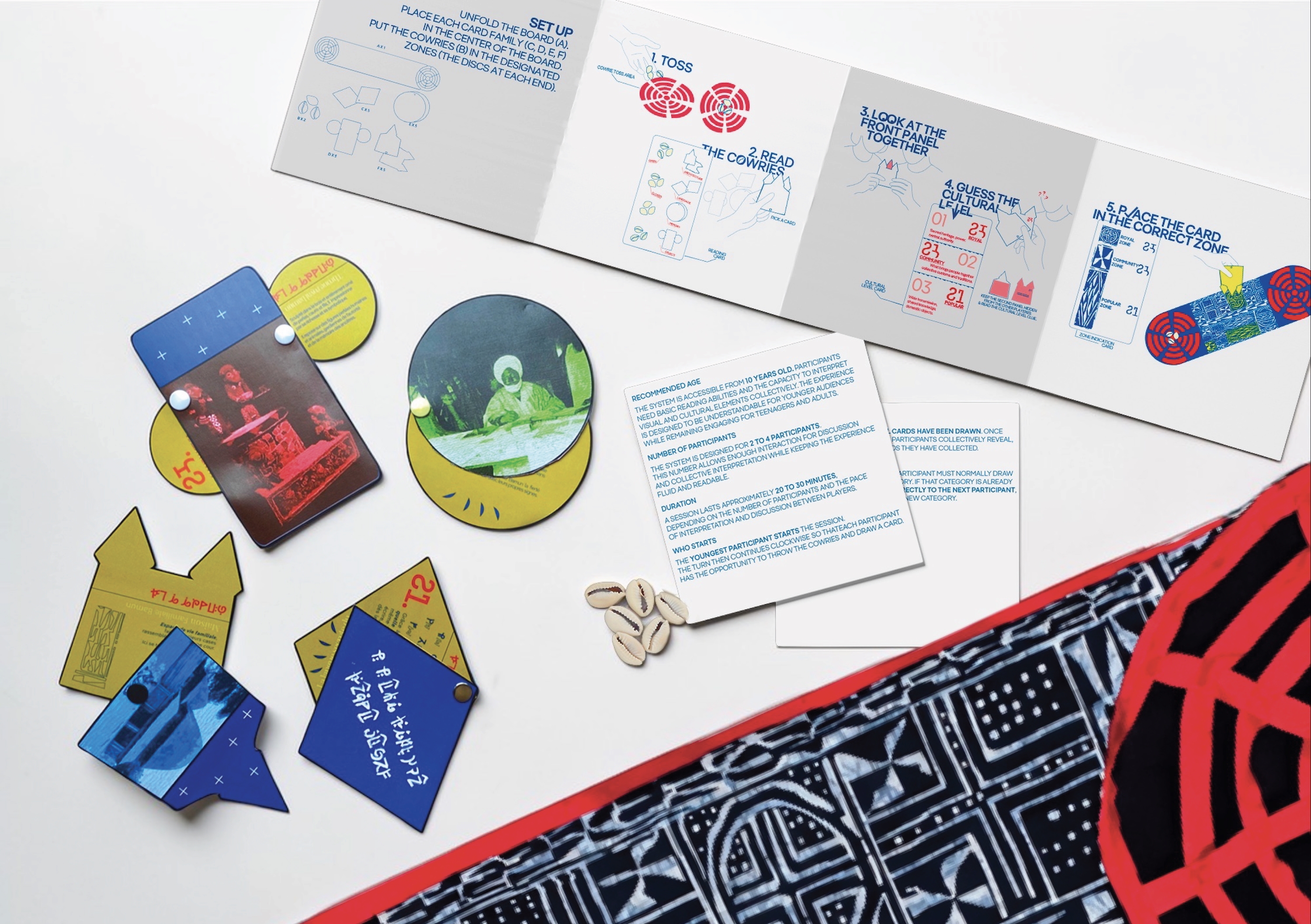
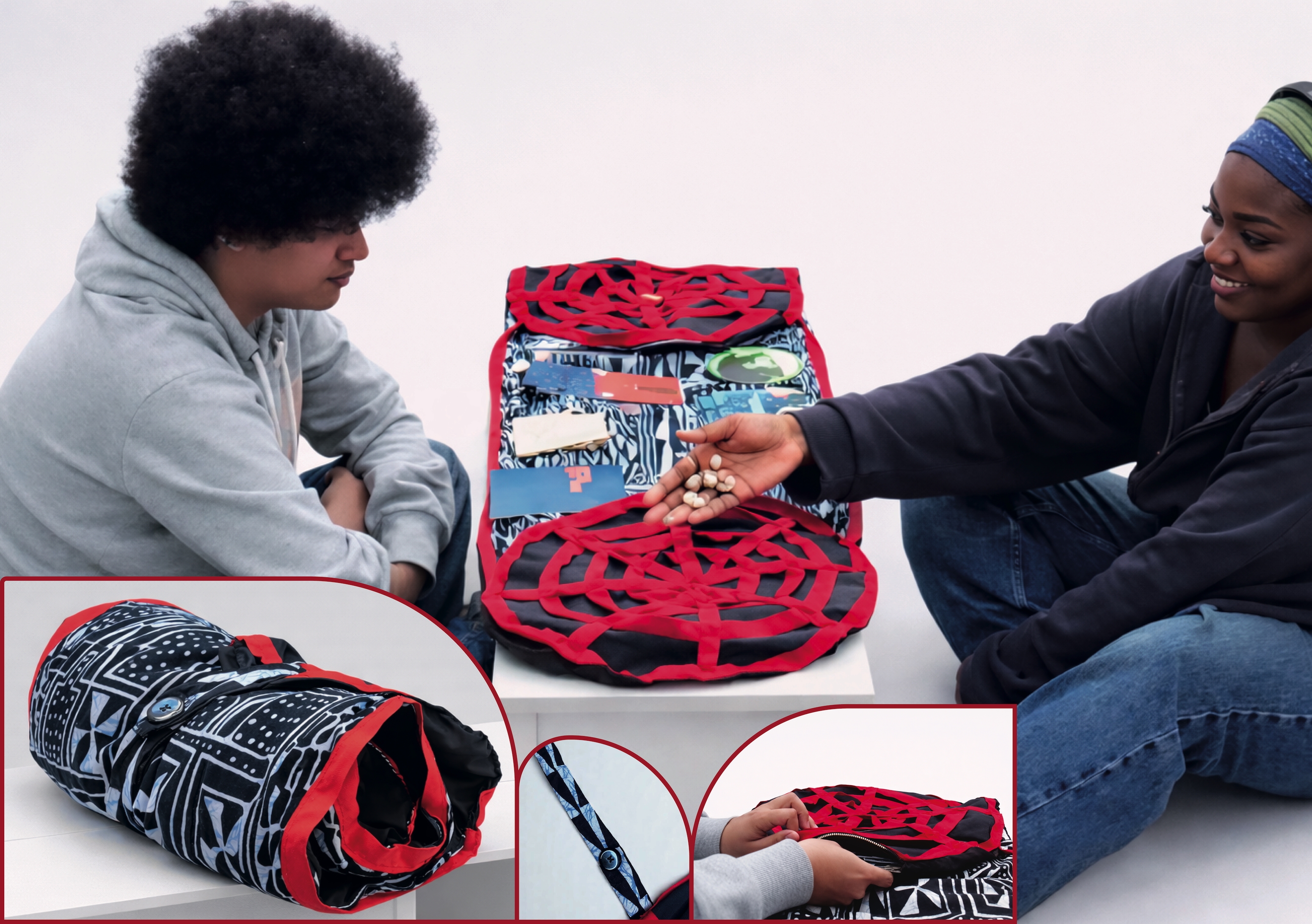
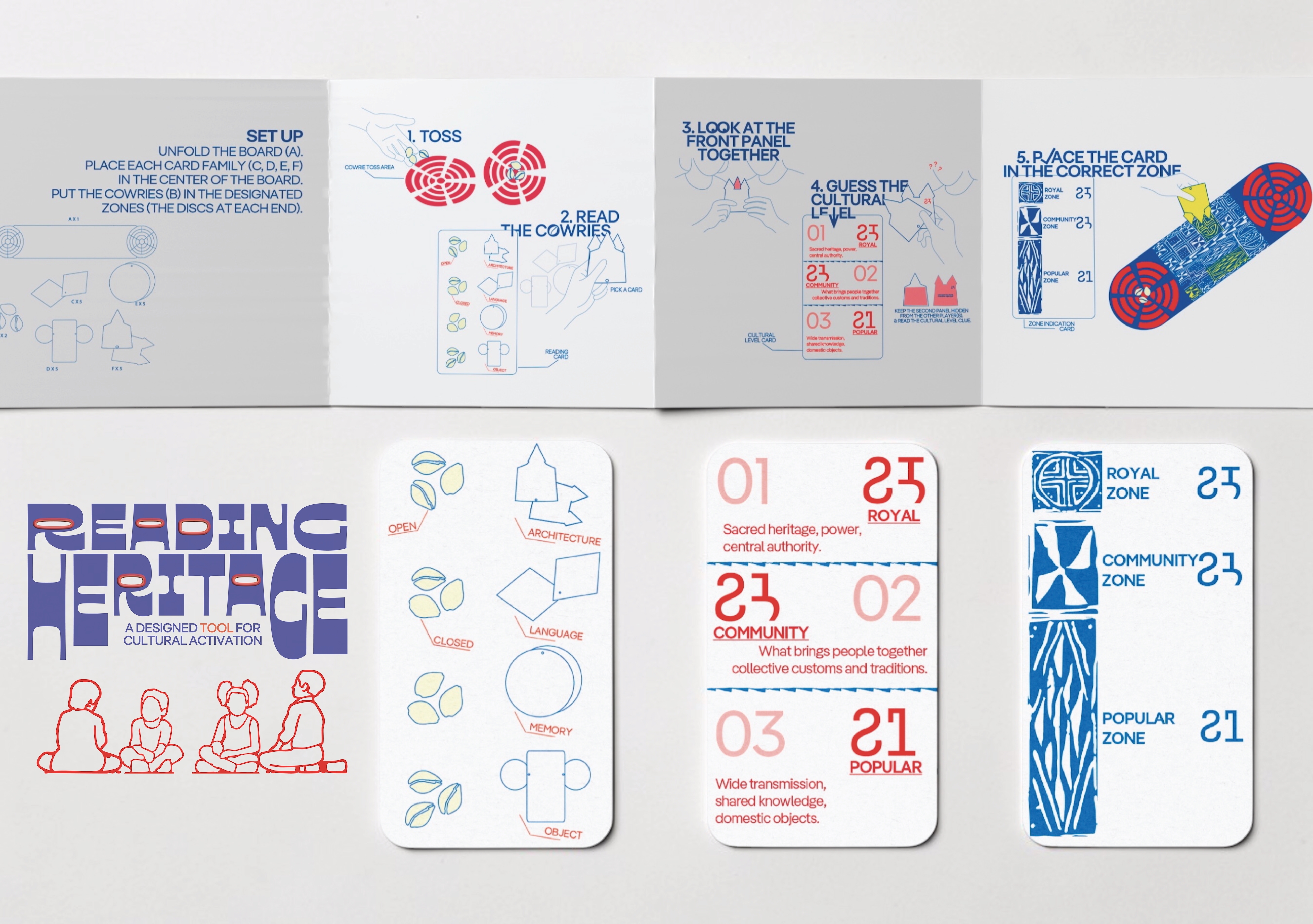
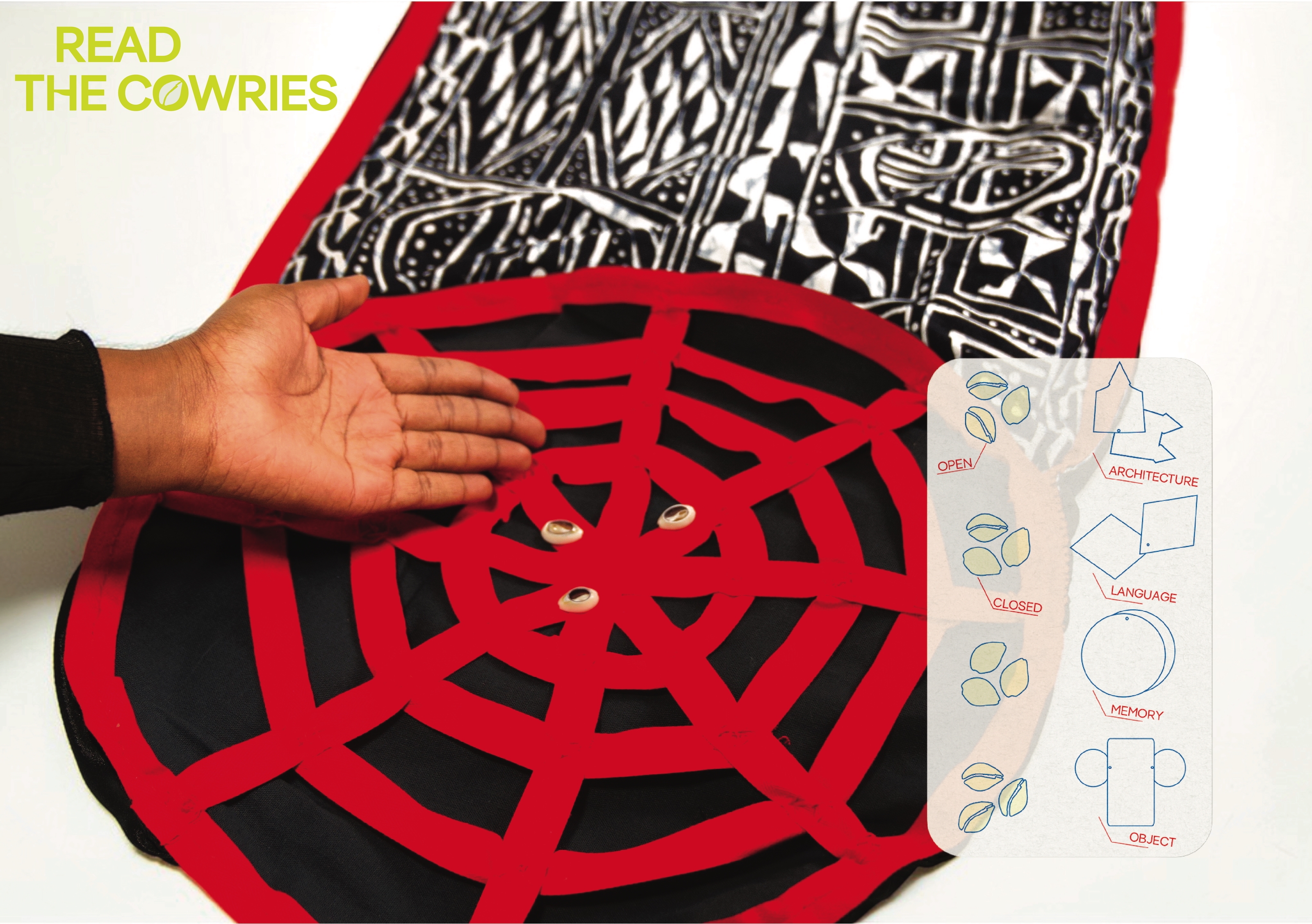
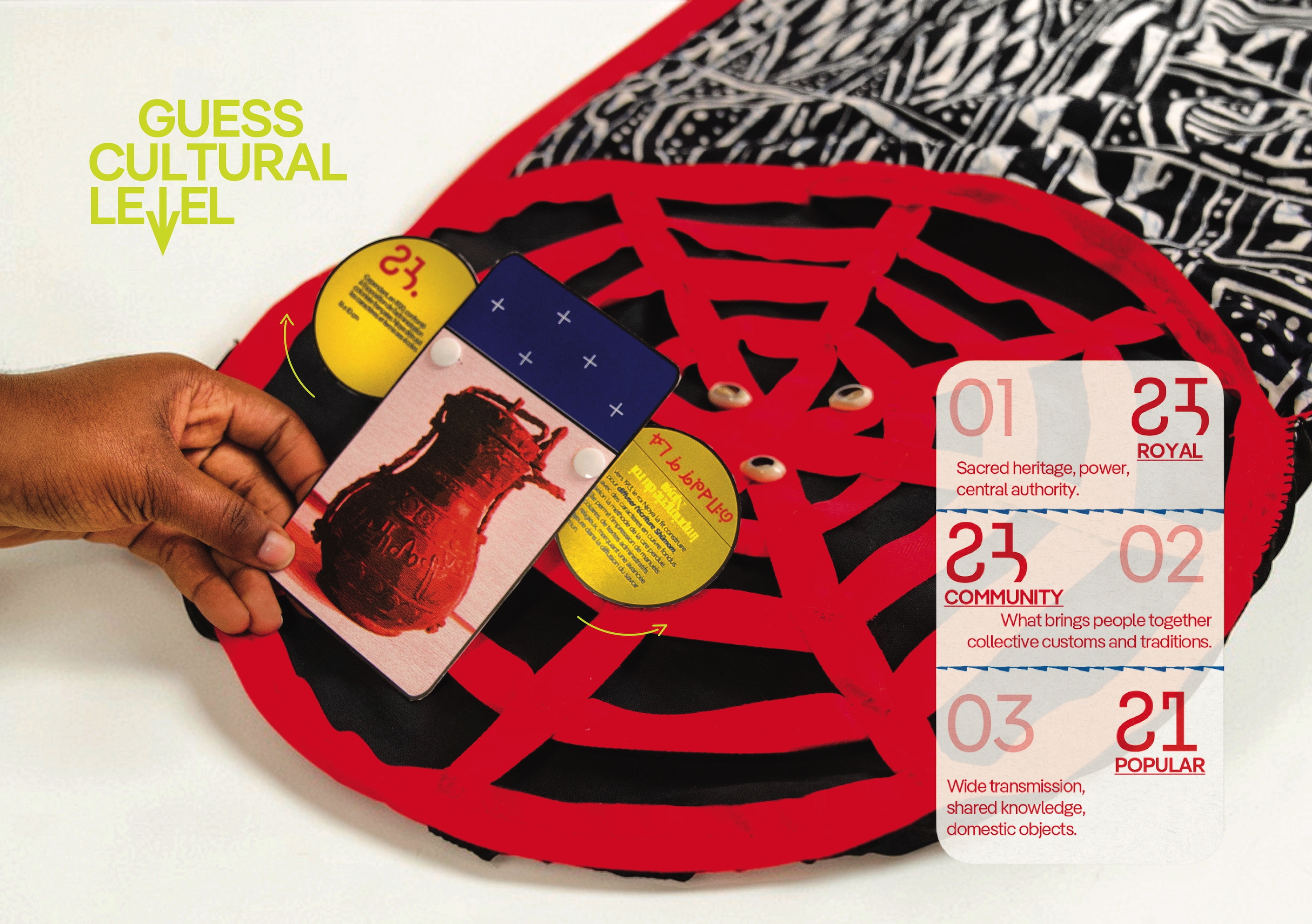
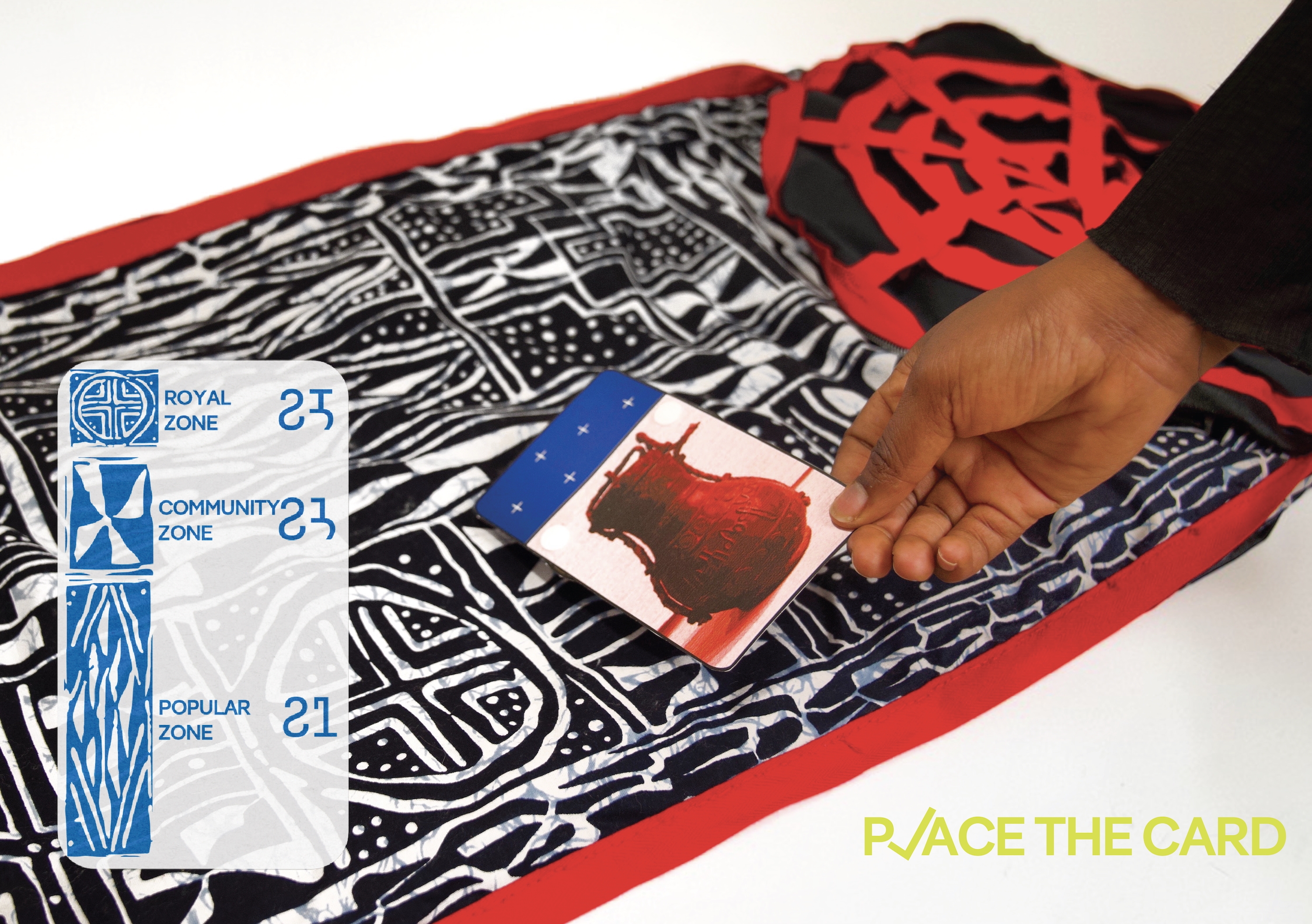
This project is rooted in the knowledge systems of the Grassfields, north-western Cameroon, cradle of the Bamun and Bamiléké cultures. It offers participants aged 10 and above an embodied entry into a living heritage language, architecture, objects, collective memory through a tactile and visual experience. The device brings together a traditional Ndop textile board, pivoting cards and cowrie shells marked with signs from the Shümom script of the Bamun Kingdom, guiding participants through different cultural levels. The experience opens with a throw of cowrie shells. Inspired by divination practices, this gesture is not governed by chance in the Western sense not randomness stripped of meaning but structured knowledge: the configuration of the shells determines which card category may be drawn. Chance here is interpretation, a dialogue with the invisible. The board becomes a shared surface where participants collectively place and classify the cards, while pivoting structures gradually reveal deeper layers of knowledge. This system invites communities in Cameroon and across the diaspora to explore the heritage of the Grassfields and to bring it to life, together.
This project is rooted in the knowledge systems of the Grassfields, north-western Cameroon, cradle of the Bamun and Bamiléké cultures. It offers participants aged 10 and above an embodied entry into a living heritage language, architecture, objects, collective memory through a tactile and visual experience. The device brings together a traditional Ndop textile board, pivoting cards and cowrie shells marked with signs from the Shümom script of the Bamun Kingdom, guiding participants through different cultural levels. The experience opens with a throw of cowrie shells. Inspired by divination practices, this gesture is not governed by chance in the Western sense not randomness stripped of meaning but structured knowledge: the configuration of the shells determines which card category may be drawn. Chance here is interpretation, a dialogue with the invisible. The board becomes a shared surface where participants collectively place and classify the cards, while pivoting structures gradually reveal deeper layers of knowledge. This system invites communities in Cameroon and across the diaspora to explore the heritage of the Grassfields and to bring it to life, together.
Project Innovation / Specification:
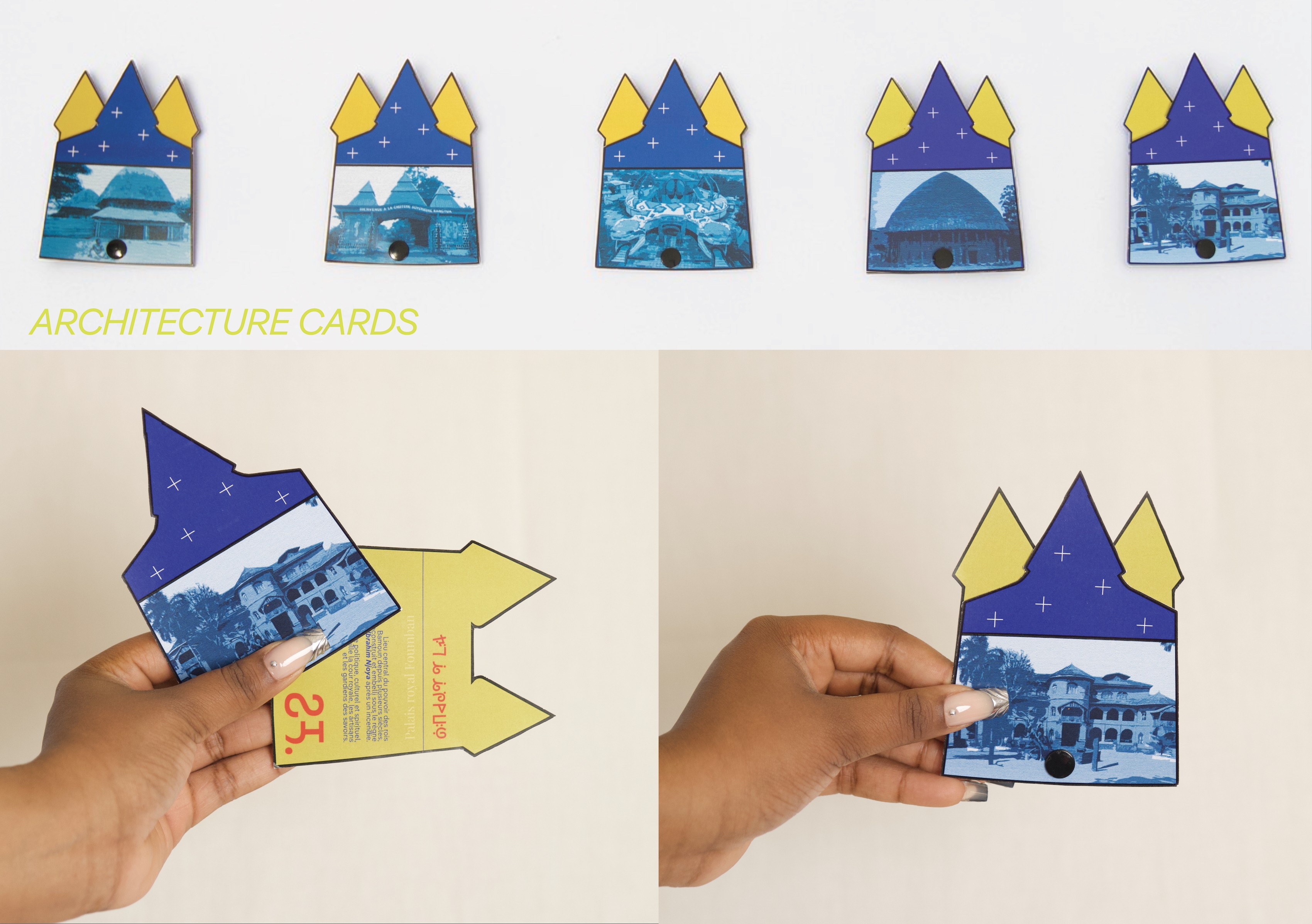
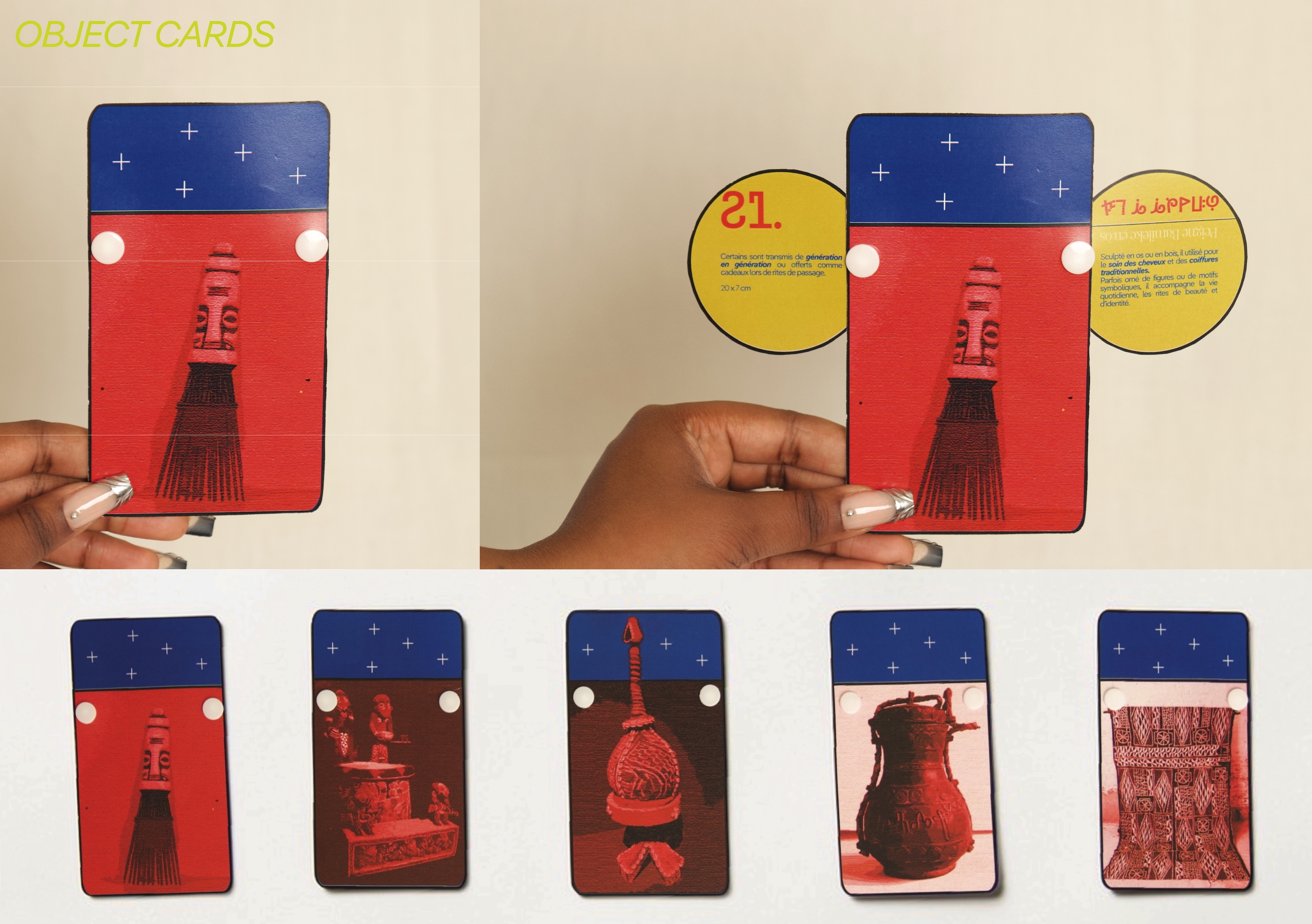
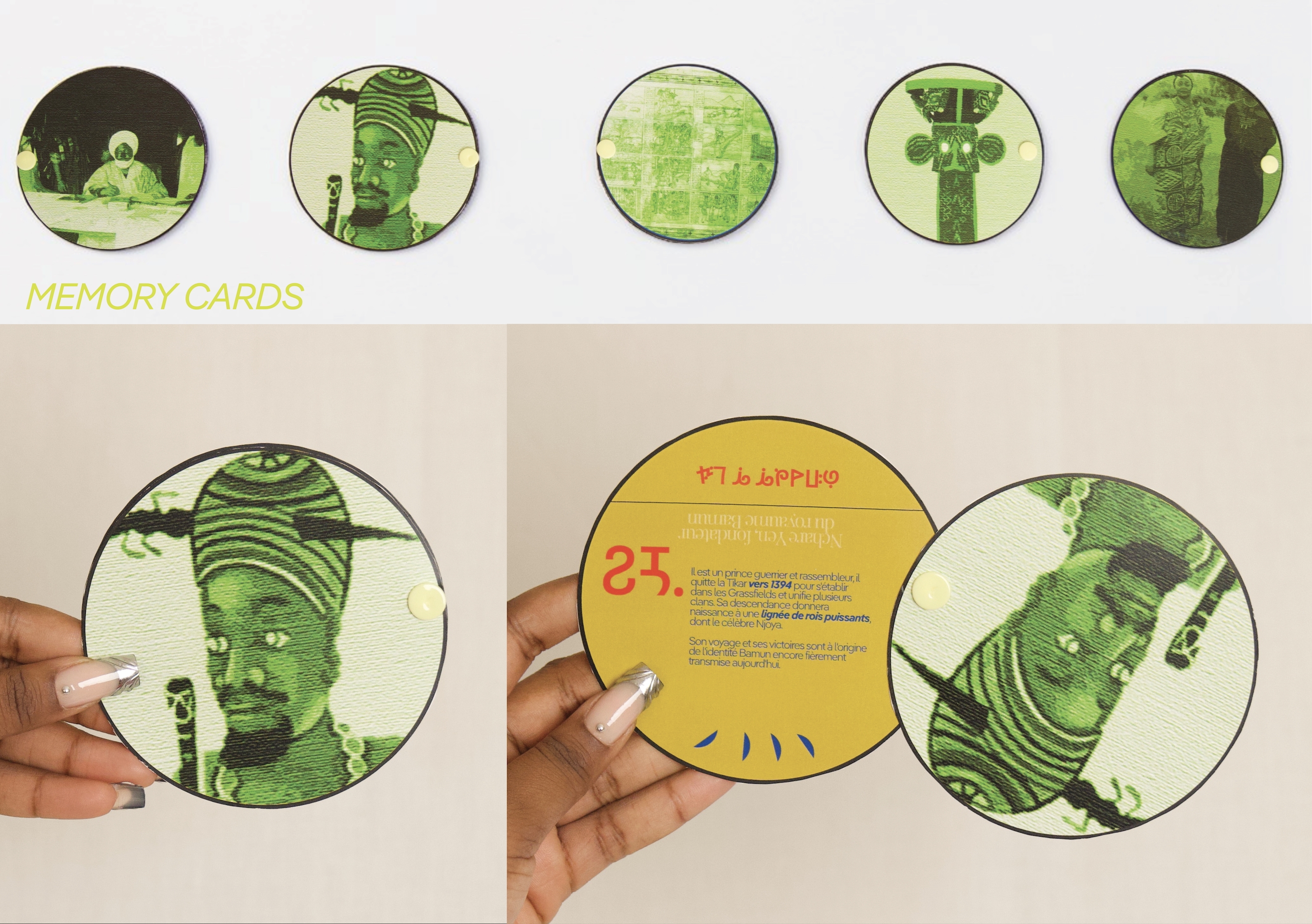
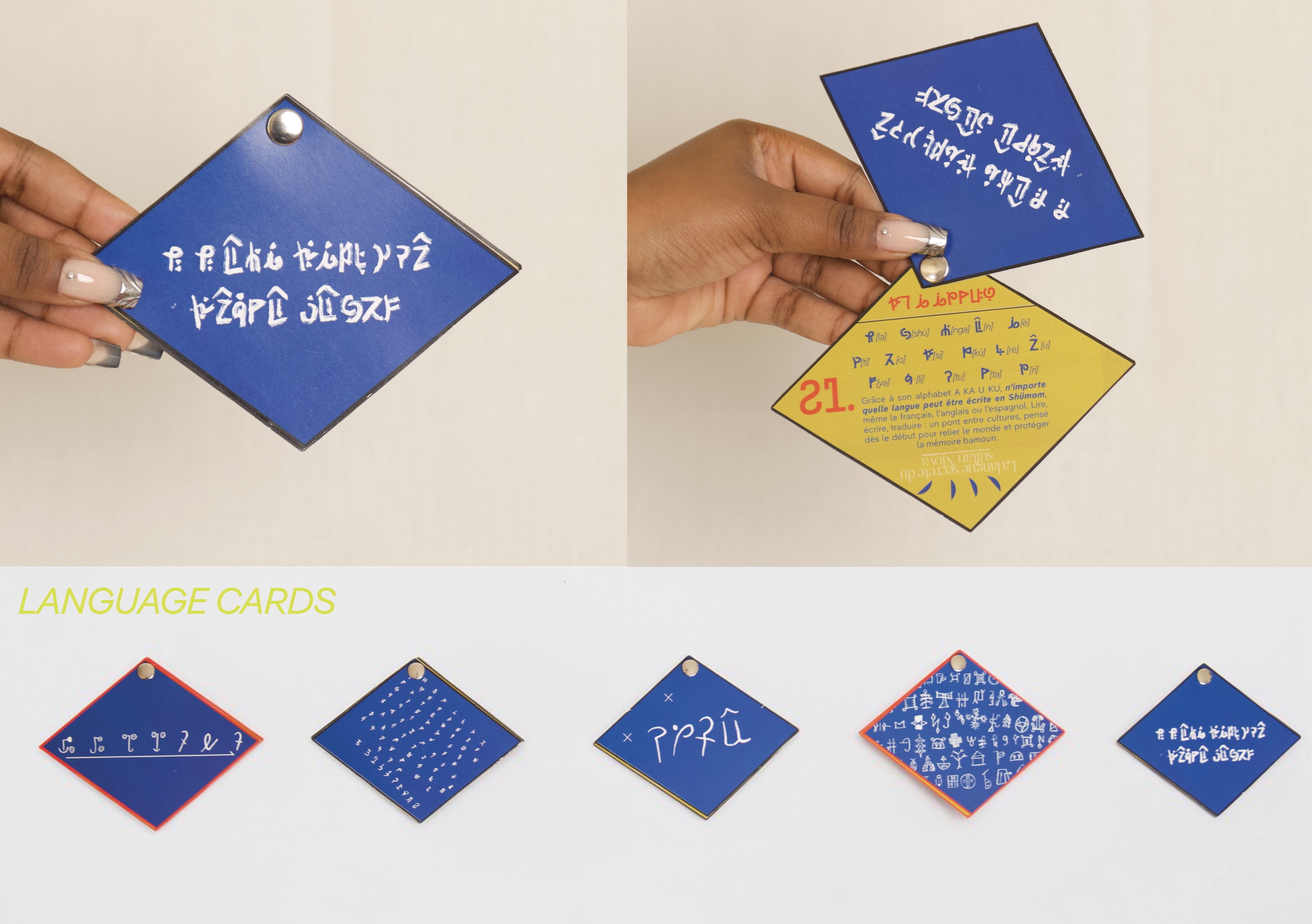
This project introduces a design system that challenges the museification of Grassfields culture extracting it from contemplation and returning it to practice by translating its visual languages into structural design decisions, where form is not decoration, but meaning. Each card category adopts a distinct morphology: diamond geometries inspired by Ndop textiles, architectural silhouettes echoing Grassfields village entrances, circular memory cards reflecting cyclical conceptions of time, and vertically structured object cards derived from elephant ceremonial masks. Morphology becomes taxonomy. Cards integrate pivoting mechanisms that physically reveal layers of information, transforming reading into a gesture of discovery. Shümom script signs guide interpretation through visual logic embedded in the object itself. The visual identity draws from a restricted palette inspired by Bamun royal palace murals: blue, red and yellow in strong contrast, anchored by thick black outlines. Color carries cultural weight, not aesthetic preference. The typographic system pairs Pangea Afrikan Text with Ojuju
This project introduces a design system that challenges the museification of Grassfields culture extracting it from contemplation and returning it to practice by translating its visual languages into structural design decisions, where form is not decoration, but meaning. Each card category adopts a distinct morphology: diamond geometries inspired by Ndop textiles, architectural silhouettes echoing Grassfields village entrances, circular memory cards reflecting cyclical conceptions of time, and vertically structured object cards derived from elephant ceremonial masks. Morphology becomes taxonomy. Cards integrate pivoting mechanisms that physically reveal layers of information, transforming reading into a gesture of discovery. Shümom script signs guide interpretation through visual logic embedded in the object itself. The visual identity draws from a restricted palette inspired by Bamun royal palace murals: blue, red and yellow in strong contrast, anchored by thick black outlines. Color carries cultural weight, not aesthetic preference. The typographic system pairs Pangea Afrikan Text with Ojuju
Project Sustainability Approach:
The project approaches sustainability through material durability, low-tech construction, and cultural continuity. The board is made from Ndop textile, a durable cotton fabric historically produced in the Grassfields region. Its flexibility and resistance allow the object to remain repairable and long-lasting rather than disposable. The cards are conceived as mechanical printed structures with pivot systems that reveal information without relying on electronics or complex manufacturing. This low-tech approach reduces material complexity while encouraging repeated tactile interaction and long-term use. Cowrie shells replace standardized dice. As naturally occurring objects historically used in systems of exchange and divination across Africa, they reduce manufactured components while reinforcing the cultural logic of the system. Beyond material considerations, the project addresses cultural sustainability by reactivating the Shümom script and knowledge structures of the Bamun Kingdom. By creating a shared interpretative experience, it supports the transmission of cultural knowledge across generations and between communities in Cameroon and the diaspora.
The project approaches sustainability through material durability, low-tech construction, and cultural continuity. The board is made from Ndop textile, a durable cotton fabric historically produced in the Grassfields region. Its flexibility and resistance allow the object to remain repairable and long-lasting rather than disposable. The cards are conceived as mechanical printed structures with pivot systems that reveal information without relying on electronics or complex manufacturing. This low-tech approach reduces material complexity while encouraging repeated tactile interaction and long-term use. Cowrie shells replace standardized dice. As naturally occurring objects historically used in systems of exchange and divination across Africa, they reduce manufactured components while reinforcing the cultural logic of the system. Beyond material considerations, the project addresses cultural sustainability by reactivating the Shümom script and knowledge structures of the Bamun Kingdom. By creating a shared interpretative experience, it supports the transmission of cultural knowledge across generations and between communities in Cameroon and the diaspora.
Local and Regional Impacts of the Project:
The project contributes to the visibility and transmission of cultural knowledge from the Grassfields region of north-western Cameroon, particularly Bamun and Bamiléké traditions. By translating elements of language, architecture, memory and ritual objects into a tactile learning system, it creates an accessible medium through which local heritage can be explored and discussed. At a regional level, the project supports the recognition of the Shümom script as part of Cameroon’s cultural heritage, encouraging interest in indigenous writing systems that have been historically marginalized. By transforming this script into an interactive visual system rather than a static historical reference, the project helps reactivate its presence within contemporary cultural practices.
The project contributes to the visibility and transmission of cultural knowledge from the Grassfields region of north-western Cameroon, particularly Bamun and Bamiléké traditions. By translating elements of language, architecture, memory and ritual objects into a tactile learning system, it creates an accessible medium through which local heritage can be explored and discussed. At a regional level, the project supports the recognition of the Shümom script as part of Cameroon’s cultural heritage, encouraging interest in indigenous writing systems that have been historically marginalized. By transforming this script into an interactive visual system rather than a static historical reference, the project helps reactivate its presence within contemporary cultural practices.
Profile Description:
Darlène Tchuinda Douni is a designer whose practice explores the relationships between graphic design, material culture, and systems of knowledge. Her work investigates how design can translate cultural structures, visual languages, and forms of collective memory into contemporary objects and learning tools. Drawing from African visual traditions and historical archives, she develops experimental design systems that engage with questions of transmission, identity, and the decolonisation of design practices.
Darlène Tchuinda Douni is a designer whose practice explores the relationships between graphic design, material culture, and systems of knowledge. Her work investigates how design can translate cultural structures, visual languages, and forms of collective memory into contemporary objects and learning tools. Drawing from African visual traditions and historical archives, she develops experimental design systems that engage with questions of transmission, identity, and the decolonisation of design practices.