Arena-in-a-Box
Prize(s):
WINNER 2026 ARCHITECTURE / Cultural Building Architecture
Company Name:Boogertman + Partners
Lead Designer(s) Name(s):Bob van Bebber
Architecture Firm:Boogertman + Partners
Client Name:QA Venue Solutions
Photo Credit:Boogertman + Partners
Project Location:Relocatable
Design Status:Concept
Video URL:View
Project Description:
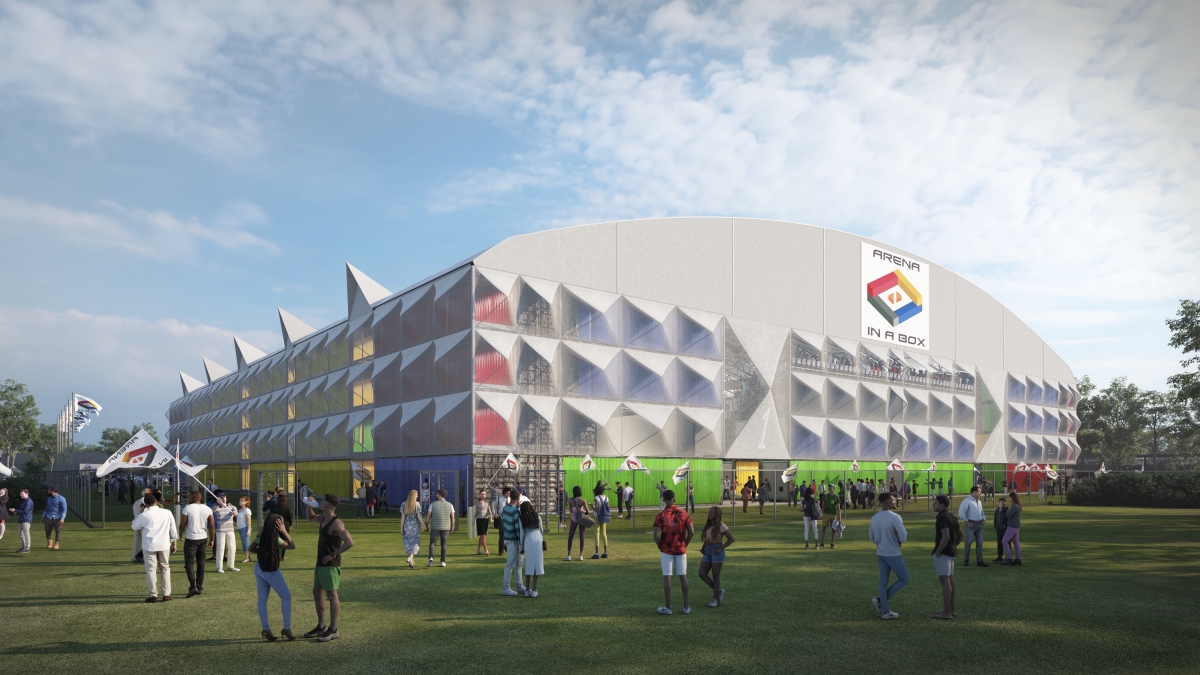
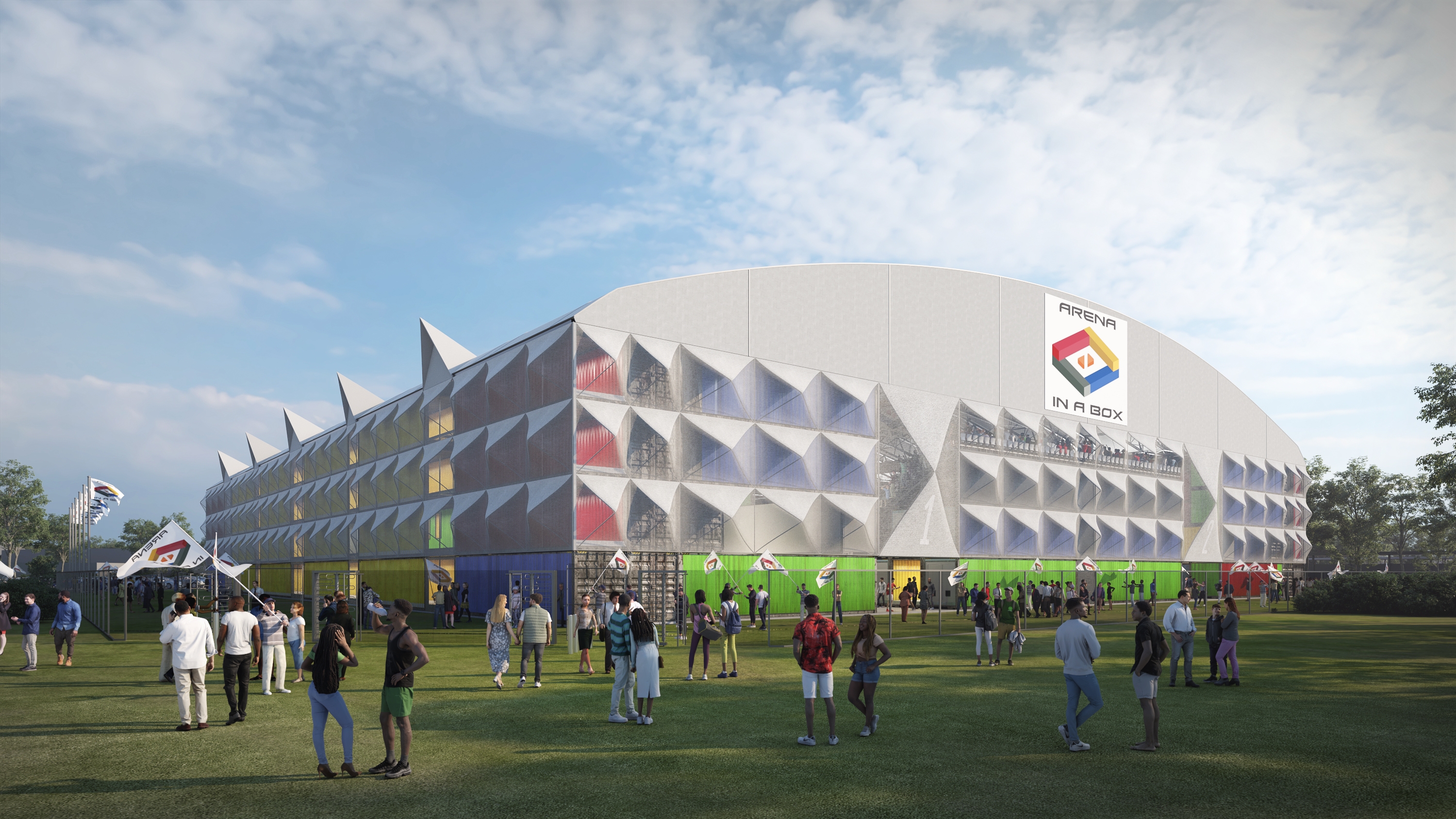
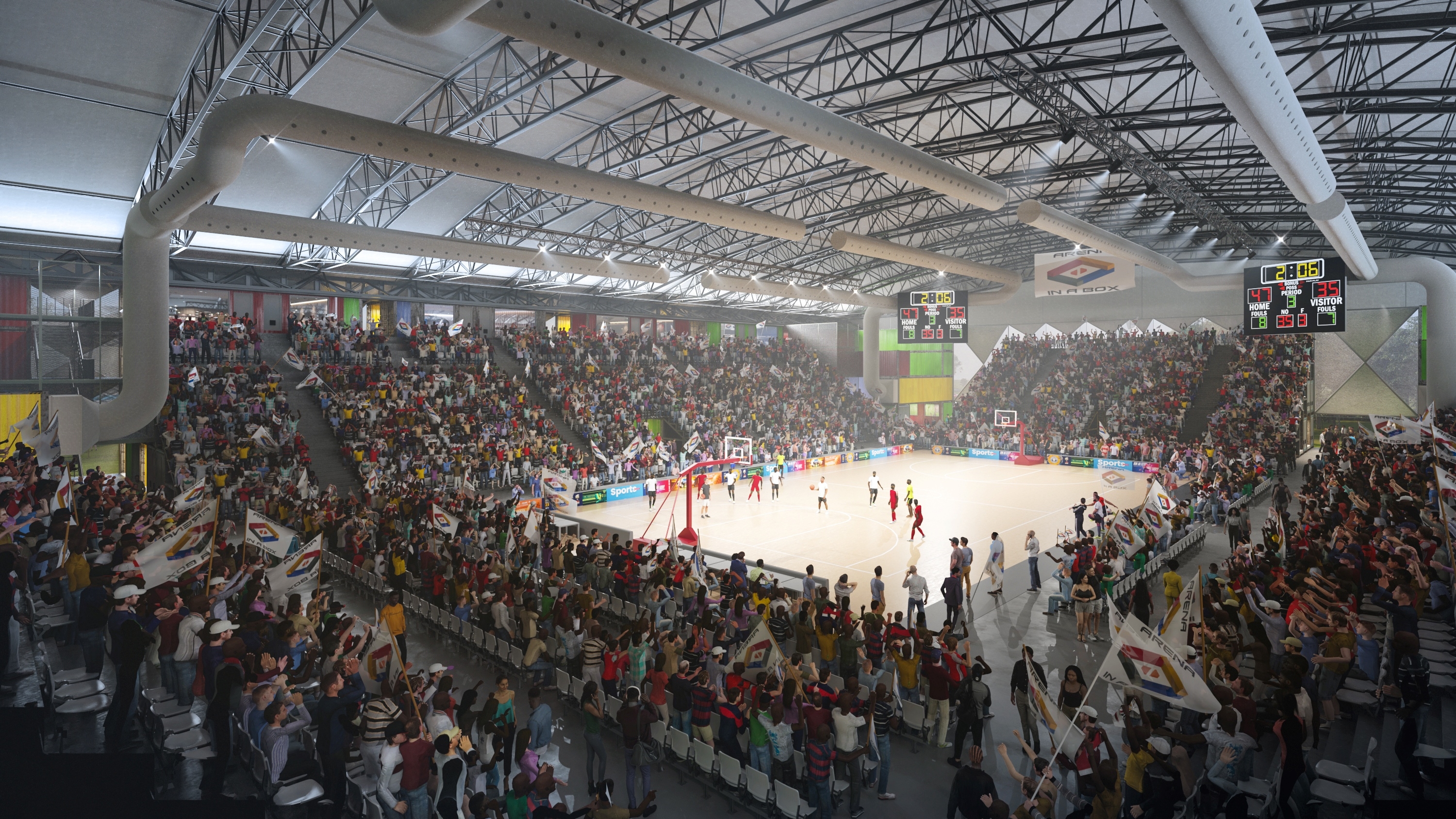
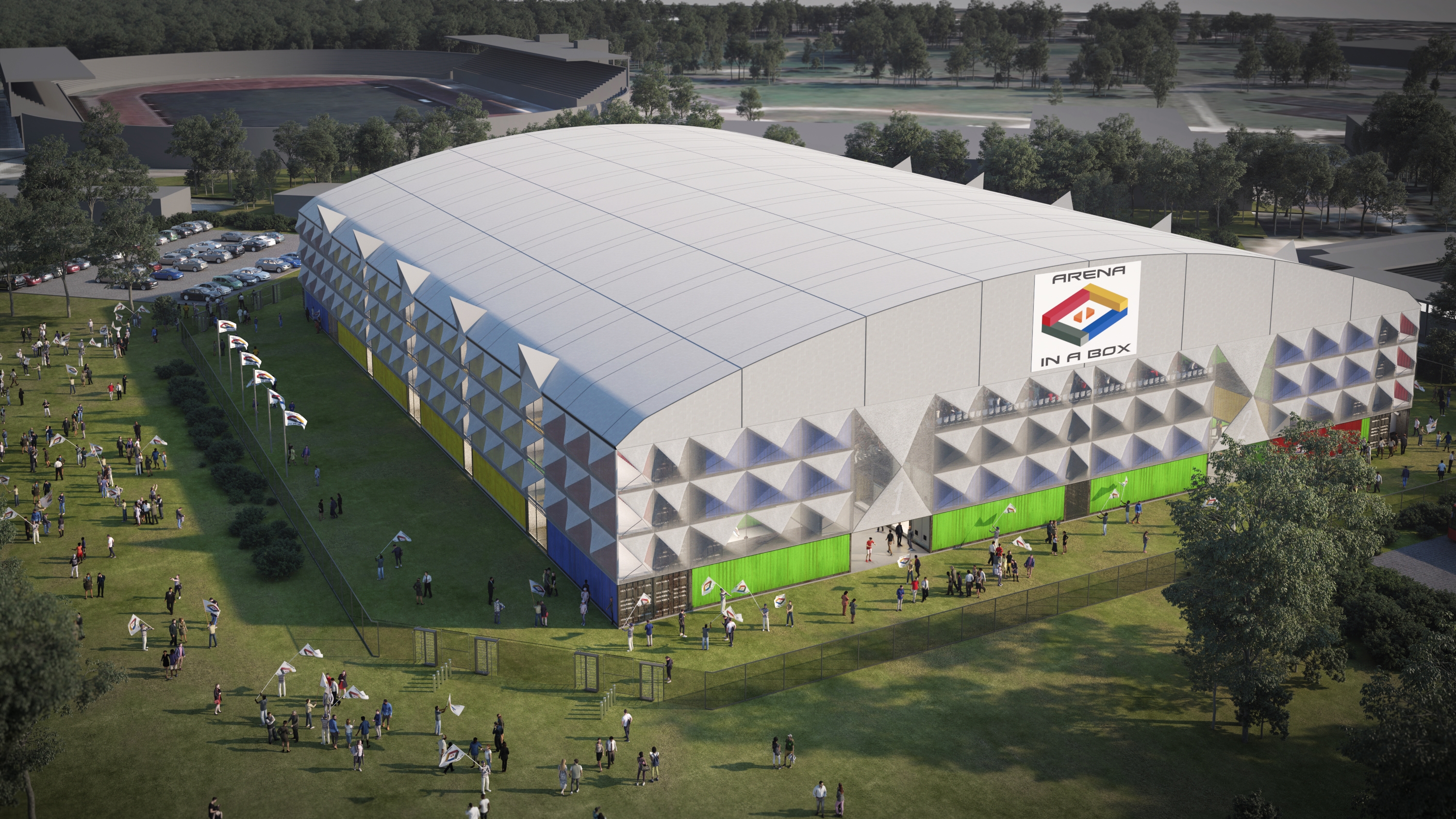
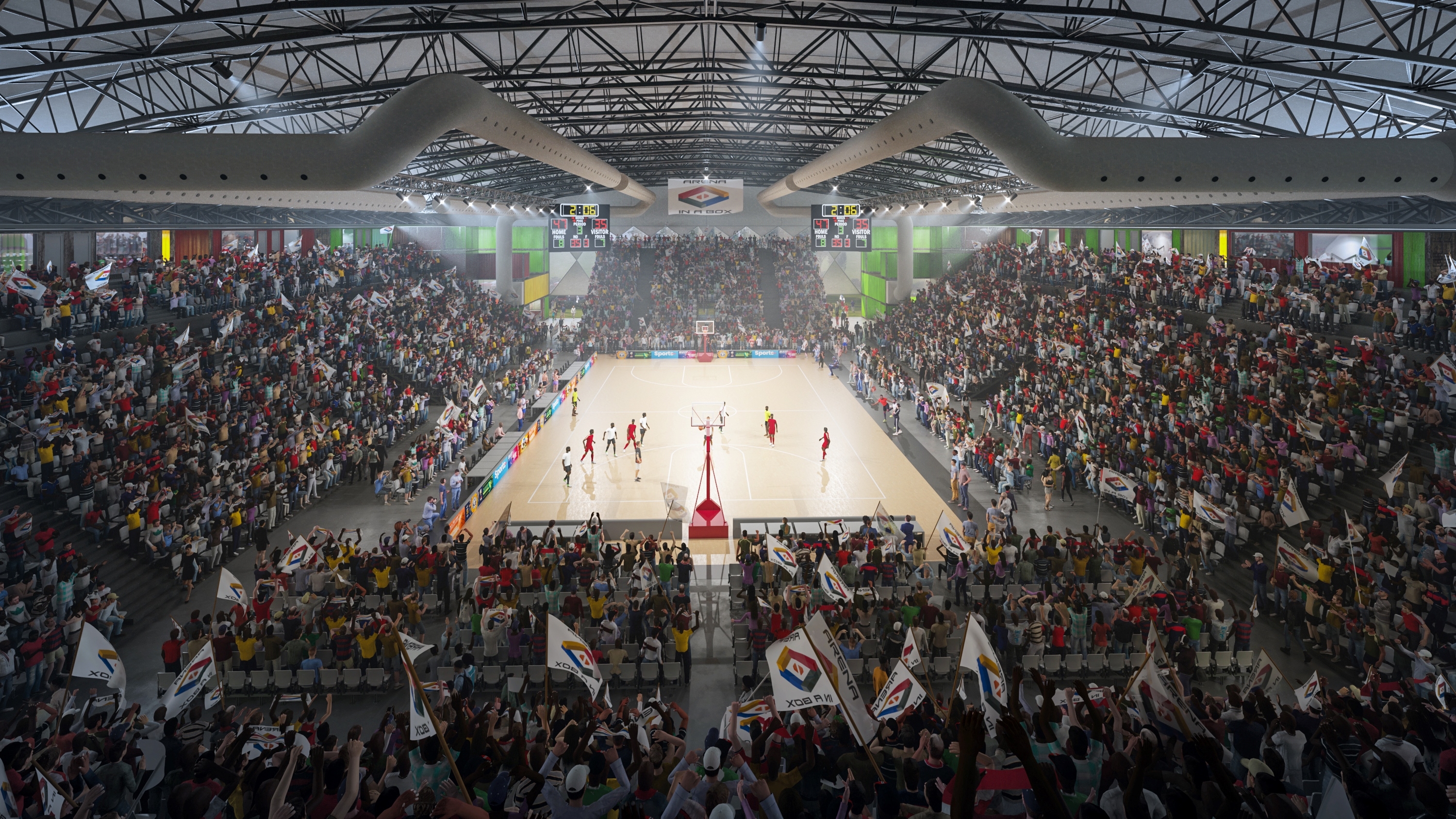
Arena-in-a-Box responds to the growing demand across Africa for flexible, multi-purpose venues capable of hosting both sporting events and large-scale gatherings. Conceived as a modular, relocatable system, the project redefines the arena as a mobile and adaptable piece of infrastructure. The design delivers a medium-sized venue with a baseline capacity of 4000 seats arranged across four grandstands and compliant with international basketball standards. Through the use of portable flooring systems, the arena can be reconfigured to accommodate a range of uses, including volleyball, handball, concerts and banquets. The architecture is based on a containerised system, where all functions are either housed within standardised modules or formed in the spaces between them. These units act as both structure and transport mechanism, enabling the arena to be dismantled, relocated and reassembled with ease. The result is a robust, scalable solution that extends access to high-quality event infrastructure across diverse and evolving contexts.
Arena-in-a-Box responds to the growing demand across Africa for flexible, multi-purpose venues capable of hosting both sporting events and large-scale gatherings. Conceived as a modular, relocatable system, the project redefines the arena as a mobile and adaptable piece of infrastructure. The design delivers a medium-sized venue with a baseline capacity of 4000 seats arranged across four grandstands and compliant with international basketball standards. Through the use of portable flooring systems, the arena can be reconfigured to accommodate a range of uses, including volleyball, handball, concerts and banquets. The architecture is based on a containerised system, where all functions are either housed within standardised modules or formed in the spaces between them. These units act as both structure and transport mechanism, enabling the arena to be dismantled, relocated and reassembled with ease. The result is a robust, scalable solution that extends access to high-quality event infrastructure across diverse and evolving contexts.
Project Innovation / Specification:
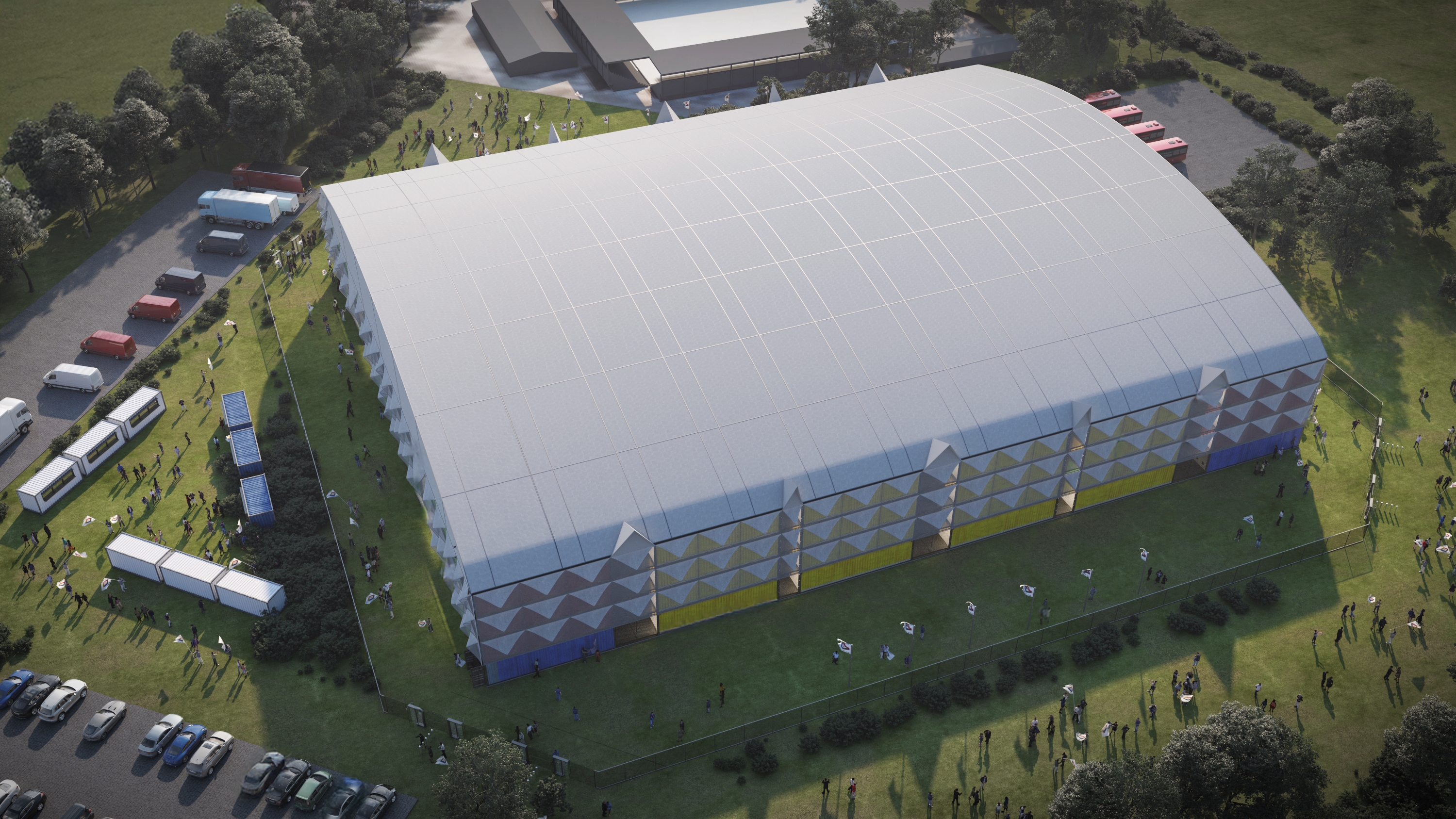
Arena-in-a-Box introduces a “kit-of-parts” approach to arena design, challenging the notion of architecture as fixed and permanent. The system is composed of modular container units that serve as structure, enclosure and transport, allowing the entire building to be deployed, dismantled and relocated efficiently. This approach significantly reduces construction time while maintaining the performance requirements of a modern arena. The design accommodates a 4000-seat configuration with four grandstands, meeting elite-level basketball standards, while remaining adaptable for multiple event types through interchangeable floor systems. The project distinguishes between two key components: the standardised building system and the site-specific conditions. With only a simple concrete base required, the arena becomes largely independent of location, able to respond to a wide range of urban or regional scenarios. By pushing the boundaries of design for disassembly, the project demonstrates that complex, high-performance buildings can be both mobile and reusable, offering a new model for event infrastructure.
Arena-in-a-Box introduces a “kit-of-parts” approach to arena design, challenging the notion of architecture as fixed and permanent. The system is composed of modular container units that serve as structure, enclosure and transport, allowing the entire building to be deployed, dismantled and relocated efficiently. This approach significantly reduces construction time while maintaining the performance requirements of a modern arena. The design accommodates a 4000-seat configuration with four grandstands, meeting elite-level basketball standards, while remaining adaptable for multiple event types through interchangeable floor systems. The project distinguishes between two key components: the standardised building system and the site-specific conditions. With only a simple concrete base required, the arena becomes largely independent of location, able to respond to a wide range of urban or regional scenarios. By pushing the boundaries of design for disassembly, the project demonstrates that complex, high-performance buildings can be both mobile and reusable, offering a new model for event infrastructure.
Project Sustainability Approach:
Sustainability is embedded in the project’s core principle of reuse. The fully demountable system allows the arena to be relocated and reconfigured multiple times, significantly extending its lifecycle and reducing the need for new construction. The modular approach minimises material waste and enables efficient assembly and disassembly processes. By limiting permanent works to a simple foundation, the environmental impact on each site is reduced, allowing for temporary activation without long-term disruption. Recent advancements in engineered timber construction present further opportunities to enhance the system’s sustainability. Timber could replace or supplement existing materials, reducing embodied carbon while maintaining structural performance at scale. This combination of adaptability, reusability and evolving material strategies positions the project as a forward-looking response to resource-conscious design in a rapidly changing built environment.
Sustainability is embedded in the project’s core principle of reuse. The fully demountable system allows the arena to be relocated and reconfigured multiple times, significantly extending its lifecycle and reducing the need for new construction. The modular approach minimises material waste and enables efficient assembly and disassembly processes. By limiting permanent works to a simple foundation, the environmental impact on each site is reduced, allowing for temporary activation without long-term disruption. Recent advancements in engineered timber construction present further opportunities to enhance the system’s sustainability. Timber could replace or supplement existing materials, reducing embodied carbon while maintaining structural performance at scale. This combination of adaptability, reusability and evolving material strategies positions the project as a forward-looking response to resource-conscious design in a rapidly changing built environment.
Local and Regional Impacts of the Project:
Arena-in-a-Box offers a transformative model for infrastructure delivery across Africa, where rapid urban growth demands flexible and cost-effective solutions. By removing the need for permanent, location-bound facilities, the project expands access to high-quality venues, enabling more communities to host sporting, cultural and social events. This has the potential to unlock economic opportunities, support local talent and foster community engagement. The system’s mobility allows it to serve multiple locations over time rather than remaining underutilised in a single site. Beyond its practical benefits, the project challenges conventional thinking about architecture, positioning adaptability, mobility and reuse as central to future development across the continent.
Arena-in-a-Box offers a transformative model for infrastructure delivery across Africa, where rapid urban growth demands flexible and cost-effective solutions. By removing the need for permanent, location-bound facilities, the project expands access to high-quality venues, enabling more communities to host sporting, cultural and social events. This has the potential to unlock economic opportunities, support local talent and foster community engagement. The system’s mobility allows it to serve multiple locations over time rather than remaining underutilised in a single site. Beyond its practical benefits, the project challenges conventional thinking about architecture, positioning adaptability, mobility and reuse as central to future development across the continent.