Pathways
Prize(s):
Honorable Mention 2026 ARCHITECTURE / Mixed-Use Building Architecture
School / University Name:Vega School at Emeris
Lead Designer(s) Name(s):Aquilla Fernandez & Hooriyah Shaik
Professor Name(s):Musarath Sader
Photo Credit:Aquilla Fernandez and Hooriyah Shaik
Project Location:Frere Tennis Court, Esther Roberts Road, Umbilo, Durban, 4013
Design Status:Concept
Project Description:
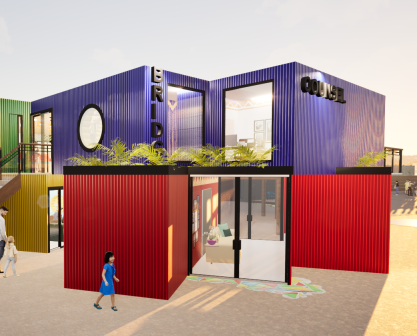
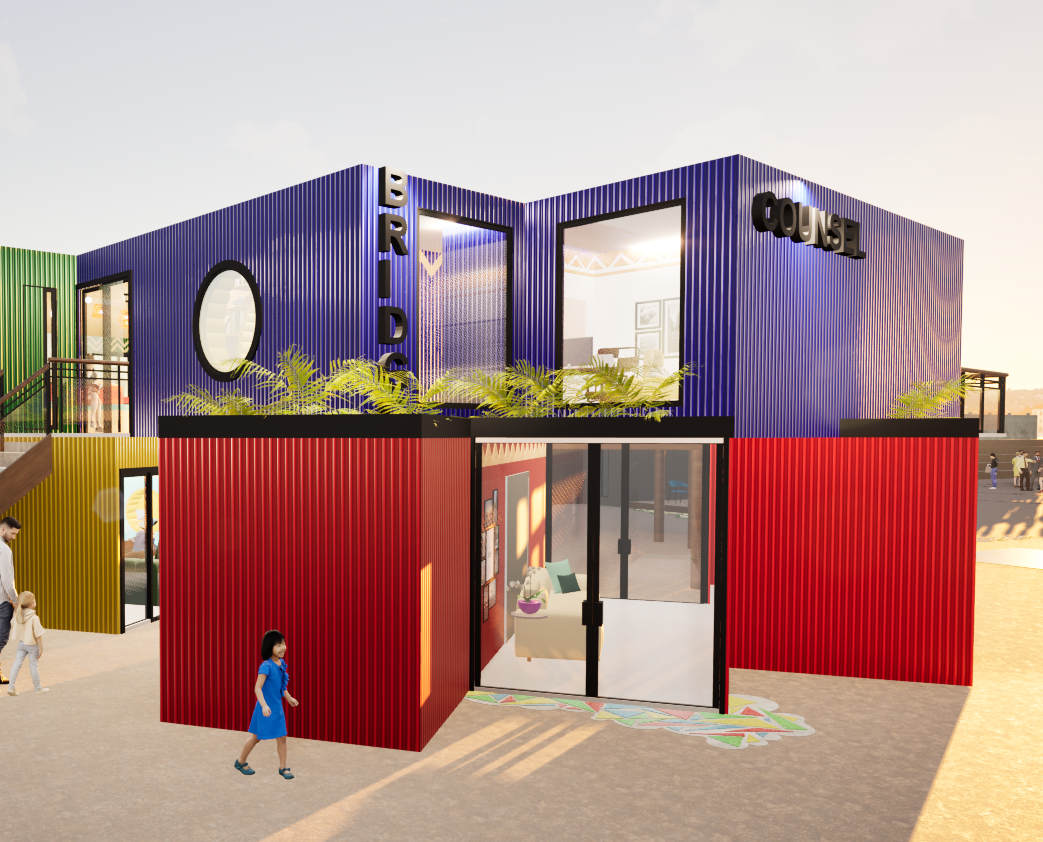
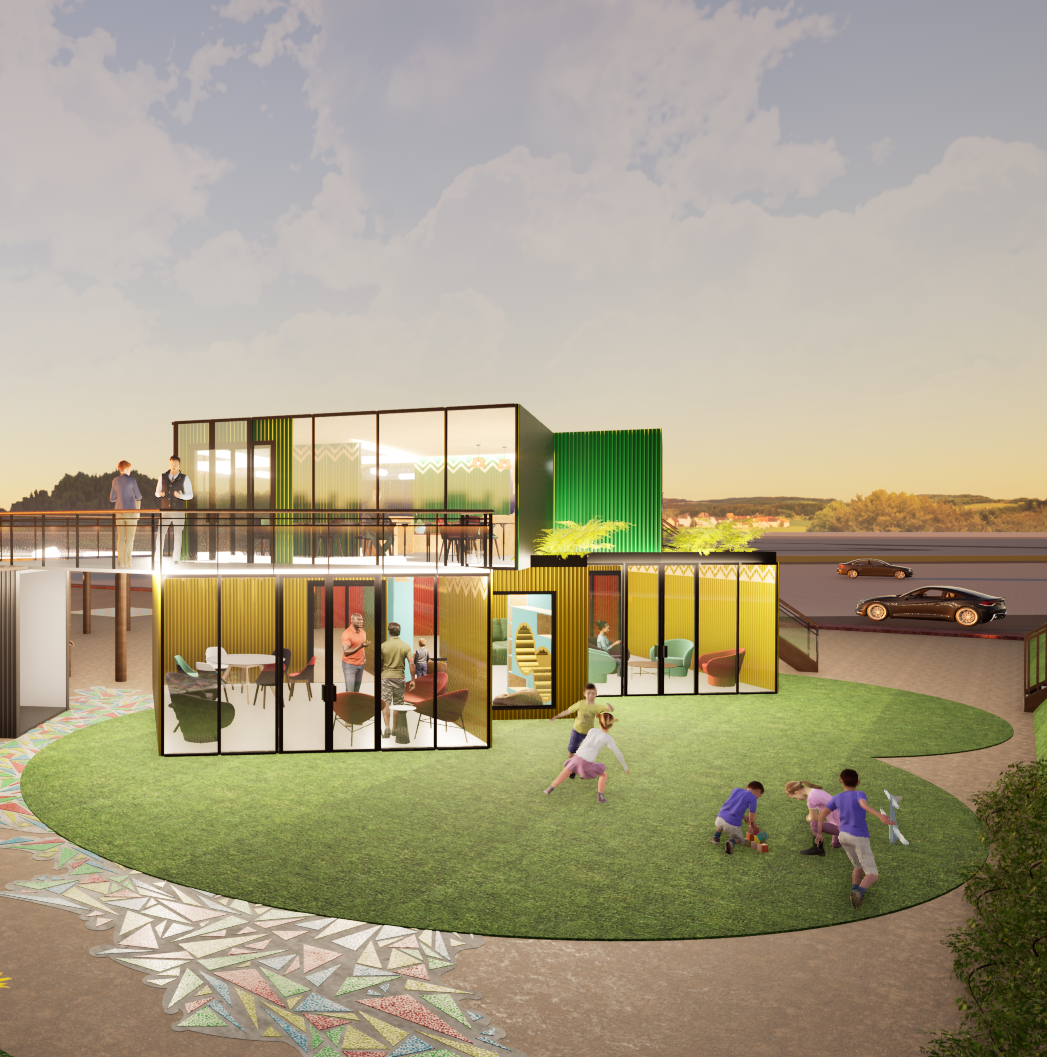
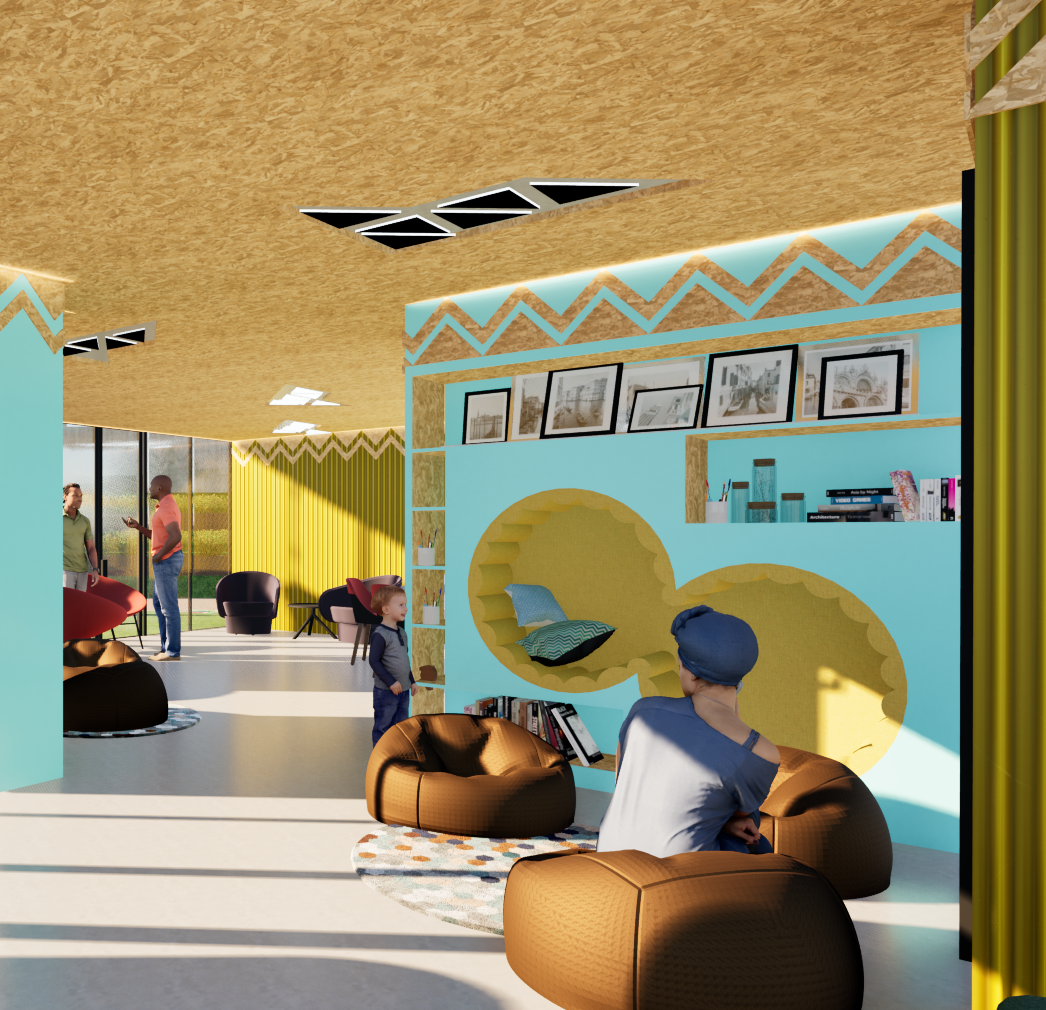
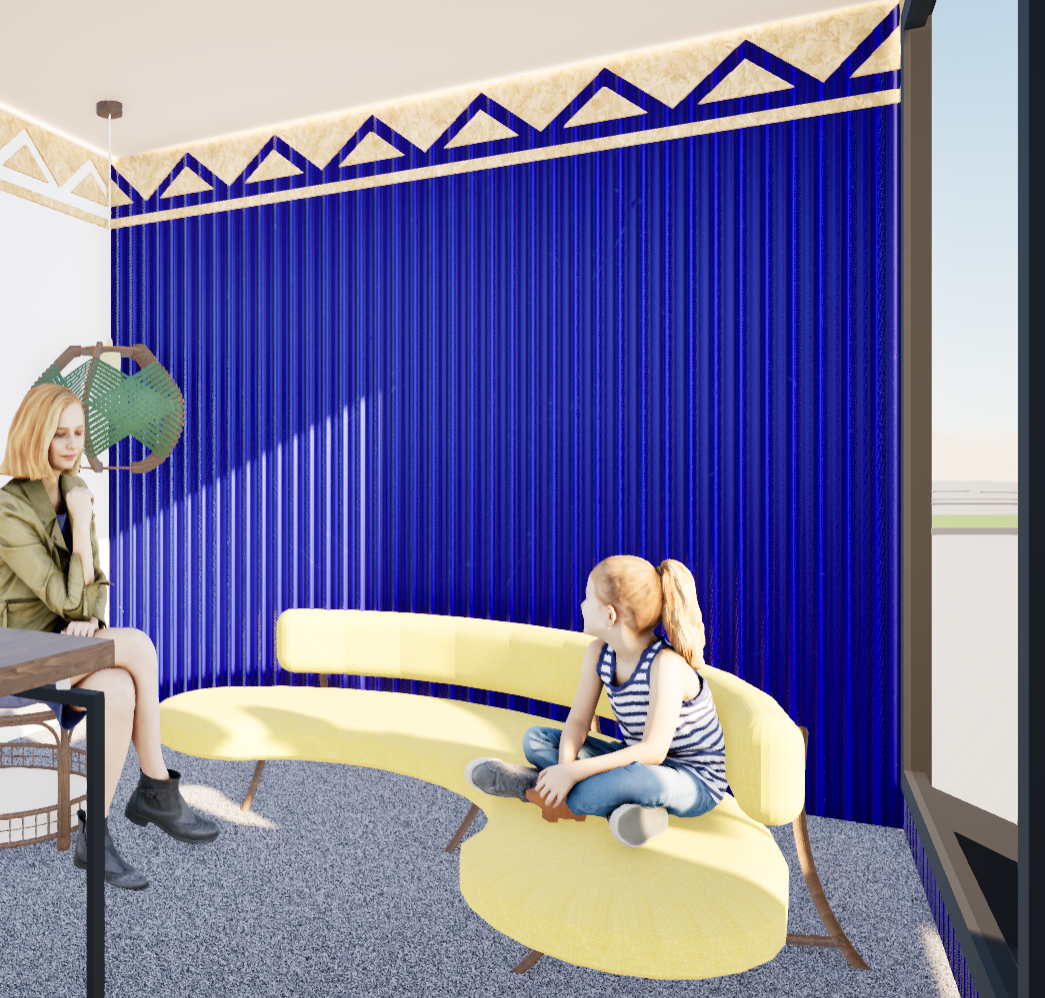
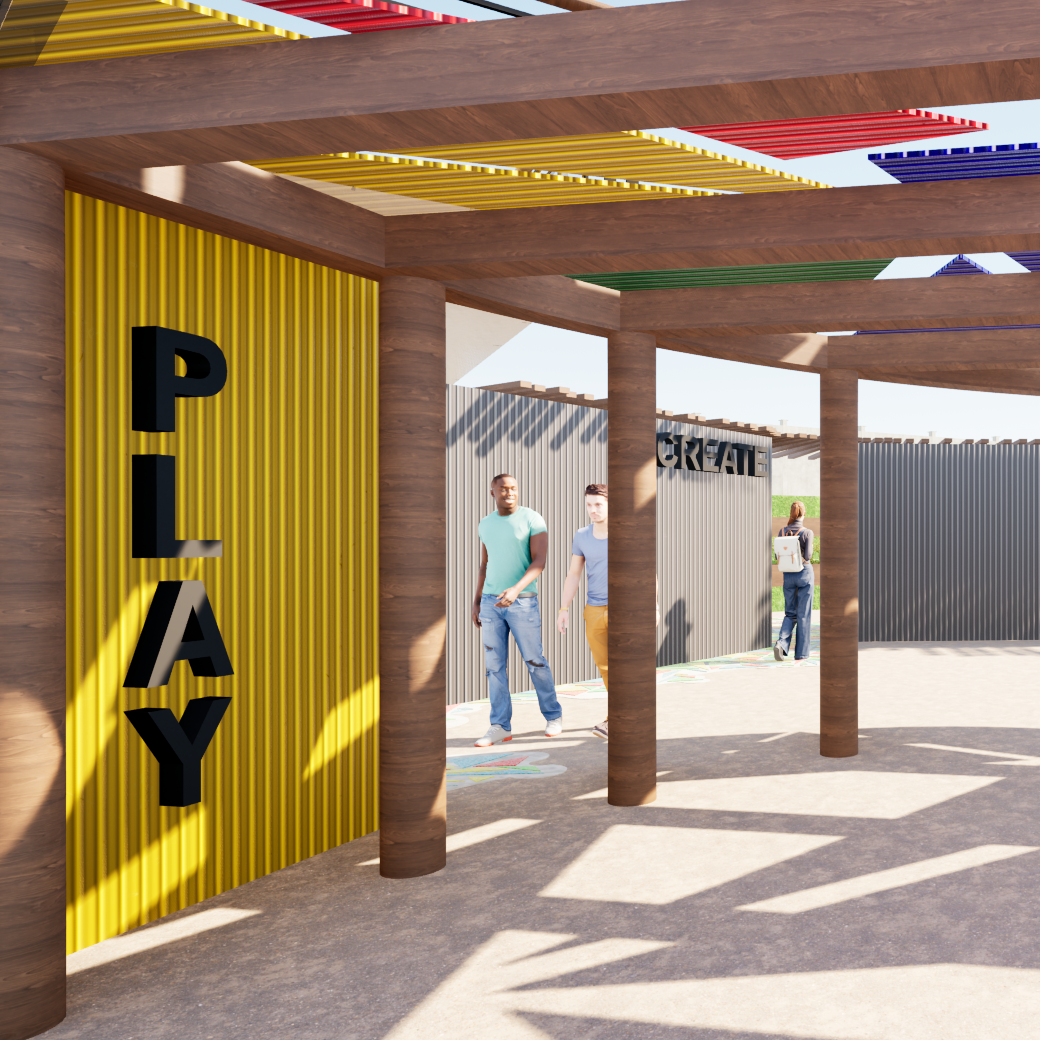
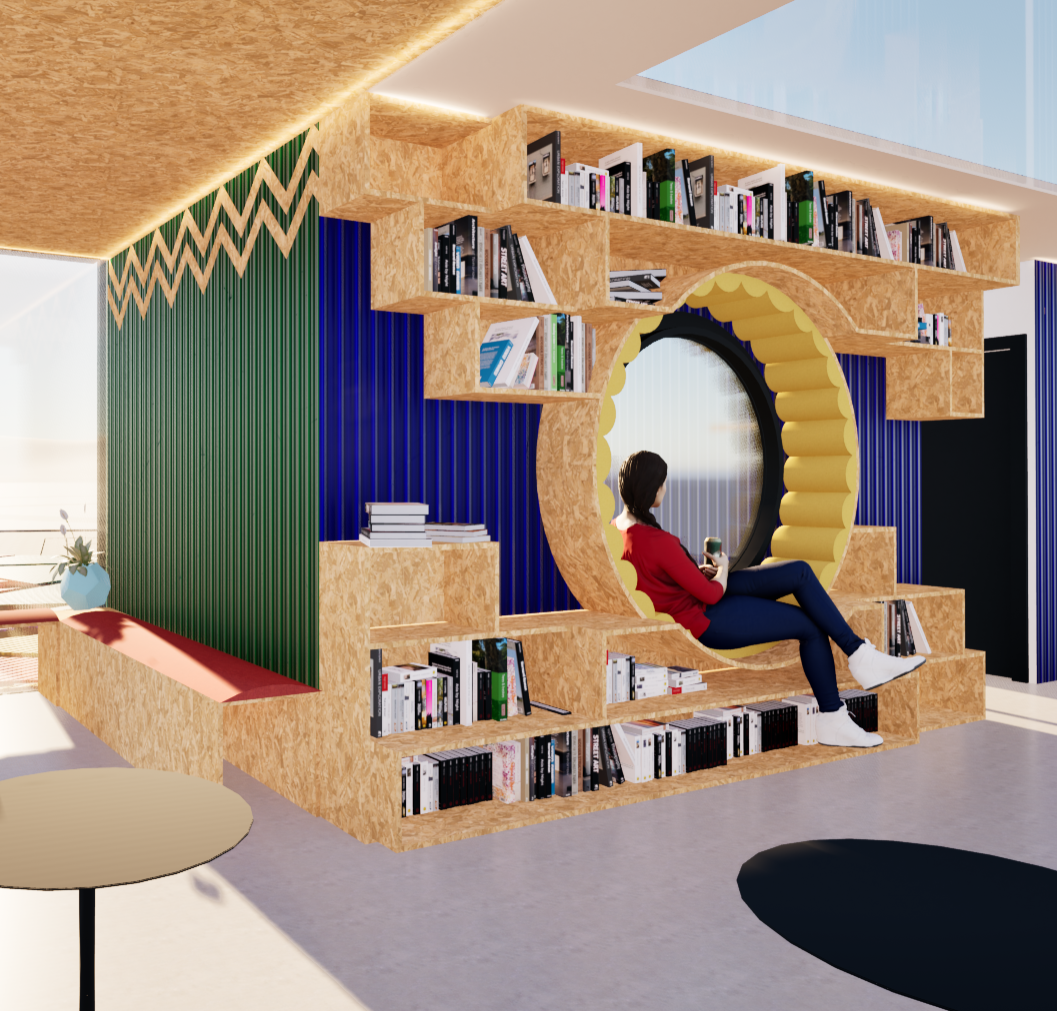
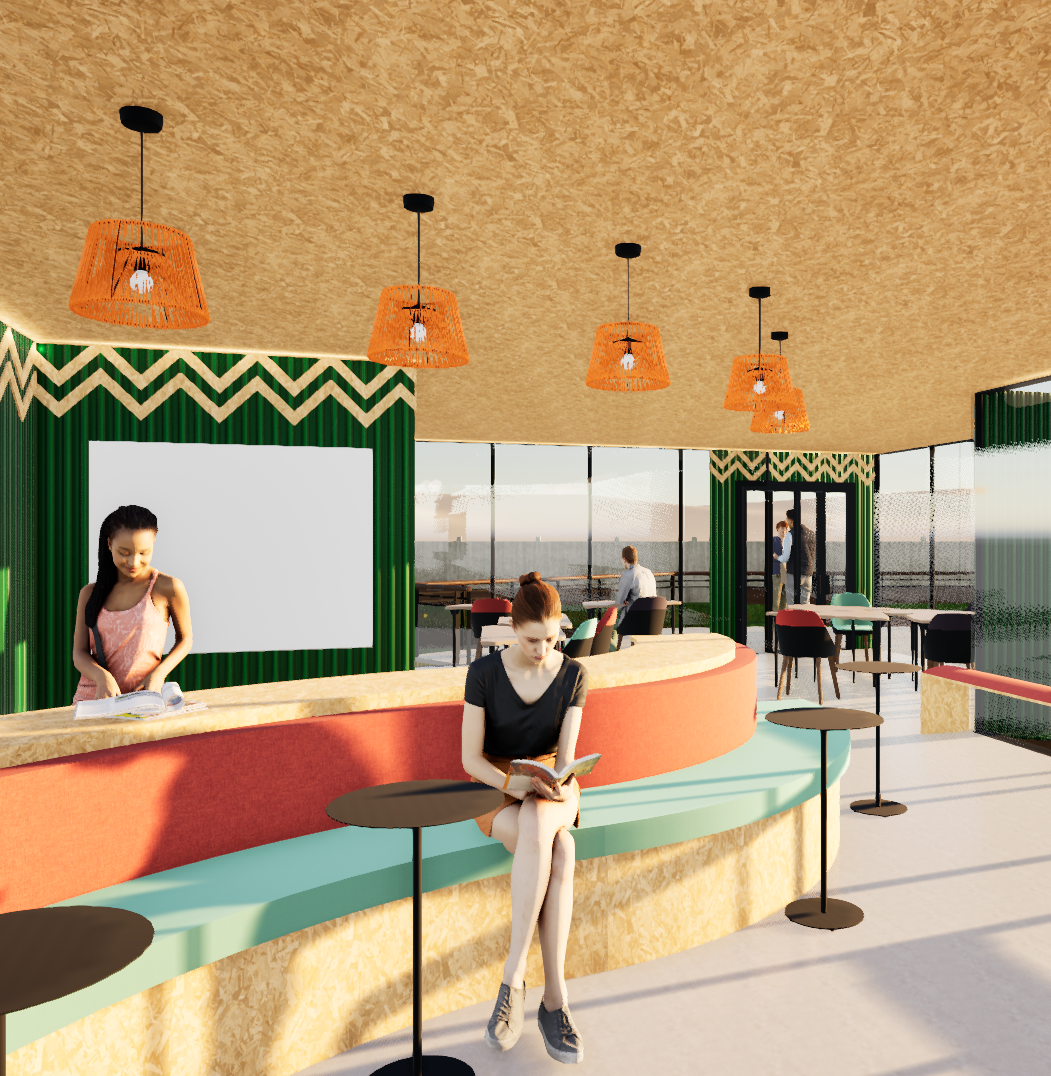
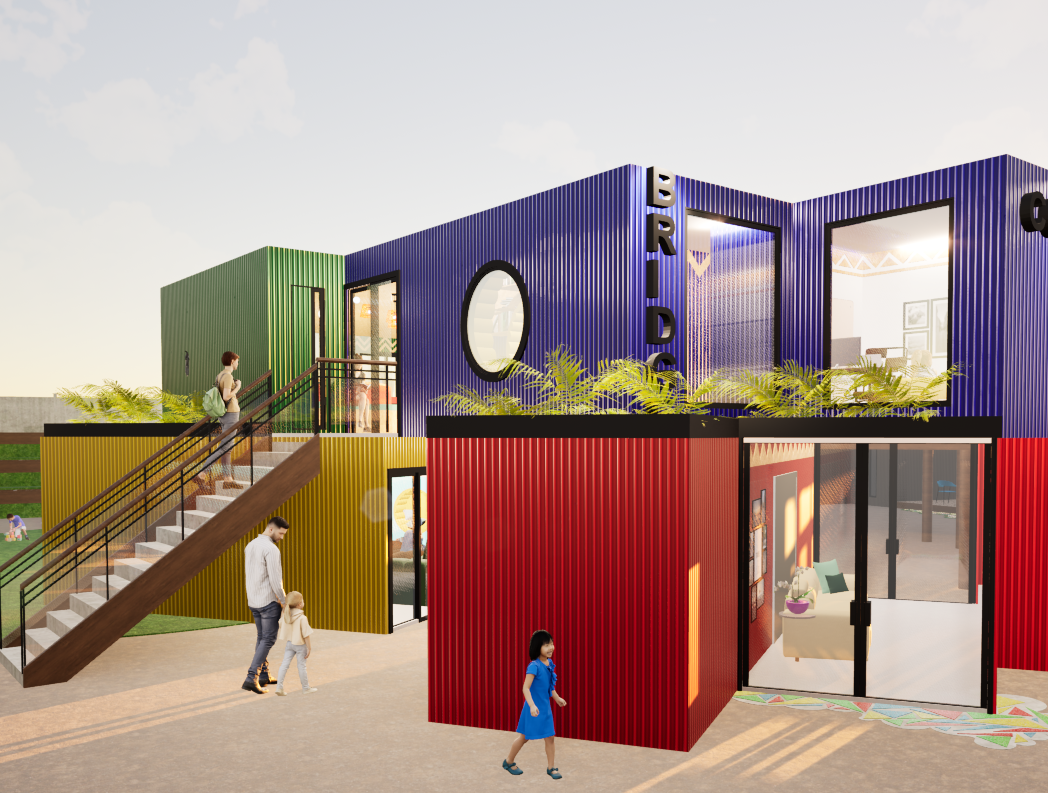
Pathways is a community youth centre designed as a safe, nurturing environment where children can learn, heal, and grow. The project brings together education, emotional support, and social connection through interconnected spaces, including a learning area for tutoring and creative activities, a library to help bridge the knowledge gap, counselling spaces for private and group sessions, and a social zone that encourages interaction. A shaded awning links all zones, forming a protected outdoor space for activities and fundraising events. A tiered garden with stepped seating extends toward the soccer courts, creating spaces for reflection while allowing the community to gather and support youth through sport. Inspired by traditional isiZulu culture, the design uses bold primary colours and graphic patterns to establish a strong South African identity. Spaces are colour-coded and clearly labelled to support intuitive wayfinding. The structure is formed from repurposed shipping containers, stacked in dynamic arrangements and left exposed to express sustainability. Generous glazing and skylights maximise natural light, reinforcing a bright, hopeful atmosphere for young lives.
Pathways is a community youth centre designed as a safe, nurturing environment where children can learn, heal, and grow. The project brings together education, emotional support, and social connection through interconnected spaces, including a learning area for tutoring and creative activities, a library to help bridge the knowledge gap, counselling spaces for private and group sessions, and a social zone that encourages interaction. A shaded awning links all zones, forming a protected outdoor space for activities and fundraising events. A tiered garden with stepped seating extends toward the soccer courts, creating spaces for reflection while allowing the community to gather and support youth through sport. Inspired by traditional isiZulu culture, the design uses bold primary colours and graphic patterns to establish a strong South African identity. Spaces are colour-coded and clearly labelled to support intuitive wayfinding. The structure is formed from repurposed shipping containers, stacked in dynamic arrangements and left exposed to express sustainability. Generous glazing and skylights maximise natural light, reinforcing a bright, hopeful atmosphere for young lives.
Project Innovation / Specification:
Pathways Youth Centre transforms a previously abandoned tennis court in Berea, Durban, which local youth were already using informally for soccer and exercise, into a carefully zoned, multi-functional hub. The design formalizes these activities with dedicated areas for sport, learning, counselling, creative expression, and social interaction. Modular, repurposed shipping containers are stacked and arranged to define distinct zones while maintaining connectivity, and colour-coded spaces with clear signage support intuitive wayfinding. Shaded awnings, pergolas, and tiered seating link indoor and outdoor areas, creating flexible environments for education, recreation, and community gatherings. Bold isiZulu-inspired patterns and primary colours reinforce a strong cultural identity. Through adaptive reuse, strategic zoning, and integrated facilities, the project provides an engaging, functional, and culturally resonant environment that elevates the youth’s everyday experiences.
Pathways Youth Centre transforms a previously abandoned tennis court in Berea, Durban, which local youth were already using informally for soccer and exercise, into a carefully zoned, multi-functional hub. The design formalizes these activities with dedicated areas for sport, learning, counselling, creative expression, and social interaction. Modular, repurposed shipping containers are stacked and arranged to define distinct zones while maintaining connectivity, and colour-coded spaces with clear signage support intuitive wayfinding. Shaded awnings, pergolas, and tiered seating link indoor and outdoor areas, creating flexible environments for education, recreation, and community gatherings. Bold isiZulu-inspired patterns and primary colours reinforce a strong cultural identity. Through adaptive reuse, strategic zoning, and integrated facilities, the project provides an engaging, functional, and culturally resonant environment that elevates the youth’s everyday experiences.
Project Sustainability Approach:
Pathways Youth Centre integrates sustainability through adaptive reuse, resource efficiency, climate-responsive design, and social sustainability. The project repurposes an abandoned tennis court and modular shipping containers, reducing material waste while providing flexible, durable facilities for learning, counselling, and social spaces. Existing hard surfaces are retained for outdoor recreation, limiting new land disturbance. Daylighting is maximized through large windows, curtain walls, and skylights, reducing reliance on artificial lighting, while natural ventilation and shaded awnings support thermal comfort. Outdoor pergolas, tiered seating, and shade structures create multi-functional spaces that adapt to weather and encourage year-round use. Social sustainability is embedded through inclusive design, volunteer programs for retired professionals, mentorship opportunities, and culturally resonant spaces that strengthen community cohesion. Materials such as chipboard accents and exposed corrugated surfaces celebrate honesty of material while minimizing finishing impacts, and LED lighting highlights functional and aesthetic features efficiently.
Pathways Youth Centre integrates sustainability through adaptive reuse, resource efficiency, climate-responsive design, and social sustainability. The project repurposes an abandoned tennis court and modular shipping containers, reducing material waste while providing flexible, durable facilities for learning, counselling, and social spaces. Existing hard surfaces are retained for outdoor recreation, limiting new land disturbance. Daylighting is maximized through large windows, curtain walls, and skylights, reducing reliance on artificial lighting, while natural ventilation and shaded awnings support thermal comfort. Outdoor pergolas, tiered seating, and shade structures create multi-functional spaces that adapt to weather and encourage year-round use. Social sustainability is embedded through inclusive design, volunteer programs for retired professionals, mentorship opportunities, and culturally resonant spaces that strengthen community cohesion. Materials such as chipboard accents and exposed corrugated surfaces celebrate honesty of material while minimizing finishing impacts, and LED lighting highlights functional and aesthetic features efficiently.
Local and Regional Impacts of the Project:
Pathways Youth Centre transforms Berea, Durban, by providing under-resourced youth with safe, structured spaces for learning, skills development, counselling, sport, and creative expression. The project formalizes informal uses of a neglected tennis court, creating zones that foster mentorship, social cohesion, and community pride. Retired professionals are engaged as volunteers, sharing expertise while finding purpose in meaningful involvement. Regionally, Pathways supports youth development, reduces vulnerability, promotes employable skills, and strengthens partnerships with organisations like Breadline Africa. By combining tailored facilities, cultural identity, and community engagement, the centre offers a replicable model for inclusive, youth-focused development.
Pathways Youth Centre transforms Berea, Durban, by providing under-resourced youth with safe, structured spaces for learning, skills development, counselling, sport, and creative expression. The project formalizes informal uses of a neglected tennis court, creating zones that foster mentorship, social cohesion, and community pride. Retired professionals are engaged as volunteers, sharing expertise while finding purpose in meaningful involvement. Regionally, Pathways supports youth development, reduces vulnerability, promotes employable skills, and strengthens partnerships with organisations like Breadline Africa. By combining tailored facilities, cultural identity, and community engagement, the centre offers a replicable model for inclusive, youth-focused development.