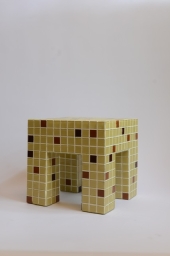
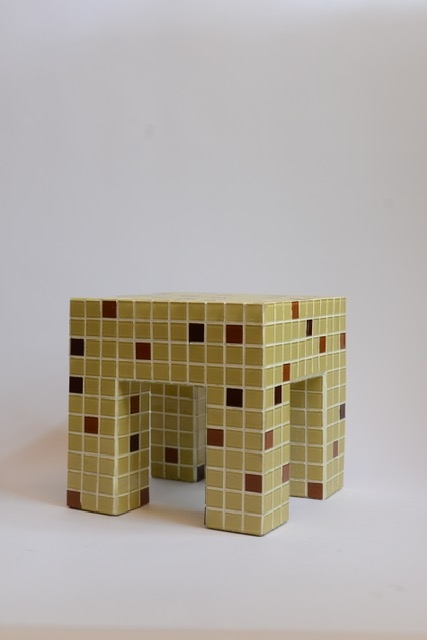
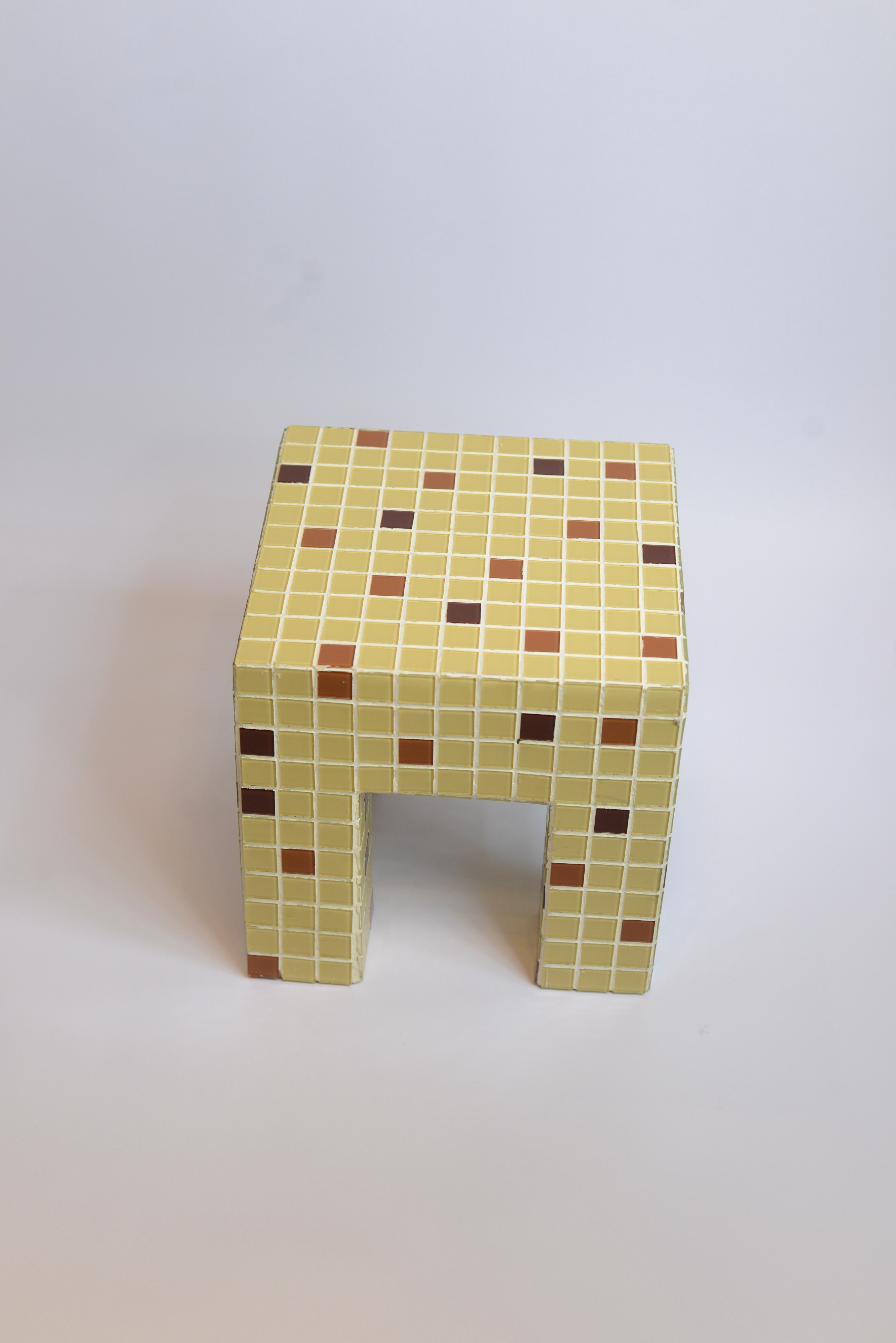
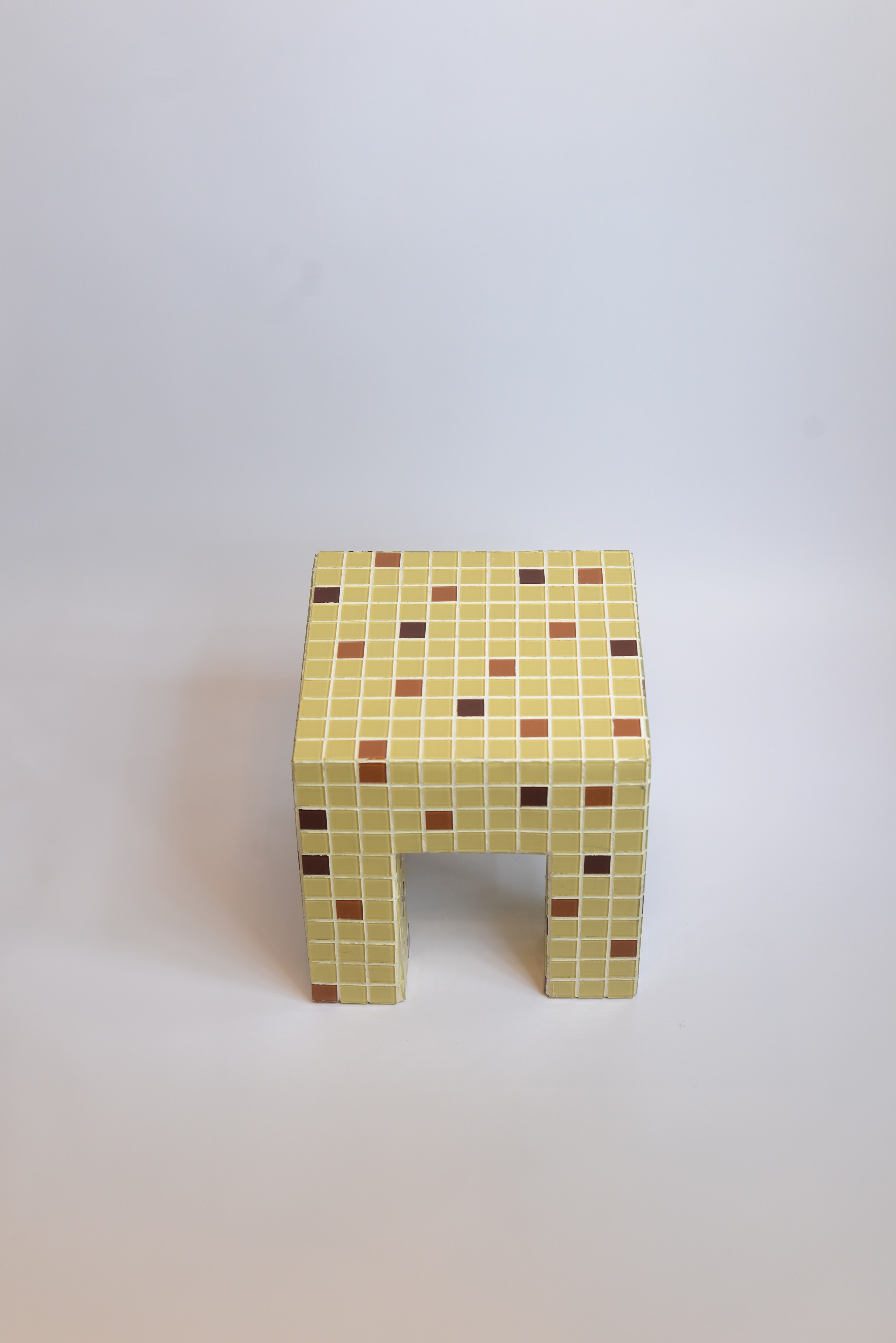
The Origin Apoti
Prize(s):
Honorable Mention 2026 PRODUCT DESIGN / Furniture & Lighting
Lead Designer(s) Name(s):Omolade Ogundimu
Design Status:Prototype
Product Description:
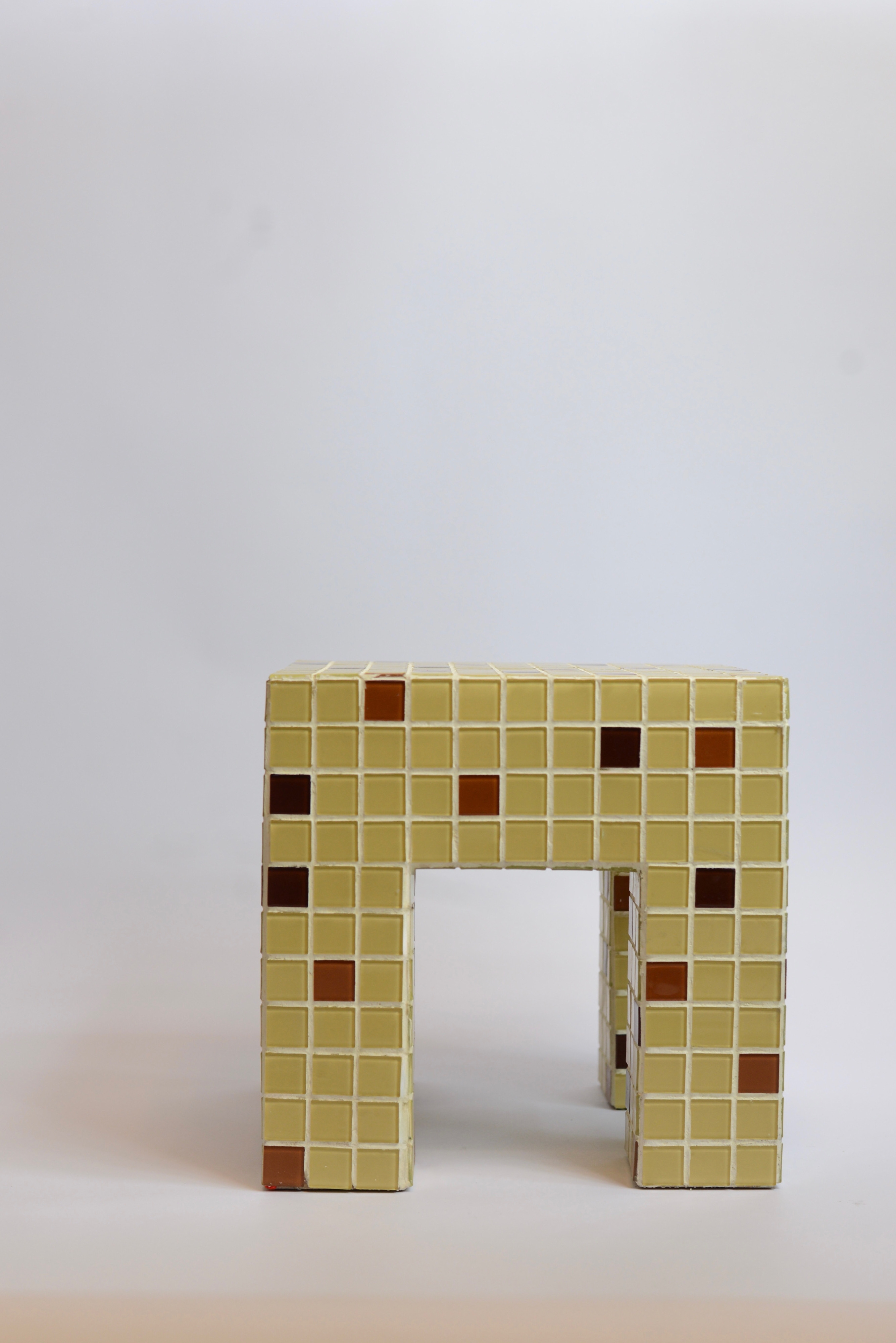
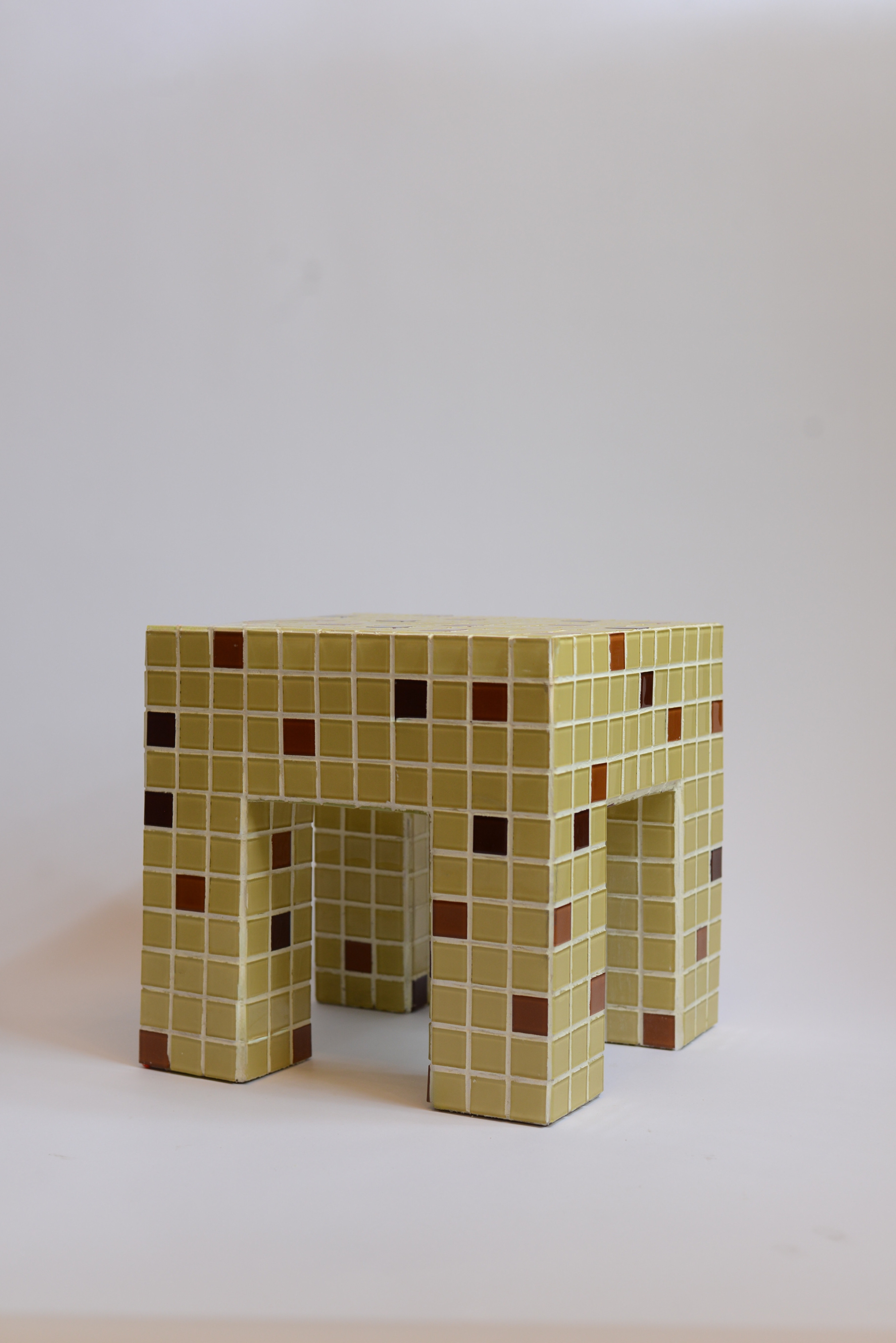
The Origin Apoti (Footstool) is a post-colonial reflection of the traditional Yoruba apoti, a low wooden stool commonly found in Nigerian households. It is used for everyday domestic activities, which include food preparation and communal seating. It is made from reclaimed and recycled wood and hand-applied mosaic tiles. The footstool balances cultural memory with a contemporary outlook, preserving the core identity of the place it is found in, while reflecting the architecture of the times. The stool retains its original sense of function and domestic memory.
The Origin Apoti (Footstool) is a post-colonial reflection of the traditional Yoruba apoti, a low wooden stool commonly found in Nigerian households. It is used for everyday domestic activities, which include food preparation and communal seating. It is made from reclaimed and recycled wood and hand-applied mosaic tiles. The footstool balances cultural memory with a contemporary outlook, preserving the core identity of the place it is found in, while reflecting the architecture of the times. The stool retains its original sense of function and domestic memory.
Product Innovation / Specification:
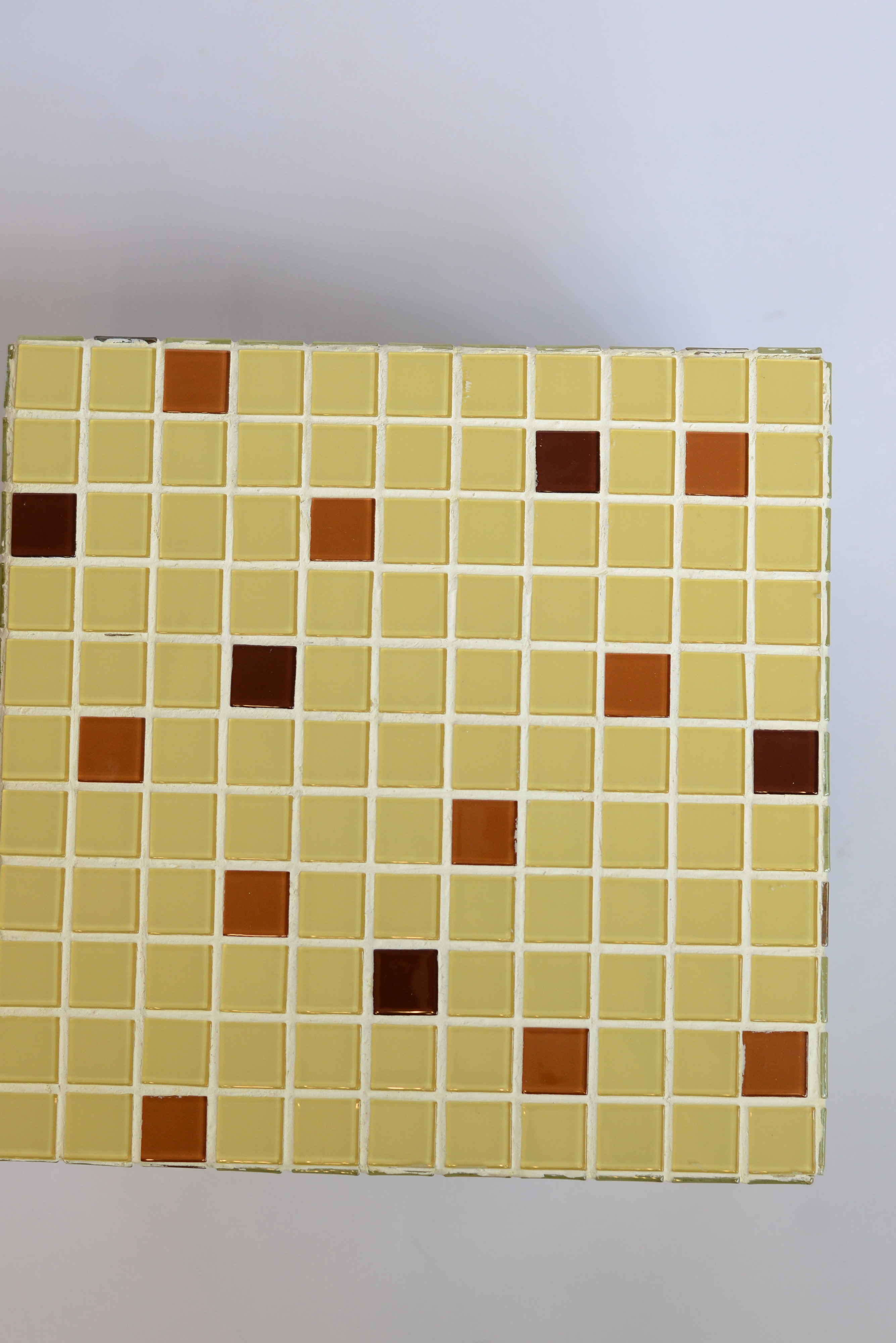
The Origin Apoti stands apart with its reinterpretation of a culturally familiar domestic form. The Apoti in a traditional setting was also known for its mobility and portability, moving around from the kitchen to the backyard. Therefore, the proportions needed to reflect this. We employed a subtractive design approach, carving away from a block mass and using negative space to improve its practicality. With the use of mosaic tiling, we reintroduced the post-colonial West African architecture language, allowing for both decoration and durability. The adhesion of the tile to the wood also led to new explorations into adhesives, which, unlike cement commonly used in tiling, allowed for a firm fit. With the hollow wooden internal structure, we were able to achieve the visual experience of a solid object without excessive weight.
The Origin Apoti stands apart with its reinterpretation of a culturally familiar domestic form. The Apoti in a traditional setting was also known for its mobility and portability, moving around from the kitchen to the backyard. Therefore, the proportions needed to reflect this. We employed a subtractive design approach, carving away from a block mass and using negative space to improve its practicality. With the use of mosaic tiling, we reintroduced the post-colonial West African architecture language, allowing for both decoration and durability. The adhesion of the tile to the wood also led to new explorations into adhesives, which, unlike cement commonly used in tiling, allowed for a firm fit. With the hollow wooden internal structure, we were able to achieve the visual experience of a solid object without excessive weight.
Product Sustainability Approach:
One of the core conscious decisions employed when designing the Origin Apoti was the material itself. It is produced using reclaimed wood (old cabinetry from renovation projects and waste offcuts from manufacturing houses). This reduced the dependence on newly sourced timber while extending the life span of existing materials that would otherwise have been disposed of improperly. The subtractive design also reduced the tile consumption and labor intensity, encouraging accessible production costs and responsible resource use. The piece needed to be locally fabricated and replicable, so we were able to prioritize local craftsmanship and mosaic tiling ( a skill that is fast-fading in the artisanal space due to modernism). This way, we were able to reduce our waste footprint and also encourage mosaic tile training amongst local artisans.
One of the core conscious decisions employed when designing the Origin Apoti was the material itself. It is produced using reclaimed wood (old cabinetry from renovation projects and waste offcuts from manufacturing houses). This reduced the dependence on newly sourced timber while extending the life span of existing materials that would otherwise have been disposed of improperly. The subtractive design also reduced the tile consumption and labor intensity, encouraging accessible production costs and responsible resource use. The piece needed to be locally fabricated and replicable, so we were able to prioritize local craftsmanship and mosaic tiling ( a skill that is fast-fading in the artisanal space due to modernism). This way, we were able to reduce our waste footprint and also encourage mosaic tile training amongst local artisans.
Local and Regional Impacts of the Product:
As an everyday object, the design validates local forms and positions them within contemporary design conversations. The philosophy behind it is simple: design should hold memory. In an ever-evolving world of trends, we chose to immortalize a traditional concept in a global context. Over the years, mosaic tiling was once regarded as an heirloom skill passed down from generation to generation. A craft of great detail had begun to reach a decline in demand. On a regional level, the piece contributes to a larger narrative - the growing revival of mosaic tiling. It supports local craftsmanship by highlighting tiling as a highly sought-after skill able to compete and stand side by side with crafts like carpentry, and also allows tilers to earn more and grow their artisanal value in the market.
As an everyday object, the design validates local forms and positions them within contemporary design conversations. The philosophy behind it is simple: design should hold memory. In an ever-evolving world of trends, we chose to immortalize a traditional concept in a global context. Over the years, mosaic tiling was once regarded as an heirloom skill passed down from generation to generation. A craft of great detail had begun to reach a decline in demand. On a regional level, the piece contributes to a larger narrative - the growing revival of mosaic tiling. It supports local craftsmanship by highlighting tiling as a highly sought-after skill able to compete and stand side by side with crafts like carpentry, and also allows tilers to earn more and grow their artisanal value in the market.

Lead Designer(s) Name(s):Omolade Ogundimu