Clover Desk
Prize(s):
WINNER 2026 PRODUCT DESIGN / People-Centric Design | PRODUCT DESIGN / Furniture & Lighting
Company Name:Studio 127_1
Lead Designer(s) Name(s):Florian Mouafo
Design Team / Other designer(s):Patrick Yakana, Sandrine Simo
Other Contributor(s):Baudrel Nde, Lizette Stafack, Catherine Sosso, Christy Diapa, Yves Oyono, Raoul Makoal
Manufacturer Name:Fozap Furniture Ltd
Project Location:Yaounde
Design Status:Prototype
Website: View
Product Description:
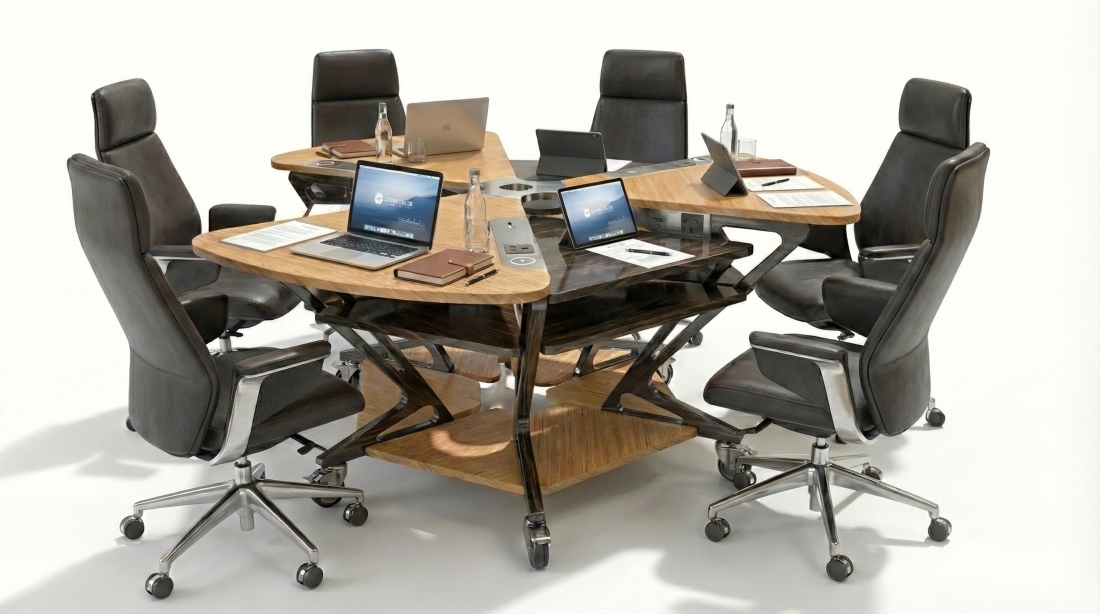
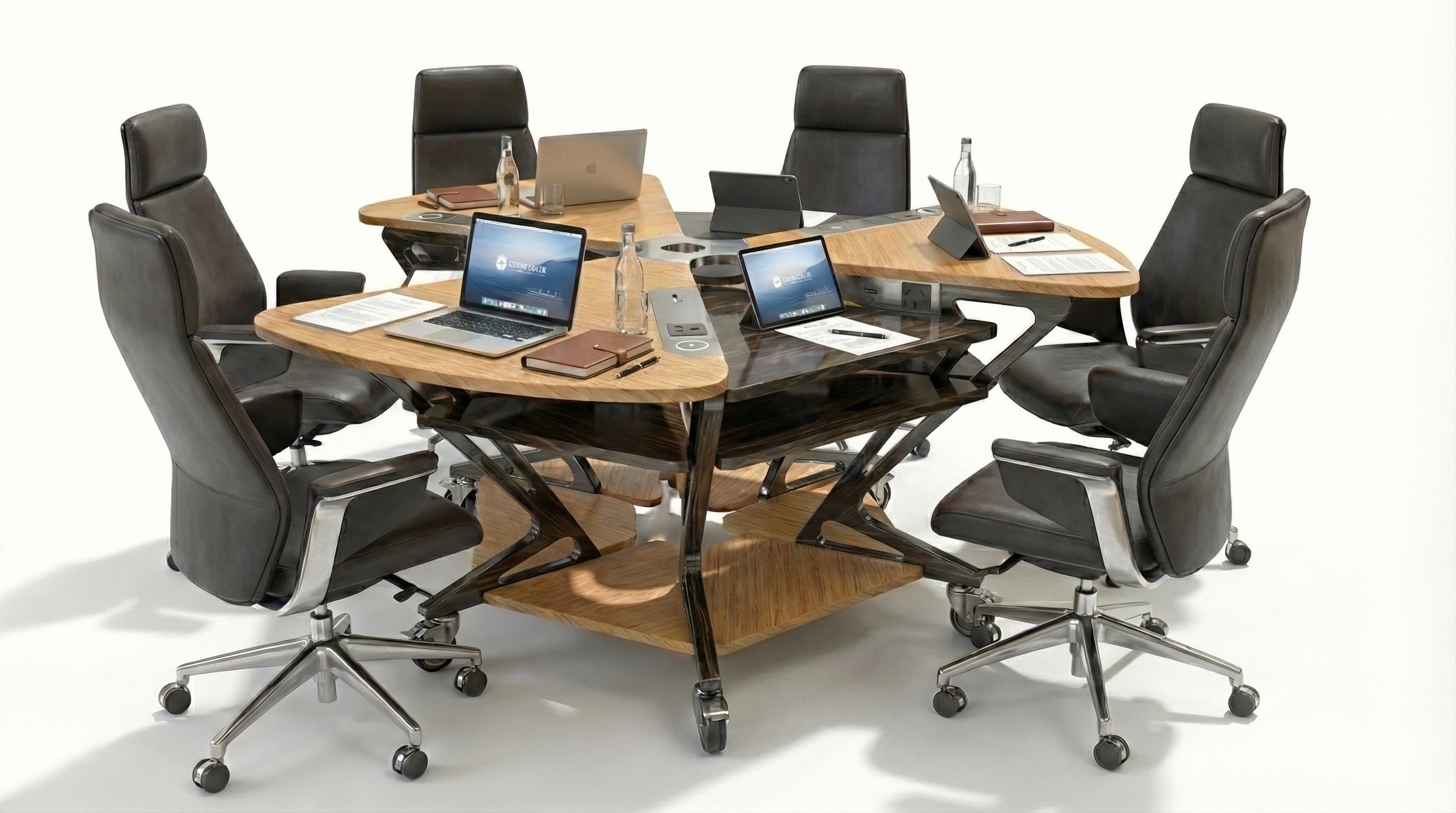
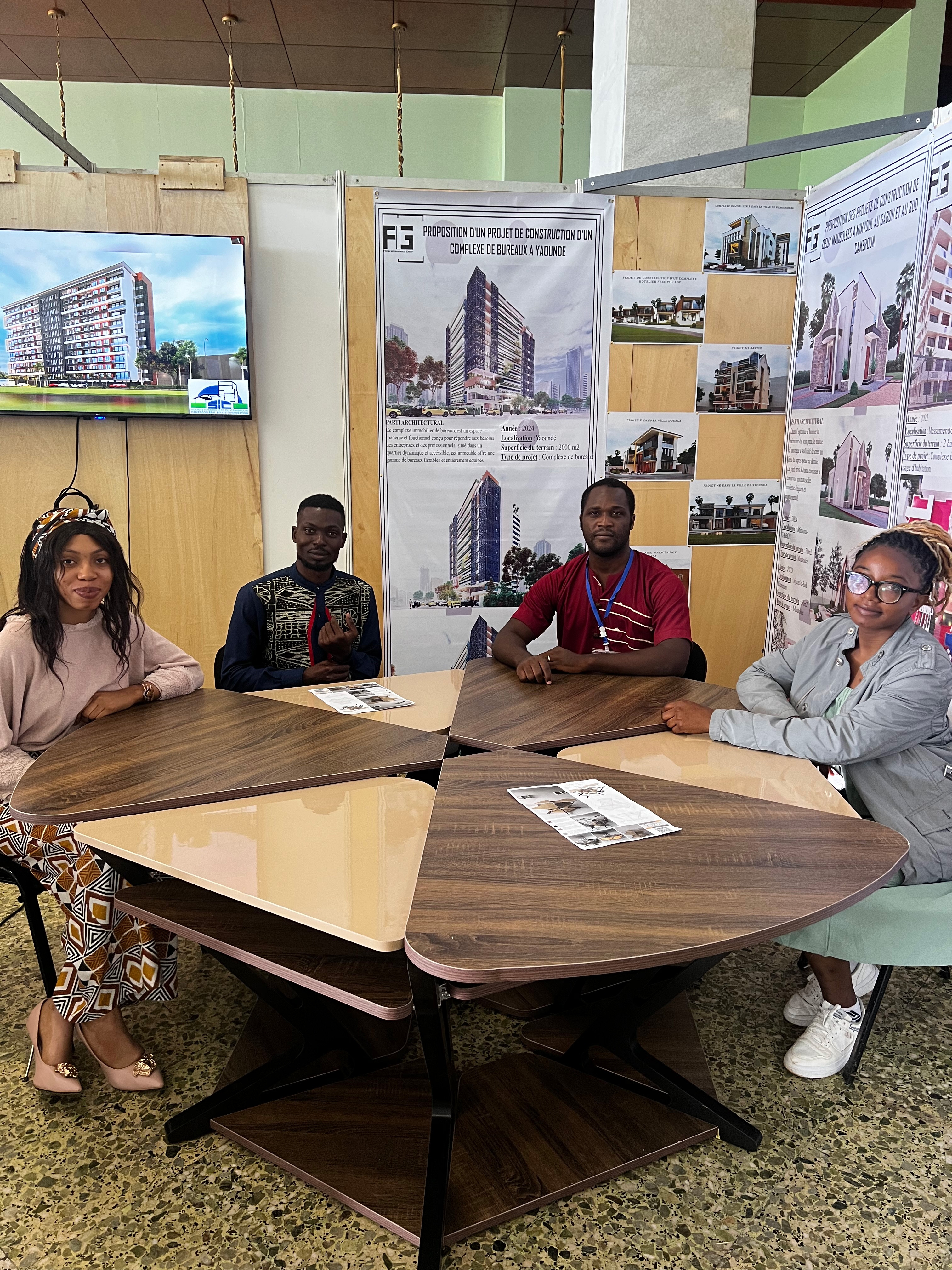
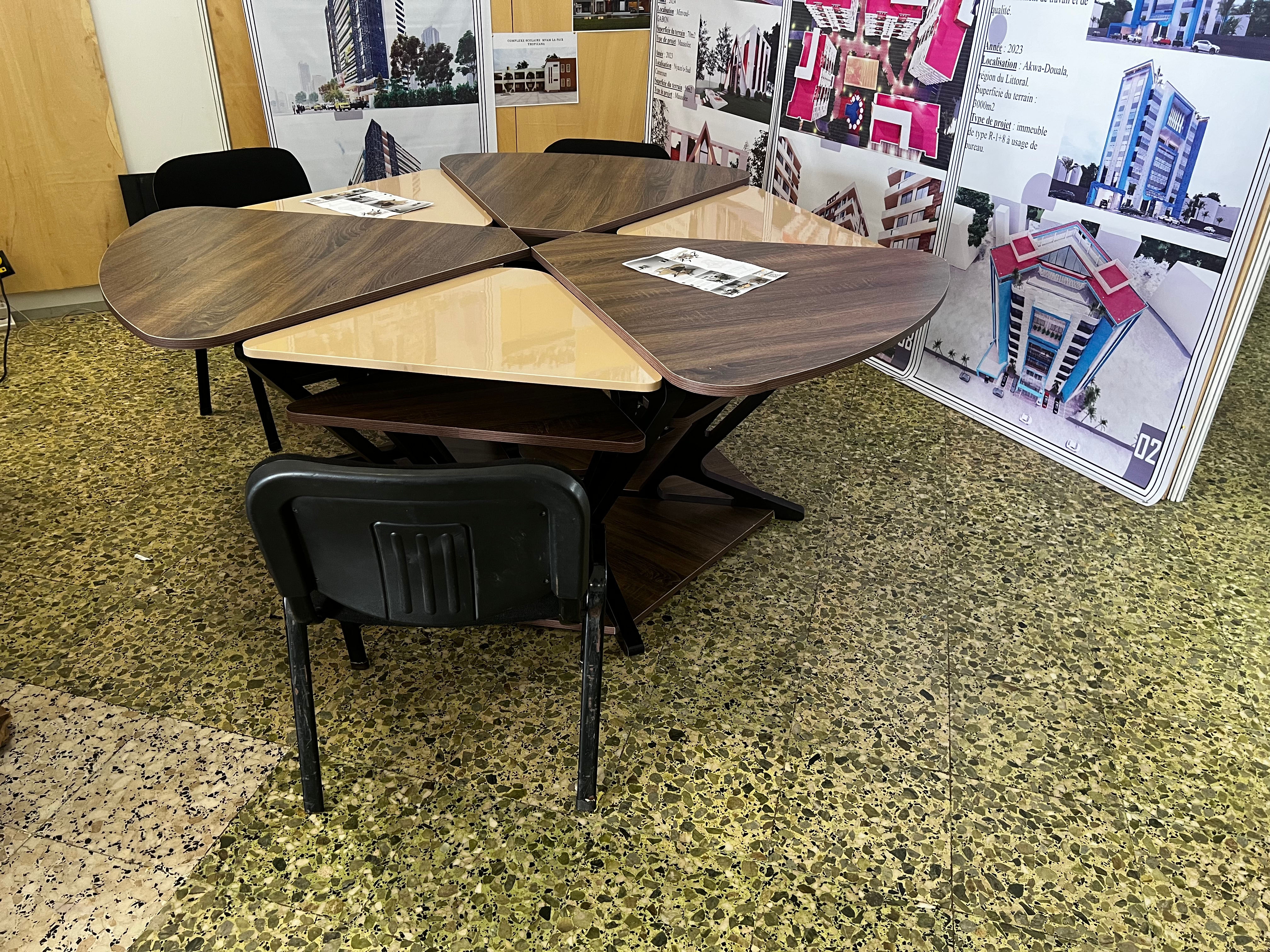
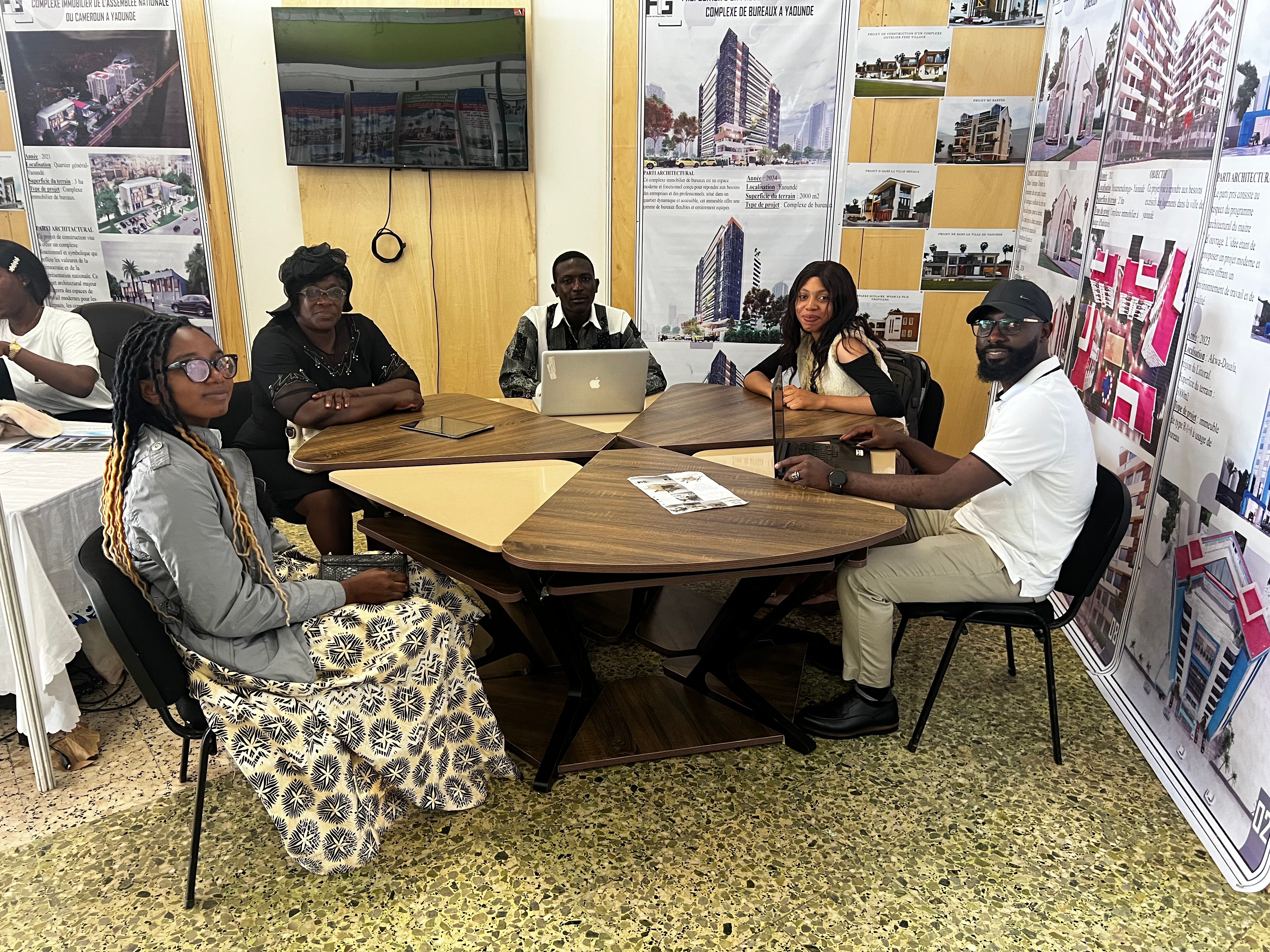
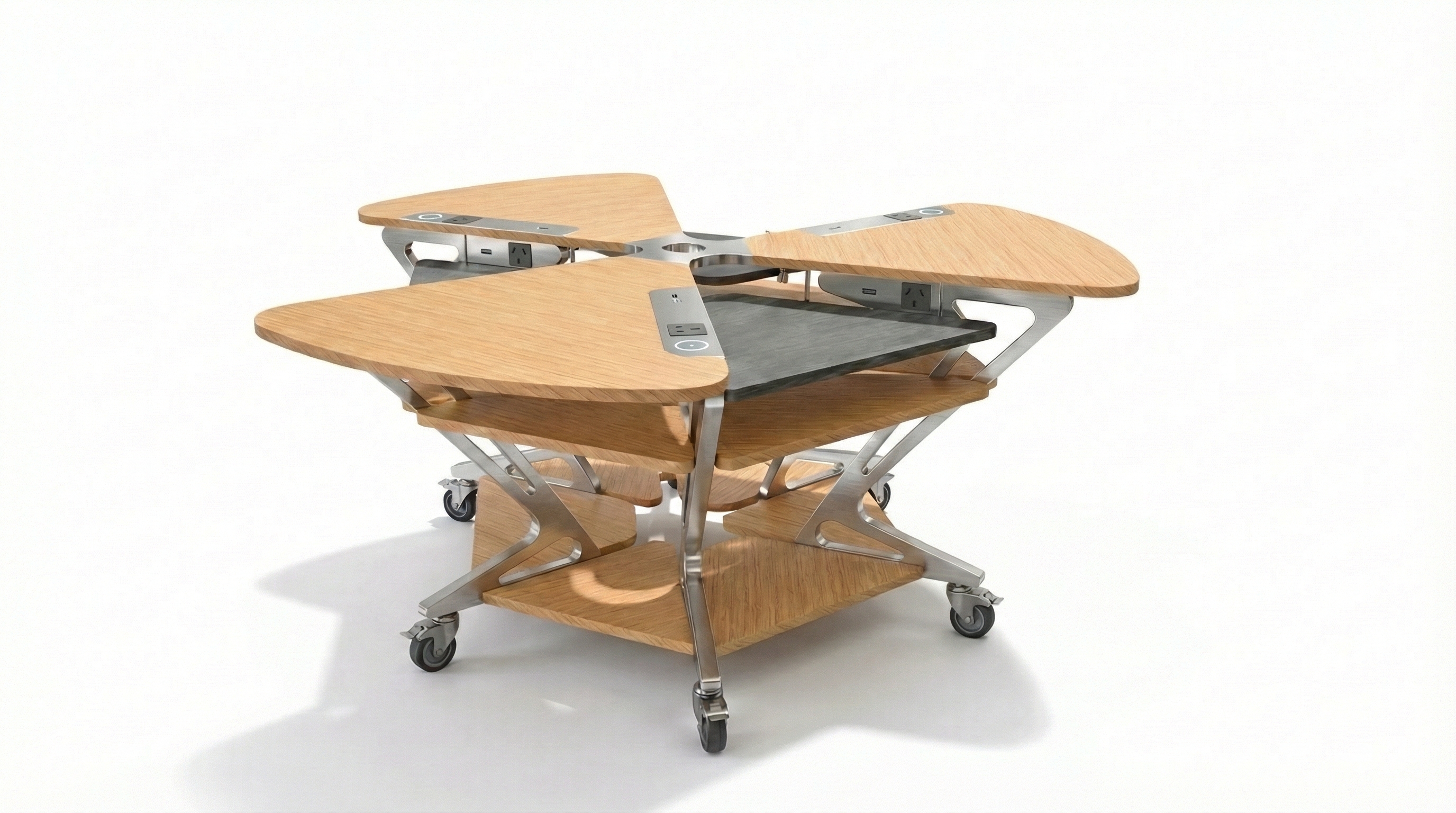
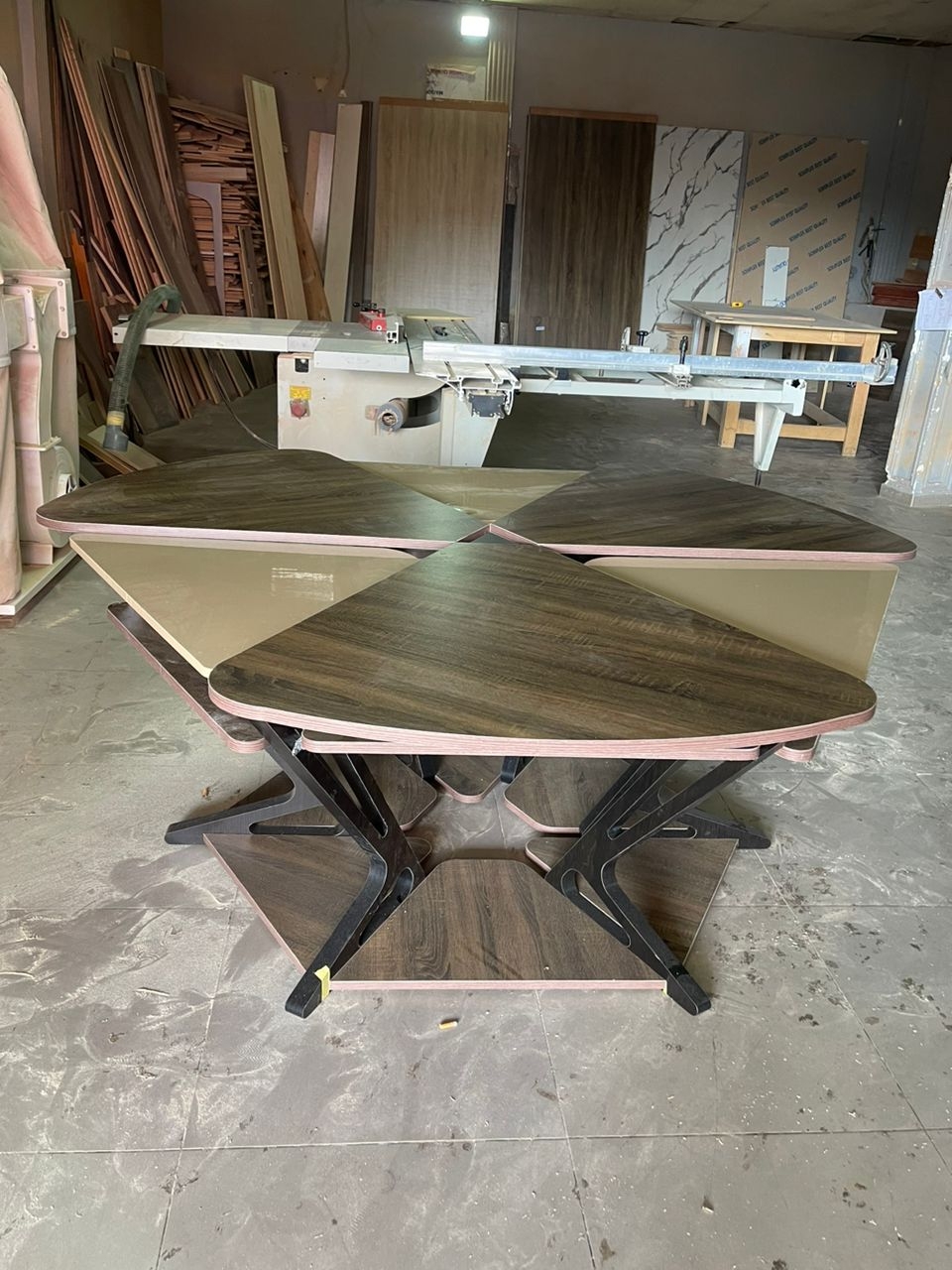
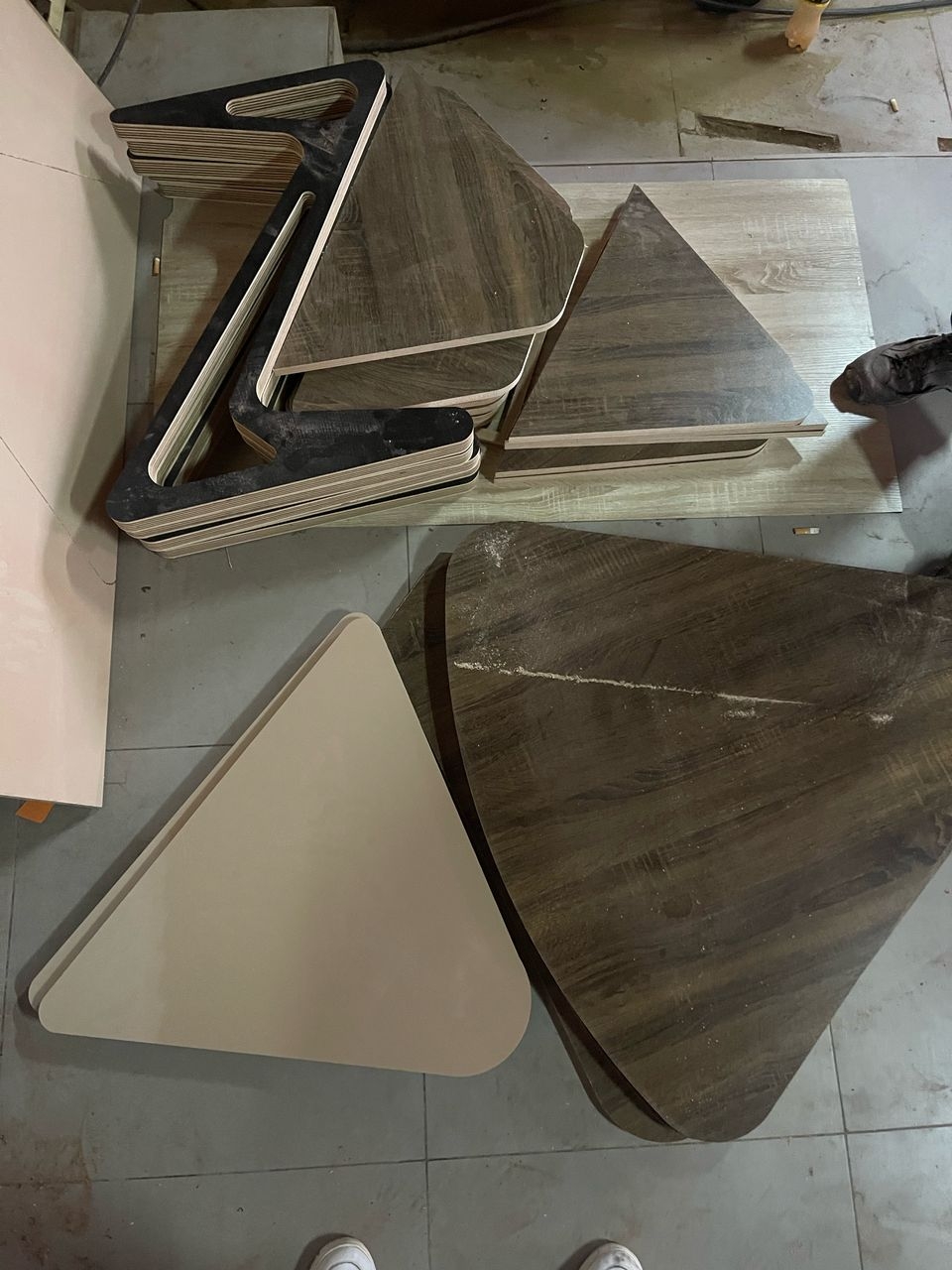
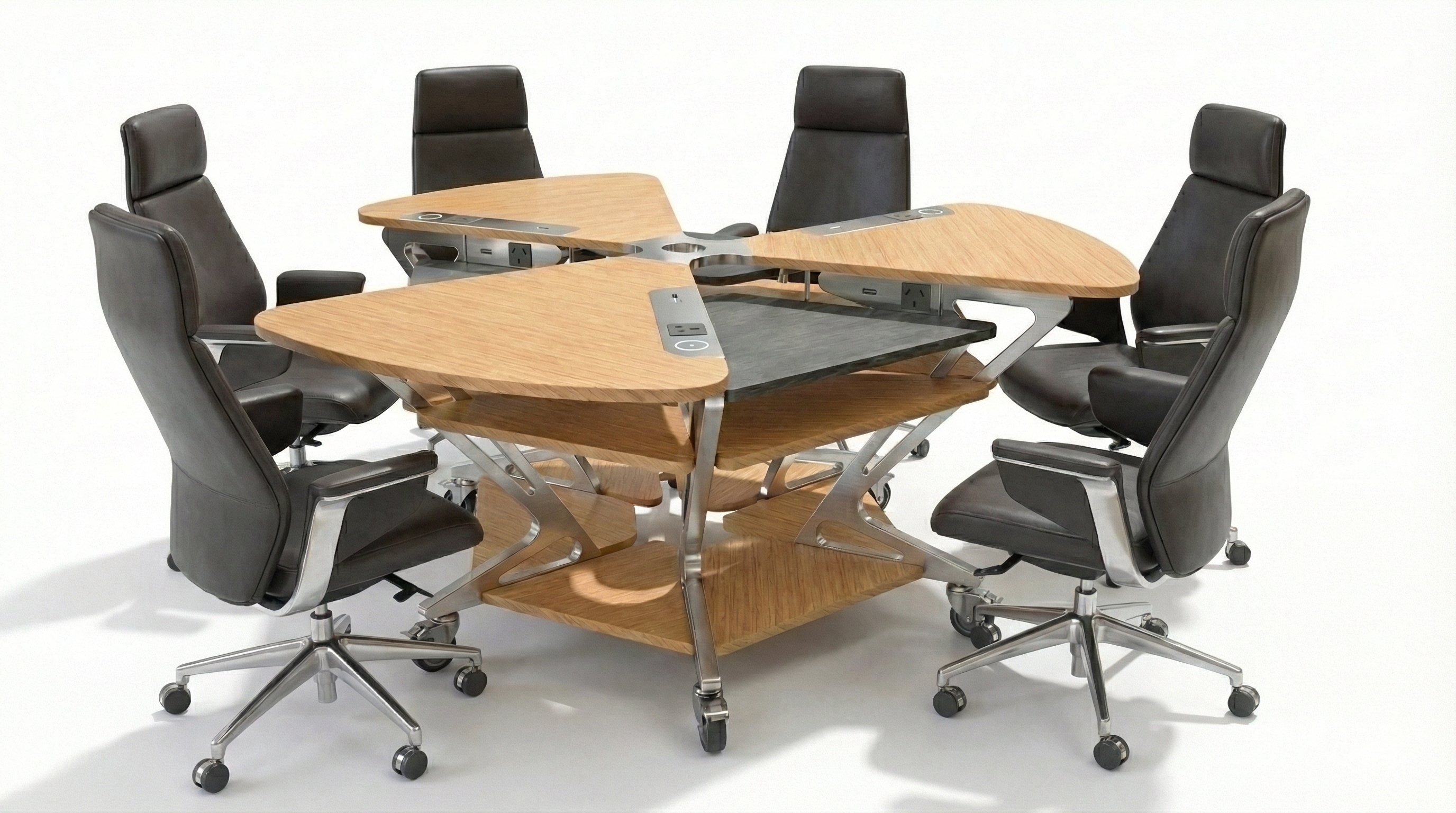
Clover Desk is a modular collaborative workstation designed to transform any room into a flexible hub for teamwork, meetings, and creative production. Inspired by a clover leaf, its three curved work surfaces orbit a central core, encouraging face-to-face interaction while keeping shared tools, screens, and documents within easy reach. More than a static table, Clover Desk supports multiple working styles from quick stand-ups and brainstorming to laptop collaboration, reviews, and small presentations. Its rounded edges improve comfort and circulation, keeping the workspace open even in compact areas while maintaining clear sightlines for smooth communication. Built for evolving environments, Clover Desk integrates guided rails and wheels for effortless repositioning and reconfiguration. Premium wood surfaces add warmth and durability, while engineered metal elements provide structural strength and a clean modern contrast. Reinforced legs ensure stability under daily use. Ideal for coworking spaces, studios, training rooms, and project team areas, Clover Desk combines adaptability, comfort, and a distinctive design identity.
Clover Desk is a modular collaborative workstation designed to transform any room into a flexible hub for teamwork, meetings, and creative production. Inspired by a clover leaf, its three curved work surfaces orbit a central core, encouraging face-to-face interaction while keeping shared tools, screens, and documents within easy reach. More than a static table, Clover Desk supports multiple working styles from quick stand-ups and brainstorming to laptop collaboration, reviews, and small presentations. Its rounded edges improve comfort and circulation, keeping the workspace open even in compact areas while maintaining clear sightlines for smooth communication. Built for evolving environments, Clover Desk integrates guided rails and wheels for effortless repositioning and reconfiguration. Premium wood surfaces add warmth and durability, while engineered metal elements provide structural strength and a clean modern contrast. Reinforced legs ensure stability under daily use. Ideal for coworking spaces, studios, training rooms, and project team areas, Clover Desk combines adaptability, comfort, and a distinctive design identity.
Product Innovation / Specification:
Designed to deliver high-capacity teamwork in compact spaces. Its clover-inspired plan: three rounded work surfaces arranged around a central core, creates balanced, face-to-face positions, preserves clear sightliness, and keeps shared tools, documents, or displays within easy reach while maintaining individual work zones. A key performance target is space efficiency: Clover Desk can accommodate up to 6 people in less than 10 m², making it ideal for spaces where density and comfort must coexist. The rounded perimeter also improves circulation, reducing edge conflicts and supporting smoother movement in tight rooms. Reconfiguration is enabled through a guided mobility system combining rails and wheels, allowing controlled repositioning and quick layout changes without heavy handling or disassembly. A multi-level structure supports organization by separating primary work areas from shared or secondary surfaces, helping reduce clutter during collaborative sessions.
Designed to deliver high-capacity teamwork in compact spaces. Its clover-inspired plan: three rounded work surfaces arranged around a central core, creates balanced, face-to-face positions, preserves clear sightliness, and keeps shared tools, documents, or displays within easy reach while maintaining individual work zones. A key performance target is space efficiency: Clover Desk can accommodate up to 6 people in less than 10 m², making it ideal for spaces where density and comfort must coexist. The rounded perimeter also improves circulation, reducing edge conflicts and supporting smoother movement in tight rooms. Reconfiguration is enabled through a guided mobility system combining rails and wheels, allowing controlled repositioning and quick layout changes without heavy handling or disassembly. A multi-level structure supports organization by separating primary work areas from shared or secondary surfaces, helping reduce clutter during collaborative sessions.
Product Sustainability Approach:
The desk is designed as a long-life, low-waste collaboration system focused on efficiency, durability, and responsible material choices. Its sustainability strategy starts with space optimization: accommodating up to 6 people in less than 10 m² reduces floor area per user and can lower fit-out scale and energy demand. A second pillar is design for longevity. Robust structural elements and durable work surfaces support high-use environments such as coworking, training, and studios. Reinforced support and controlled mobility reduce wear from wobble, impact, and repositioning, extending service life and limiting replacement. Clover Desk supports adaptability over disposal. Guided rails and wheels allow layout changes without buying new furniture, enabling reuse across meeting, teamwork, and review scenarios. Materials can be specified for lower impact: wood from legally harvested, preferably certified sources with low-emission finishes, and metal components selected for structural efficiency with durable protective coatings. Repair-friendly detailing standard fasteners, replaceable wear parts, and separable assemblies improves maintenance, refurbishment, and recycling potential.
The desk is designed as a long-life, low-waste collaboration system focused on efficiency, durability, and responsible material choices. Its sustainability strategy starts with space optimization: accommodating up to 6 people in less than 10 m² reduces floor area per user and can lower fit-out scale and energy demand. A second pillar is design for longevity. Robust structural elements and durable work surfaces support high-use environments such as coworking, training, and studios. Reinforced support and controlled mobility reduce wear from wobble, impact, and repositioning, extending service life and limiting replacement. Clover Desk supports adaptability over disposal. Guided rails and wheels allow layout changes without buying new furniture, enabling reuse across meeting, teamwork, and review scenarios. Materials can be specified for lower impact: wood from legally harvested, preferably certified sources with low-emission finishes, and metal components selected for structural efficiency with durable protective coatings. Repair-friendly detailing standard fasteners, replaceable wear parts, and separable assemblies improves maintenance, refurbishment, and recycling potential.
Local and Regional Impacts of the Product:
The desk is in the prototyping phase and is designed and manufactured in Cameroon, creating local and regional value. Local fabrication shortens supply chains and keeps economic value—design work, workshop labor, finishing, and assembly within Cameroon and Central Africa. Locally, prototyping builds skills in woodworking, metal fabrication, finishing, and product engineering. Iterative testing improves precision and quality control, strengthening workshop capacity and supporting a transition to small-series manufacturing. Regionally, local production reduces reliance on imported office furniture affected by shipping costs and lead times. A Cameroon-made desk can improve availability for co-working spaces and training centres, with faster repairs, spare parts, and after-sales support.
The desk is in the prototyping phase and is designed and manufactured in Cameroon, creating local and regional value. Local fabrication shortens supply chains and keeps economic value—design work, workshop labor, finishing, and assembly within Cameroon and Central Africa. Locally, prototyping builds skills in woodworking, metal fabrication, finishing, and product engineering. Iterative testing improves precision and quality control, strengthening workshop capacity and supporting a transition to small-series manufacturing. Regionally, local production reduces reliance on imported office furniture affected by shipping costs and lead times. A Cameroon-made desk can improve availability for co-working spaces and training centres, with faster repairs, spare parts, and after-sales support.

Company Name:Studio 127_1
Lead Designer(s) Name(s):Florian Mouafo
Profile Description:
Architect and BIM & Design Technology Specialist with experience across architectural design, BIM coordination, computational workflows, façade rationalisation, and design-to-construction delivery. Founder of Studio 127_1, leading multidisciplinary project development from concept to technical resolution. My work focuses on the intersection of design ambition, digital methods, and buildable outcomes, with a strong interest in computational design, Revit-based delivery, and technically rigorous architectural systems.
Architect and BIM & Design Technology Specialist with experience across architectural design, BIM coordination, computational workflows, façade rationalisation, and design-to-construction delivery. Founder of Studio 127_1, leading multidisciplinary project development from concept to technical resolution. My work focuses on the intersection of design ambition, digital methods, and buildable outcomes, with a strong interest in computational design, Revit-based delivery, and technically rigorous architectural systems.
Environmental Practices:
My environmental approach is grounded in passive design, material efficiency, and climate-responsive architectural systems. I integrate BIM, computational workflows, and environmental analysis to improve daylight, solar control, façade performance, and buildability from early design stages through delivery. My work seeks to reduce environmental impact through rationalised systems, durable materials, efficient coordination, and design strategies that respond to local climate, context, and long-term resilience.
My environmental approach is grounded in passive design, material efficiency, and climate-responsive architectural systems. I integrate BIM, computational workflows, and environmental analysis to improve daylight, solar control, façade performance, and buildability from early design stages through delivery. My work seeks to reduce environmental impact through rationalised systems, durable materials, efficient coordination, and design strategies that respond to local climate, context, and long-term resilience.
Previous Awards Won:
3rd Prize — Ramses Awards 2025, “The Original Place” 3rd Prize — Ramses Awards 2024, “The Iconic Place” Editor’s Choice — Terra x Terra competition, hosted by UNFUSE on UNI.xyz (2021)
3rd Prize — Ramses Awards 2025, “The Original Place” 3rd Prize — Ramses Awards 2024, “The Iconic Place” Editor’s Choice — Terra x Terra competition, hosted by UNFUSE on UNI.xyz (2021)