Oti Institute
Prize(s):
Honorable Mention 2026 ARCHITECTURE / Public building Architecture
Lead Designer(s) Name(s):Jason Foster Butz
Design Team / Other designer(s):Isaac Kwadwo Nyarko
Architecture Firm:STEM Lab consultation - Becky McDuffie, Lord Aeck Sargent
Interior Designer:Kodwo G. Dowell - Technology
Client Name:Elizabeth Garbrah-Aidoo, PhD - Africa Institute of Medical Sciences & Technology, Inc. (AIMST)
Project Location:Kete Krachi, Ghana
Design Status:Concept
Website: View
Video URL:View
Project Description:
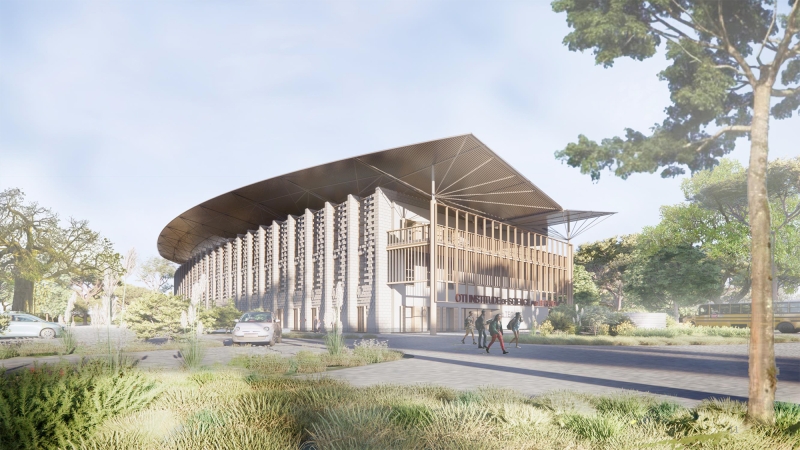
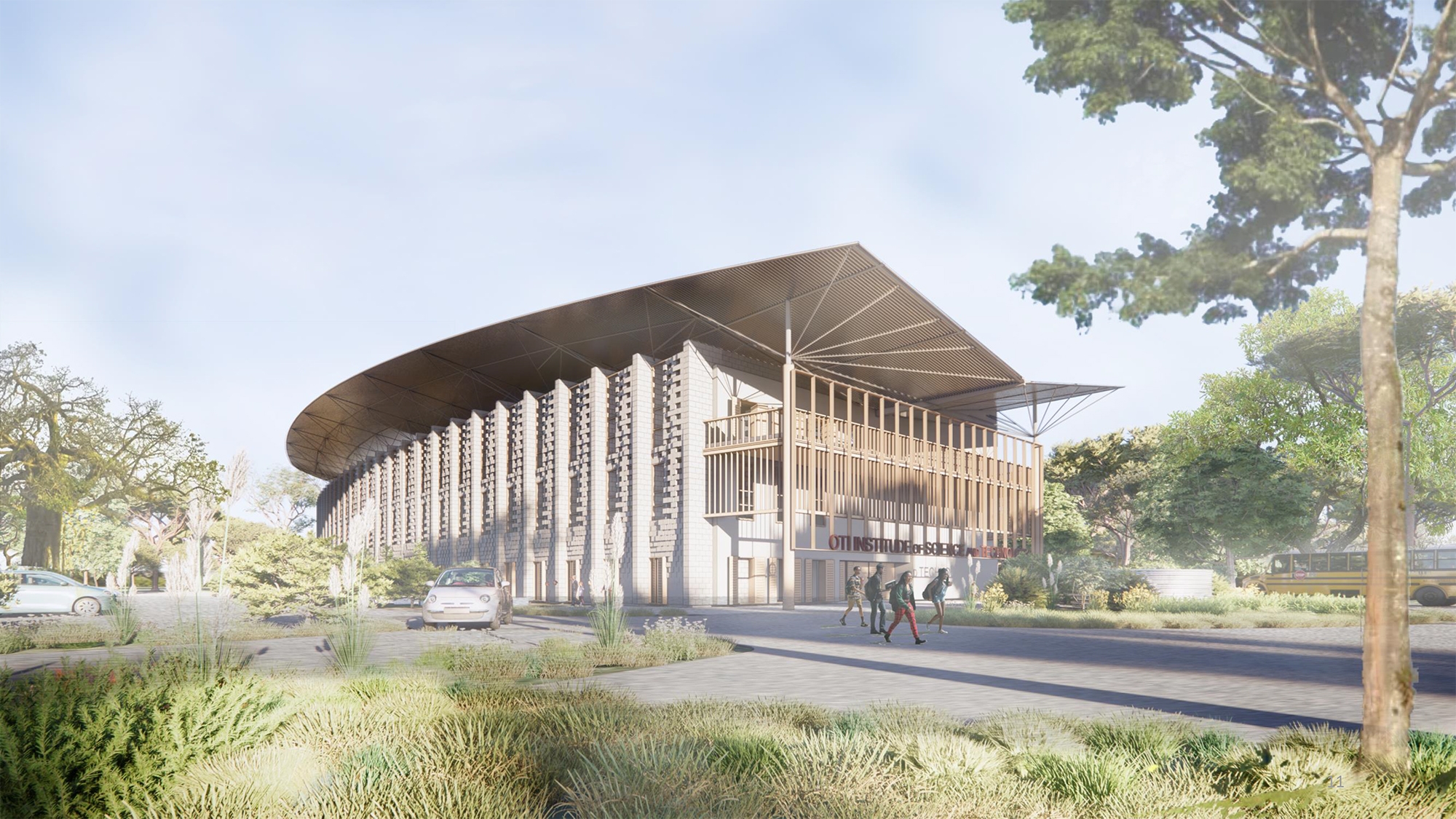
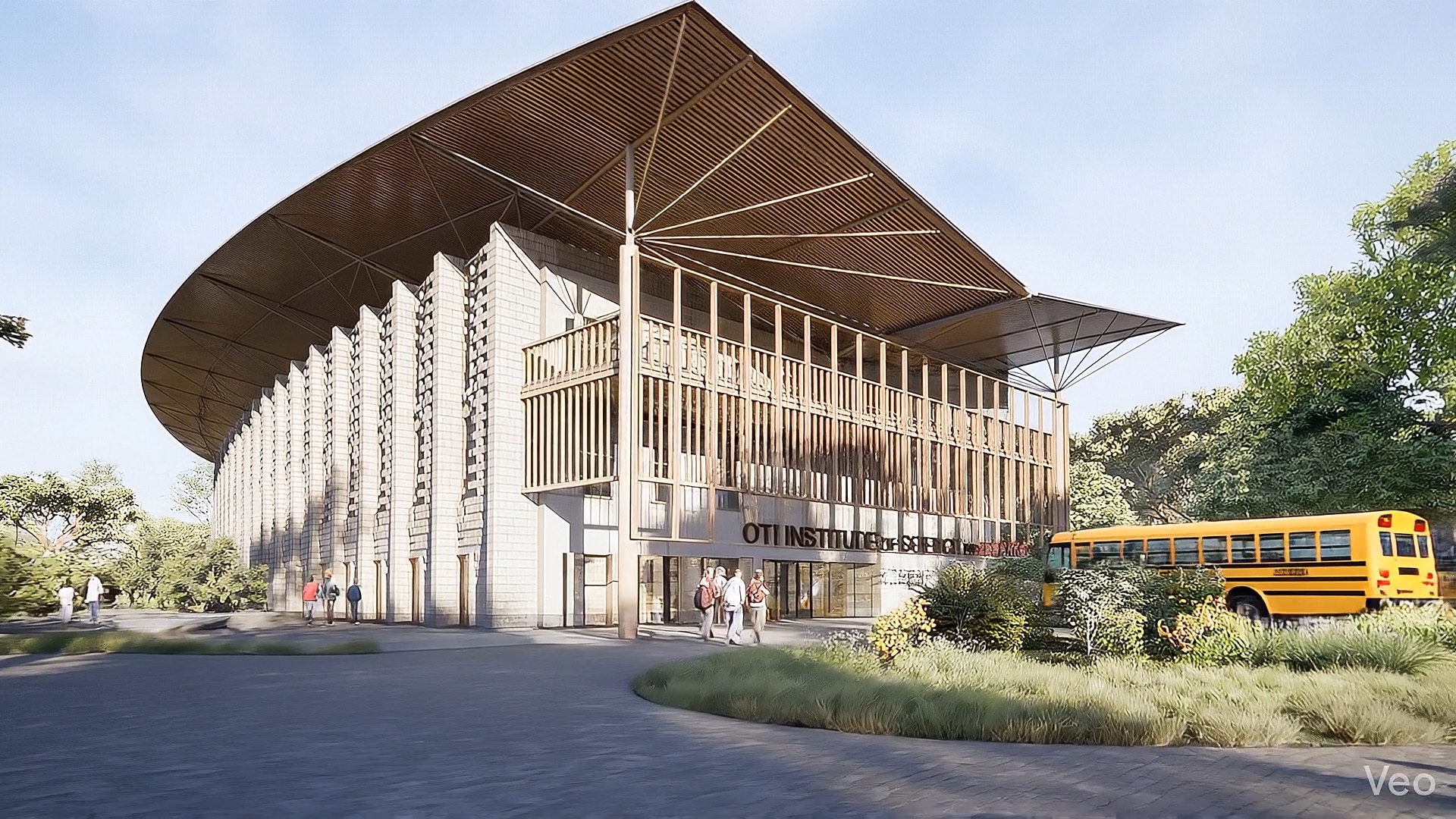
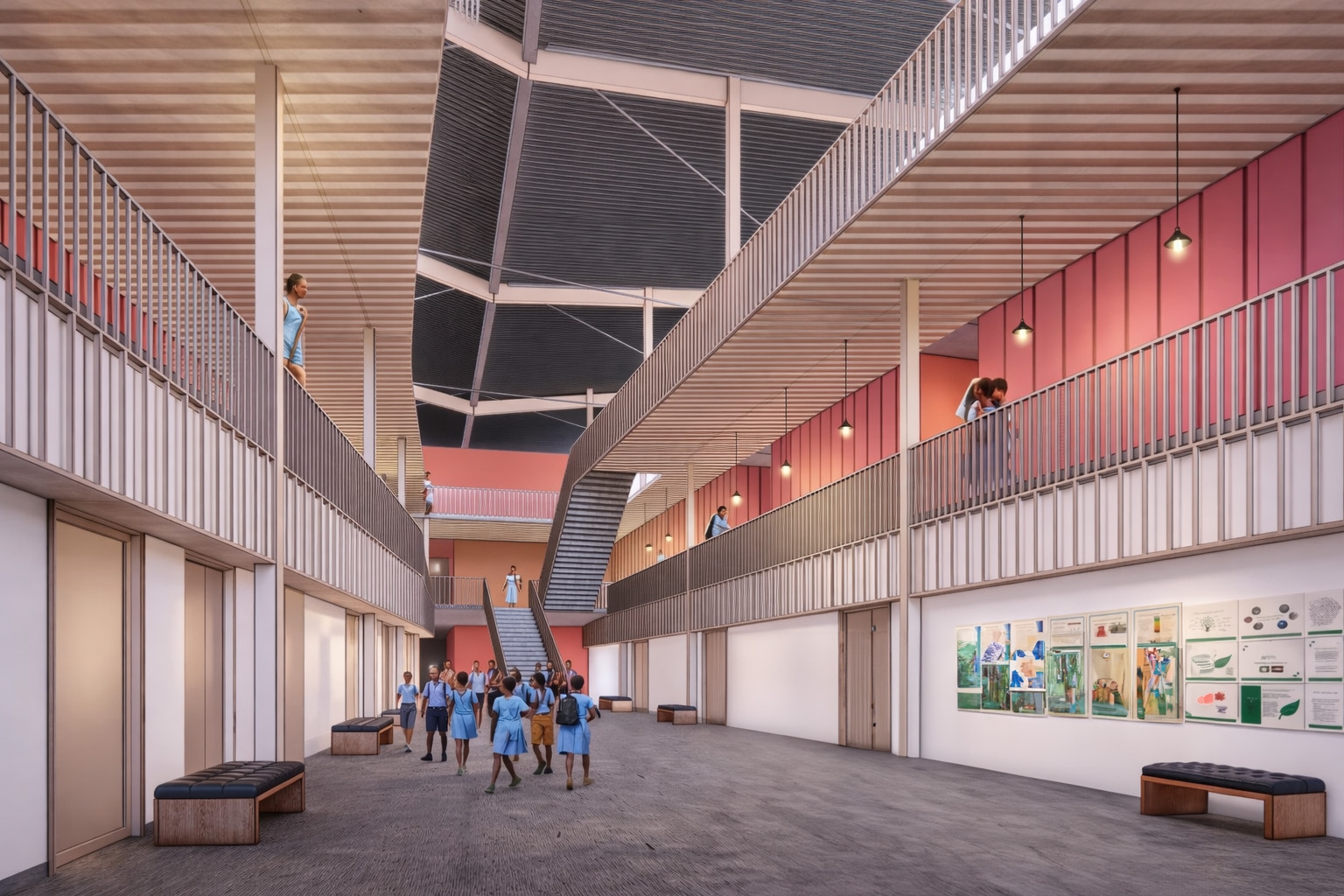
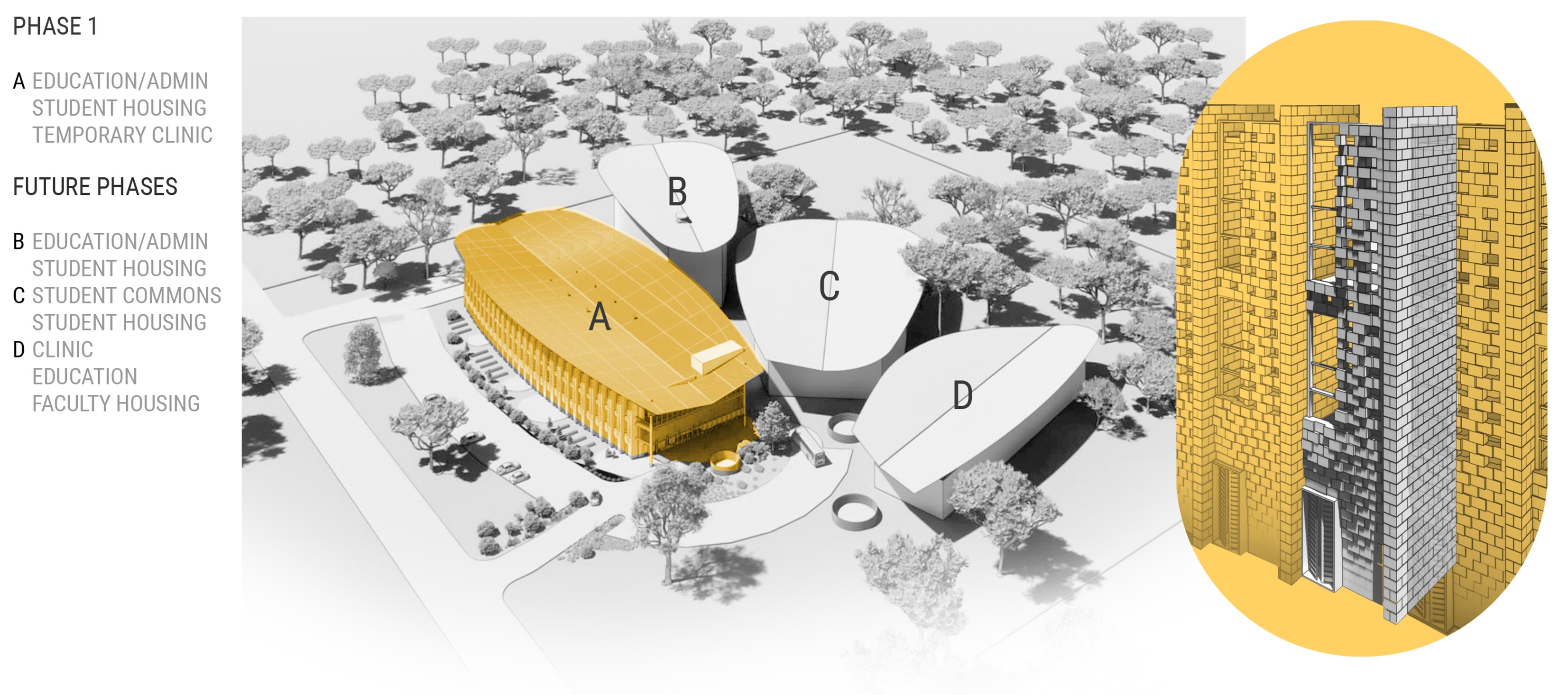
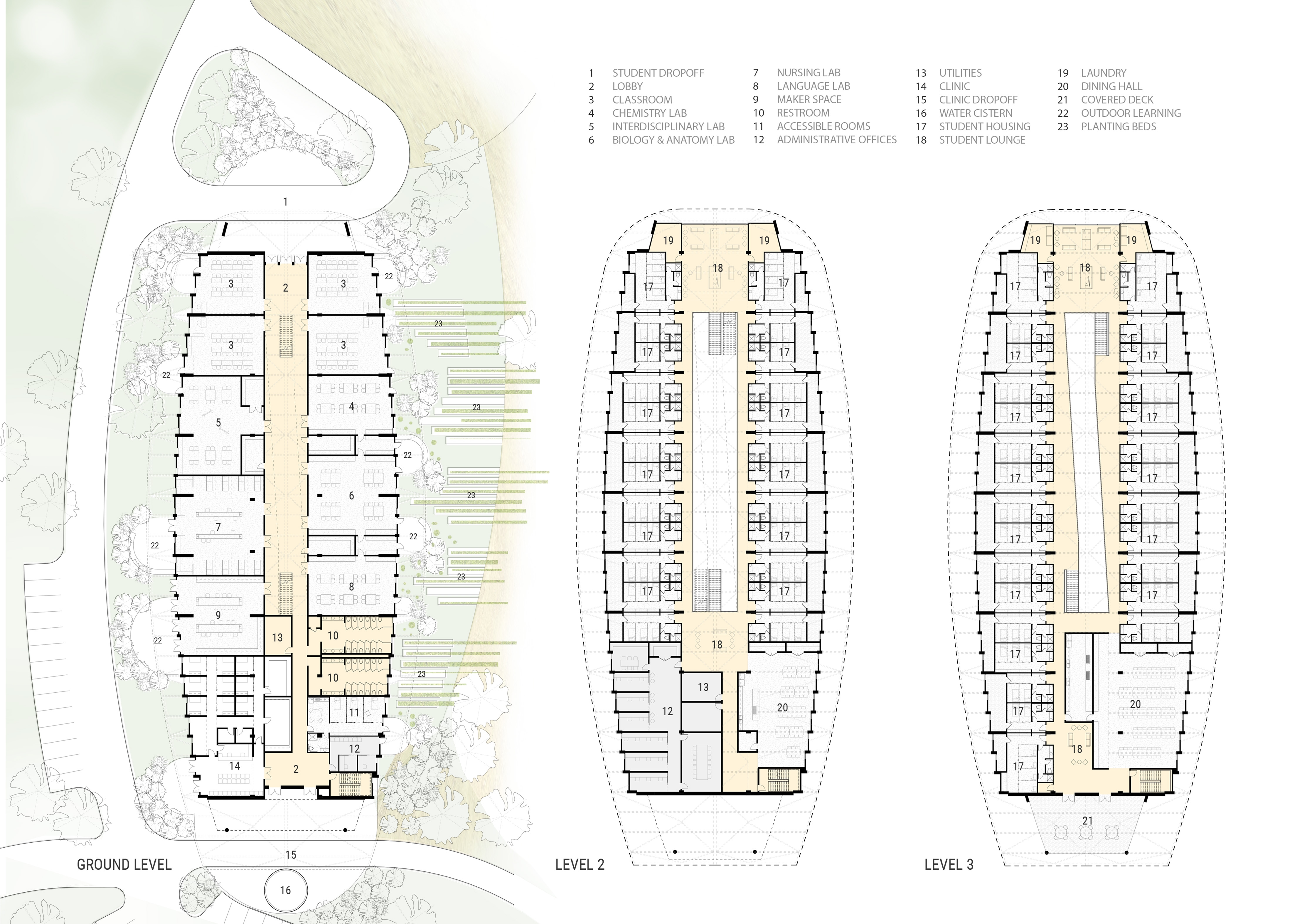
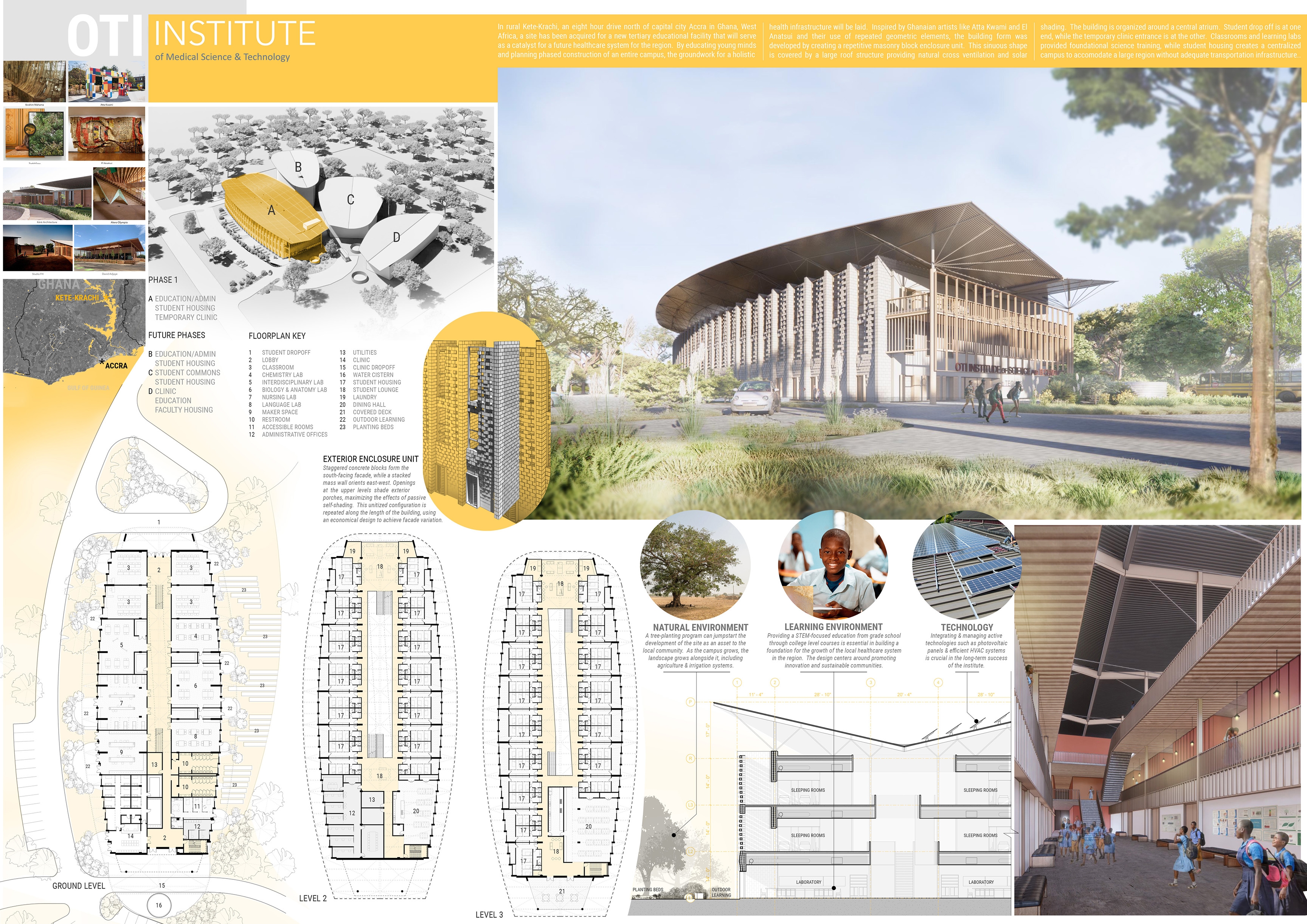
The proposed science and technology campus in Kwakuae, near Kete-Krachi in Ghana’s Oti Region, establishes a new center for STEM education in a region with limited access to tertiary institutions. The project develops a 10-acre campus through phased construction beginning with core academic infrastructure, including lecture halls, laboratories, an ICT center, library resources, student housing, and supporting water and energy systems. The architecture responds directly to local climate and construction traditions. A modular masonry enclosure system forms the building envelope, using repetitive concrete block units to achieve façade variation while remaining economical to construct with local labor and materials. Buildings are organized around a naturally ventilated atrium and shaded by an expansive roof structure that reduces solar heat gain while promoting cross-ventilation. Passive design strategies limit energy demand and improve thermal comfort in the tropical climate. Solar power systems, borehole water supply, and decentralized sanitation infrastructure ensure operational resilience. Academic programs in computing, environmental science, agriculture, technology, and more.
The proposed science and technology campus in Kwakuae, near Kete-Krachi in Ghana’s Oti Region, establishes a new center for STEM education in a region with limited access to tertiary institutions. The project develops a 10-acre campus through phased construction beginning with core academic infrastructure, including lecture halls, laboratories, an ICT center, library resources, student housing, and supporting water and energy systems. The architecture responds directly to local climate and construction traditions. A modular masonry enclosure system forms the building envelope, using repetitive concrete block units to achieve façade variation while remaining economical to construct with local labor and materials. Buildings are organized around a naturally ventilated atrium and shaded by an expansive roof structure that reduces solar heat gain while promoting cross-ventilation. Passive design strategies limit energy demand and improve thermal comfort in the tropical climate. Solar power systems, borehole water supply, and decentralized sanitation infrastructure ensure operational resilience. Academic programs in computing, environmental science, agriculture, technology, and more.
Project Innovation / Specification:
The project introduces a model for delivering globally relevant scientific education within a rural infrastructure context. Hybrid learning systems combine in-person instruction with cloud-based platforms that provide access to international lectures, datasets, and digital course materials. Locally hosted content servers allow reliable access to educational resources even when connectivity is limited. Virtual laboratory platforms supplement physical science labs, enabling students to perform advanced experiments through simulation while reducing equipment and consumable costs. Telemedicine systems integrated into a campus clinic allow students to observe remote diagnostics, clinical consultations, and public health data analysis, linking scientific education with real healthcare practice. Renewable energy installations on campus function as teaching tools, allowing students to monitor energy generation and storage systems in real time. Agricultural research plots incorporate climate monitoring and irrigation technologies to test resilient farming techniques. A small fabrication laboratory equipped with digital manufacturing tools supports prototyping of relevant technologies.
The project introduces a model for delivering globally relevant scientific education within a rural infrastructure context. Hybrid learning systems combine in-person instruction with cloud-based platforms that provide access to international lectures, datasets, and digital course materials. Locally hosted content servers allow reliable access to educational resources even when connectivity is limited. Virtual laboratory platforms supplement physical science labs, enabling students to perform advanced experiments through simulation while reducing equipment and consumable costs. Telemedicine systems integrated into a campus clinic allow students to observe remote diagnostics, clinical consultations, and public health data analysis, linking scientific education with real healthcare practice. Renewable energy installations on campus function as teaching tools, allowing students to monitor energy generation and storage systems in real time. Agricultural research plots incorporate climate monitoring and irrigation technologies to test resilient farming techniques. A small fabrication laboratory equipped with digital manufacturing tools supports prototyping of relevant technologies.
Project Sustainability Approach:
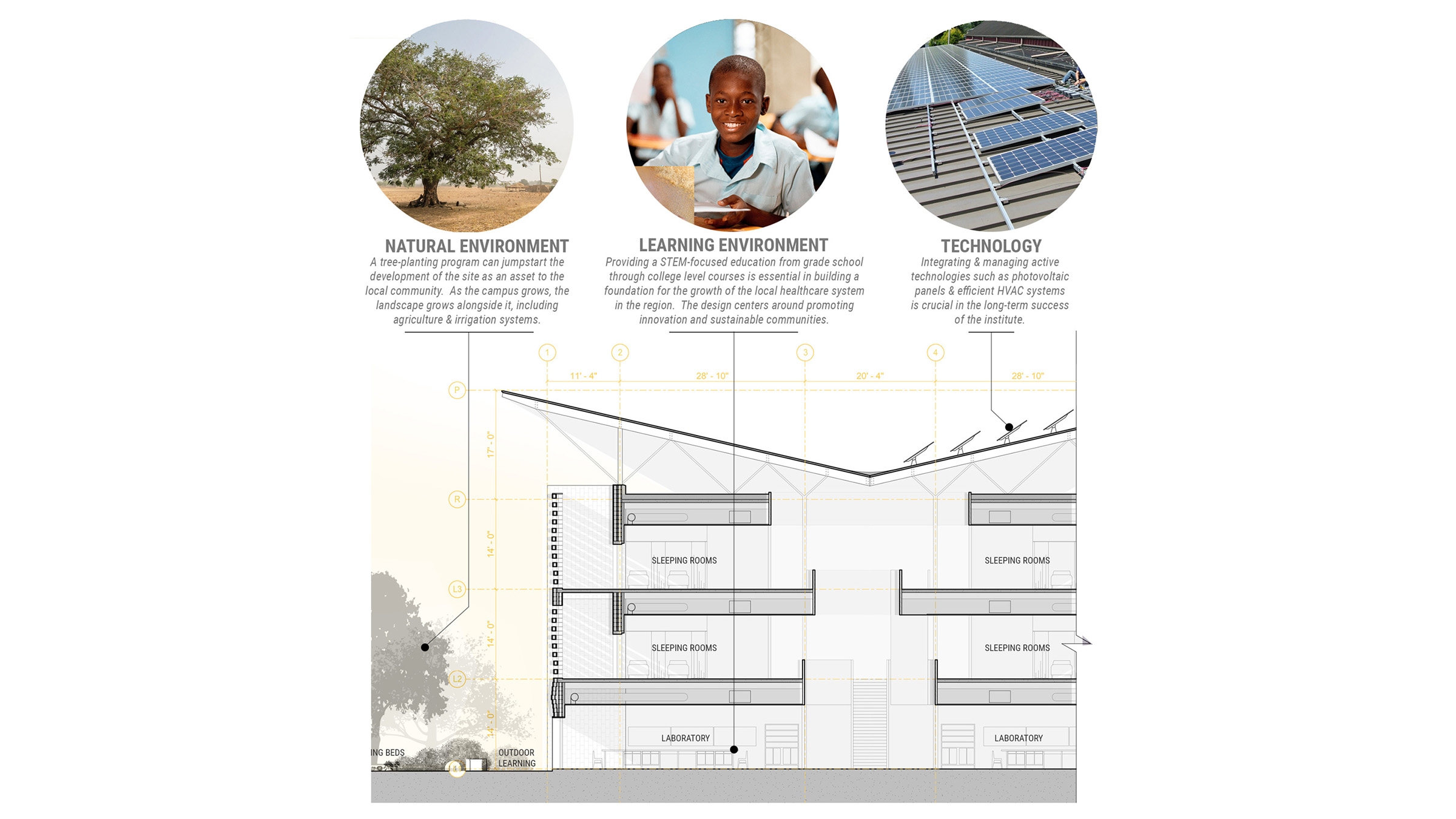
Sustainability is embedded in the environmental design, operational strategy, and long-term financial model of the campus. Passive cooling and solar shading reduce dependence on mechanical systems, while building orientation and masonry shading elements minimize heat gain. A large roof canopy provides protection from solar radiation and supports photovoltaic panels that generate renewable electricity. Battery storage ensures energy reliability in a region where grid power may fluctuate. Water security is achieved through borehole wells, rainwater harvesting, and elevated storage systems that provide redundancy during dry seasons. Wastewater treatment and composting systems allow organic waste to be reused in campus agriculture. Landscaping and tree planting will create shaded outdoor environments while improving local ecological conditions. The modular construction strategy enables the campus to expand gradually as enrollment grows, preventing overbuilding and reducing financial risk. Operational sustainability is strengthened through diversified revenue sources including tuition, research collaborations, agricultural production, and workforce training programs.
Sustainability is embedded in the environmental design, operational strategy, and long-term financial model of the campus. Passive cooling and solar shading reduce dependence on mechanical systems, while building orientation and masonry shading elements minimize heat gain. A large roof canopy provides protection from solar radiation and supports photovoltaic panels that generate renewable electricity. Battery storage ensures energy reliability in a region where grid power may fluctuate. Water security is achieved through borehole wells, rainwater harvesting, and elevated storage systems that provide redundancy during dry seasons. Wastewater treatment and composting systems allow organic waste to be reused in campus agriculture. Landscaping and tree planting will create shaded outdoor environments while improving local ecological conditions. The modular construction strategy enables the campus to expand gradually as enrollment grows, preventing overbuilding and reducing financial risk. Operational sustainability is strengthened through diversified revenue sources including tuition, research collaborations, agricultural production, and workforce training programs.
Local and Regional Impacts of the Project:
The campus will expand access to tertiary STEM education in a region where students often must relocate to distant cities. By training scientists, technologists, and public health professionals locally, the project strengthens regional human capital and reduces migration pressures. Construction and long-term operations will generate employment while stimulating local supply chains and small businesses. Applied research in agriculture, renewable energy, and environmental management will support regional economic resilience. Telemedicine and health training programs will improve access to healthcare knowledge and services. Over time the institution will serve as a catalyst for educational advancement, workforce development, and innovation across the Oti Region.
The campus will expand access to tertiary STEM education in a region where students often must relocate to distant cities. By training scientists, technologists, and public health professionals locally, the project strengthens regional human capital and reduces migration pressures. Construction and long-term operations will generate employment while stimulating local supply chains and small businesses. Applied research in agriculture, renewable energy, and environmental management will support regional economic resilience. Telemedicine and health training programs will improve access to healthcare knowledge and services. Over time the institution will serve as a catalyst for educational advancement, workforce development, and innovation across the Oti Region.