Portfolio Experience Website
Prize(s):
Honorable Mention 2026 Multimedia Design / Website Design
Lead Designer(s) Name(s):Amu Leeuw
Other Contributor(s):Siyakubulela Njemla
Client Name:Amu Leeuw
Photo Credit:Amu Leeuw
Project Location:South Africa
Design Status:Commercialized
Website: View
Project Description:
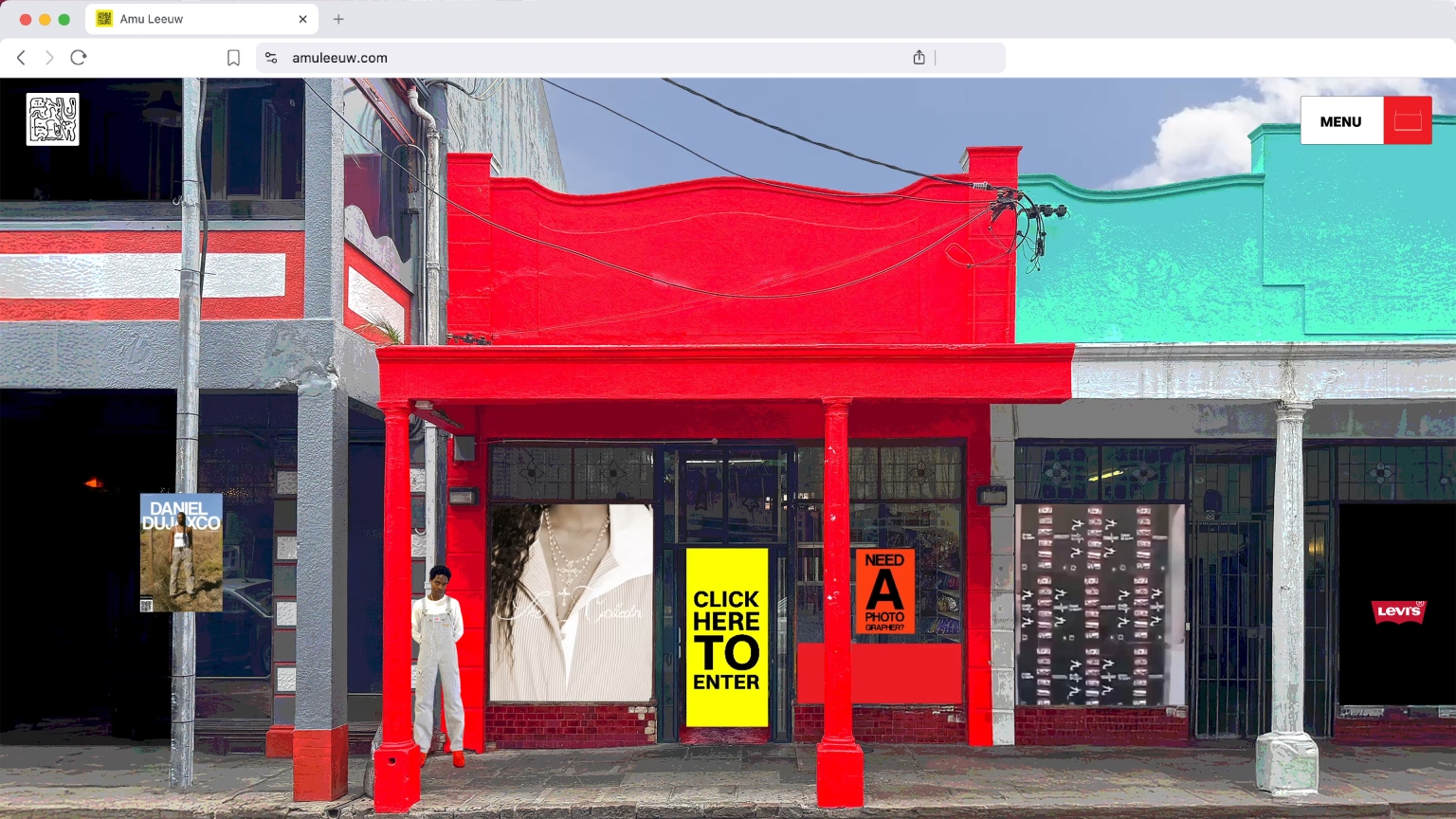
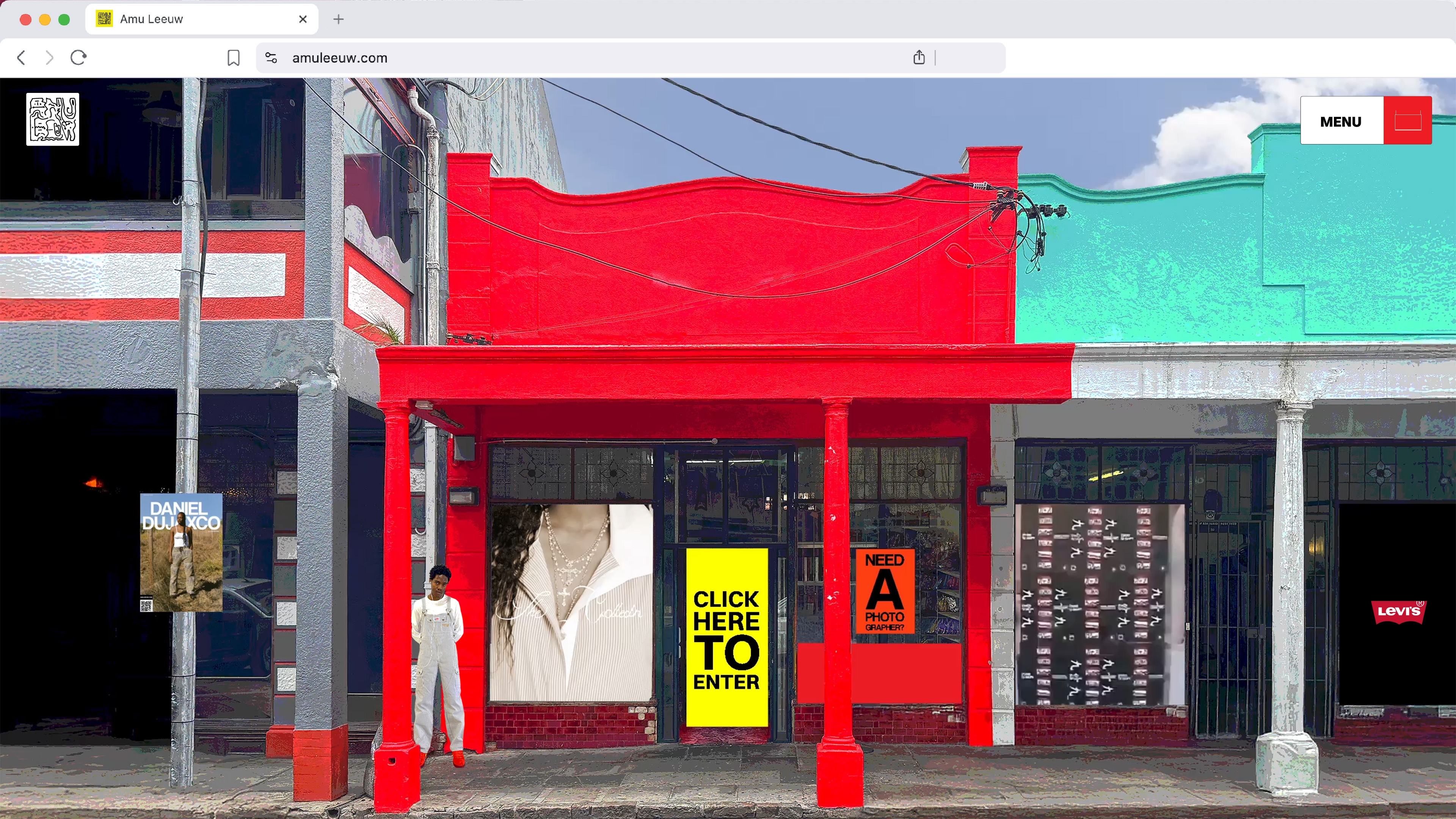
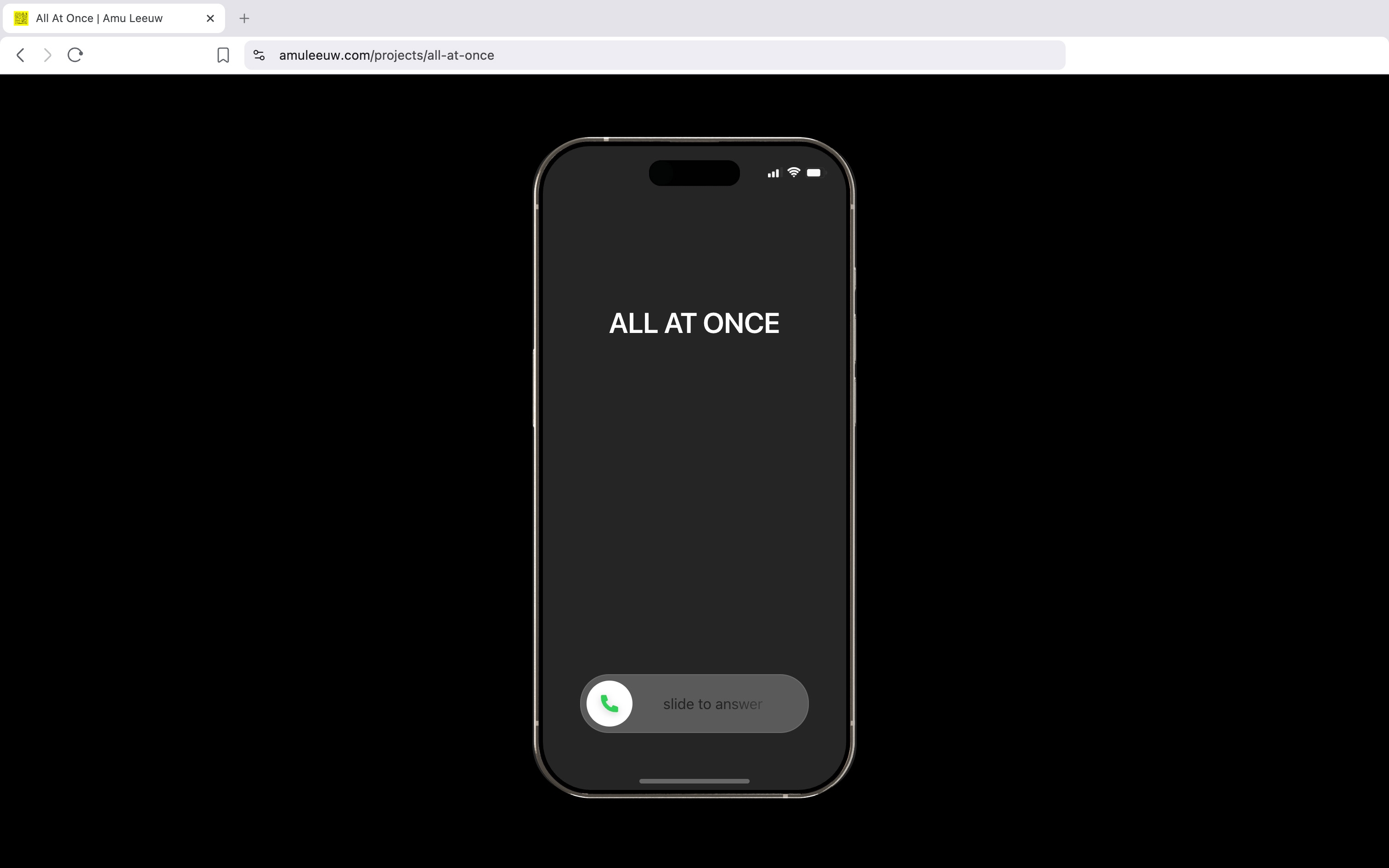
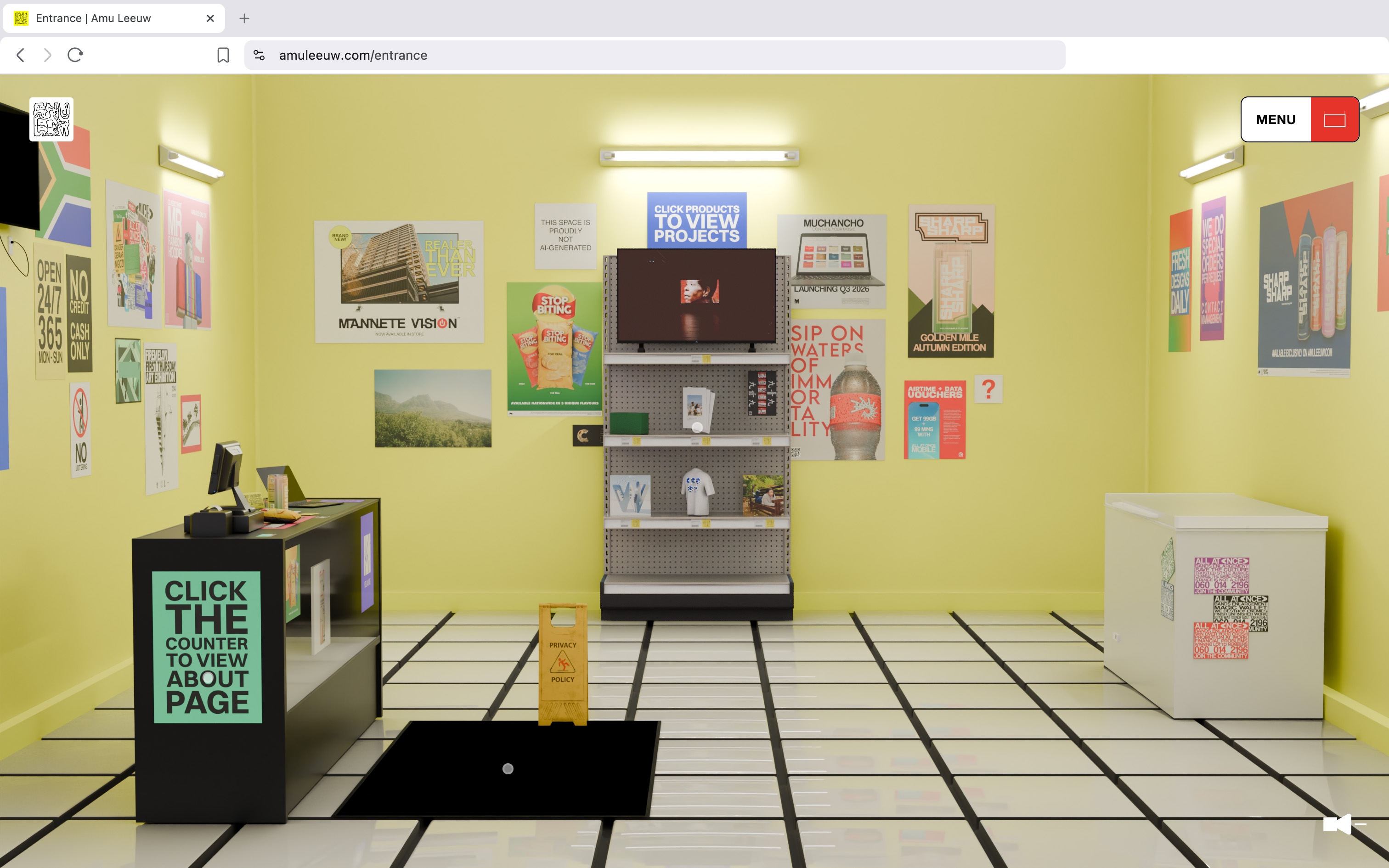
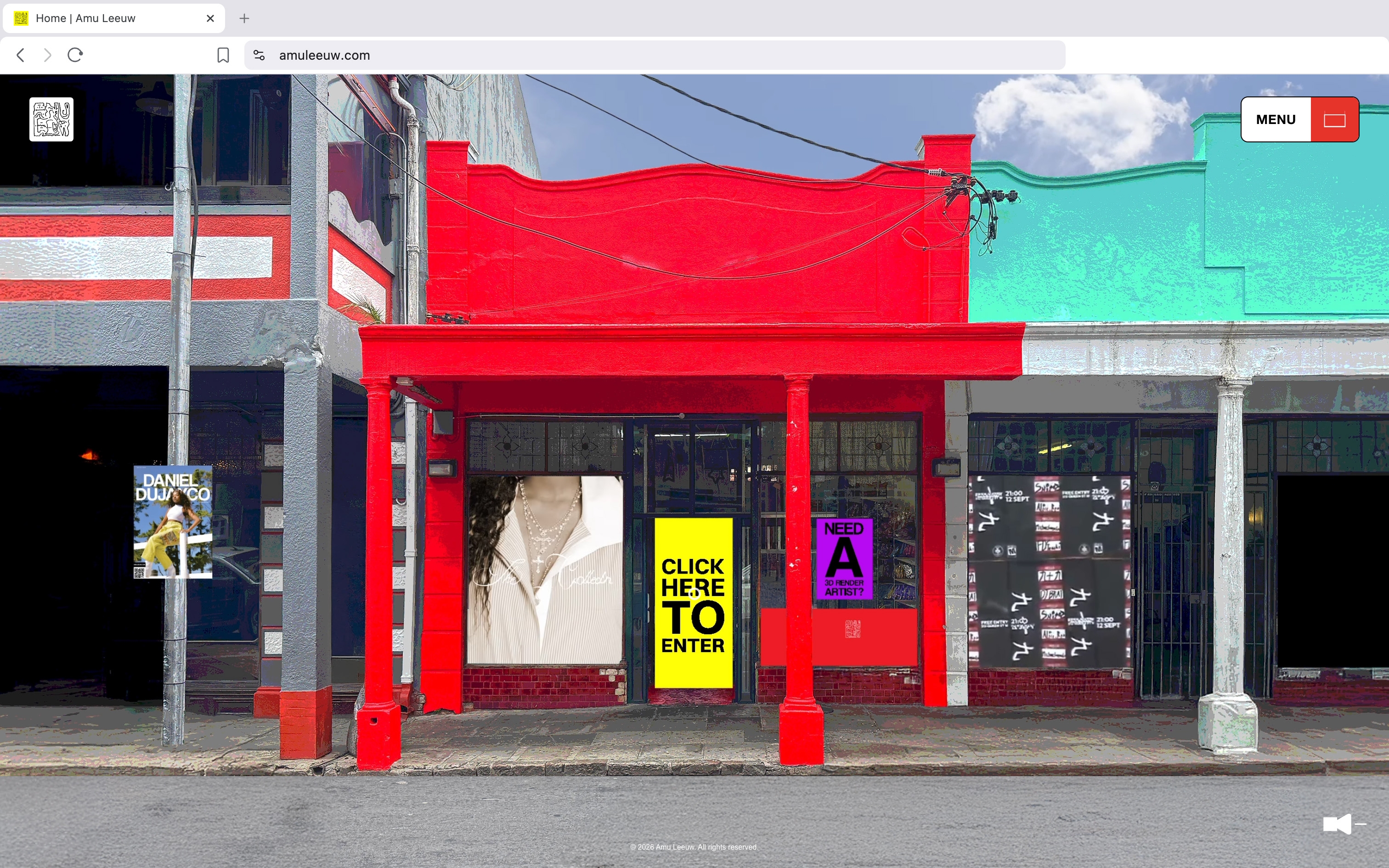
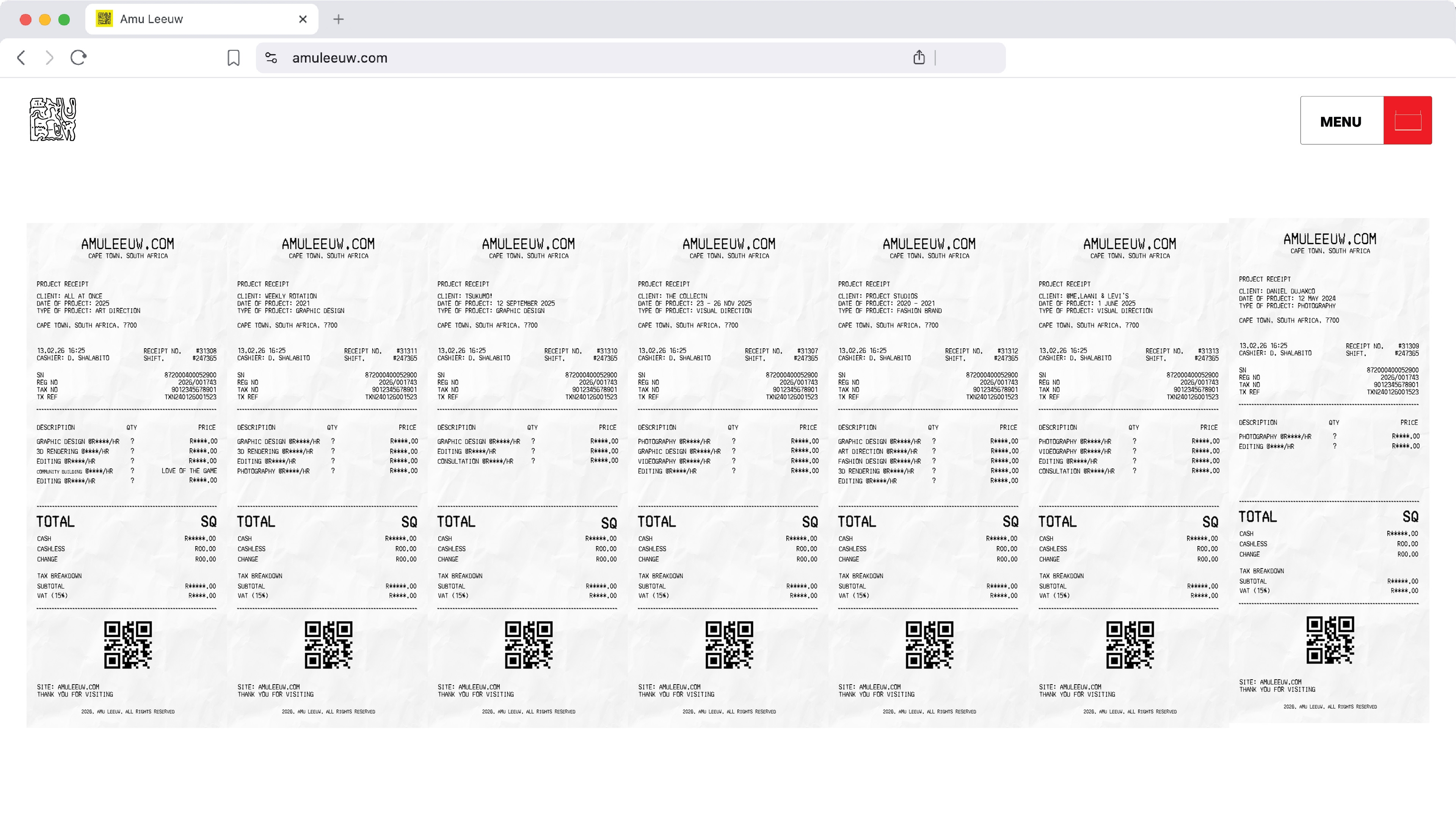
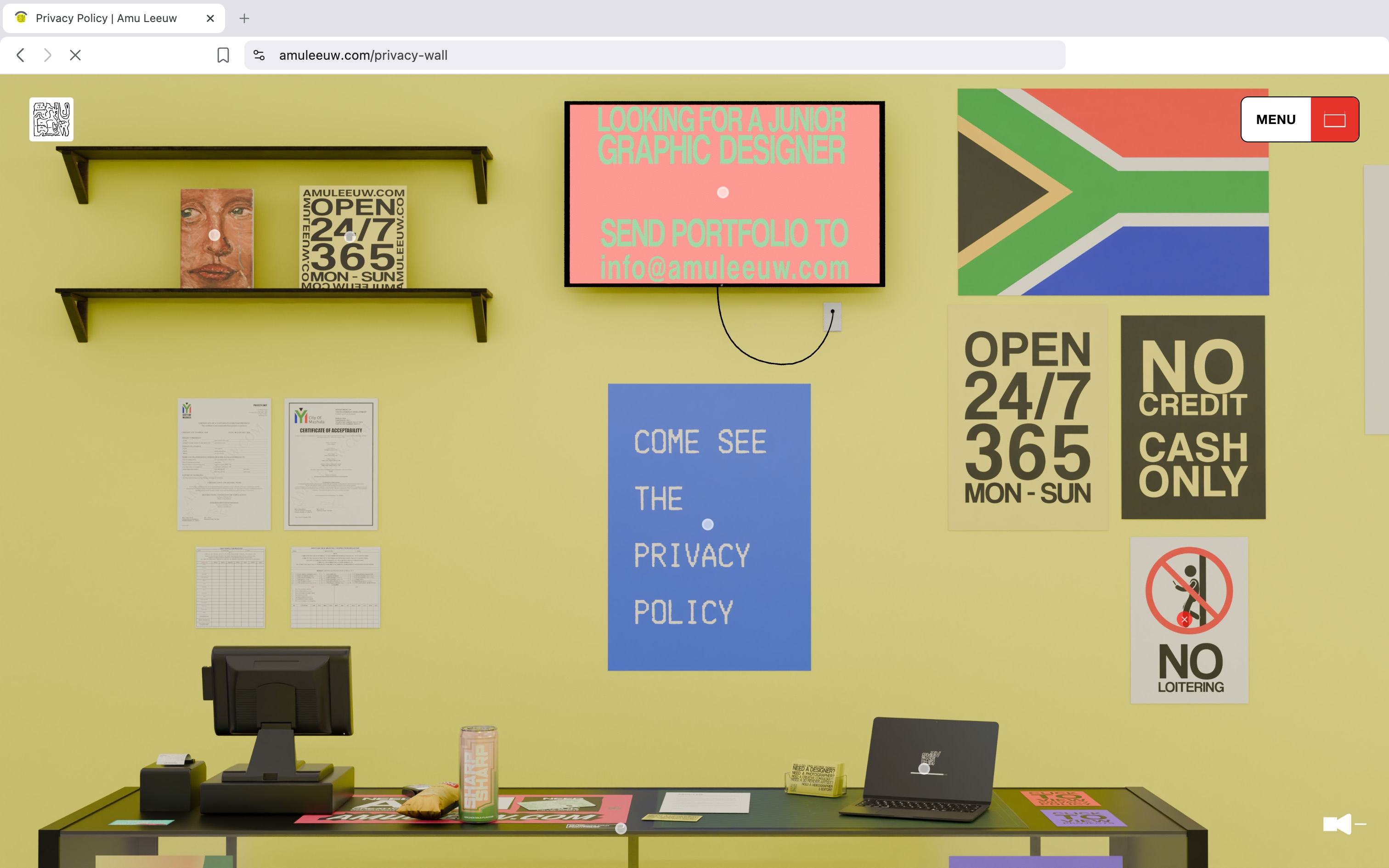
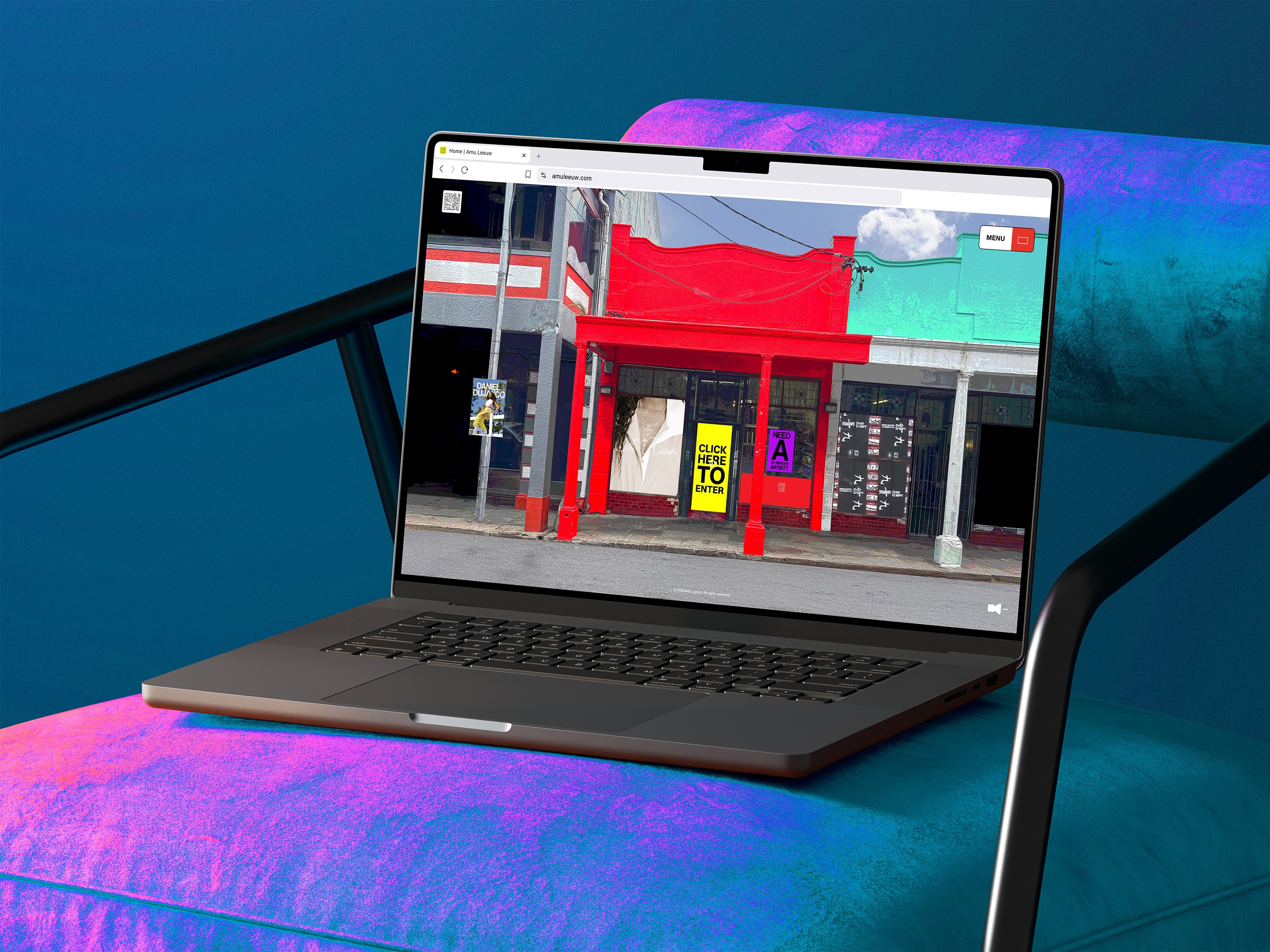
This portfolio reimagines traditional designer showcases through the lens of South African spaza shops (informal convenience stores). The site transforms browsing into an interactive shop floor experience where visitors explore work across branding, web development, multimedia design, and creative direction. The portfolio showcases over five years of professional work, including select client campaigns for brands like Levi's and independent ventures like PROJECT STUDIOS (fashion brand) as well as the upcoming creative organisation ALL AT ONCE. Every asset was created in-house using the Adobe Creative Suite, DaVinci Resolve, Blender3D and Logic Pro X – from photography and motion graphics to 3D elements and custom Foley sound design. The result is a portfolio that functions as both a professional showcase and a celebration of South African creative culture grounded in identity, instantly relatable, and designed to create a one-of-one web experience.
This portfolio reimagines traditional designer showcases through the lens of South African spaza shops (informal convenience stores). The site transforms browsing into an interactive shop floor experience where visitors explore work across branding, web development, multimedia design, and creative direction. The portfolio showcases over five years of professional work, including select client campaigns for brands like Levi's and independent ventures like PROJECT STUDIOS (fashion brand) as well as the upcoming creative organisation ALL AT ONCE. Every asset was created in-house using the Adobe Creative Suite, DaVinci Resolve, Blender3D and Logic Pro X – from photography and motion graphics to 3D elements and custom Foley sound design. The result is a portfolio that functions as both a professional showcase and a celebration of South African creative culture grounded in identity, instantly relatable, and designed to create a one-of-one web experience.
Project Innovation / Specification:
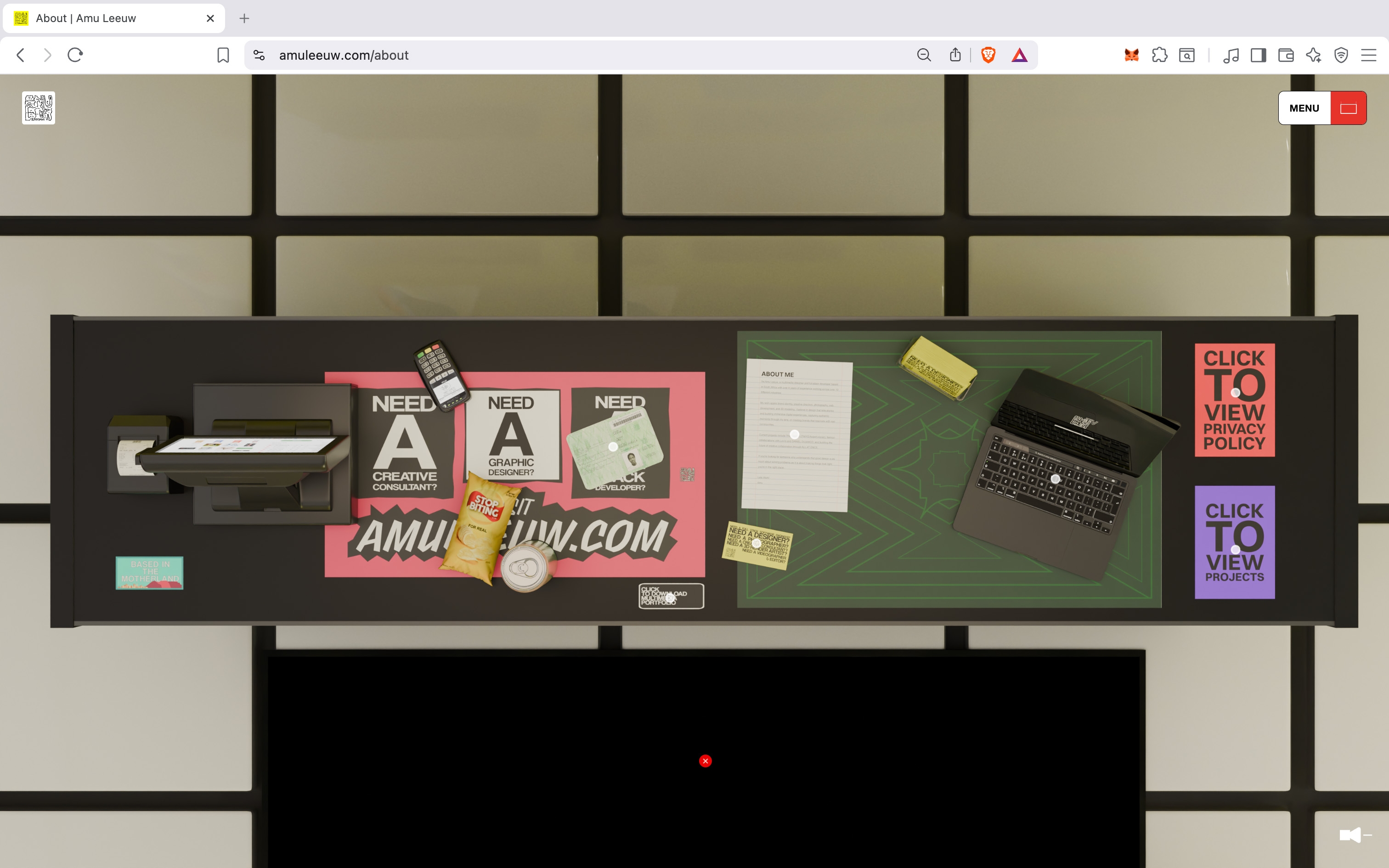
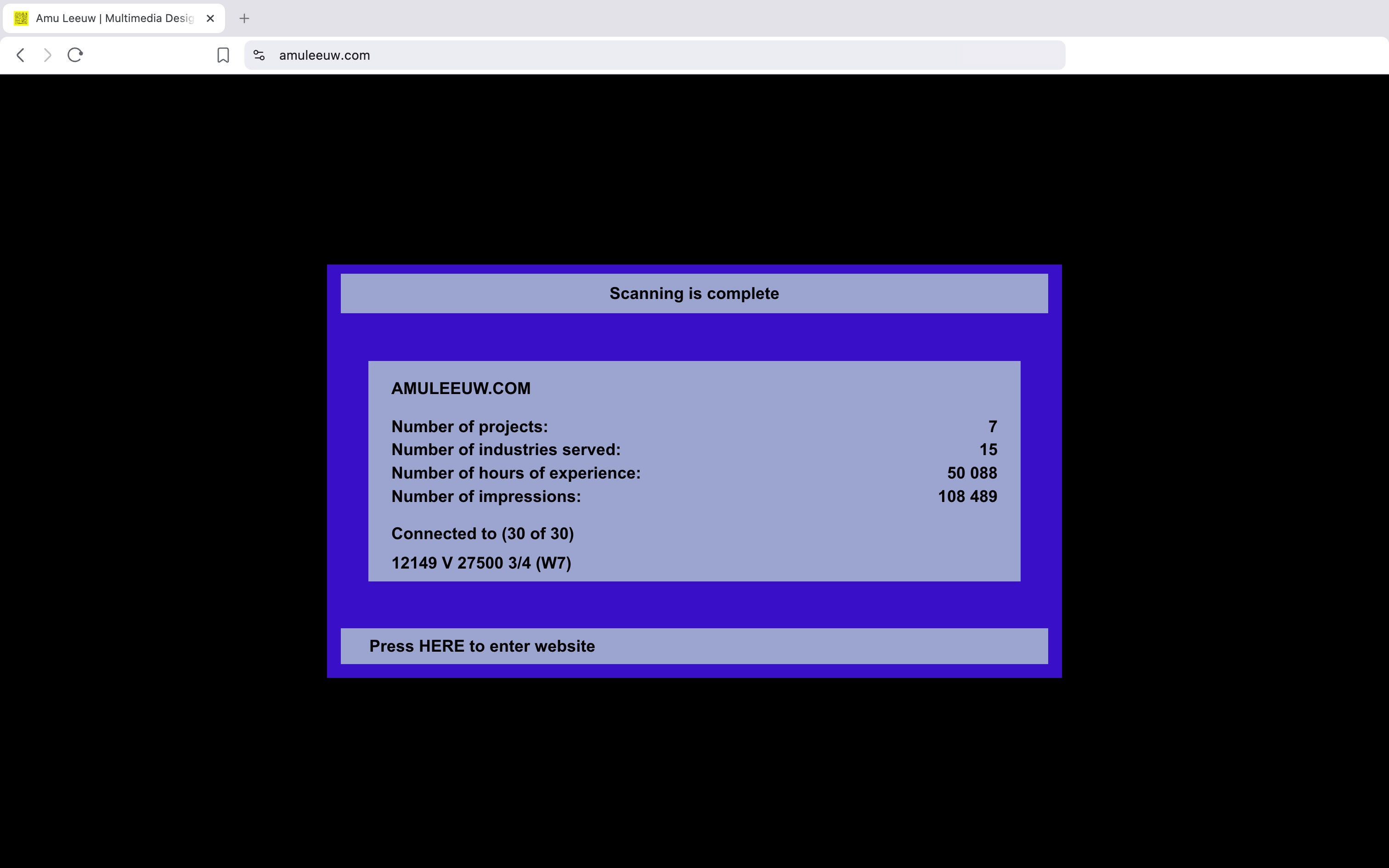
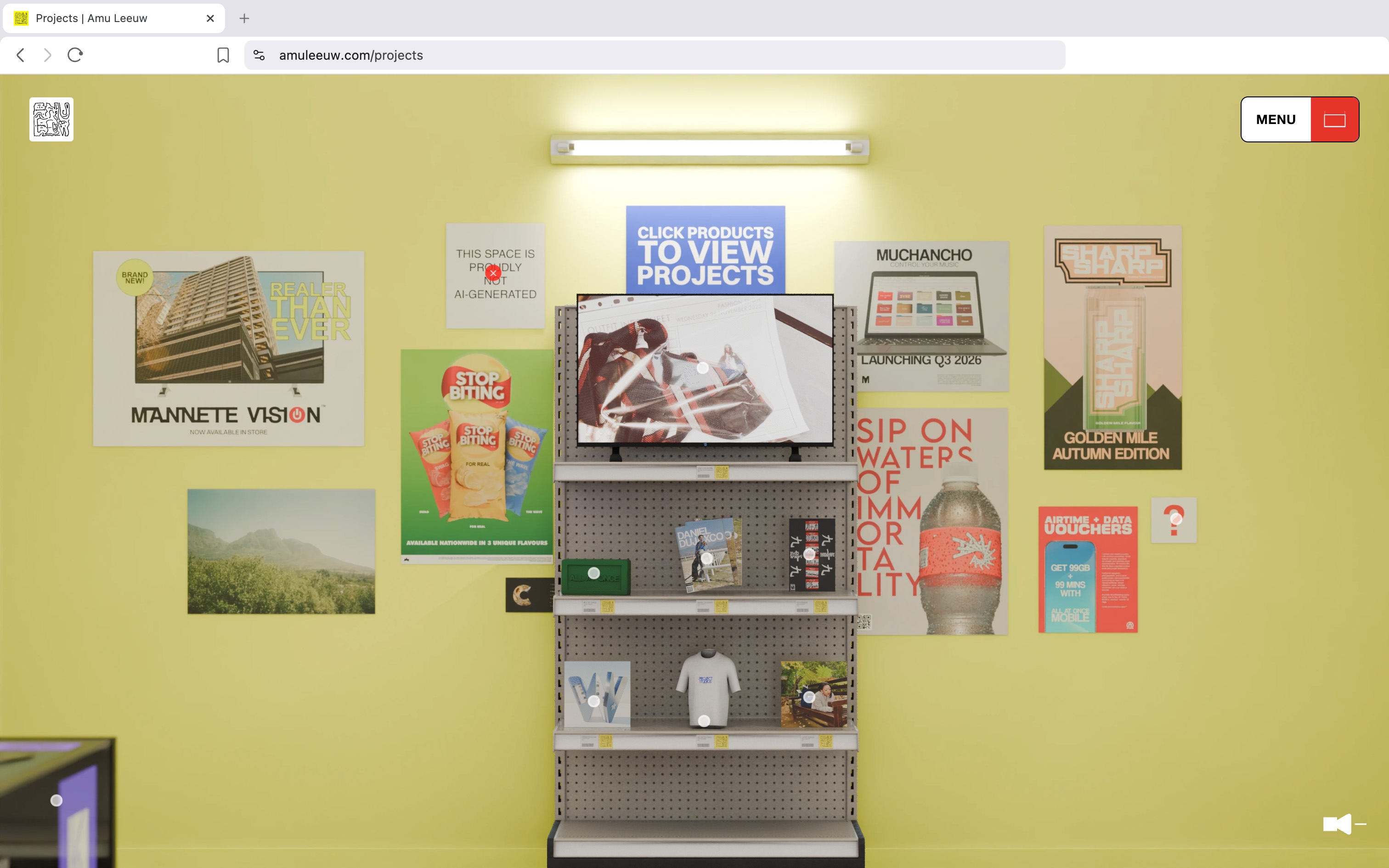
The innovation is in marrying cultural storytelling with technical execution. The site uses spatial design principles inspired by physical retail—visitors, users navigate a spaza shop environment where projects are positioned as products on shelves, creating intuitive way-finding through visual metaphor. Technically, the front end is built using React for speed and modularity, with custom CSS handling responsive behaviour across devices. The mobile experience is intentionally distinct from desktop—mobile prioritises quick access and clarity, while desktop includes interactive Easter eggs and environmental details. This respects different contexts of use rather than forcing a one-size-fits-all solution. The design system is modular and scalable. New projects get added to the display shelf, older work moves to the "fridge" and side projects live on auxiliary shelves, creating a living archive that evolves over time. All photography, 3D models, motion graphics, sound design were done in-house, ensuring stylistic coherence. The result demonstrates technical versatility, cultural awareness, and commitment to craft at every level.
The innovation is in marrying cultural storytelling with technical execution. The site uses spatial design principles inspired by physical retail—visitors, users navigate a spaza shop environment where projects are positioned as products on shelves, creating intuitive way-finding through visual metaphor. Technically, the front end is built using React for speed and modularity, with custom CSS handling responsive behaviour across devices. The mobile experience is intentionally distinct from desktop—mobile prioritises quick access and clarity, while desktop includes interactive Easter eggs and environmental details. This respects different contexts of use rather than forcing a one-size-fits-all solution. The design system is modular and scalable. New projects get added to the display shelf, older work moves to the "fridge" and side projects live on auxiliary shelves, creating a living archive that evolves over time. All photography, 3D models, motion graphics, sound design were done in-house, ensuring stylistic coherence. The result demonstrates technical versatility, cultural awareness, and commitment to craft at every level.
Project Sustainability Approach:
Sustainability is built into both the technical architecture and conceptual framework. The site is designed to grow organically — new projects are added to the display shelf, older work gets archived in the "fridge," and alternative projects live on auxiliary shelves. This mirrors how spaza shops manage inventory and ensures the portfolio remains a living archive rather than a static snapshot. Technically, the site is maintained through Git version control and deployed via Wrangler CLI, making updates straightforward. The modular React architecture allows scalable content management without structural overhauls. With AI-assisted workflows, focus shifts to visual execution whilst the system handles presentation logic keeping maintenance lean long-term. The design is fully responsive, though mobile and desktop experiences are intentionally distinct. The site reflects evolving practice, with space for collaborative work, guest contributions, and personal artefacts. The spaza shop metaphor is adaptable. The store can expand, change layout, introduce new sections. It functions as both portfolio and cultural artefact, designed to reflect values, capabilities, and identity over time.
Sustainability is built into both the technical architecture and conceptual framework. The site is designed to grow organically — new projects are added to the display shelf, older work gets archived in the "fridge," and alternative projects live on auxiliary shelves. This mirrors how spaza shops manage inventory and ensures the portfolio remains a living archive rather than a static snapshot. Technically, the site is maintained through Git version control and deployed via Wrangler CLI, making updates straightforward. The modular React architecture allows scalable content management without structural overhauls. With AI-assisted workflows, focus shifts to visual execution whilst the system handles presentation logic keeping maintenance lean long-term. The design is fully responsive, though mobile and desktop experiences are intentionally distinct. The site reflects evolving practice, with space for collaborative work, guest contributions, and personal artefacts. The spaza shop metaphor is adaptable. The store can expand, change layout, introduce new sections. It functions as both portfolio and cultural artefact, designed to reflect values, capabilities, and identity over time.
Local and Regional Impacts of the Project:
Locally, the project raises the bar for quality, ambition and innovation in South African design and development, demonstrating what's possible when cultural authenticity meets technical execution whilst bringing visibility to South African designers often overlooked globally. Regionally and internationally, it challenges perceptions of African creative work, spotlighting the continent's capabilities as technology and creativity rapidly evolve here. It proves world-class interactive experiences can be conceived, designed, and built in Africa. It showcases interdisciplinary practice—fusing art, engineering, storytelling, and sound design. This versatility is essential for creative industries' future, setting a precedent for what multidisciplinary African designers can achieve.
Locally, the project raises the bar for quality, ambition and innovation in South African design and development, demonstrating what's possible when cultural authenticity meets technical execution whilst bringing visibility to South African designers often overlooked globally. Regionally and internationally, it challenges perceptions of African creative work, spotlighting the continent's capabilities as technology and creativity rapidly evolve here. It proves world-class interactive experiences can be conceived, designed, and built in Africa. It showcases interdisciplinary practice—fusing art, engineering, storytelling, and sound design. This versatility is essential for creative industries' future, setting a precedent for what multidisciplinary African designers can achieve.
Lead Designer(s) Name(s):Amu Leeuw
Profile Description:
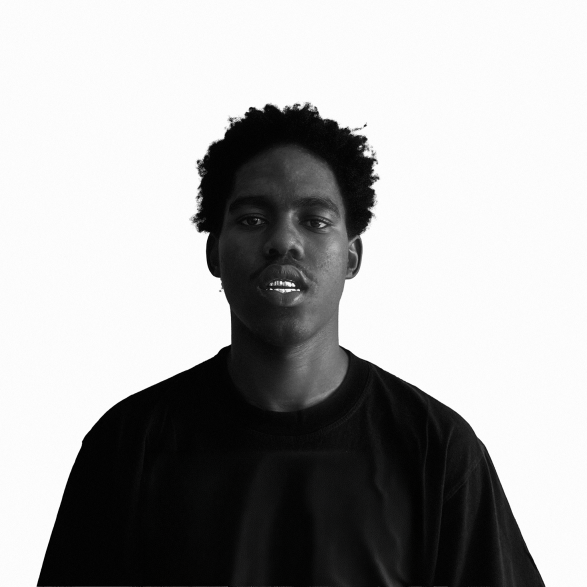
I'm a Cape Town-based multidisciplinary creative with over five years of professional experience across photography, videography, full-stack development, and sound production. My work sits at the intersection of technology and culture, built with precision, grounded in South African identity, and designed to compete on an international stage. What sets me apart is my ability to move fluidly between disciplines without losing conceptual depth. My portfolio site, amuleeuw, is a recent example — an interactive web experience modelled on the South African spaza shop, combining custom Foley sound
I'm a Cape Town-based multidisciplinary creative with over five years of professional experience across photography, videography, full-stack development, and sound production. My work sits at the intersection of technology and culture, built with precision, grounded in South African identity, and designed to compete on an international stage. What sets me apart is my ability to move fluidly between disciplines without losing conceptual depth. My portfolio site, amuleeuw, is a recent example — an interactive web experience modelled on the South African spaza shop, combining custom Foley sound