Jali Screen
Prize(s):
WINNER 2026 PRODUCT DESIGN / Homeware & Decoration
Company Name:Studio Kalki
Lead Designer(s) Name(s):Nikhil Sunil Tricam
Design Team / Other designer(s):Nindya Bucktowar
Manufacturer Name:Studio Kalki
Distributors Name:Studio Kalki
Photo Credit:Nikhil Tricam
Project Location:Durban, KwaZulu Natal, South Africa
Design Status:Prototype
Product Description:
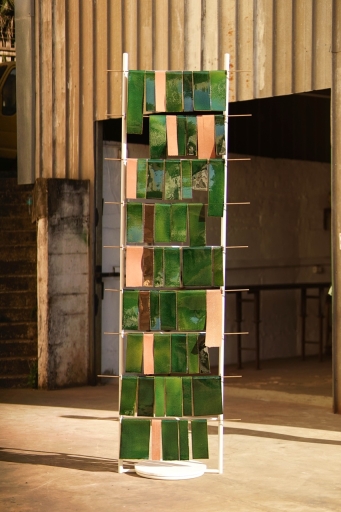
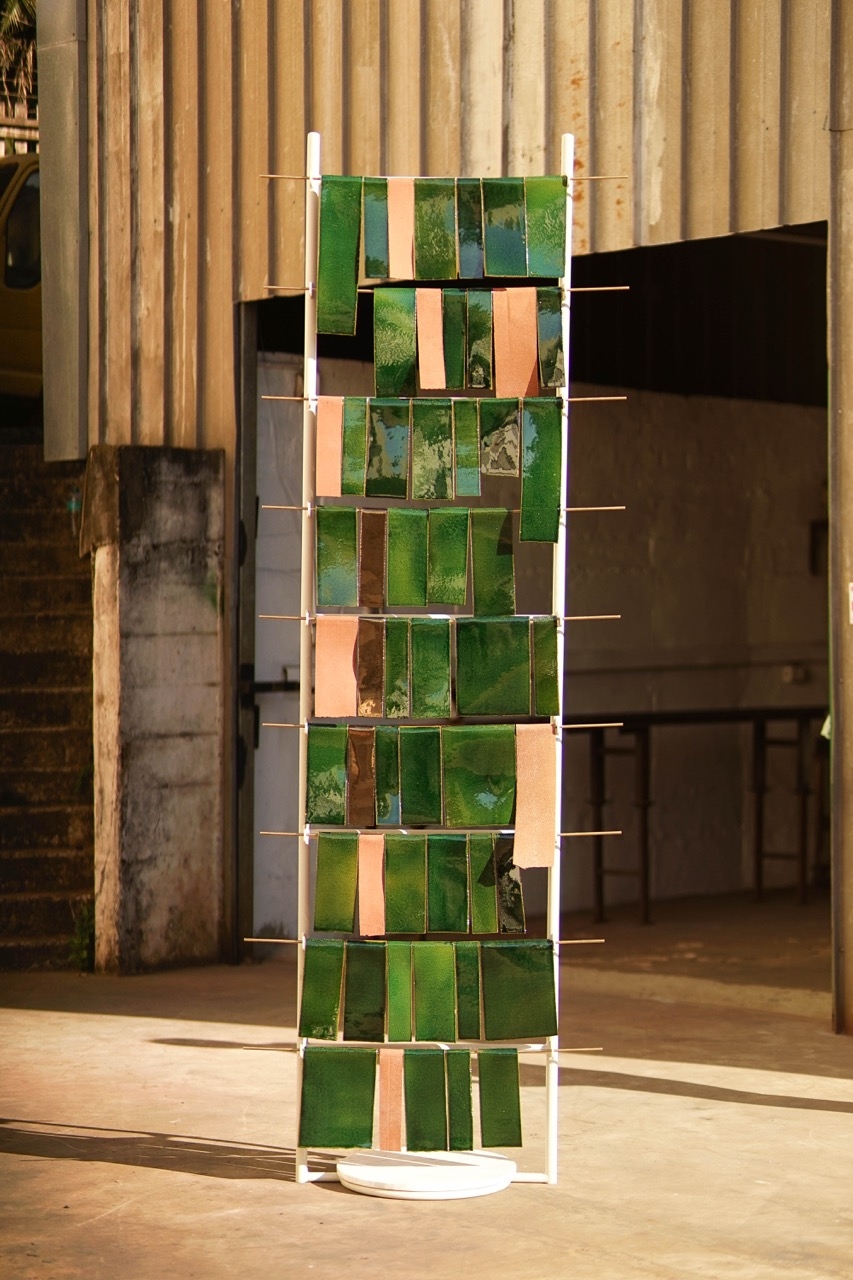
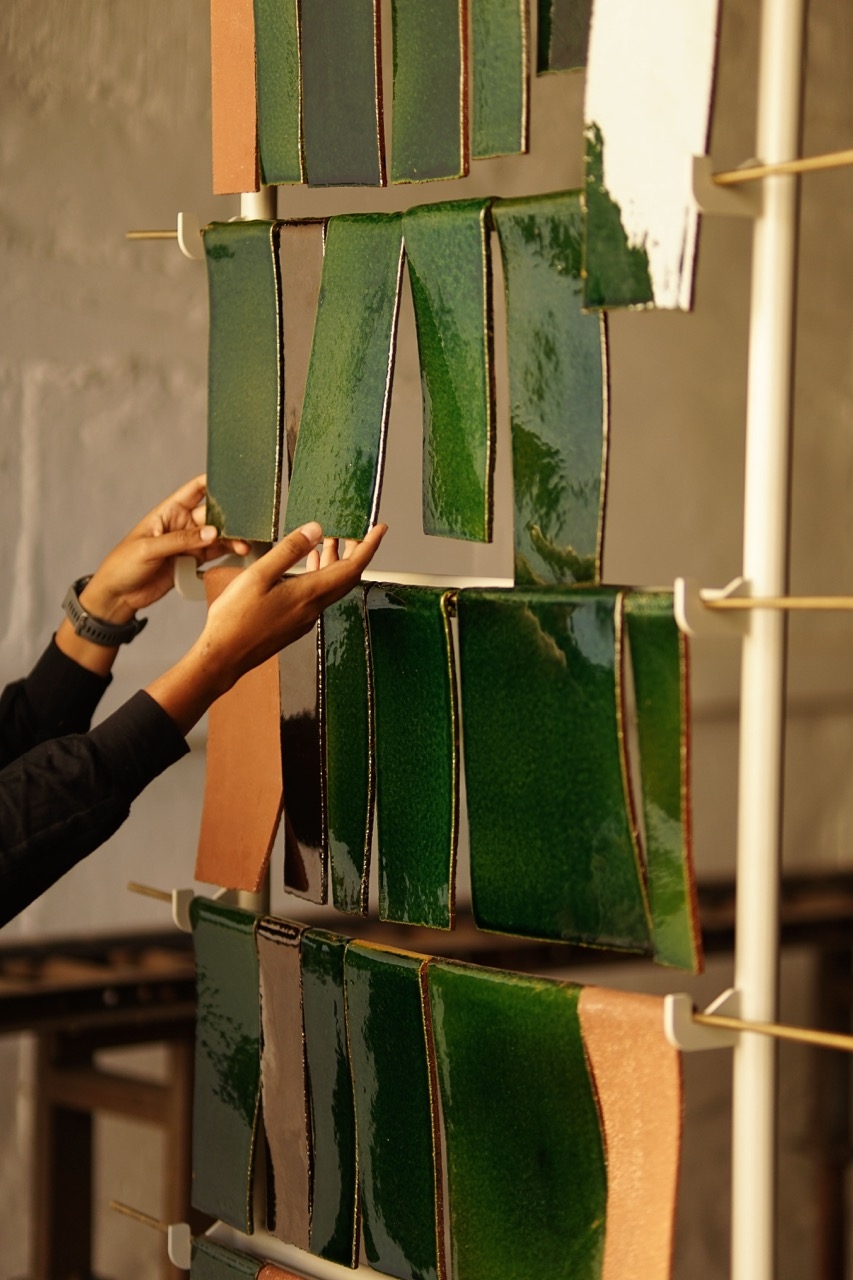
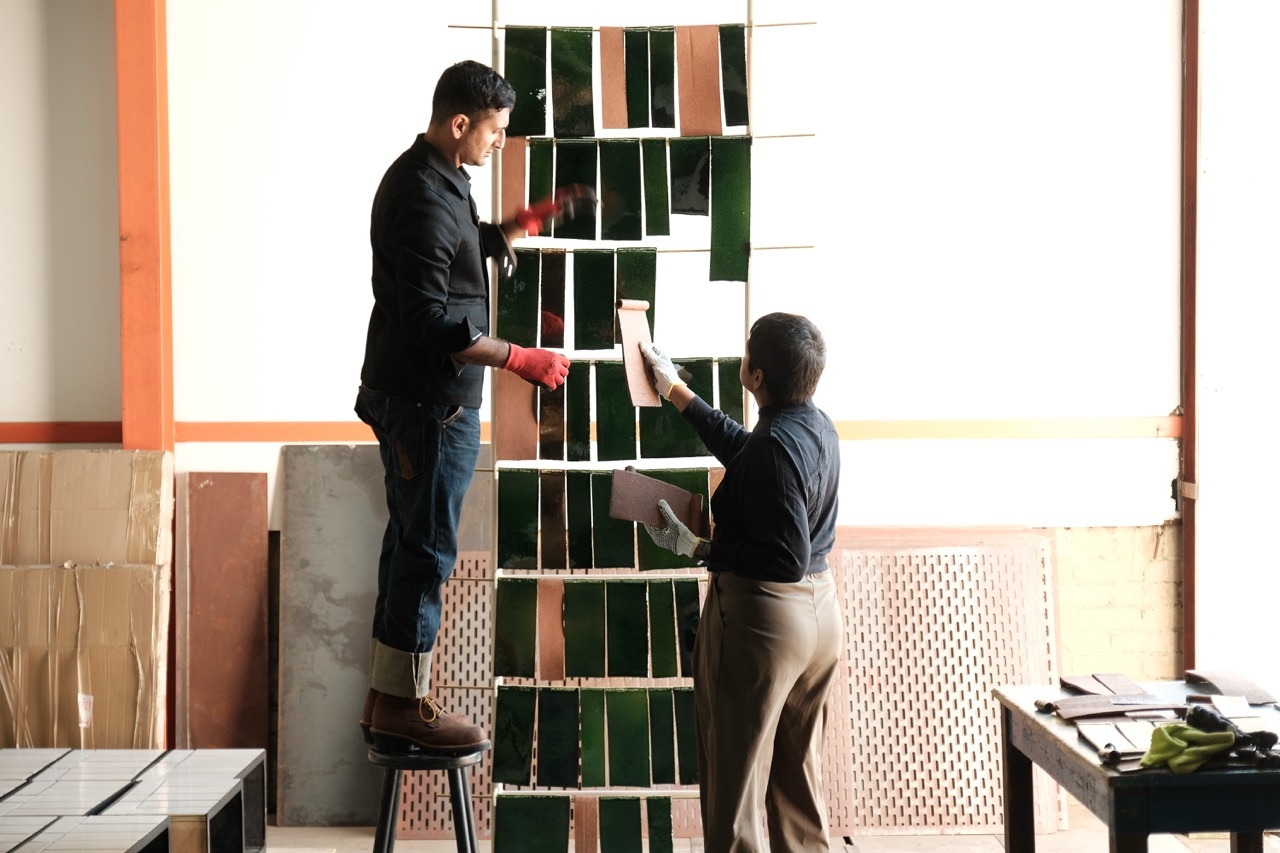
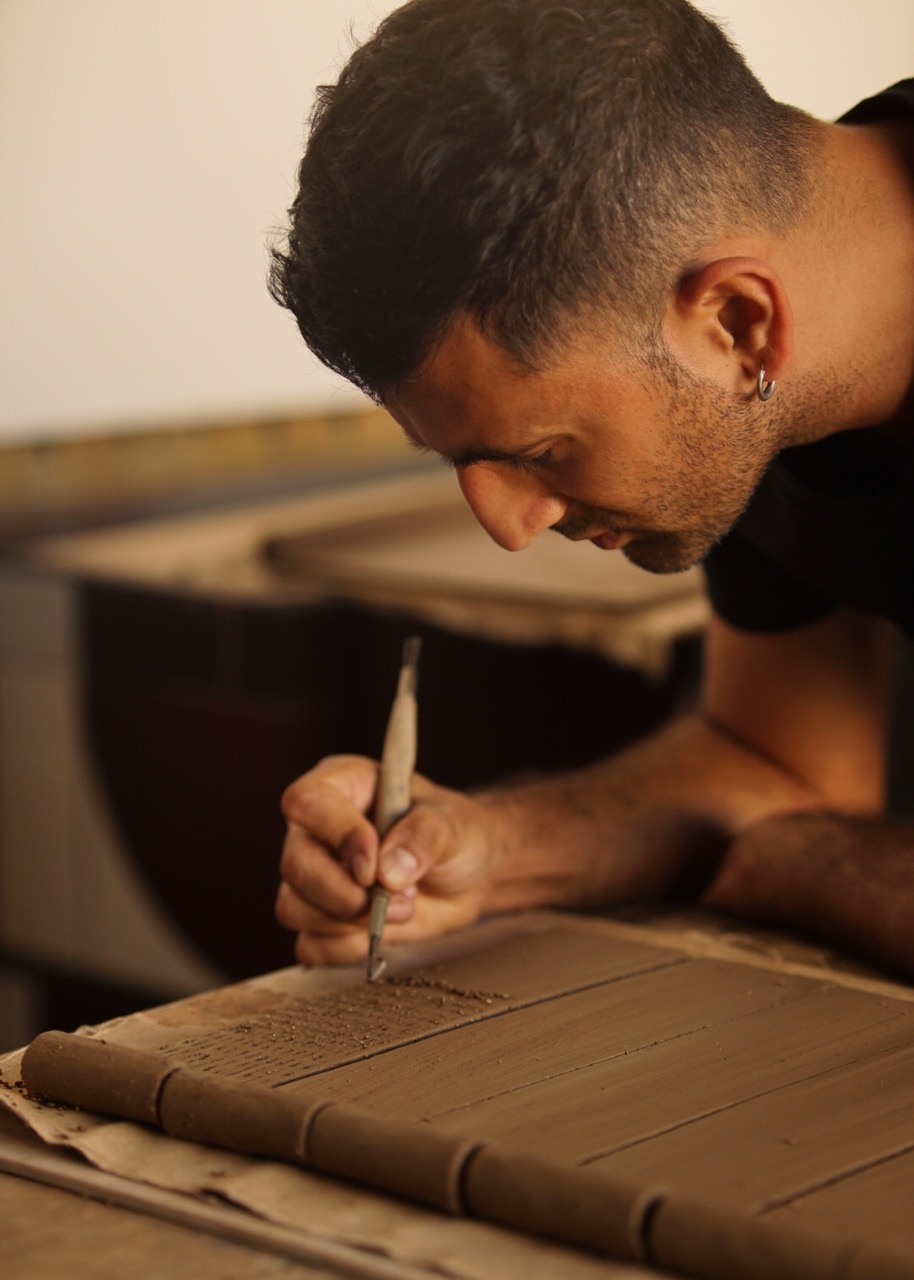
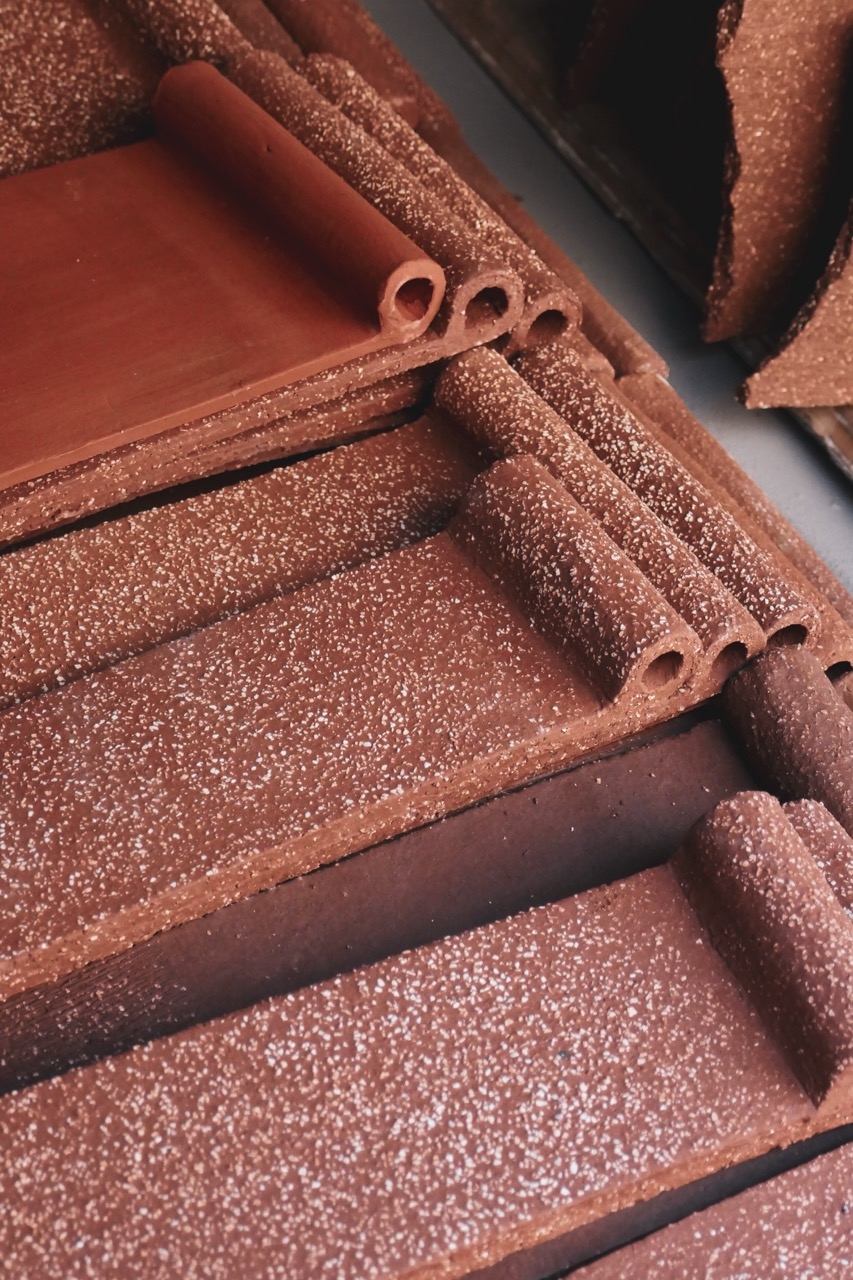
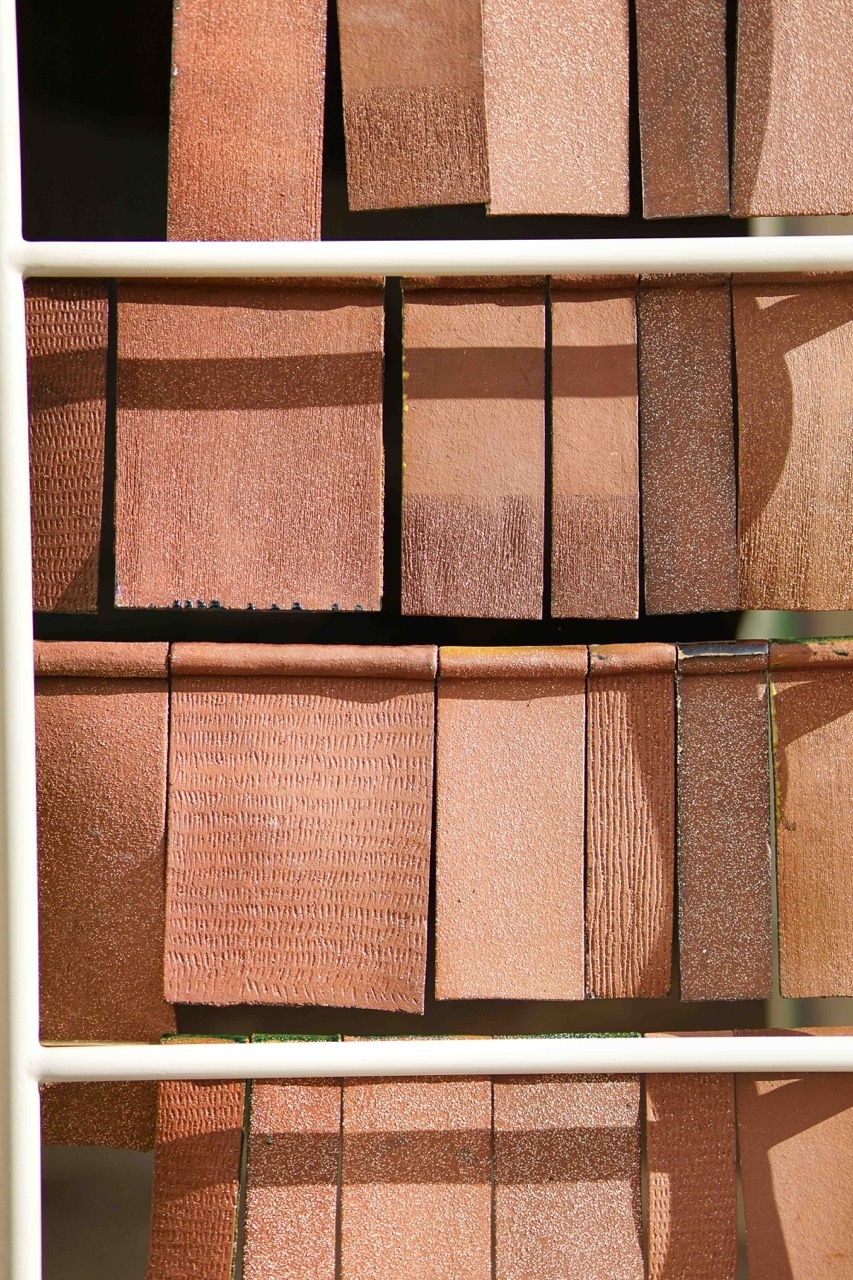
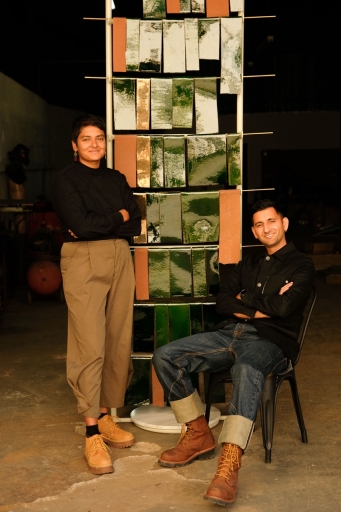
The Scale Screen is a free-standing ceramic installation that reinterprets the textural and spatial heritage of Southern African architectural elements. Drawing inspiration from the rhythmic permeability of traditional primary structures—such as the woven reed screens and 'latte' or 'Isithiyo sethayi' (sapling) fences found across the region, this piece translates organic, ephemeral boundaries into a permanent, tactile medium. Conceived as a contemporary exploration of regional terracotta craftsmanship, the Scale Screen replaces the rigid wall with a living skin of hand-rolled, textured clay sheets. These individual ceramic scales are suspended on brass rods to create a dynamic veil that negotiates the threshold between private and communal space. By prioritising airflow and dappled light, the design honours the climatic intelligence of Southern African vernacular design, where boundaries are rarely solid. Instead, they are breathable filters that offer seclusion without isolation. The installation celebrates the raw, earth-bound materiality of clay, elevating a traditional craft into a sophisticated modular system for modern spatial division.
The Scale Screen is a free-standing ceramic installation that reinterprets the textural and spatial heritage of Southern African architectural elements. Drawing inspiration from the rhythmic permeability of traditional primary structures—such as the woven reed screens and 'latte' or 'Isithiyo sethayi' (sapling) fences found across the region, this piece translates organic, ephemeral boundaries into a permanent, tactile medium. Conceived as a contemporary exploration of regional terracotta craftsmanship, the Scale Screen replaces the rigid wall with a living skin of hand-rolled, textured clay sheets. These individual ceramic scales are suspended on brass rods to create a dynamic veil that negotiates the threshold between private and communal space. By prioritising airflow and dappled light, the design honours the climatic intelligence of Southern African vernacular design, where boundaries are rarely solid. Instead, they are breathable filters that offer seclusion without isolation. The installation celebrates the raw, earth-bound materiality of clay, elevating a traditional craft into a sophisticated modular system for modern spatial division.
Product Innovation / Specification:
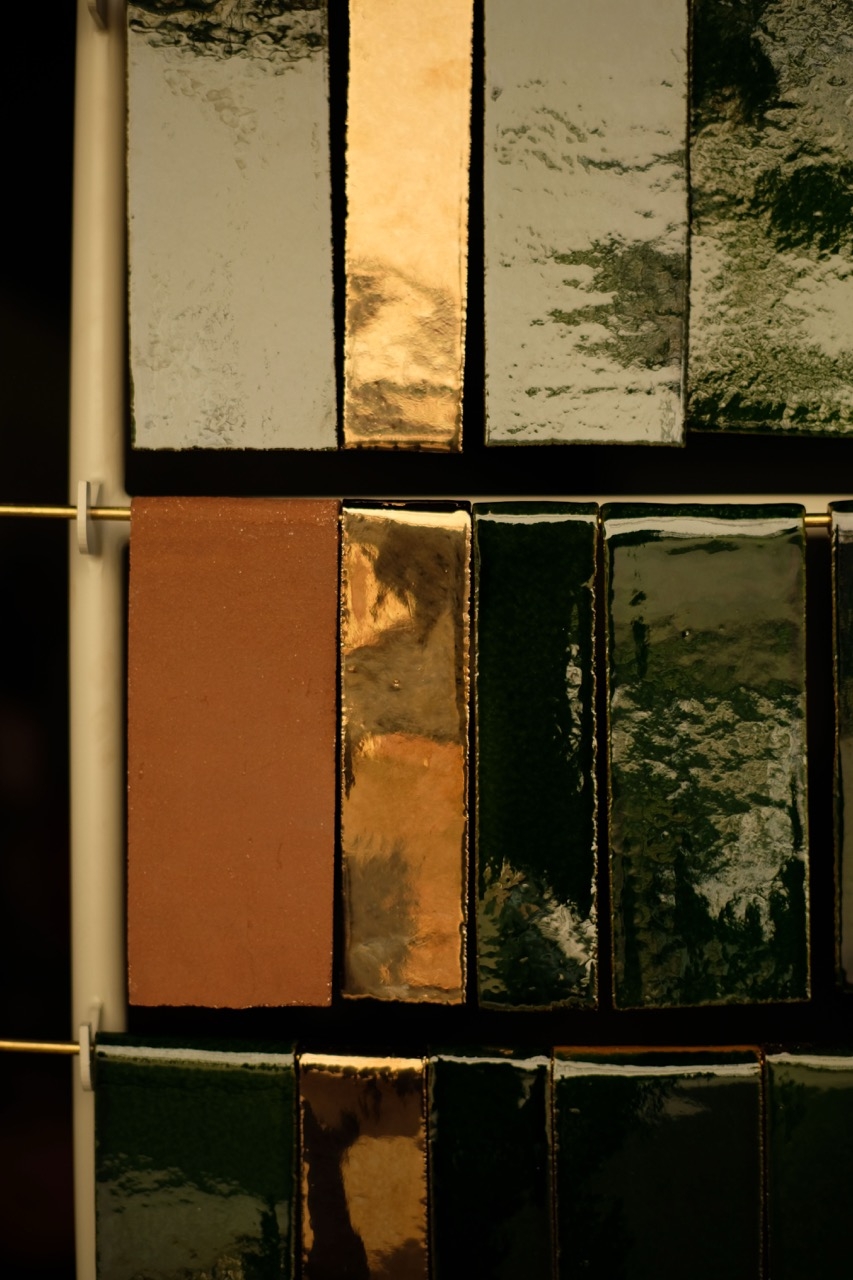
The screen treats terracotta - traditionally a heavy, stereometric material - as a soft, flowing, permeable veil. Each handmade, high-fired sheet of clay is allowed to move freely under its own weight within the kiln, bending an morphing into a state of permanent dynamism. When threaded through the brass rods, the varied surfaces, alternating between glazed and raw finishes, create a living screen that evokes privacy but invites engagement. It serves as a space-defining element while remaining dynamic and sculptural.
The screen treats terracotta - traditionally a heavy, stereometric material - as a soft, flowing, permeable veil. Each handmade, high-fired sheet of clay is allowed to move freely under its own weight within the kiln, bending an morphing into a state of permanent dynamism. When threaded through the brass rods, the varied surfaces, alternating between glazed and raw finishes, create a living screen that evokes privacy but invites engagement. It serves as a space-defining element while remaining dynamic and sculptural.
Product Sustainability Approach:
Clay contains incredibly low embodied energy. Synthetic partitions made of plastic, glass, or aluminium, terracotta is a minimally processed earth mineral. Our terracotta is sourced locally from our partner-farm, ensuring the carbon footprint associated with transportation is eliminated. The raw materials are abundant, non-toxic, and require only water and heat to transition from a plastic state to a durable architectural element. The Scale Screen is designed to function as a passive cooling system. In the Southern African context, where solar gain and high temperatures are constant architectural challenges, a solid wall often acts as a thermal trap. By contrast, the scaled geometry of this screen utilises the principle of permeable boundaries. The gaps between the hand-rolled clay sheets allow for cross-ventilation, facilitating the movement of air through a space while providing significant shading. The thermal mass of the ceramic tiles also helps regulate micro-climates; the clay absorbs the day’s heat and releases it slowly, reducing the reliance on energy-intensive HVAC systems.
Clay contains incredibly low embodied energy. Synthetic partitions made of plastic, glass, or aluminium, terracotta is a minimally processed earth mineral. Our terracotta is sourced locally from our partner-farm, ensuring the carbon footprint associated with transportation is eliminated. The raw materials are abundant, non-toxic, and require only water and heat to transition from a plastic state to a durable architectural element. The Scale Screen is designed to function as a passive cooling system. In the Southern African context, where solar gain and high temperatures are constant architectural challenges, a solid wall often acts as a thermal trap. By contrast, the scaled geometry of this screen utilises the principle of permeable boundaries. The gaps between the hand-rolled clay sheets allow for cross-ventilation, facilitating the movement of air through a space while providing significant shading. The thermal mass of the ceramic tiles also helps regulate micro-climates; the clay absorbs the day’s heat and releases it slowly, reducing the reliance on energy-intensive HVAC systems.
Local and Regional Impacts of the Product:
The scale screen is modular and waterproof, and thus 'scalable'. Entire building facades can be adorned with this treatment, ensuring the elevation of the spatial quality and human experience within a building. The use of local terracotta, sourced from a farm in our local countryside, ensures continued work for inhabitants of the village in the proximity of the facility, employed there.
The scale screen is modular and waterproof, and thus 'scalable'. Entire building facades can be adorned with this treatment, ensuring the elevation of the spatial quality and human experience within a building. The use of local terracotta, sourced from a farm in our local countryside, ensures continued work for inhabitants of the village in the proximity of the facility, employed there.
Company Name:Studio Kalki
Lead Designer(s) Name(s):Nikhil Sunil Tricam
Previous Awards Won:
Nikhil Tricam _2012 - Part of winning team for new NMMU Business School (the Workplace Architects). _2013 - FYDA international awards : top 10 internationally, award of honour _2014 - First place: ID5 ‘Durban Urban’ : (Visual Arts) _2014 - Published in UIA Journal [Article : Tomorrow’s Archtitect] _2017 - First place : DBR/ Kencada competition for a new school in Lamu, Kenya (with Nindya Bucktowar) _2018 - Published in SA Artist [Feature : Nikhil Tricam - Finding Perspective in the City] _2018 - TV interview aired on MELA SA [Feature : Nikhil Tricam - Architect] _2018/ 2019 - Selected as part of Red Bull Amaphiko design team, for 2019. _2022 - Selected as part of AHEC : Future Heirlooms designers [along with six of SA’s top designers] _2022 - Winner : Nando’s Hot Young Designer 2022 (with Nindya Bucktowar) _2023 - Awarded Battersea Power Station Interactive Mural Project in London, UK (with Nindya Bucktowar and Clout SA) _2024 - Residence of the Year - House & Garden Designer of the Year Awards - Elaleni Forest House (with Julia Rutherfoord Architect) _2024 - Scape100 Listing - Scape Magazine (with Nindya Bucktowar as Studio Kalki) _2025 - Shortlisted for Cape Town Furniture Week - Design of the Year (with Nindya Bucktowar as Studio Kalki)
Nikhil Tricam _2012 - Part of winning team for new NMMU Business School (the Workplace Architects). _2013 - FYDA international awards : top 10 internationally, award of honour _2014 - First place: ID5 ‘Durban Urban’ : (Visual Arts) _2014 - Published in UIA Journal [Article : Tomorrow’s Archtitect] _2017 - First place : DBR/ Kencada competition for a new school in Lamu, Kenya (with Nindya Bucktowar) _2018 - Published in SA Artist [Feature : Nikhil Tricam - Finding Perspective in the City] _2018 - TV interview aired on MELA SA [Feature : Nikhil Tricam - Architect] _2018/ 2019 - Selected as part of Red Bull Amaphiko design team, for 2019. _2022 - Selected as part of AHEC : Future Heirlooms designers [along with six of SA’s top designers] _2022 - Winner : Nando’s Hot Young Designer 2022 (with Nindya Bucktowar) _2023 - Awarded Battersea Power Station Interactive Mural Project in London, UK (with Nindya Bucktowar and Clout SA) _2024 - Residence of the Year - House & Garden Designer of the Year Awards - Elaleni Forest House (with Julia Rutherfoord Architect) _2024 - Scape100 Listing - Scape Magazine (with Nindya Bucktowar as Studio Kalki) _2025 - Shortlisted for Cape Town Furniture Week - Design of the Year (with Nindya Bucktowar as Studio Kalki)