EGYADI
Prize(s):
WINNER 2026 PRODUCT DESIGN / People-Centric Design
Lead Designer(s) Name(s):Eloukou Marie-Pierre BEYELA
Design Status:Concept
Website: View
Product Description:
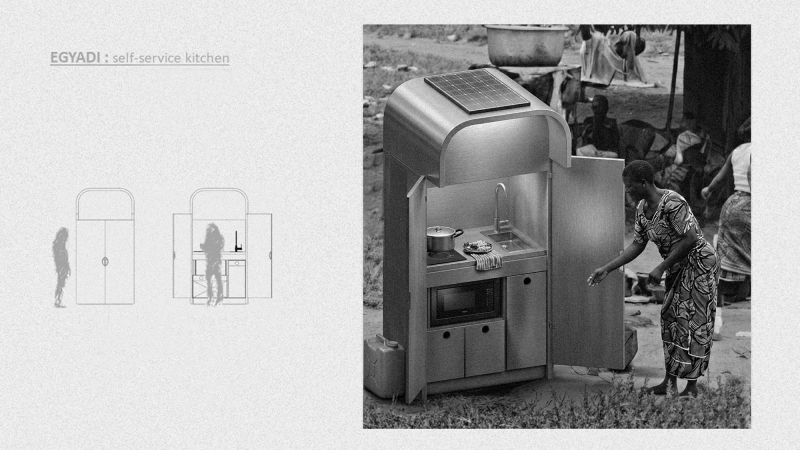
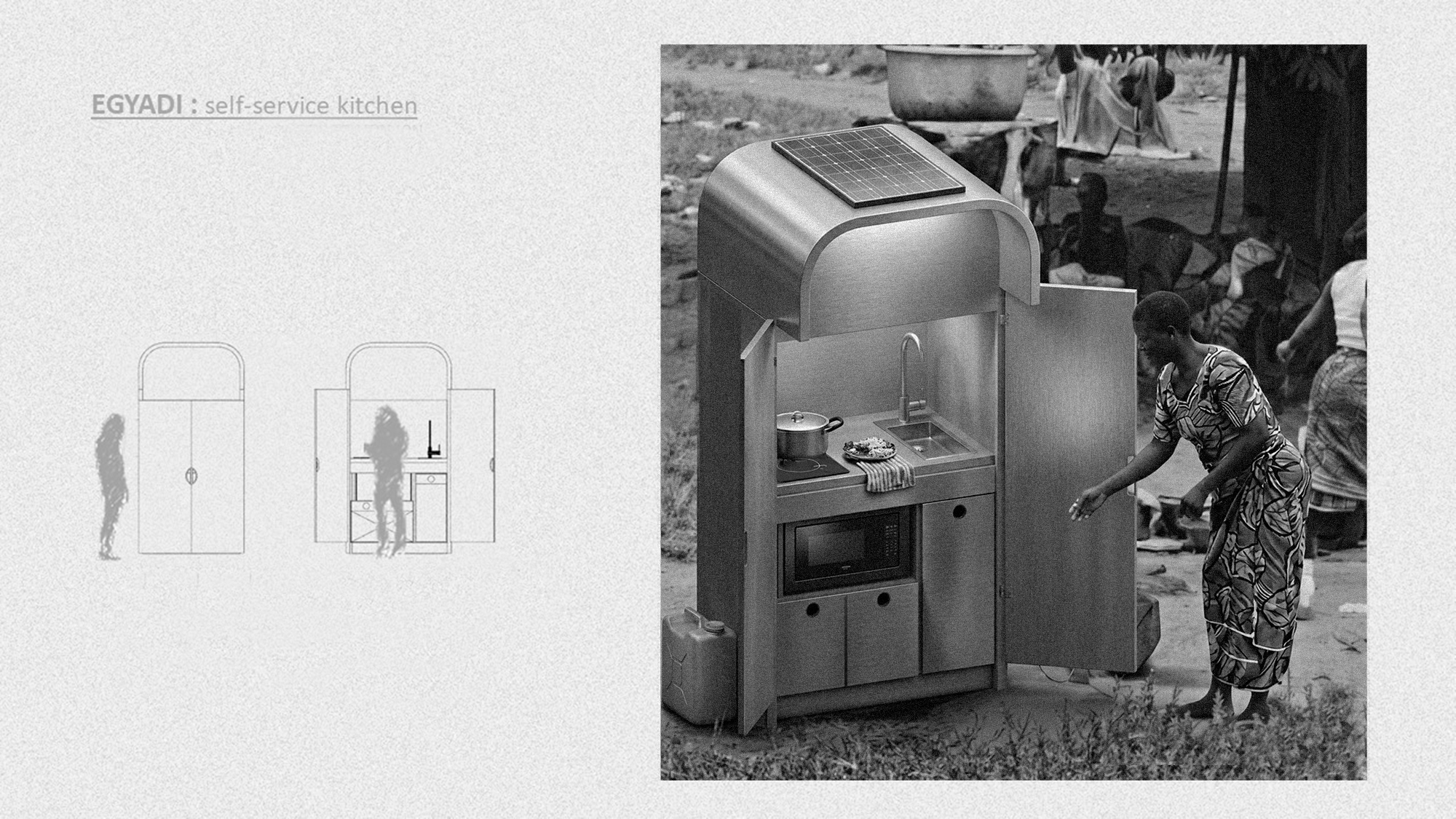
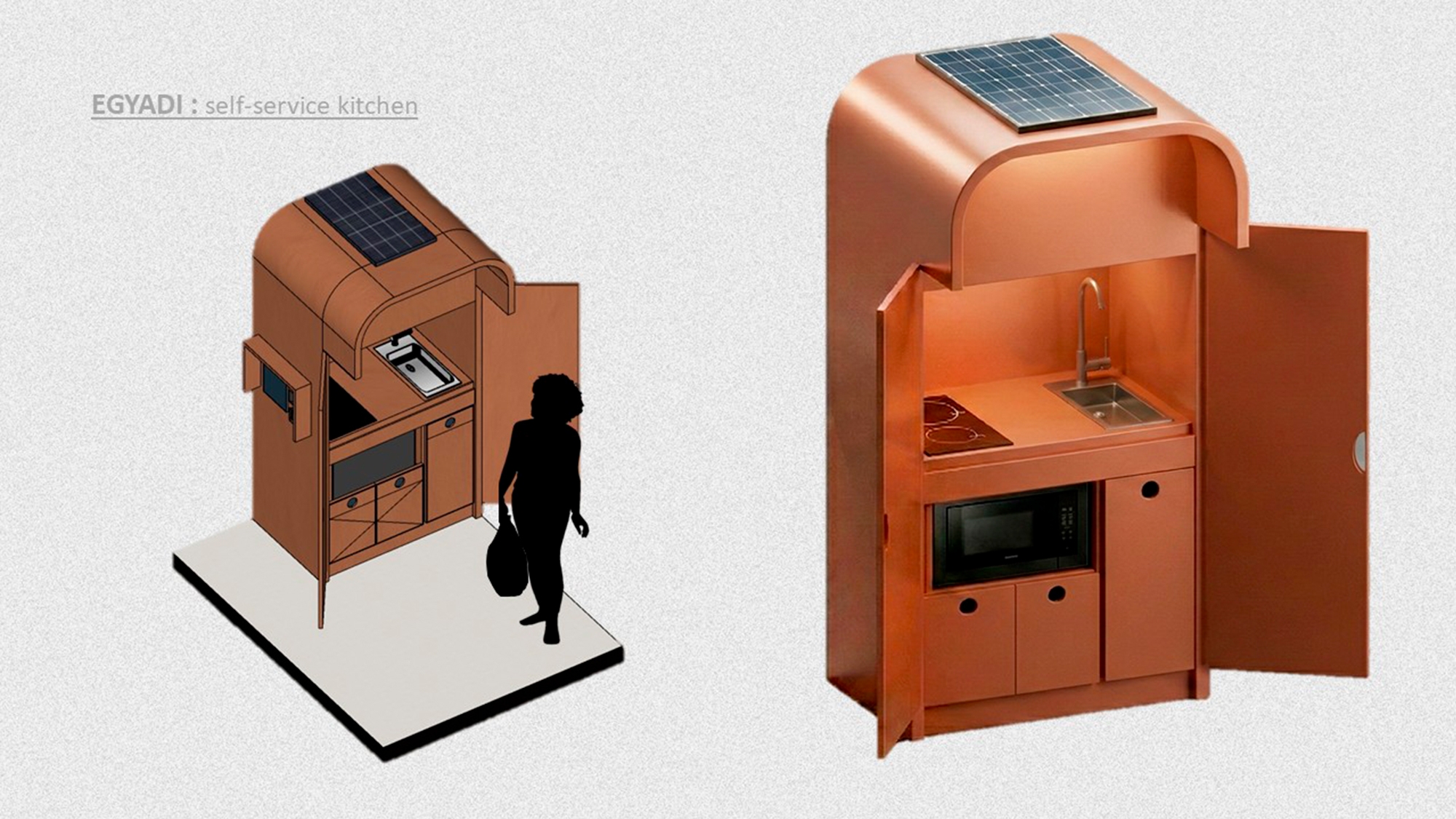
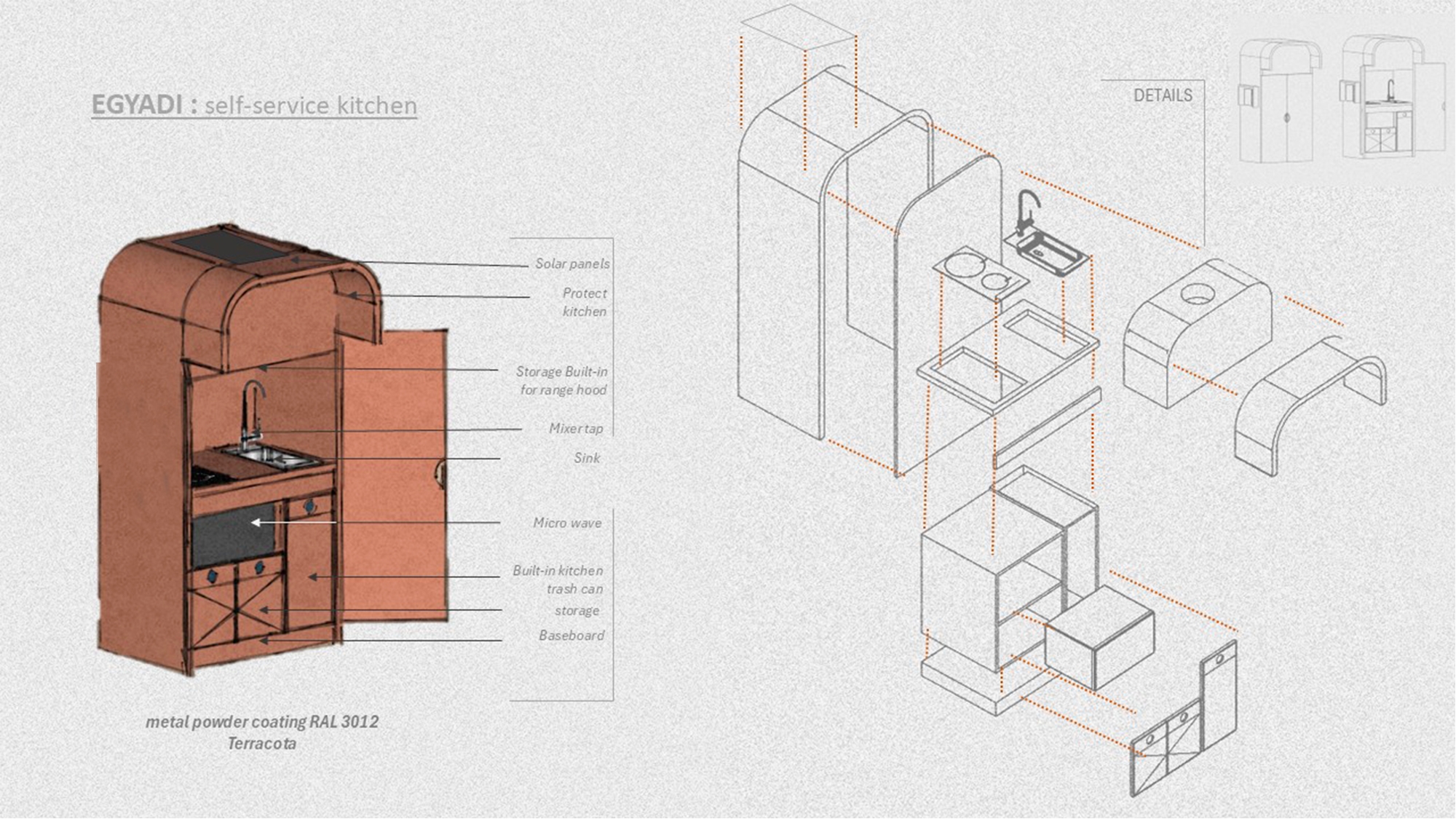
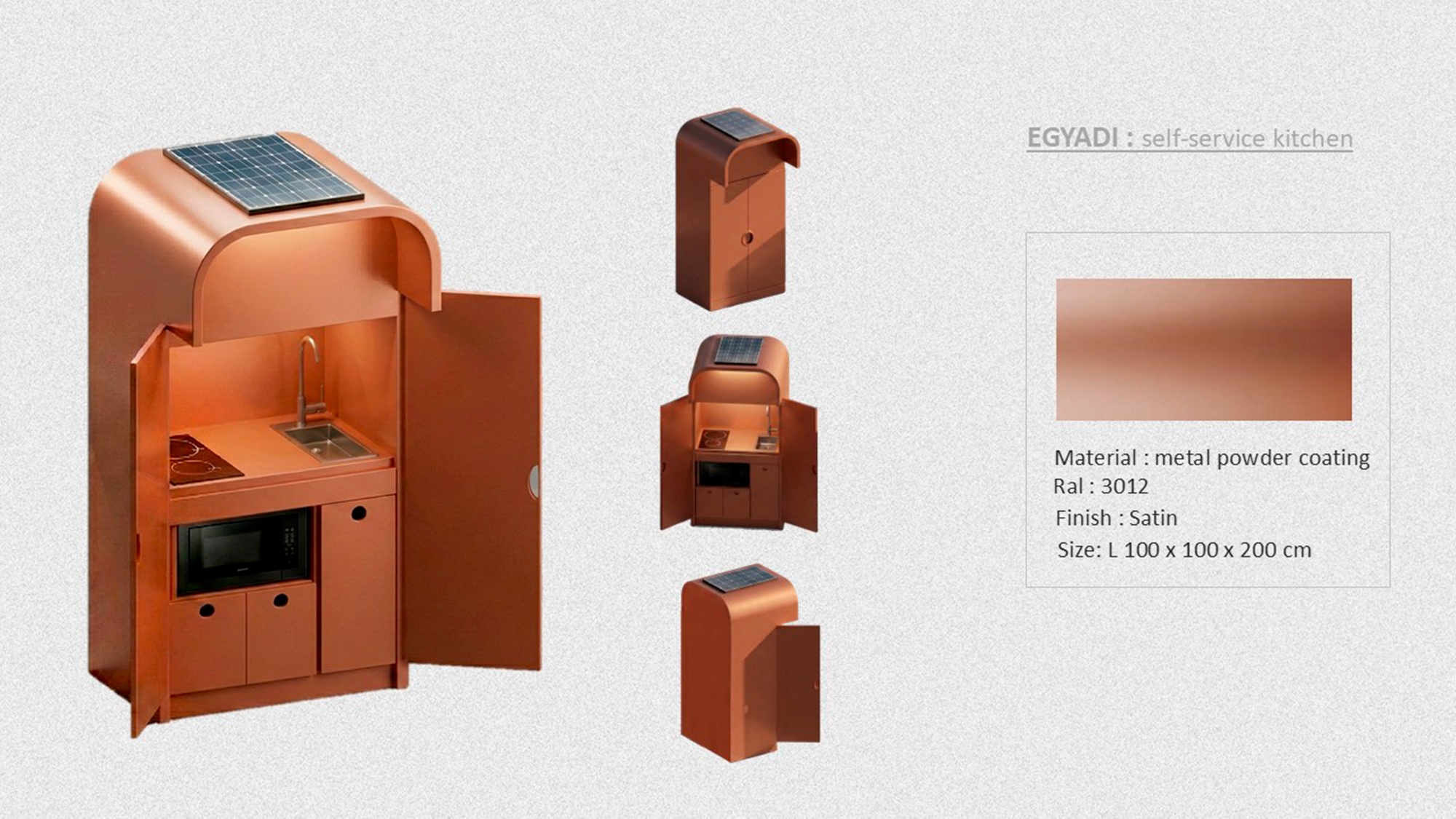
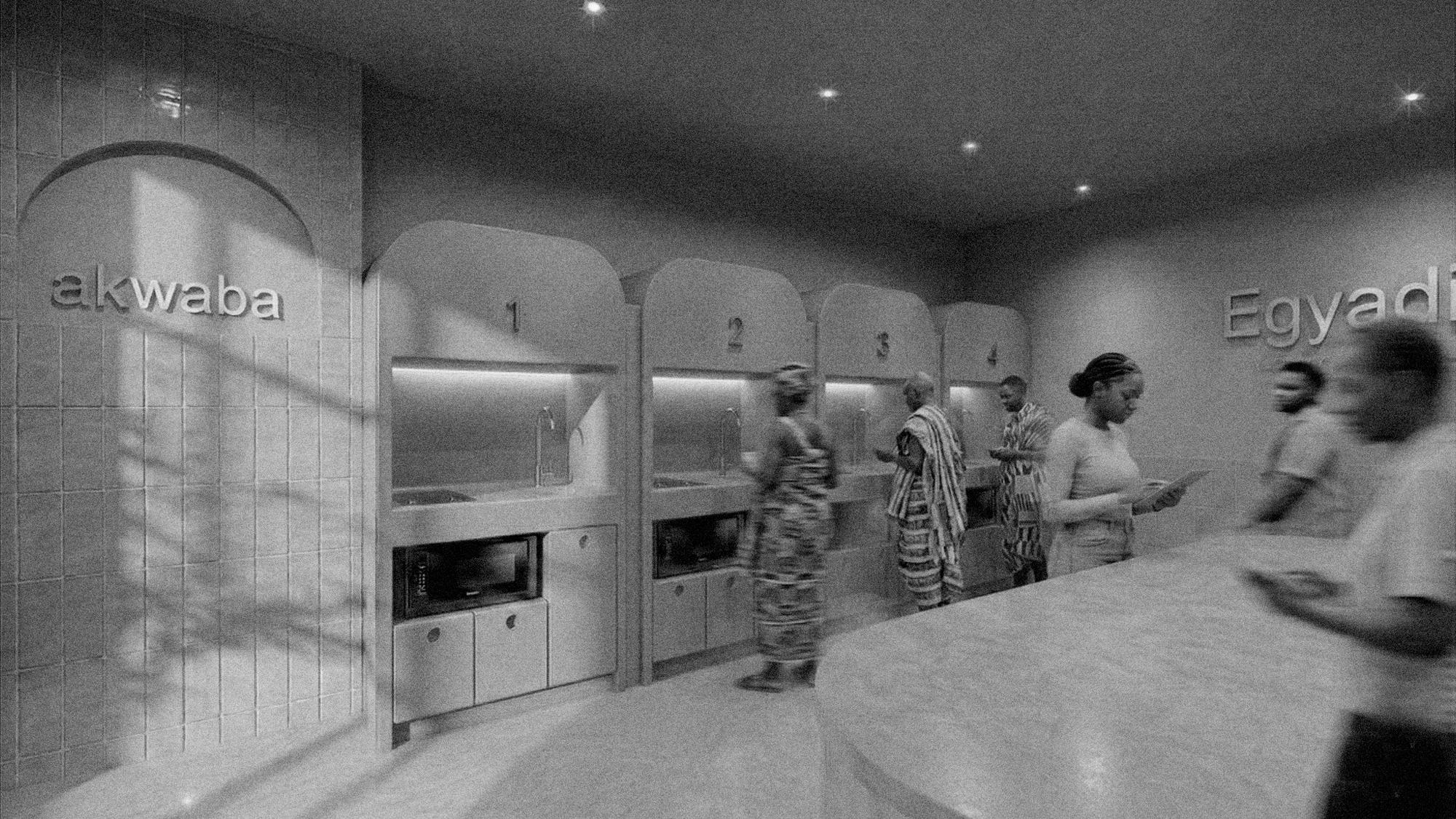
Access to kitchen equipment through this concept has been designed to address the major challenges of our time by offering an innovative, inclusive, and adaptable solution. It operates across a wide range of issues: social, ecological, and educational. EGYADI (which means “kitchen” in the Nzema language) is a self-service kitchen concept intended to be deployed in rural areas, particularly in villages. Designed to be accessible to all, it primarily serves rural communities. Its simple form, metallic structure, and terracotta tone bring a touch of modernity to the space while respecting and preserving the surrounding landscape. Through this project, we aim to create a positive and lasting impact by improving meal preparation conditions and encouraging the sharing of resources.
Access to kitchen equipment through this concept has been designed to address the major challenges of our time by offering an innovative, inclusive, and adaptable solution. It operates across a wide range of issues: social, ecological, and educational. EGYADI (which means “kitchen” in the Nzema language) is a self-service kitchen concept intended to be deployed in rural areas, particularly in villages. Designed to be accessible to all, it primarily serves rural communities. Its simple form, metallic structure, and terracotta tone bring a touch of modernity to the space while respecting and preserving the surrounding landscape. Through this project, we aim to create a positive and lasting impact by improving meal preparation conditions and encouraging the sharing of resources.
Product Innovation / Specification:
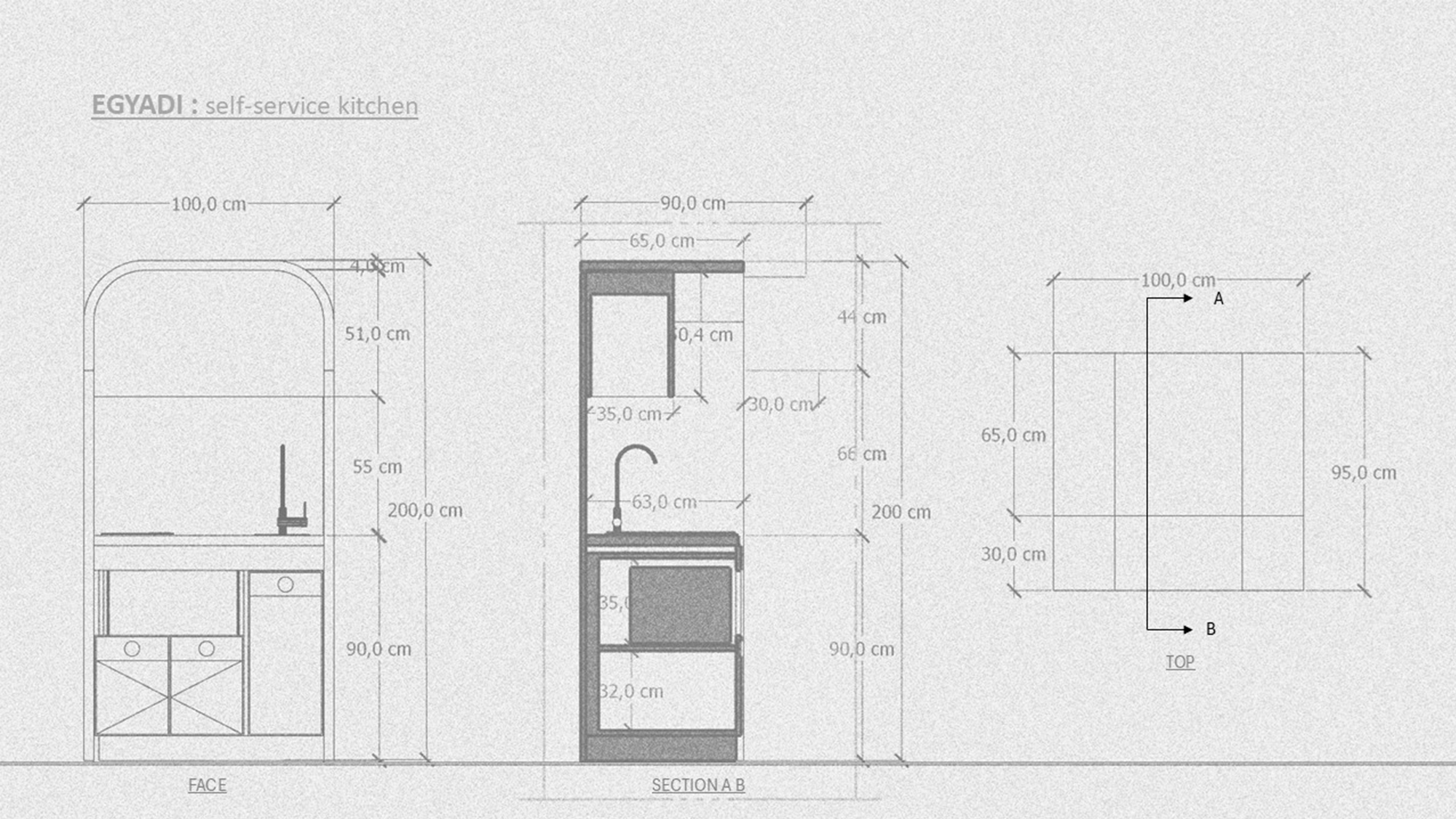
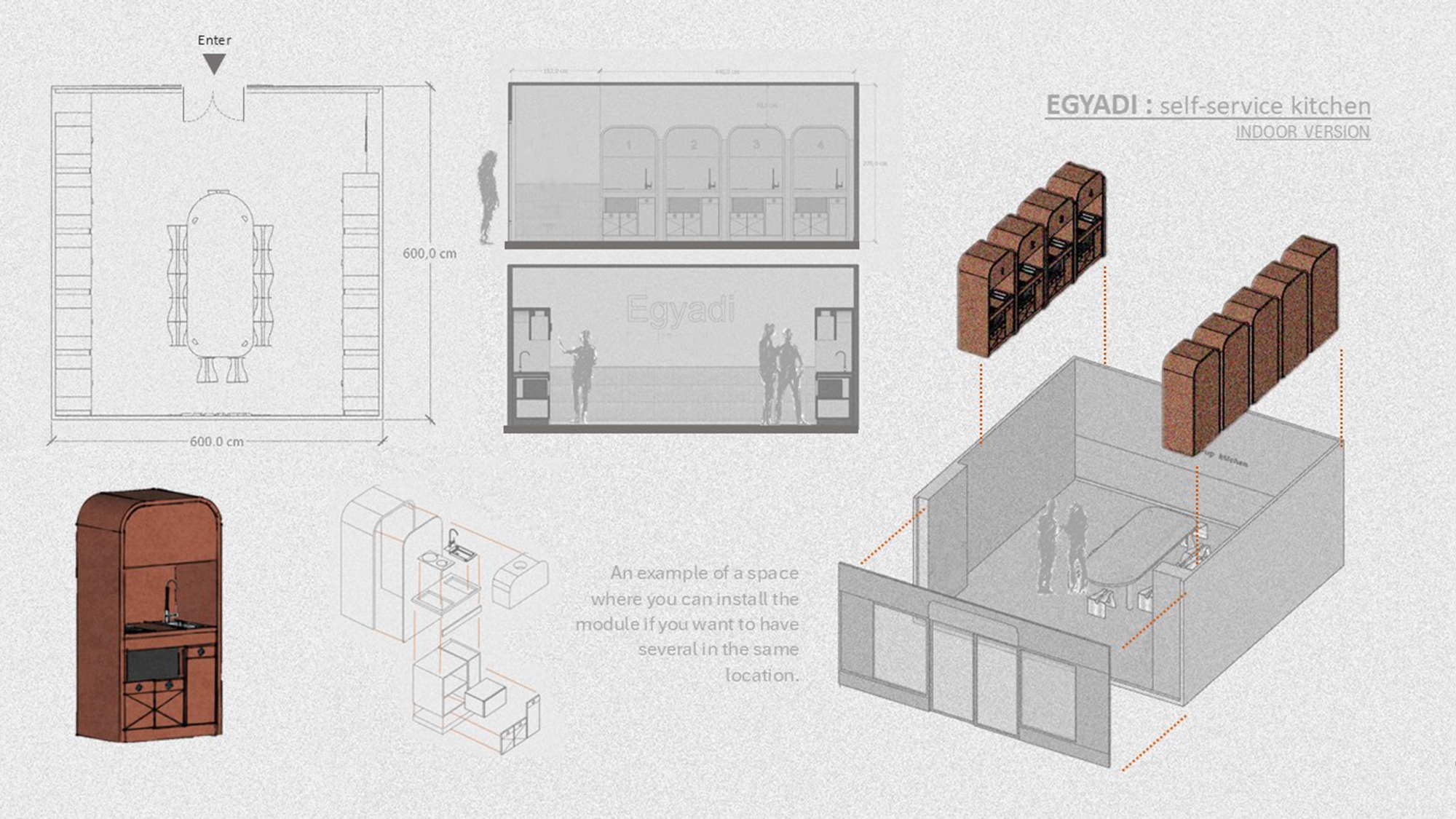
The EGYADI self-service kitchen stands out for its innovative approach tailored to rural realities. Designed to operate both outdoors and indoors, it is based on a flexible and modular architecture that allows for either a standalone installation or integration into an existing space, depending on the specific needs of the site. Its core innovation lies in the shared use of kitchen equipment within a structured and accessible space. The system integrates modern household appliances, providing rural communities with access to technologies that have previously been little used in their daily lives. This gradual introduction to modern equipment serves as a catalyst for learning and for transforming culinary practices. By partially replacing the traditional use of wood and charcoal, EGYADI offers significant time savings, improves user comfort, and reduces the physical strain associated with meal preparation. It promotes shared access to resources, strengthens community engagement, encourages social interaction, and enhances the overall efficiency of the space. EGYADI therefore represents an innovative technical, social, and environmental solution.
The EGYADI self-service kitchen stands out for its innovative approach tailored to rural realities. Designed to operate both outdoors and indoors, it is based on a flexible and modular architecture that allows for either a standalone installation or integration into an existing space, depending on the specific needs of the site. Its core innovation lies in the shared use of kitchen equipment within a structured and accessible space. The system integrates modern household appliances, providing rural communities with access to technologies that have previously been little used in their daily lives. This gradual introduction to modern equipment serves as a catalyst for learning and for transforming culinary practices. By partially replacing the traditional use of wood and charcoal, EGYADI offers significant time savings, improves user comfort, and reduces the physical strain associated with meal preparation. It promotes shared access to resources, strengthens community engagement, encourages social interaction, and enhances the overall efficiency of the space. EGYADI therefore represents an innovative technical, social, and environmental solution.
Product Sustainability Approach:
The sustainable approach of EGYADI is based on reducing dependence on wood and charcoal for cooking, particularly in villages. The concept actively contributes to forest preservation and to reducing the pressure placed on local natural resources. The integration of alternative technologies, such as solar panels, also makes it possible to consider a more autonomous and environmentally responsible energy solution. The sustainability of the project is also reflected in its principle of shared use. By encouraging the sharing of equipment within a collective space, EGYADI optimizes the use of resources and limits the overconsumption of individual appliances. From a material perspective, the choice of powder-coated metal with a terracotta finish follows a dual sustainability logic. On one hand, this material ensures strong resistance to weather conditions and guarantees the durability of the structure in outdoor environments. On the other hand, its color, inspired by local earth tones, allows the structure to blend harmoniously into the landscape, creating a dialogue between technical modernity and territorial identity.
The sustainable approach of EGYADI is based on reducing dependence on wood and charcoal for cooking, particularly in villages. The concept actively contributes to forest preservation and to reducing the pressure placed on local natural resources. The integration of alternative technologies, such as solar panels, also makes it possible to consider a more autonomous and environmentally responsible energy solution. The sustainability of the project is also reflected in its principle of shared use. By encouraging the sharing of equipment within a collective space, EGYADI optimizes the use of resources and limits the overconsumption of individual appliances. From a material perspective, the choice of powder-coated metal with a terracotta finish follows a dual sustainability logic. On one hand, this material ensures strong resistance to weather conditions and guarantees the durability of the structure in outdoor environments. On the other hand, its color, inspired by local earth tones, allows the structure to blend harmoniously into the landscape, creating a dialogue between technical modernity and territorial identity.
Local and Regional Impacts of the Product:
EGYADI improves quality of life by reducing the use of wood and charcoal, lowering household smoke exposure and respiratory diseases, while making meal preparation easier and more comfortable. It introduces residents to modern appliances and sustainable practices (efficient cooking, solar energy, shared resources), fostering learning and awareness. Shared use of equipment strengthens social bonds and creates communal spaces. Regionally, the project preserves forests, reduces carbon footprint, highlights local traditions, and serves as a replicable model of sustainable community infrastructure, adaptable to other public services such as schools, workplaces, or urban facilities.
EGYADI improves quality of life by reducing the use of wood and charcoal, lowering household smoke exposure and respiratory diseases, while making meal preparation easier and more comfortable. It introduces residents to modern appliances and sustainable practices (efficient cooking, solar energy, shared resources), fostering learning and awareness. Shared use of equipment strengthens social bonds and creates communal spaces. Regionally, the project preserves forests, reduces carbon footprint, highlights local traditions, and serves as a replicable model of sustainable community infrastructure, adaptable to other public services such as schools, workplaces, or urban facilities.

Lead Designer(s) Name(s):Eloukou Marie-Pierre BEYELA