

Helix
Prize(s):
WINNER 2026 PRODUCT DESIGN / Electronics Products Design | PRODUCT DESIGN / People-Centric Design
School / University Name:Savannah College of Art and Design
Lead Designer(s) Name(s):Erika Kimani
Professor Name(s):Paul Mcgroary
Photo Credit:Erika Kimani
Project Location:SCAD Savannah
Design Status:Concept
Product Description:
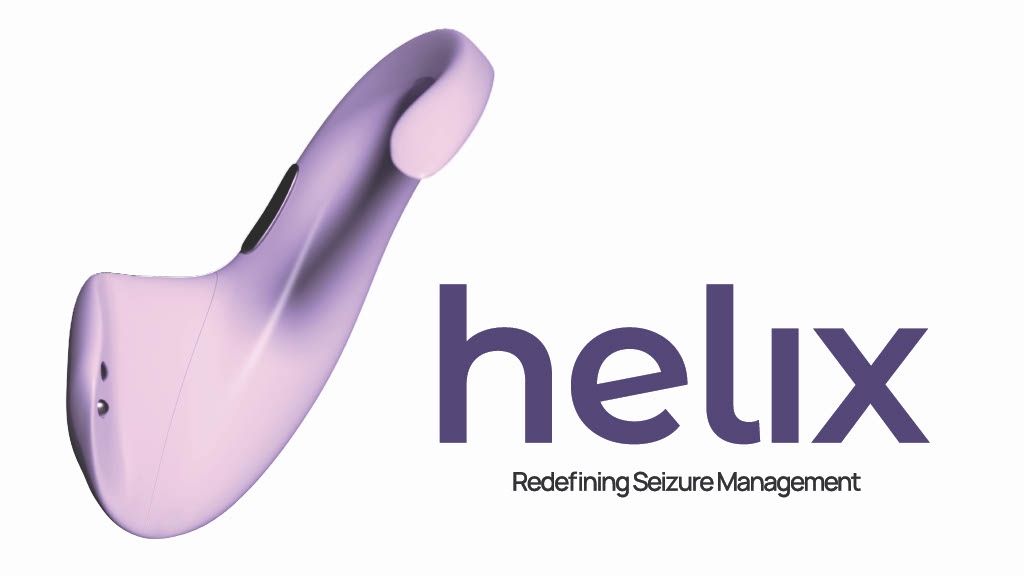
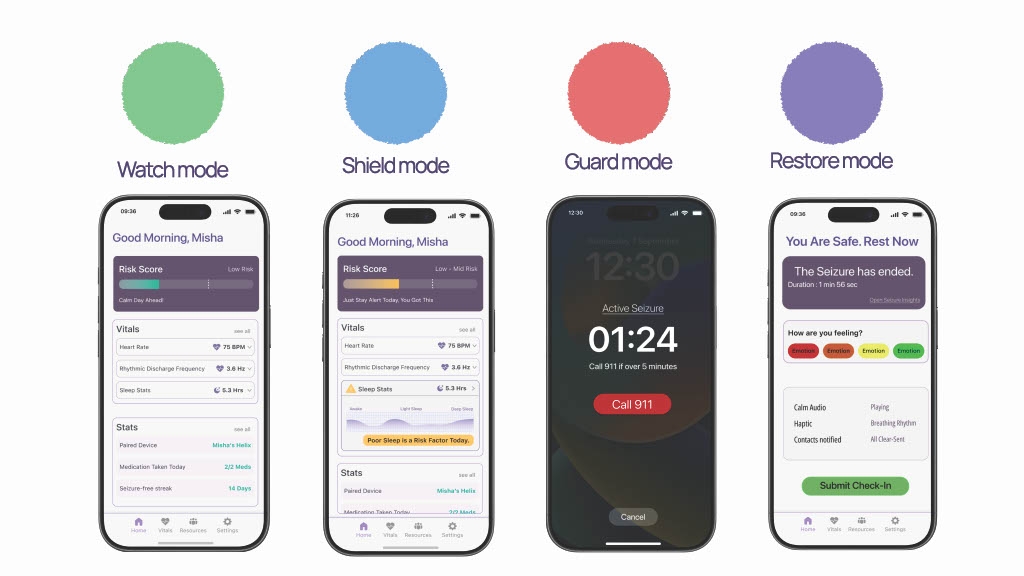
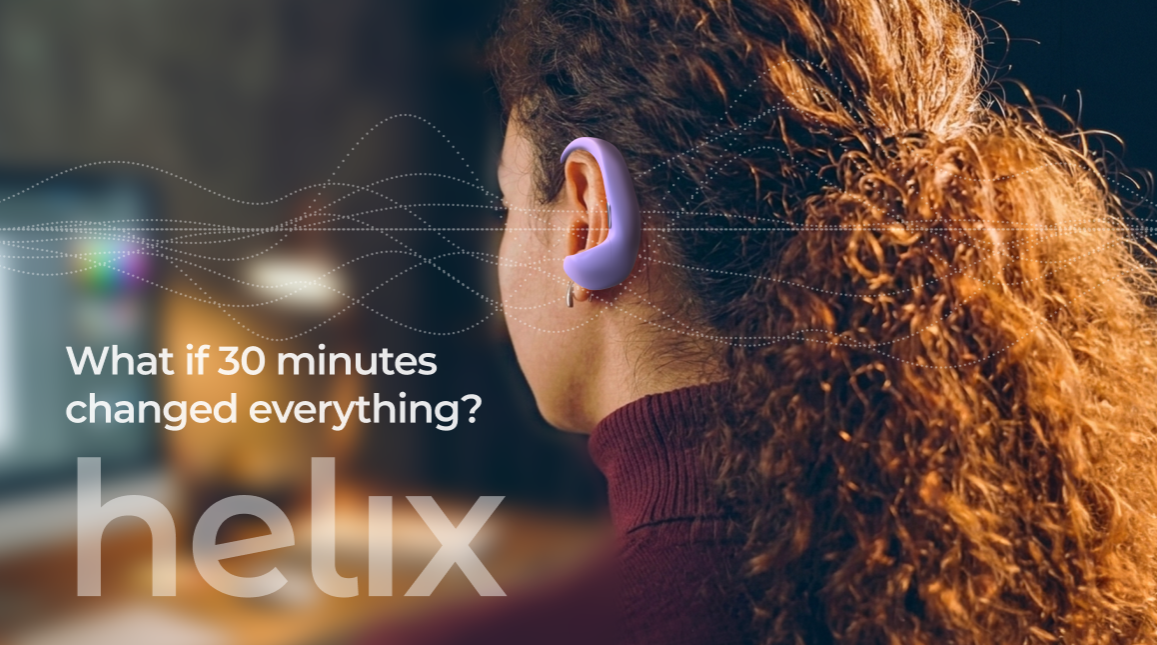
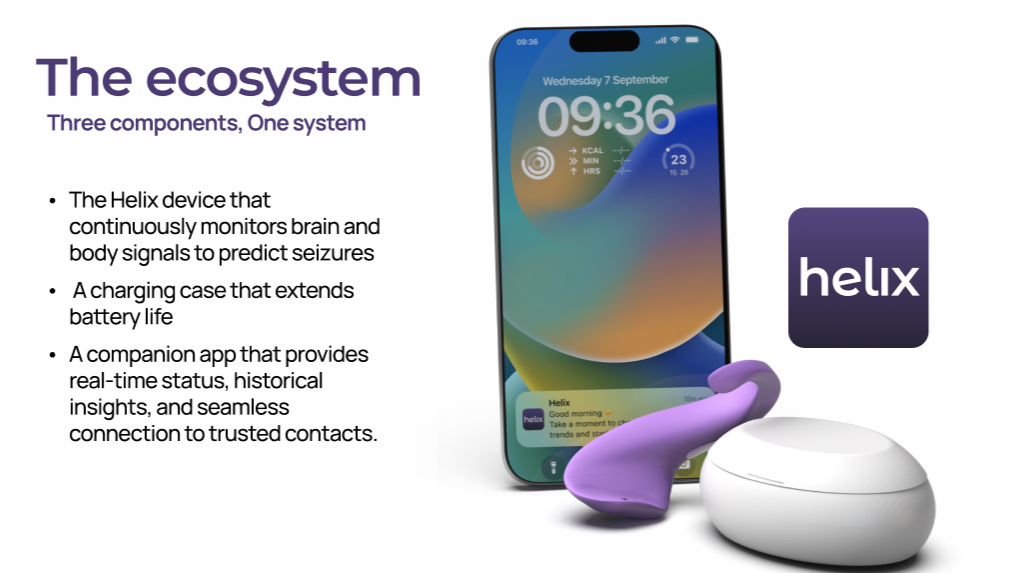
Helix is the first ear-worn device designed to predict seizures before they occur and restore agency to people living with seizures by transforming epilepsy management from reactive monitoring into proactive, preventive care, thus giving users the tools to predict, prepare, and recover with dignity. While existing solutions alert users or caregivers after a seizure has begun, Helix provides up to 30 minutes of warning, giving people time to find safety, notify contacts, and prepare.
Helix is the first ear-worn device designed to predict seizures before they occur and restore agency to people living with seizures by transforming epilepsy management from reactive monitoring into proactive, preventive care, thus giving users the tools to predict, prepare, and recover with dignity. While existing solutions alert users or caregivers after a seizure has begun, Helix provides up to 30 minutes of warning, giving people time to find safety, notify contacts, and prepare.
Product Innovation / Specification:
Helix challenges the assumption that medical devices must look medical. The continuous-curve, over-ear form factor draws from premium consumer audio products rather than clinical wearables. The device integrates four sensing modalities into a single ear-worn form factor: 4-channel dry EEG electrode array positioned along the ear hook and mastoid area PPG optical heart rate sensor 6-axis IMU for motion and orientation detection On-device machine learning This multi-modal approach achieves high seizure prediction accuracy. This is validated in peer-reviewed ear-EEG research through correlations between brain activity patterns and cardiac and motion biomarkers.
Helix challenges the assumption that medical devices must look medical. The continuous-curve, over-ear form factor draws from premium consumer audio products rather than clinical wearables. The device integrates four sensing modalities into a single ear-worn form factor: 4-channel dry EEG electrode array positioned along the ear hook and mastoid area PPG optical heart rate sensor 6-axis IMU for motion and orientation detection On-device machine learning This multi-modal approach achieves high seizure prediction accuracy. This is validated in peer-reviewed ear-EEG research through correlations between brain activity patterns and cardiac and motion biomarkers.
Product Sustainability Approach:
Helix is intended to be a durable, long-term health companion, not a disposable consumer electronic. The core device is designed to last for over 5 years through the following: Modular construction allows component-level repair Replaceable silicone ear interfaces (eliminating full-device replacement for wear items) Timeless form language that avoids trend-driven obsolescence
Helix is intended to be a durable, long-term health companion, not a disposable consumer electronic. The core device is designed to last for over 5 years through the following: Modular construction allows component-level repair Replaceable silicone ear interfaces (eliminating full-device replacement for wear items) Timeless form language that avoids trend-driven obsolescence
Local and Regional Impacts of the Product:
Addressing a Widespread Condition: Epilepsy affects over 50 million people worldwide, it is one of the most common neurological conditions on earth. Yet most live without adequate tools, managing their condition through uncertainty and fear. Helix offers a new approach: prediction instead of detection, preparation instead of reaction. Reducing Stigma Through Design: Epilepsy carries stigma in virtually every culture, limiting employment, relationships, and social participation. Helix's consumer-forward design deliberately rejects the aesthetic of illness. A device that resembles premium audio technology rather than medical equipment allows users to manage their condition without visible markers of disability: a benefit that translates across borders.
Addressing a Widespread Condition: Epilepsy affects over 50 million people worldwide, it is one of the most common neurological conditions on earth. Yet most live without adequate tools, managing their condition through uncertainty and fear. Helix offers a new approach: prediction instead of detection, preparation instead of reaction. Reducing Stigma Through Design: Epilepsy carries stigma in virtually every culture, limiting employment, relationships, and social participation. Helix's consumer-forward design deliberately rejects the aesthetic of illness. A device that resembles premium audio technology rather than medical equipment allows users to manage their condition without visible markers of disability: a benefit that translates across borders.

Lead Designer(s) Name(s):Erika Kimani
Profile Description:
I’m Erika Kimani, an industrial design student at the Savannah College of Art and Design. The three pillars of my design process are accessibility, inclusivity and sustainability, and I strive to build all my projects on that foundation. For me, design is as much about empathy and teamwork as it is about creativity. It’s about listening, understanding people’s needs, and translating those insights into meaningful solutions.
I’m Erika Kimani, an industrial design student at the Savannah College of Art and Design. The three pillars of my design process are accessibility, inclusivity and sustainability, and I strive to build all my projects on that foundation. For me, design is as much about empathy and teamwork as it is about creativity. It’s about listening, understanding people’s needs, and translating those insights into meaningful solutions.
Previous Awards Won:
ARM Student Award 2024
ARM Student Award 2024