
Sorta - Reimagining waste management in Egypt
Prize(s):
WINNER 2026 PRODUCT DESIGN / Industrial Product
School / University Name:German University In Cairo
Lead Designer(s) Name(s):Sara Ibrahim
Professor Name(s):Nada El Mossier
Project Location:Cairo
Design Status:Concept
Product Description:
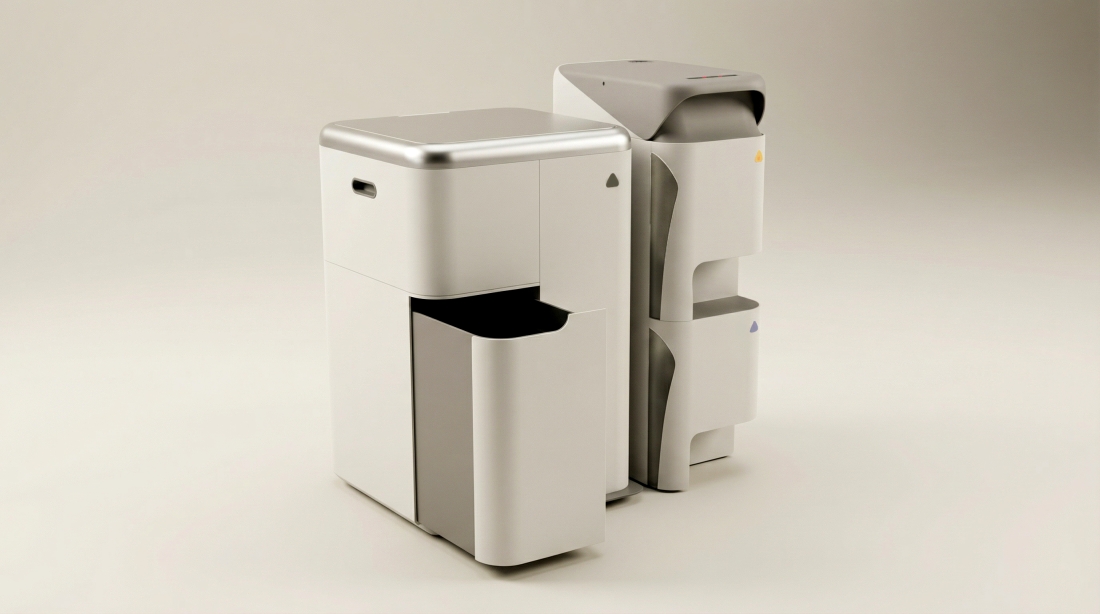
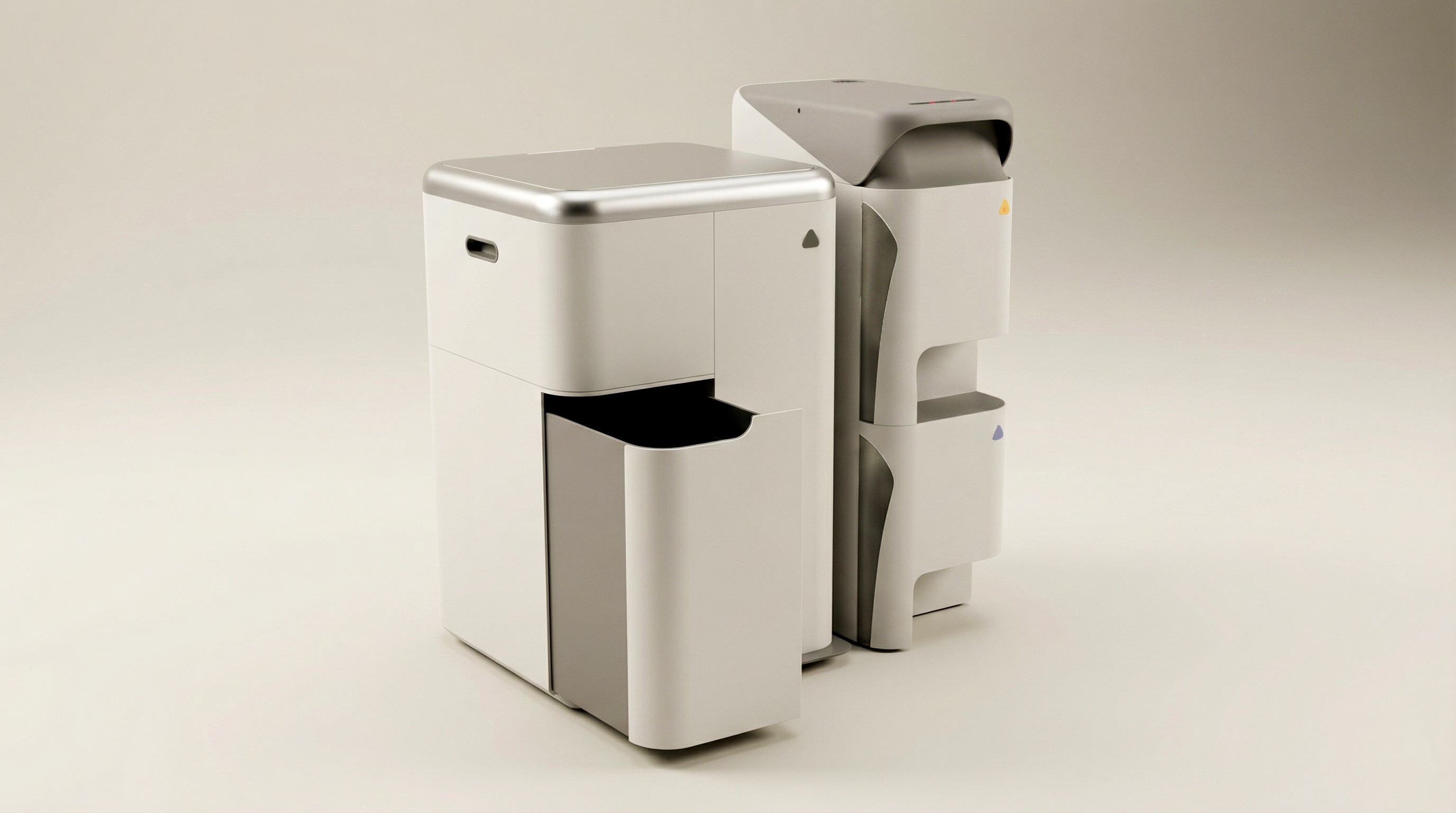
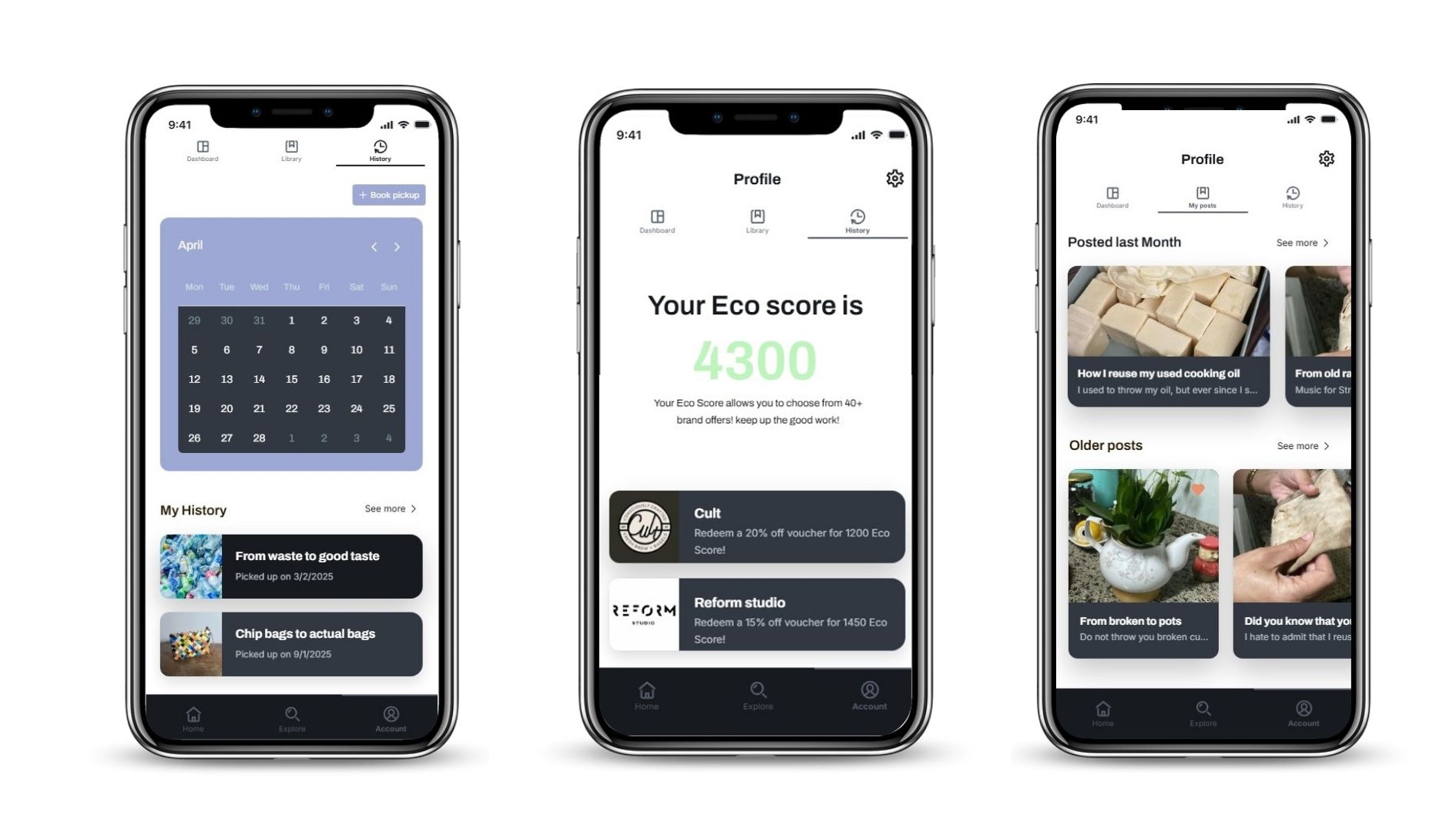
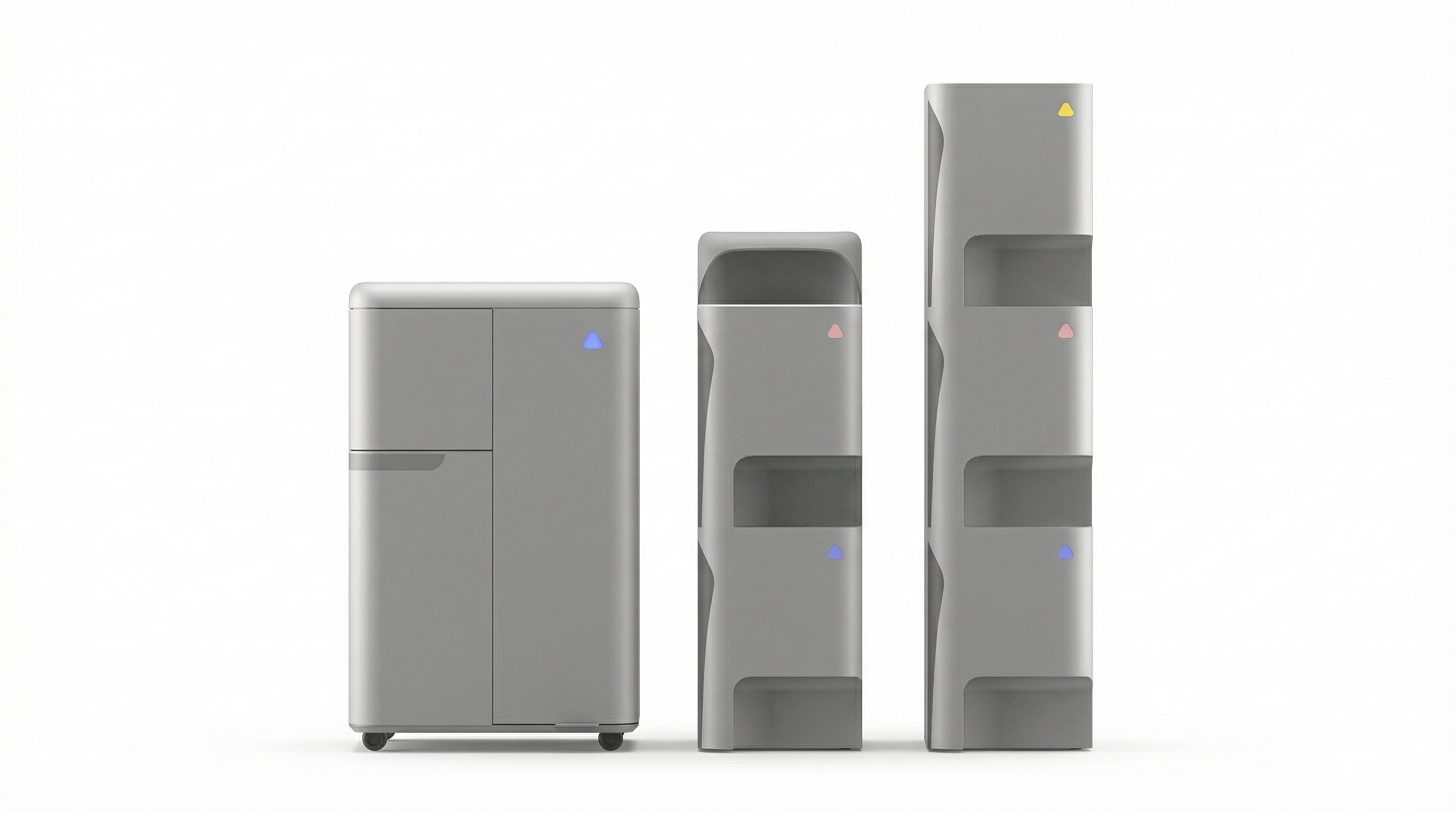
In Egypt, high-income households generate the most waste. Research reveals a clear gap between awareness and action: people know they should recycle But they do not, because they were never taught, find it too effortful, and see no tangible reward. Meanwhile, the burden of sorting contaminated waste falls on Garbage City workers, exposing them to HIV, hepatitis A, as well as, digestive hazards that affects animals from plastic-contaminated organic waste. Sorta is a phased waste segregation system designed around behavior change and gamification. Rather than demanding seven bins at once, Sorta introduces an elimination approach — users begin by separating one material type (organic food), gradually adding categories as habits solidify. Users can add a mechanical crusher for metal cans or plastic bottles, reducing volume by up to four times. Fill level is visible through a gradient frosted window on each bin. The stackable form preserves floor space. Progress is tracked through a connected app with brand-driven rewards. Sorta makes segregation measurable, rewarding, and fun — closing the loop between household action and systemic impact.
In Egypt, high-income households generate the most waste. Research reveals a clear gap between awareness and action: people know they should recycle But they do not, because they were never taught, find it too effortful, and see no tangible reward. Meanwhile, the burden of sorting contaminated waste falls on Garbage City workers, exposing them to HIV, hepatitis A, as well as, digestive hazards that affects animals from plastic-contaminated organic waste. Sorta is a phased waste segregation system designed around behavior change and gamification. Rather than demanding seven bins at once, Sorta introduces an elimination approach — users begin by separating one material type (organic food), gradually adding categories as habits solidify. Users can add a mechanical crusher for metal cans or plastic bottles, reducing volume by up to four times. Fill level is visible through a gradient frosted window on each bin. The stackable form preserves floor space. Progress is tracked through a connected app with brand-driven rewards. Sorta makes segregation measurable, rewarding, and fun — closing the loop between household action and systemic impact.
Product Innovation / Specification:
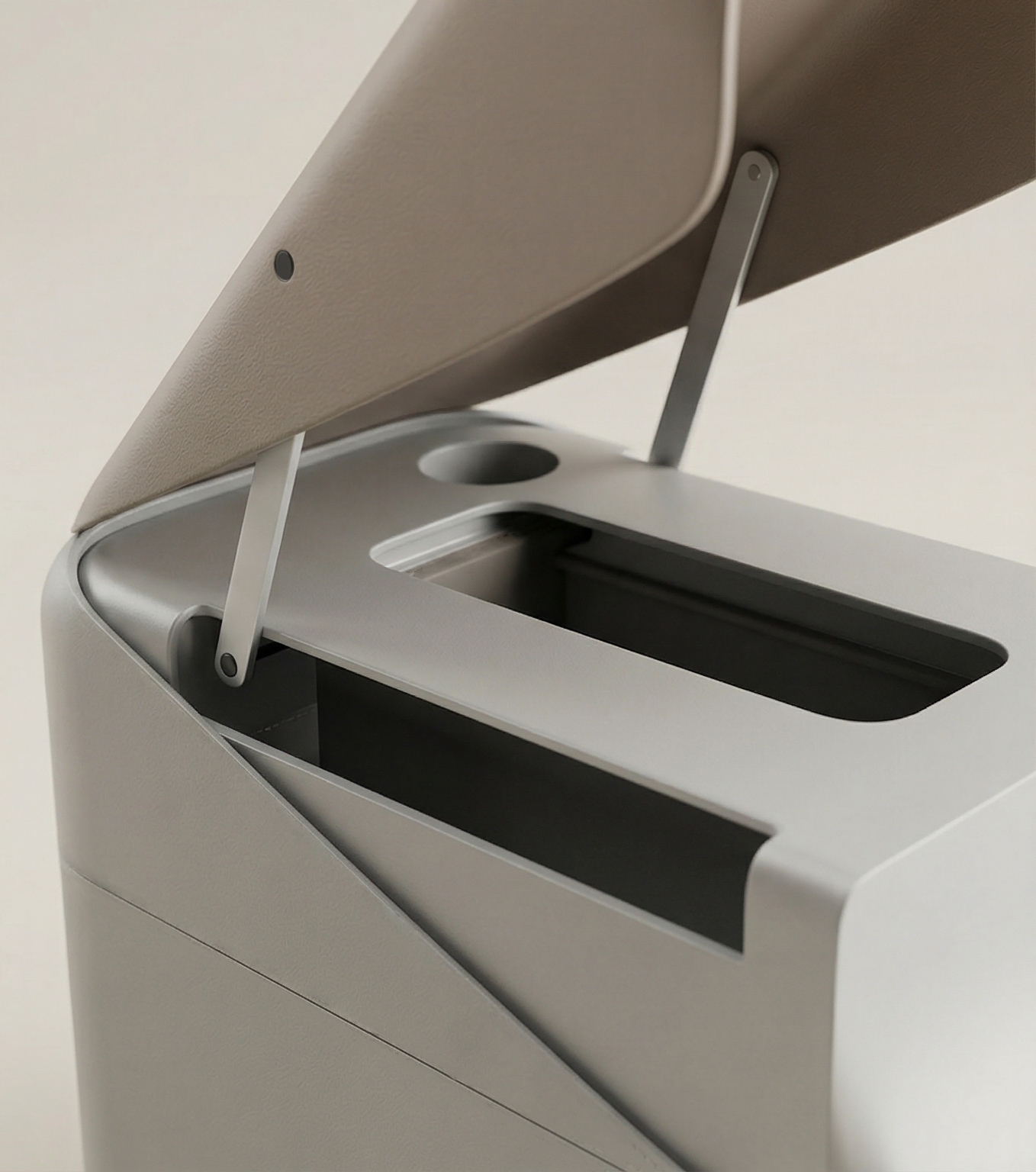
Each Sorta bin is designed to be constructed from stainless steel and recycled plastics — materials chosen to embody the product's circular ethos while withstanding repeated mechanical use. Plastic bottles must be uncapped before crushing to prevent pressure buildup. That is why the crusher's opening is therefore sized for the cap to be removed and dropped in first, and its rim is lined with ribs that mirror bottle cap threading — a form-based signifier that reminds the user to throw the cap first. The two crushing plates each carry small perforations for pressure-release , ensuring safe, consistent compression without resistance. Unlike other can crusher in the market, the unit is sealed which does not allow the spillage of any leftover liquid. Fill level is communicated passively through frosted glass panel — dark at the base, clear at the top. As the bin fills, the gradient darkens, giving the user an immediate, low-tech read on capacity with no digital interface required. The Sorta unit — one full bin — translates to a concrete, trackable quantity: transforming an abstract habit into a measurable achievement.
Each Sorta bin is designed to be constructed from stainless steel and recycled plastics — materials chosen to embody the product's circular ethos while withstanding repeated mechanical use. Plastic bottles must be uncapped before crushing to prevent pressure buildup. That is why the crusher's opening is therefore sized for the cap to be removed and dropped in first, and its rim is lined with ribs that mirror bottle cap threading — a form-based signifier that reminds the user to throw the cap first. The two crushing plates each carry small perforations for pressure-release , ensuring safe, consistent compression without resistance. Unlike other can crusher in the market, the unit is sealed which does not allow the spillage of any leftover liquid. Fill level is communicated passively through frosted glass panel — dark at the base, clear at the top. As the bin fills, the gradient darkens, giving the user an immediate, low-tech read on capacity with no digital interface required. The Sorta unit — one full bin — translates to a concrete, trackable quantity: transforming an abstract habit into a measurable achievement.
Product Sustainability Approach:
Sorta's sustainability approach operates at every scale of the product — from the materials it is made from, to the way it functions, to what happens when it reaches the end of its life. The bin is constructed from stainless steel and recycled plastics, chosen for durability and circularity. No component is electrically powered. The fill indicator is a passive gradient frosted glass panel; the crusher is entirely mechanical. This deliberate absence of electronics eliminates battery waste, charging infrastructure, and promotes a longer product life. Volume reduction is built into the system. A single crushing action reduces bottle and can volume by up to four times, cutting collection frequency and the emissions associated with it. At end of life, Sorta bins are returned to the company, disassembled, and remanufactured — closing the product's own material loop for a discount on their next unit, and ensuring that the object designed to keep other materials in circulation does not itself become waste.
Sorta's sustainability approach operates at every scale of the product — from the materials it is made from, to the way it functions, to what happens when it reaches the end of its life. The bin is constructed from stainless steel and recycled plastics, chosen for durability and circularity. No component is electrically powered. The fill indicator is a passive gradient frosted glass panel; the crusher is entirely mechanical. This deliberate absence of electronics eliminates battery waste, charging infrastructure, and promotes a longer product life. Volume reduction is built into the system. A single crushing action reduces bottle and can volume by up to four times, cutting collection frequency and the emissions associated with it. At end of life, Sorta bins are returned to the company, disassembled, and remanufactured — closing the product's own material loop for a discount on their next unit, and ensuring that the object designed to keep other materials in circulation does not itself become waste.
Local and Regional Impacts of the Product:
Egypt’s informal waste economy runs on an invisible labor exchange. Garbage City workers sort waste manually, handling unseparated trash where organic food residue is mixed with plastic, glass, and metal—exposing them daily to risks like HIV and hepatitis A. Whole, intact containers are often intercepted before reaching recycling facilities, illegally refilled with unregulated fluids, and resold as original products. This is why brands on the app collect these bottles directly for proper recycling. Organic waste is still collected by garbage workers, as it is their main source of income, used to feed pigs that are later sold.
Egypt’s informal waste economy runs on an invisible labor exchange. Garbage City workers sort waste manually, handling unseparated trash where organic food residue is mixed with plastic, glass, and metal—exposing them daily to risks like HIV and hepatitis A. Whole, intact containers are often intercepted before reaching recycling facilities, illegally refilled with unregulated fluids, and resold as original products. This is why brands on the app collect these bottles directly for proper recycling. Organic waste is still collected by garbage workers, as it is their main source of income, used to feed pigs that are later sold.