The Gianni Ravazzotti Biodiversity Centre
Prize(s):
WINNER 2026 INTERIOR DESIGN / Other Interior Designs
Company Name:Office 24-7 Architecture
Lead Designer(s) Name(s):Nabeel Essa
Design Team / Other designer(s):Alexey Rodokanakis, Samke Kunene, Lauren Segal, Adrienne Van Den Heever, Renay Kneele
Architecture Firm:Office 24|7
Lighting Design:Digital Fabric
Client Name:Lapalala Wildernous School
Photo Credit:Elsa Young
Project Location:Vrischgewaagd 652LR, Vaalwater, 0530, Limpopo Province, South Africa
Design Status:Completed
Website: View
Video URL:View
Project Description:
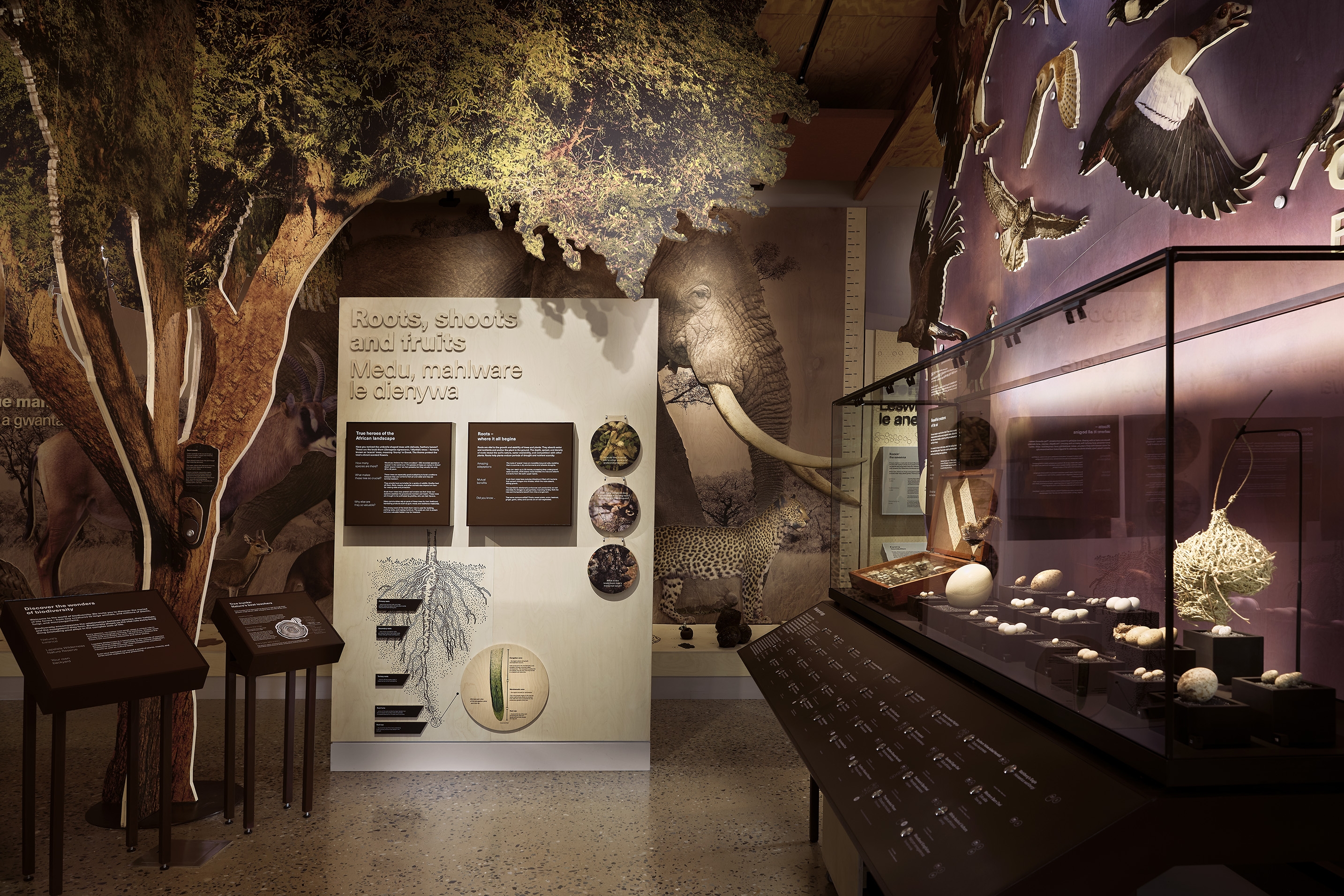
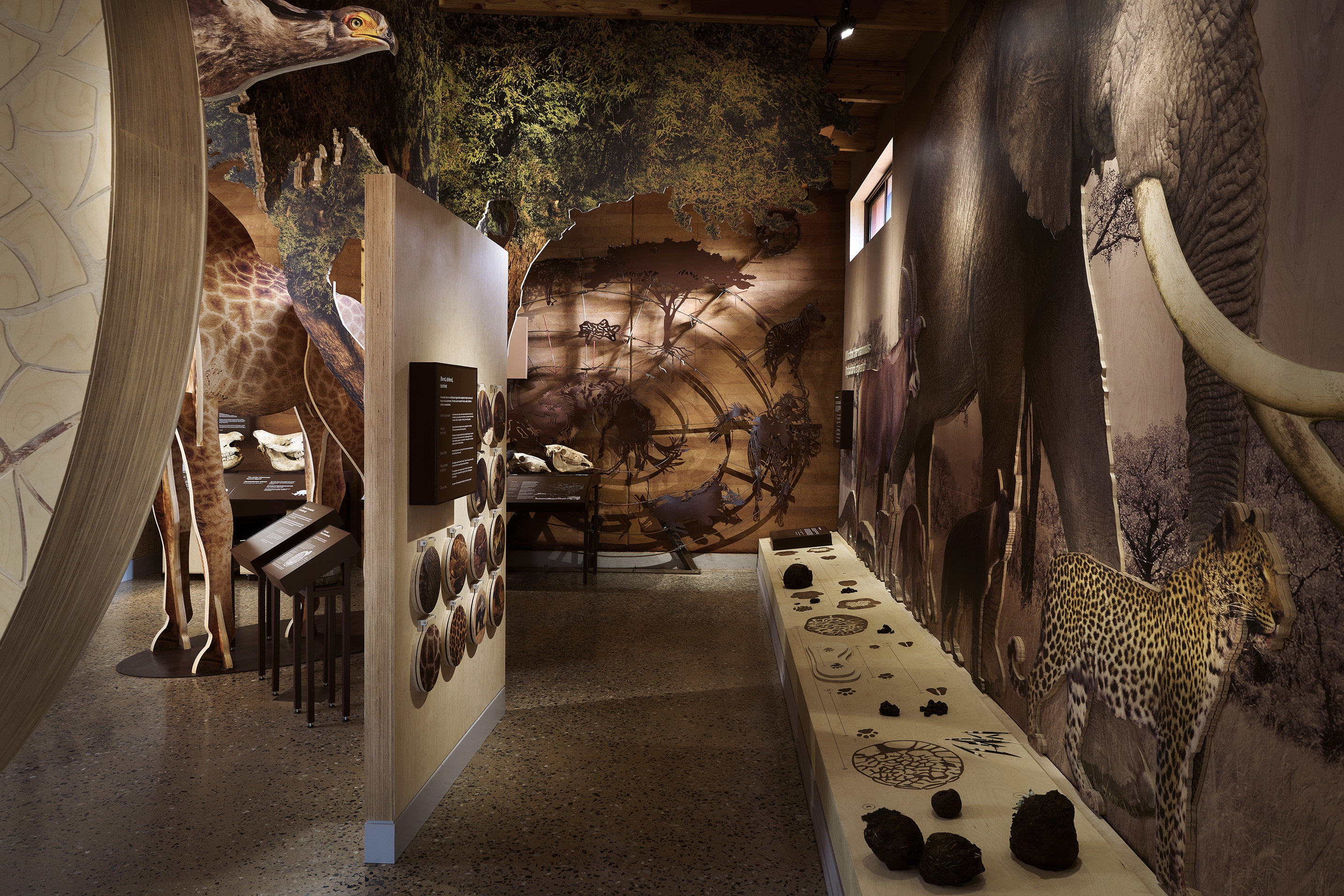
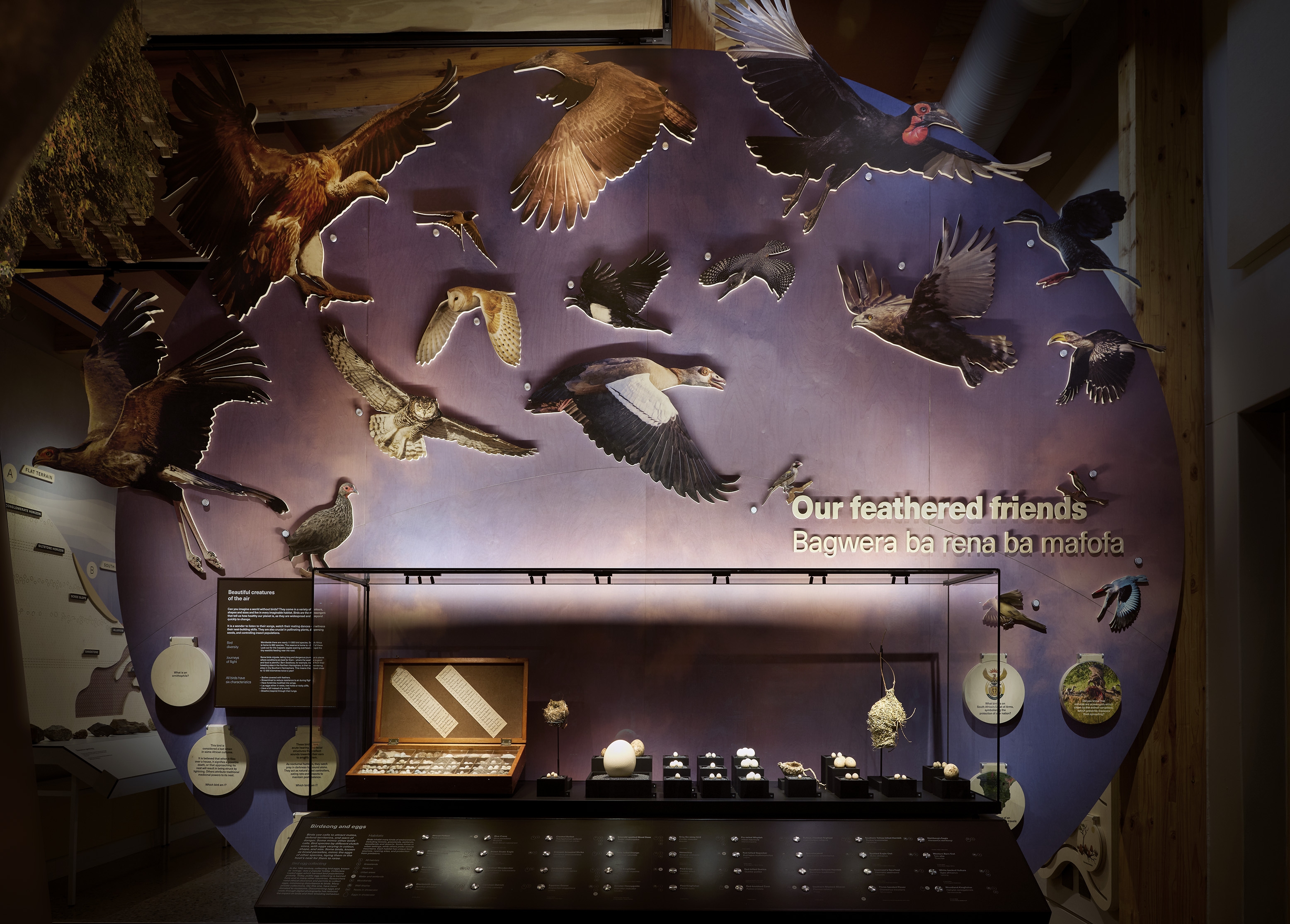
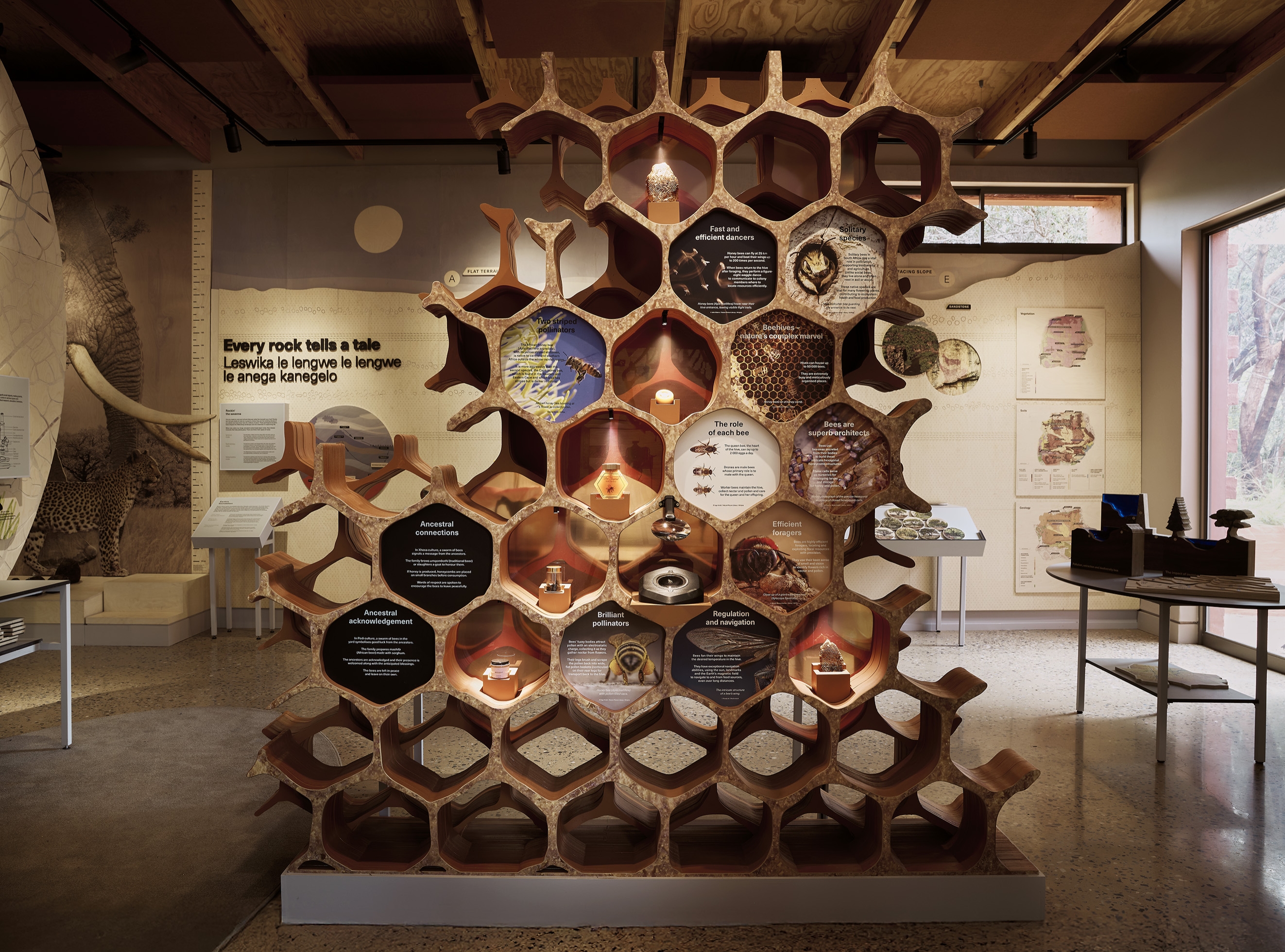
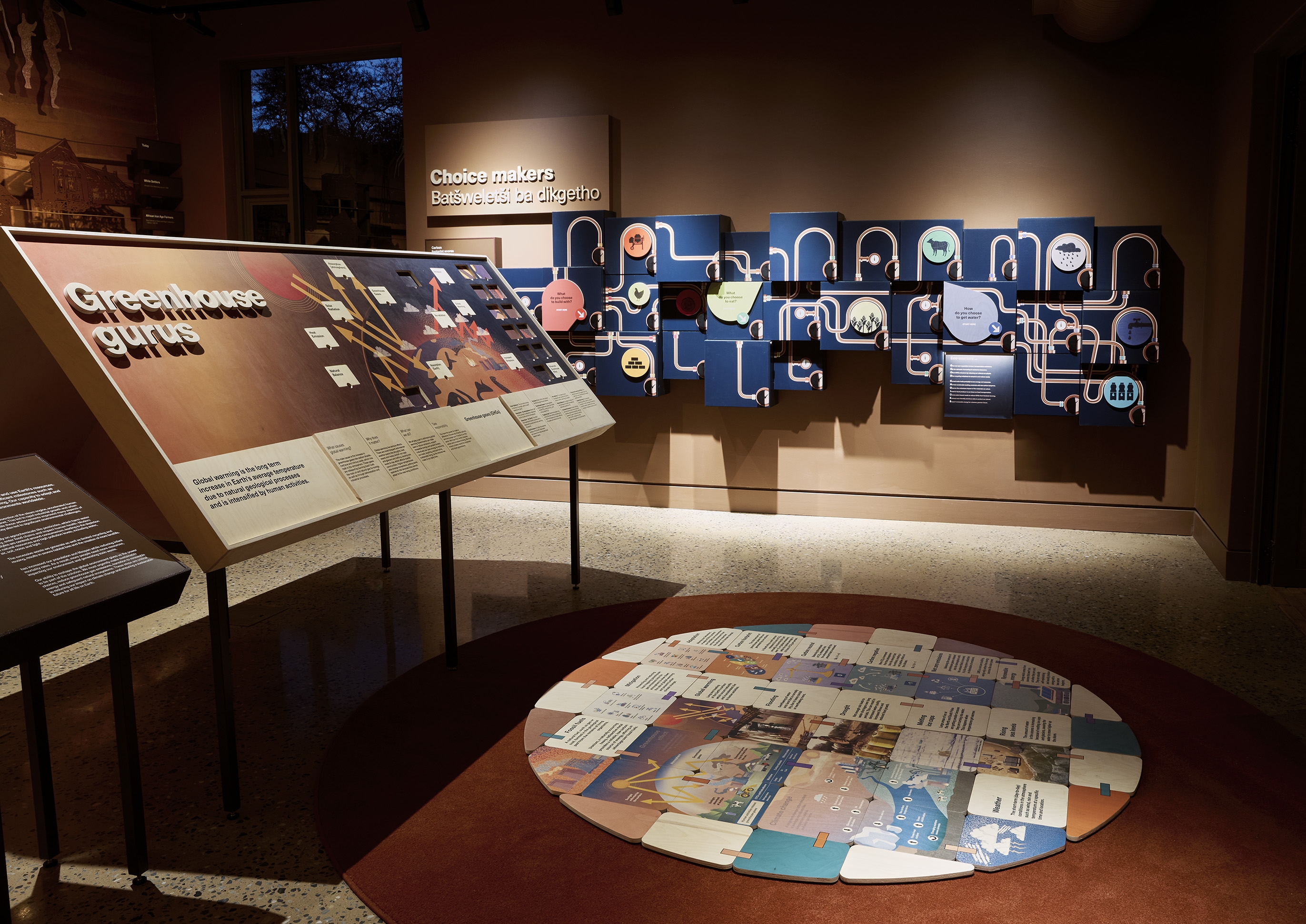
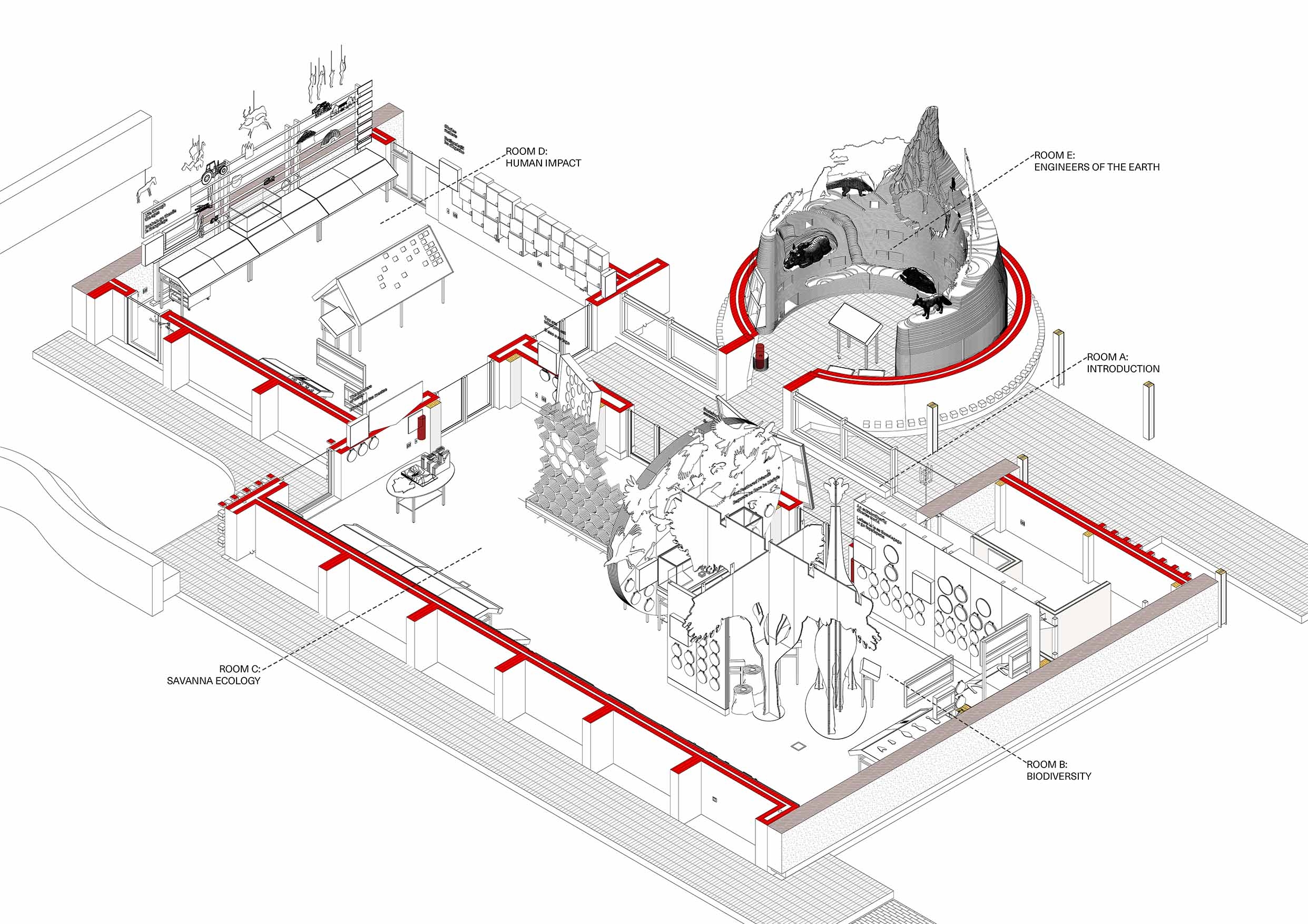
The Gianni Ravazzotti Biodiversity Centre exhibition located within the Lapalala Wilderness School reimagines the museum as an immersive learning journey through the region’s vibrant ecological tapestry of the Waterberg Biosphere Reserve. The 240 m² centre is conceived as an interactive educational experience that fosters a deeper appreciation for local biodiversity, ecology, and humanity’s relationship with the natural world, transforming environmental education into an active, sensory experience. Situated within a remote Dark Sky–certified wilderness reserve in South Africa, the exhibition responds to the challenge of communicating complex scientific knowledge in a low-impact setting without relying on technology-driven spectacle. The integration of digital technology was approached sparingly ensuring that analogue interaction is prioritised. This reversal is unusual in contemporary museums and offered an opportunity for innovation, active participation and wonder. Five themed exhibition spaces align with objectives of promoting conservation initiatives, fostering critical thinking, and providing an important framework for addressing Southern African environmental challenges.
The Gianni Ravazzotti Biodiversity Centre exhibition located within the Lapalala Wilderness School reimagines the museum as an immersive learning journey through the region’s vibrant ecological tapestry of the Waterberg Biosphere Reserve. The 240 m² centre is conceived as an interactive educational experience that fosters a deeper appreciation for local biodiversity, ecology, and humanity’s relationship with the natural world, transforming environmental education into an active, sensory experience. Situated within a remote Dark Sky–certified wilderness reserve in South Africa, the exhibition responds to the challenge of communicating complex scientific knowledge in a low-impact setting without relying on technology-driven spectacle. The integration of digital technology was approached sparingly ensuring that analogue interaction is prioritised. This reversal is unusual in contemporary museums and offered an opportunity for innovation, active participation and wonder. Five themed exhibition spaces align with objectives of promoting conservation initiatives, fostering critical thinking, and providing an important framework for addressing Southern African environmental challenges.
Project Innovation / Specification:
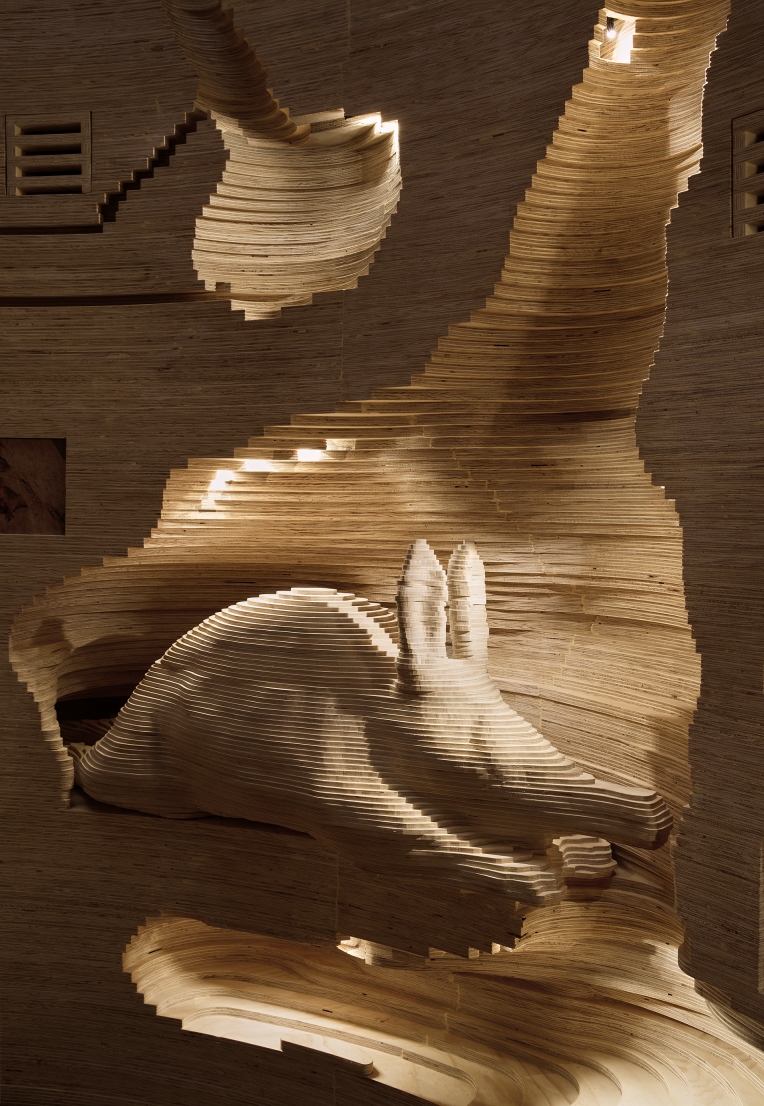
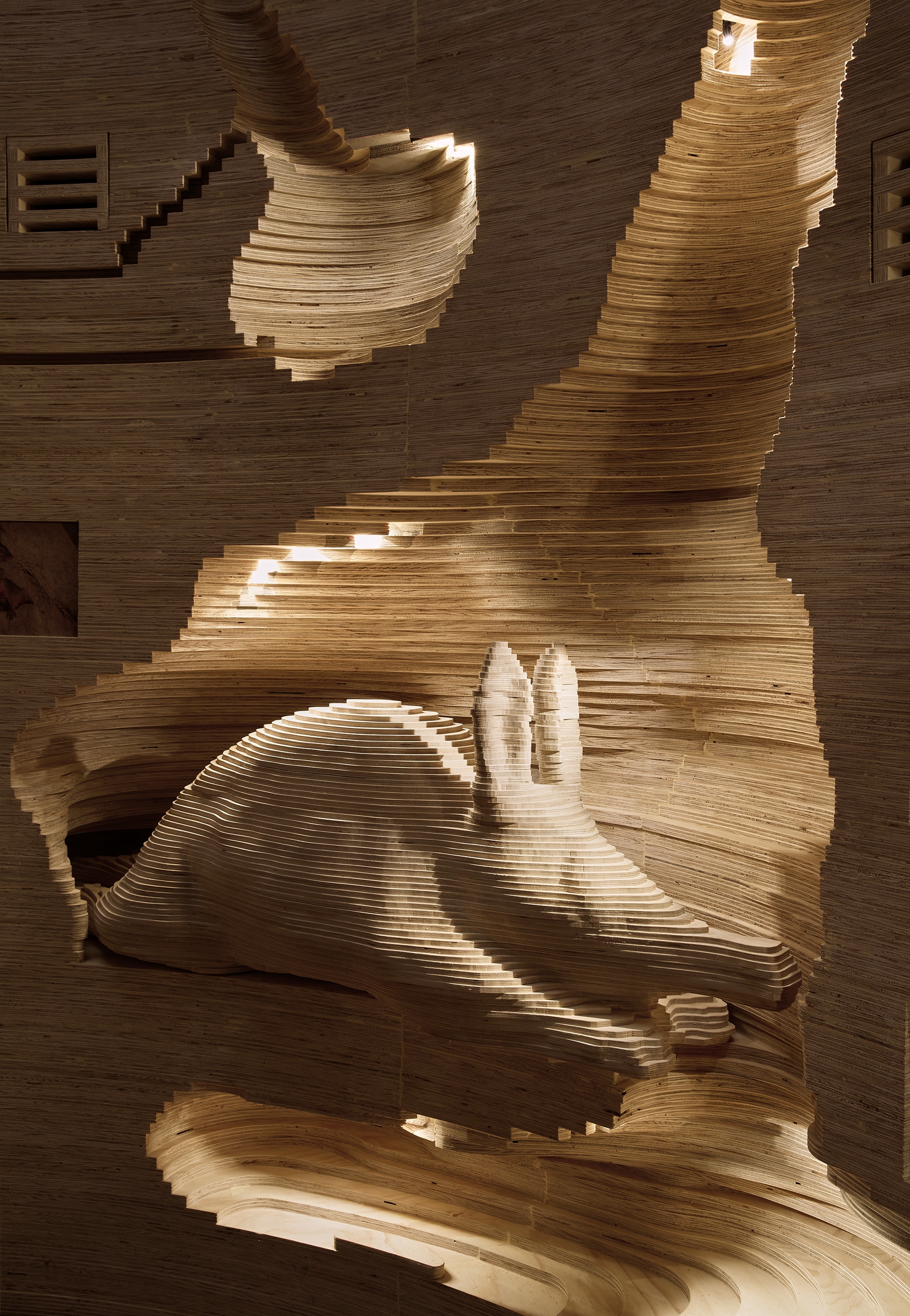
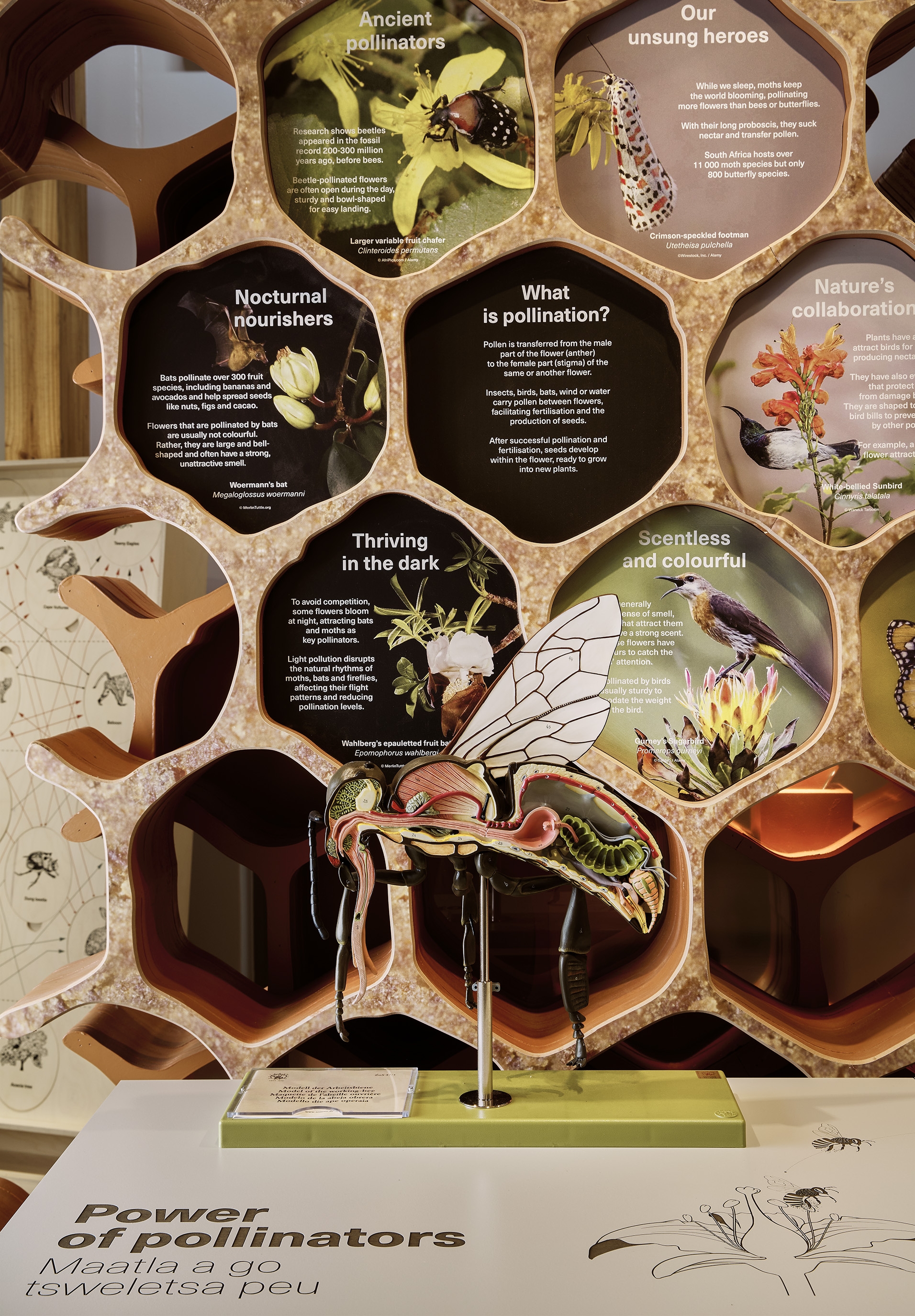
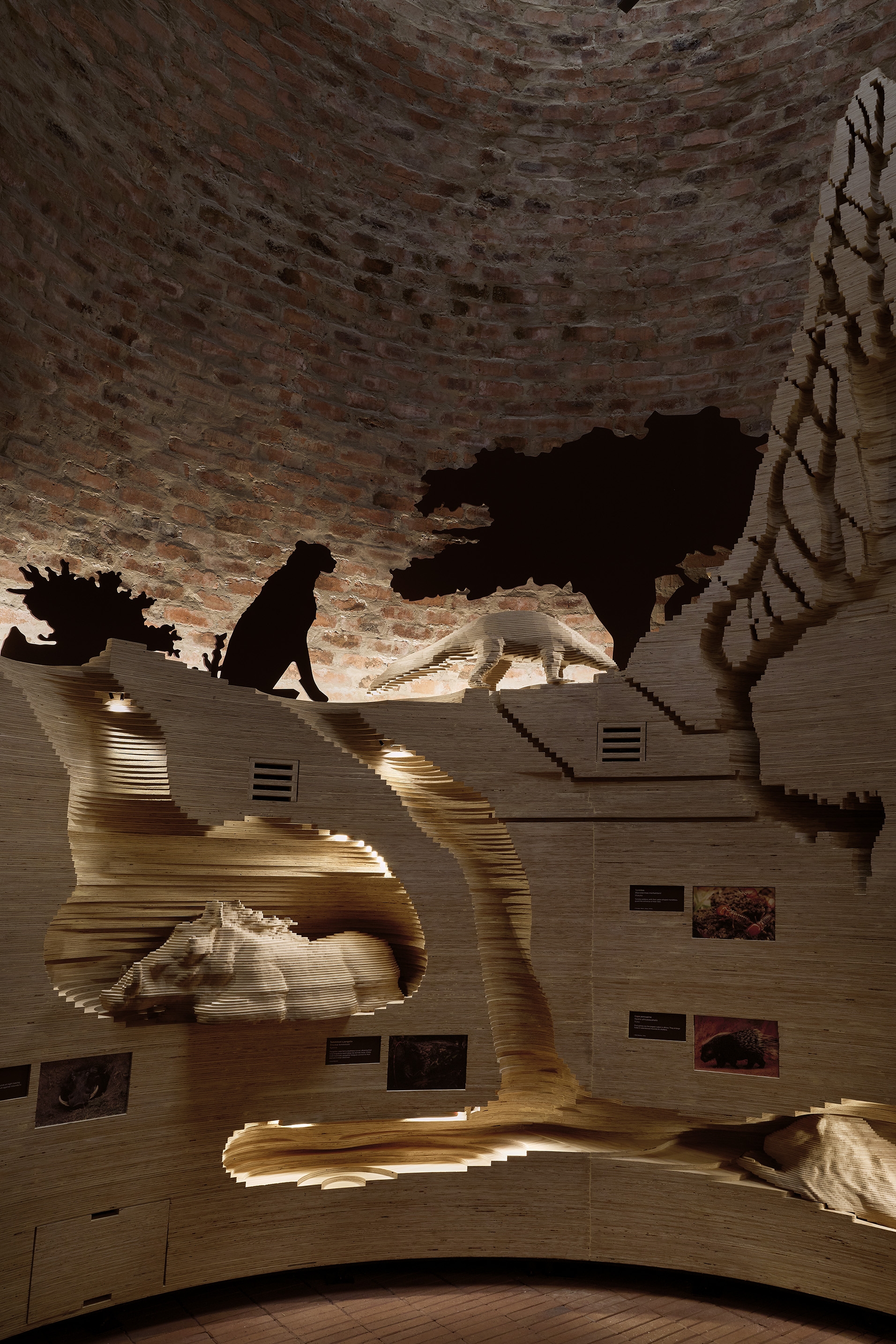
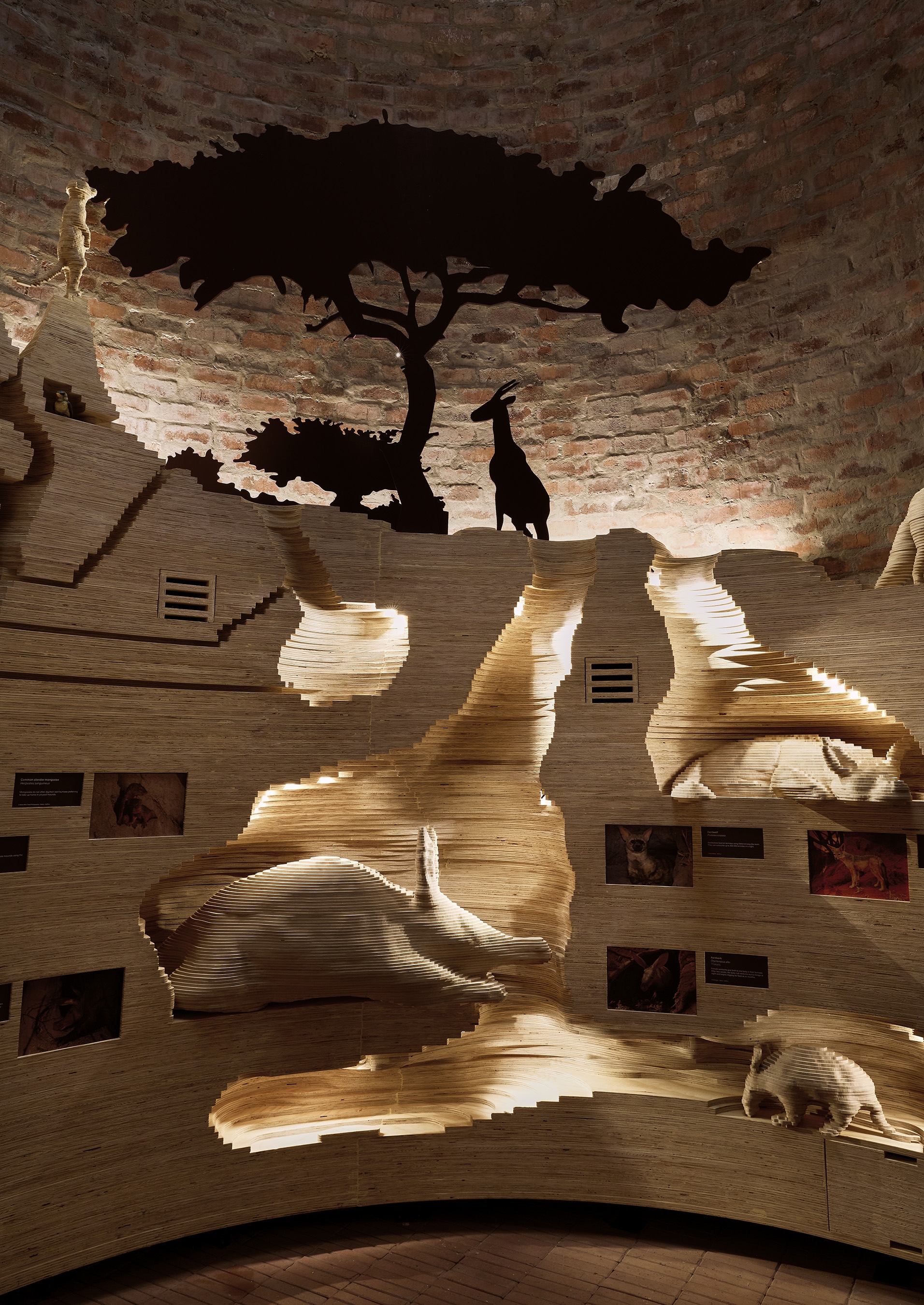
The design harnesses advanced manufacturing techniques to produce distinctive three-dimensional forms and surfaces, giving the exhibition its unique patina and character. Elaborate surface textures become invitations to touch, to probe and to linger. When we see tactile variation, we are drawn closer—not only with the eyes, but with the hands, the skin and the whole attentive body. The result is a tactile environment that inspires deeper appreciation of biodiversity and brings science to life, shifting the museum experience from passive observation to active engagement. The life-size termite mound, created via a hybrid workflow of physical sculpting, CAD, BIM coordination, and 1600 CNC-cut plywood components, reveals underground savanna ecosystems while enabling precise collaboration across design, engineering, and fabrication. Advanced techniques, including 3D printing and CNC cutting, produce tactile surfaces, full-scale animal models, and curriculum-aligned props. By synthesising digital precision with analogue making, the design transforms scientific knowledge into inclusive, sensory experiences that prioritise active engagement, curiosity, and discovery.
The design harnesses advanced manufacturing techniques to produce distinctive three-dimensional forms and surfaces, giving the exhibition its unique patina and character. Elaborate surface textures become invitations to touch, to probe and to linger. When we see tactile variation, we are drawn closer—not only with the eyes, but with the hands, the skin and the whole attentive body. The result is a tactile environment that inspires deeper appreciation of biodiversity and brings science to life, shifting the museum experience from passive observation to active engagement. The life-size termite mound, created via a hybrid workflow of physical sculpting, CAD, BIM coordination, and 1600 CNC-cut plywood components, reveals underground savanna ecosystems while enabling precise collaboration across design, engineering, and fabrication. Advanced techniques, including 3D printing and CNC cutting, produce tactile surfaces, full-scale animal models, and curriculum-aligned props. By synthesising digital precision with analogue making, the design transforms scientific knowledge into inclusive, sensory experiences that prioritise active engagement, curiosity, and discovery.
Project Sustainability Approach:
Sustainability informed the Centre at every stage of design, fabrication, and operation, aligning environmental performance with its educational mission. Exhibits prioritise material responsibility and longevity, with display objects sourced from salvaged artefacts or unused existing collections, reducing demand for new extraction. Structures are primarily fabricated from sustainably sourced birch and pine plywood, chosen for durability, reparability, and low embodied carbon, with digital modelling and CNC fabrication minimising waste. Durable, low-maintenance surfaces extend replacement cycles, reducing lifecycle impacts. Operational sustainability is supported by Lapalala Wilderness School’s off-grid systems, including solar power and biodynamic wastewater treatment, lowering carbon emissions in a remote setting. Through reuse, renewable materials, precision fabrication, and long-lasting finishes, the project demonstrates how exhibition design can achieve environmental responsibility without technological excess.
Sustainability informed the Centre at every stage of design, fabrication, and operation, aligning environmental performance with its educational mission. Exhibits prioritise material responsibility and longevity, with display objects sourced from salvaged artefacts or unused existing collections, reducing demand for new extraction. Structures are primarily fabricated from sustainably sourced birch and pine plywood, chosen for durability, reparability, and low embodied carbon, with digital modelling and CNC fabrication minimising waste. Durable, low-maintenance surfaces extend replacement cycles, reducing lifecycle impacts. Operational sustainability is supported by Lapalala Wilderness School’s off-grid systems, including solar power and biodynamic wastewater treatment, lowering carbon emissions in a remote setting. Through reuse, renewable materials, precision fabrication, and long-lasting finishes, the project demonstrates how exhibition design can achieve environmental responsibility without technological excess.
Local and Regional Impacts of the Project:
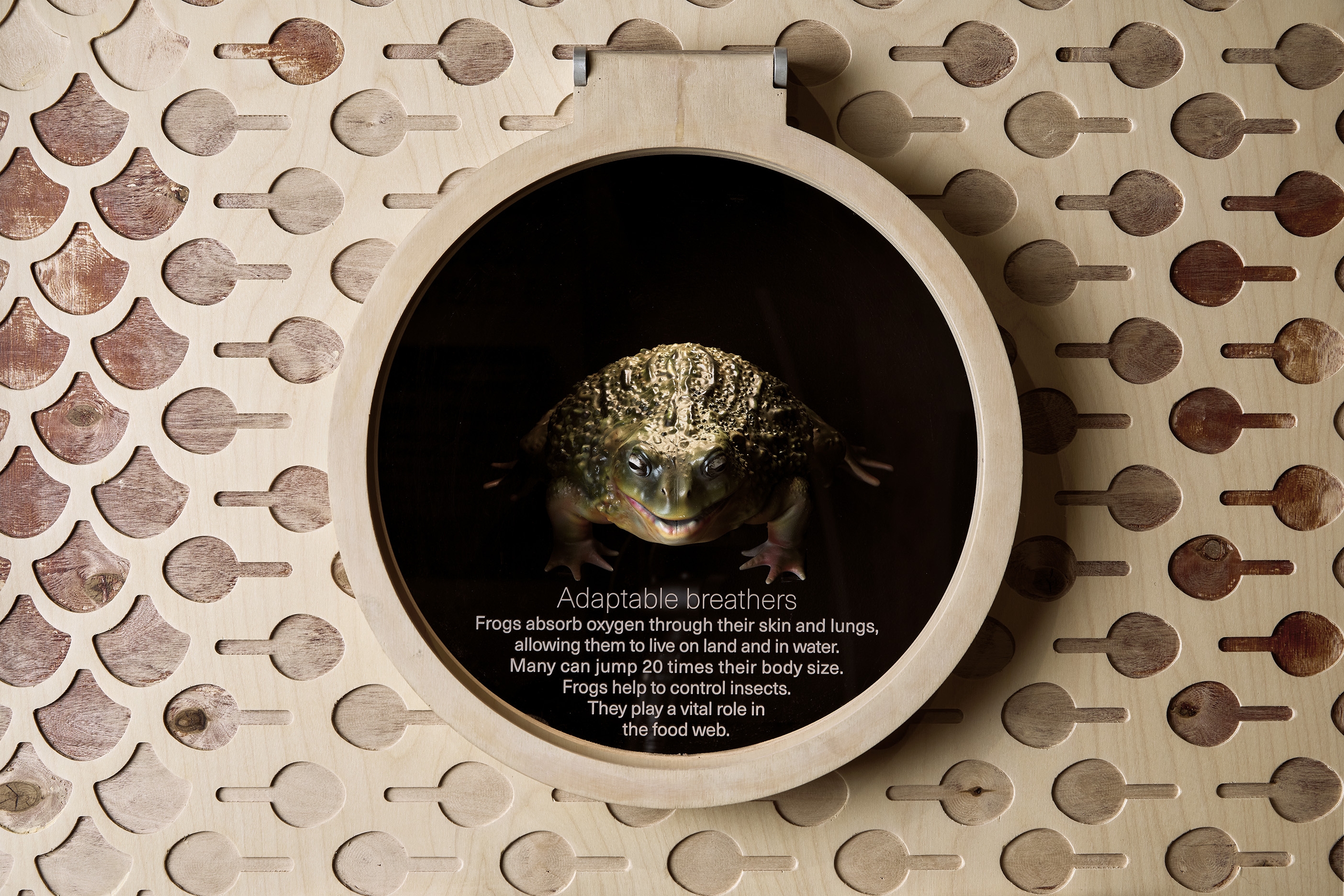
The exhibition functions as a living classroom supporting learners from under resourced rural schools that attend for free, alongside paying private schools. Interactive exhibits and puzzles transform complex concepts into accessible learning encounters. By incorporating the local vernacular (Pedi) into the exhibits, the exhibition promotes inclusivity. Highlighting local biodiversity provides rural visitors with opportunity to connect and contribute to the knowledge being shared. The exhibition fosters environmental literacy, stewardship of local ecosystems, and connections between communities and their natural environment. Regional conservation and ecological awareness are strengthened. The project positions design as a tool for social inclusion and sustainable community development.
The exhibition functions as a living classroom supporting learners from under resourced rural schools that attend for free, alongside paying private schools. Interactive exhibits and puzzles transform complex concepts into accessible learning encounters. By incorporating the local vernacular (Pedi) into the exhibits, the exhibition promotes inclusivity. Highlighting local biodiversity provides rural visitors with opportunity to connect and contribute to the knowledge being shared. The exhibition fosters environmental literacy, stewardship of local ecosystems, and connections between communities and their natural environment. Regional conservation and ecological awareness are strengthened. The project positions design as a tool for social inclusion and sustainable community development.
Company Name:Office 24-7 Architecture
Lead Designer(s) Name(s):Nabeel Essa
Profile Description:
OFFICE 24|7 ARCHITECTURE, established in 2002, specialises in adaptive reuse, reparative and narrative-driven architecture across exhibition, residential, educational, and cultural projects. We critically and spatially re-imagines education, museum, heritage and cultural projects. Ours is a practice of praxis, we have skills to enact and realise conceptual, theoretical and abstract ideas into spatial and material form. Innovative ideas act as driving forces that continue to inform the project from the scale of urban and cultural frameworks to the design at its most detailed level.
OFFICE 24|7 ARCHITECTURE, established in 2002, specialises in adaptive reuse, reparative and narrative-driven architecture across exhibition, residential, educational, and cultural projects. We critically and spatially re-imagines education, museum, heritage and cultural projects. Ours is a practice of praxis, we have skills to enact and realise conceptual, theoretical and abstract ideas into spatial and material form. Innovative ideas act as driving forces that continue to inform the project from the scale of urban and cultural frameworks to the design at its most detailed level.
Previous Awards Won:
AWARDS 2025 GIFA Regional Award of Merit 2025 – Drawing Memory into Being, Venice Biennale 2025 Scape Awards of Excellence 2025 – High Commendation – African Build of the Year – Kgodumodumo Dinosaur Interpretation Centre 2024 Herbert Prins Colosseum Awards 2024 – Award for Reinvigorating an Important Landmark - Market Theatre 2024 Scape Awards of Excellence 2024 – Shortlisted – Architectural Firm of the Year 2024 Scape Awards of Excellence 2024 – Shortlisted – Educational Build of the Year 2022 Herbert Prins Colosseum Awards 2022 – Small scale building commendation – Kleine Schuur 2022 Finalist in the Commonwealth War Graves Commission Memorial competition- Cape Town 2021 Finalist in a joint venture with Lemon Pebble architects in the Sol Plaatje University Graduation Hall competition - Kimberly 2018 World Interior News Awards, shortlisted in the Museums category - Maropeng Experience Lab 2017 Pretoria Institute of Architecture Commendation for Architecture Award - Maropeng Experience Lab 2016 South African Institute of Architects Award of Commendation 2015/16 - Moruleng Cultural precinct 2015 Pretoria Institute for Architecture Award of Merit and PIA Best Public Architecture Award - Moruleng Cultural precinct 2014 South African Institute of Architects Award of Merit 2013/14 - House ‘Kleine Schuur’ 2013 The Gauteng Institute for Architecture Merit Award for Architecture - House ‘Kleine Schuur’ 2005 Honorary mention in the contest for the memorial-museum for the victims of the Tsunami - Khao Lak, Thailand. In collaboration with Armando Oliver-Suinaga 24-7 Cooperative: Armando Oliver Suinaga (Mexico) Rosalea Monacella ( Australia ) Juana Ines Guzman Pizarro Hugo Edgar Leon Flores
AWARDS 2025 GIFA Regional Award of Merit 2025 – Drawing Memory into Being, Venice Biennale 2025 Scape Awards of Excellence 2025 – High Commendation – African Build of the Year – Kgodumodumo Dinosaur Interpretation Centre 2024 Herbert Prins Colosseum Awards 2024 – Award for Reinvigorating an Important Landmark - Market Theatre 2024 Scape Awards of Excellence 2024 – Shortlisted – Architectural Firm of the Year 2024 Scape Awards of Excellence 2024 – Shortlisted – Educational Build of the Year 2022 Herbert Prins Colosseum Awards 2022 – Small scale building commendation – Kleine Schuur 2022 Finalist in the Commonwealth War Graves Commission Memorial competition- Cape Town 2021 Finalist in a joint venture with Lemon Pebble architects in the Sol Plaatje University Graduation Hall competition - Kimberly 2018 World Interior News Awards, shortlisted in the Museums category - Maropeng Experience Lab 2017 Pretoria Institute of Architecture Commendation for Architecture Award - Maropeng Experience Lab 2016 South African Institute of Architects Award of Commendation 2015/16 - Moruleng Cultural precinct 2015 Pretoria Institute for Architecture Award of Merit and PIA Best Public Architecture Award - Moruleng Cultural precinct 2014 South African Institute of Architects Award of Merit 2013/14 - House ‘Kleine Schuur’ 2013 The Gauteng Institute for Architecture Merit Award for Architecture - House ‘Kleine Schuur’ 2005 Honorary mention in the contest for the memorial-museum for the victims of the Tsunami - Khao Lak, Thailand. In collaboration with Armando Oliver-Suinaga 24-7 Cooperative: Armando Oliver Suinaga (Mexico) Rosalea Monacella ( Australia ) Juana Ines Guzman Pizarro Hugo Edgar Leon Flores