Lapalala Curator House
Prize(s):
WINNER 2026 INTERIOR DESIGN / Sustainable Interior Design
School / University Name:Vega School at Emeris
Lead Designer(s) Name(s):Paige Clendennen
Professor Name(s):Nicole Mason
Project Location:Lapalala wilderness School, Limpopo Province, South Africa
Design Status:Concept
Video URL:View
Project Description:
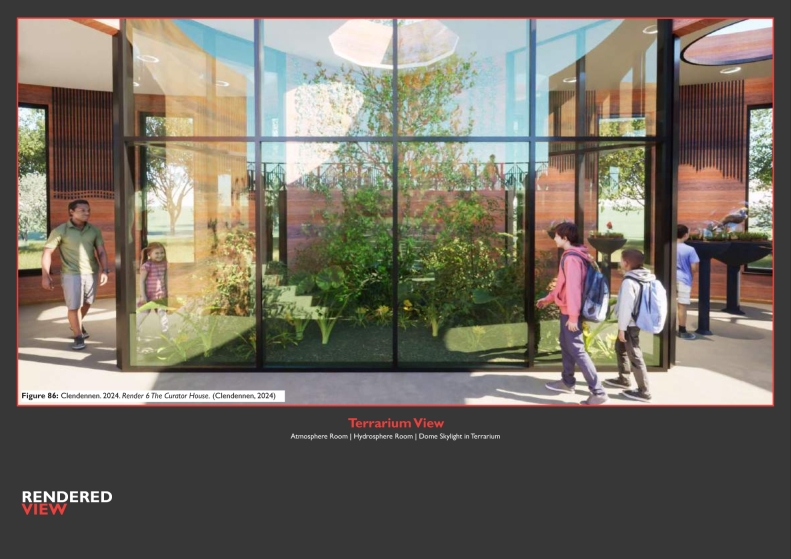
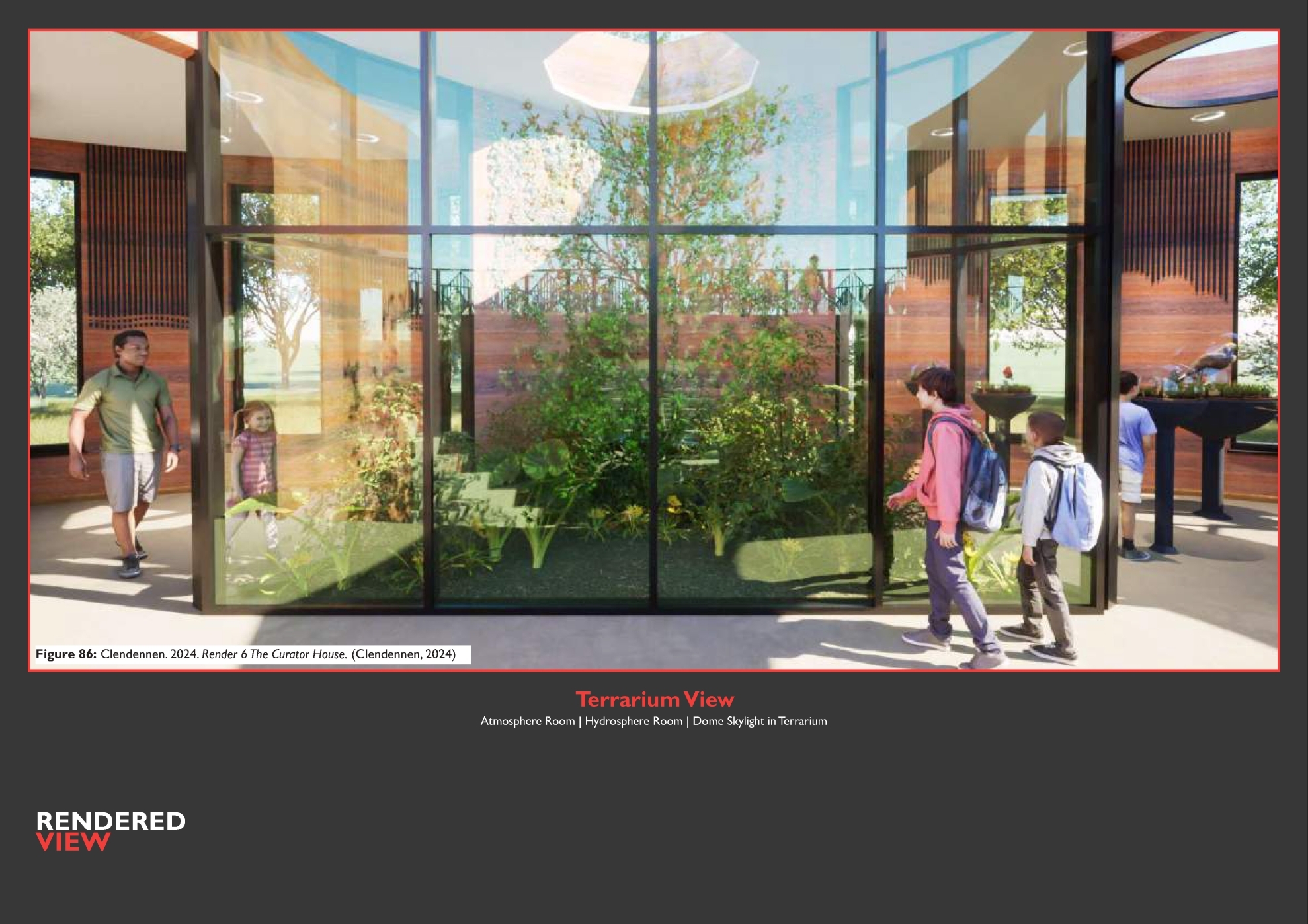
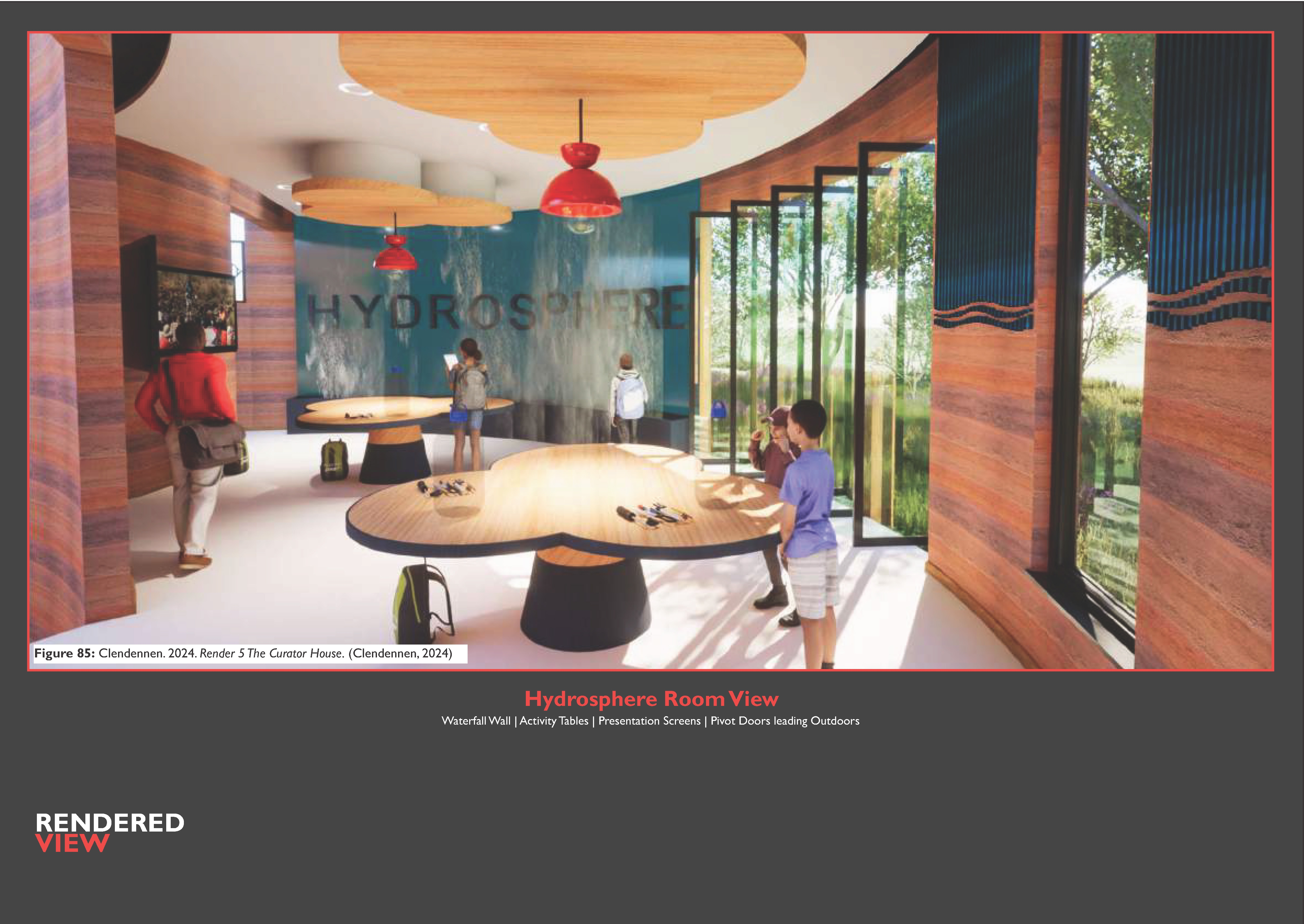
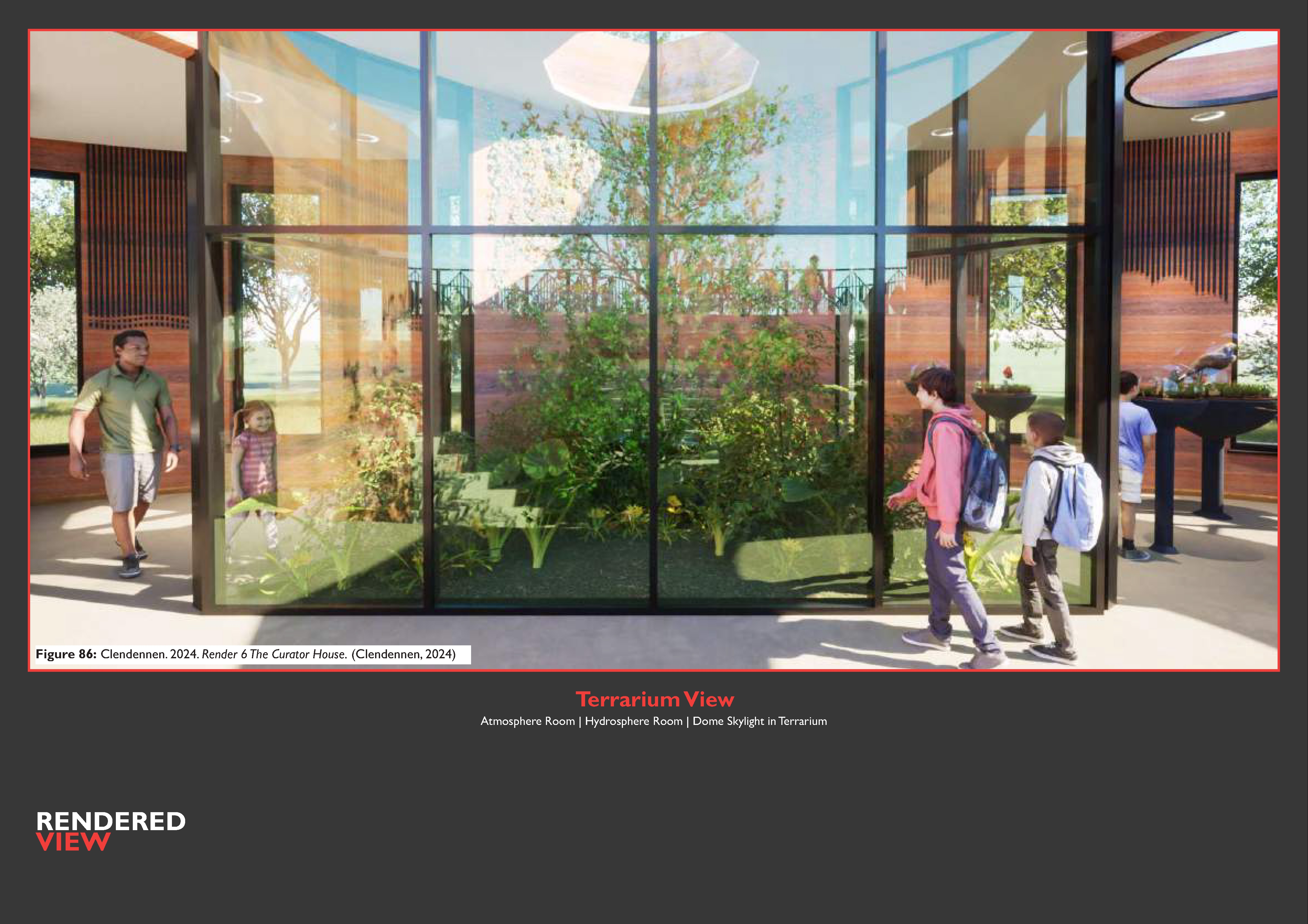
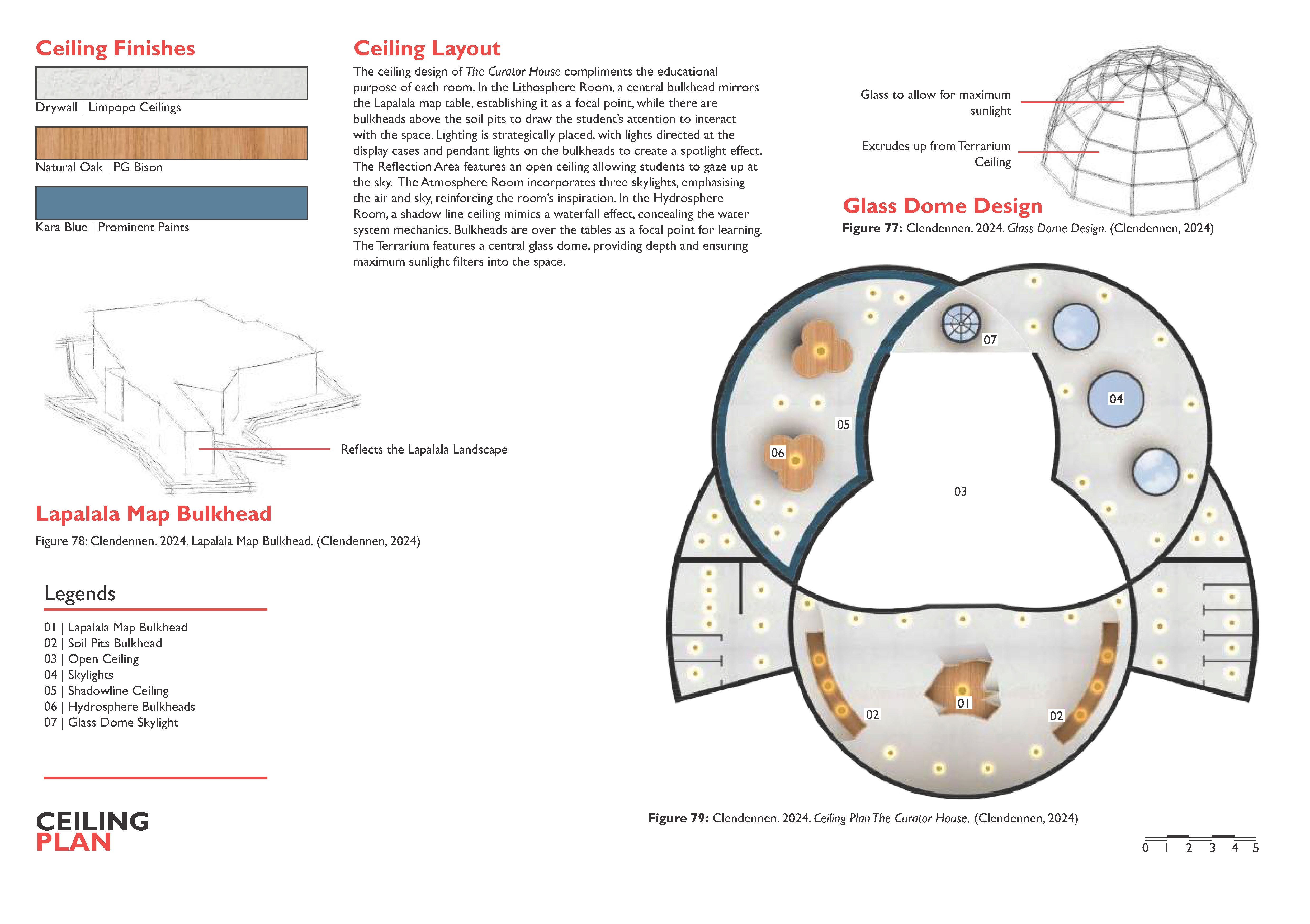
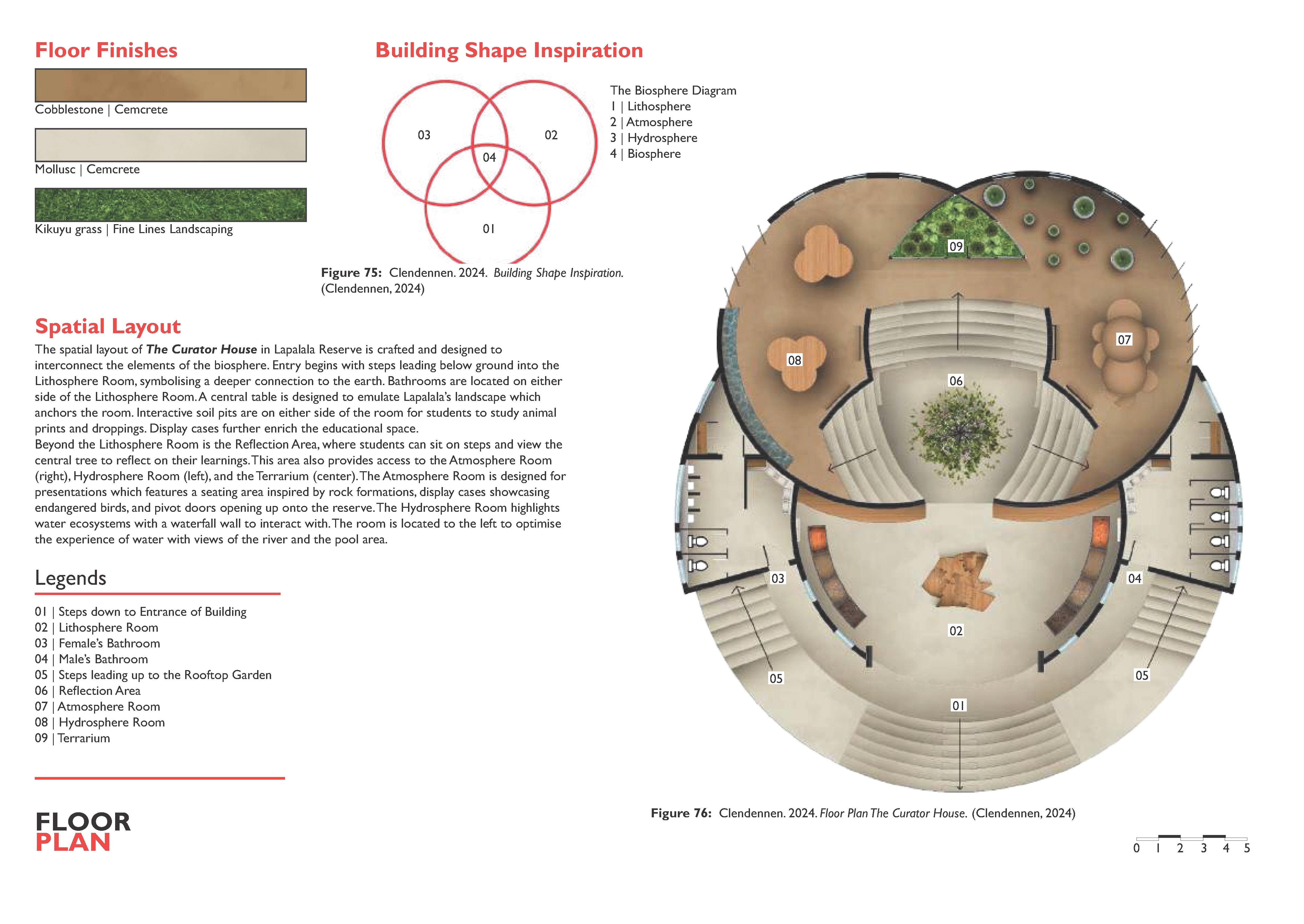
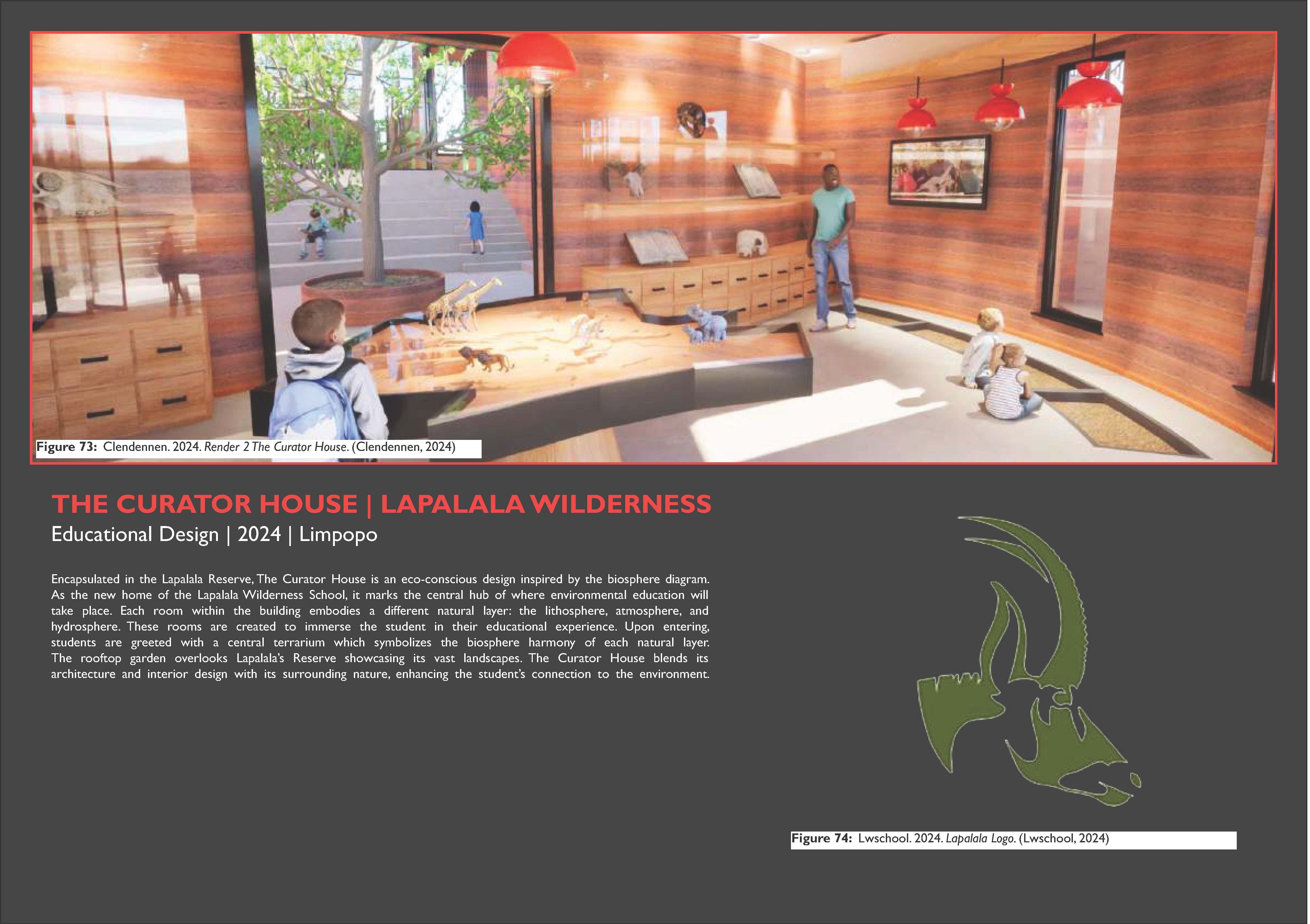
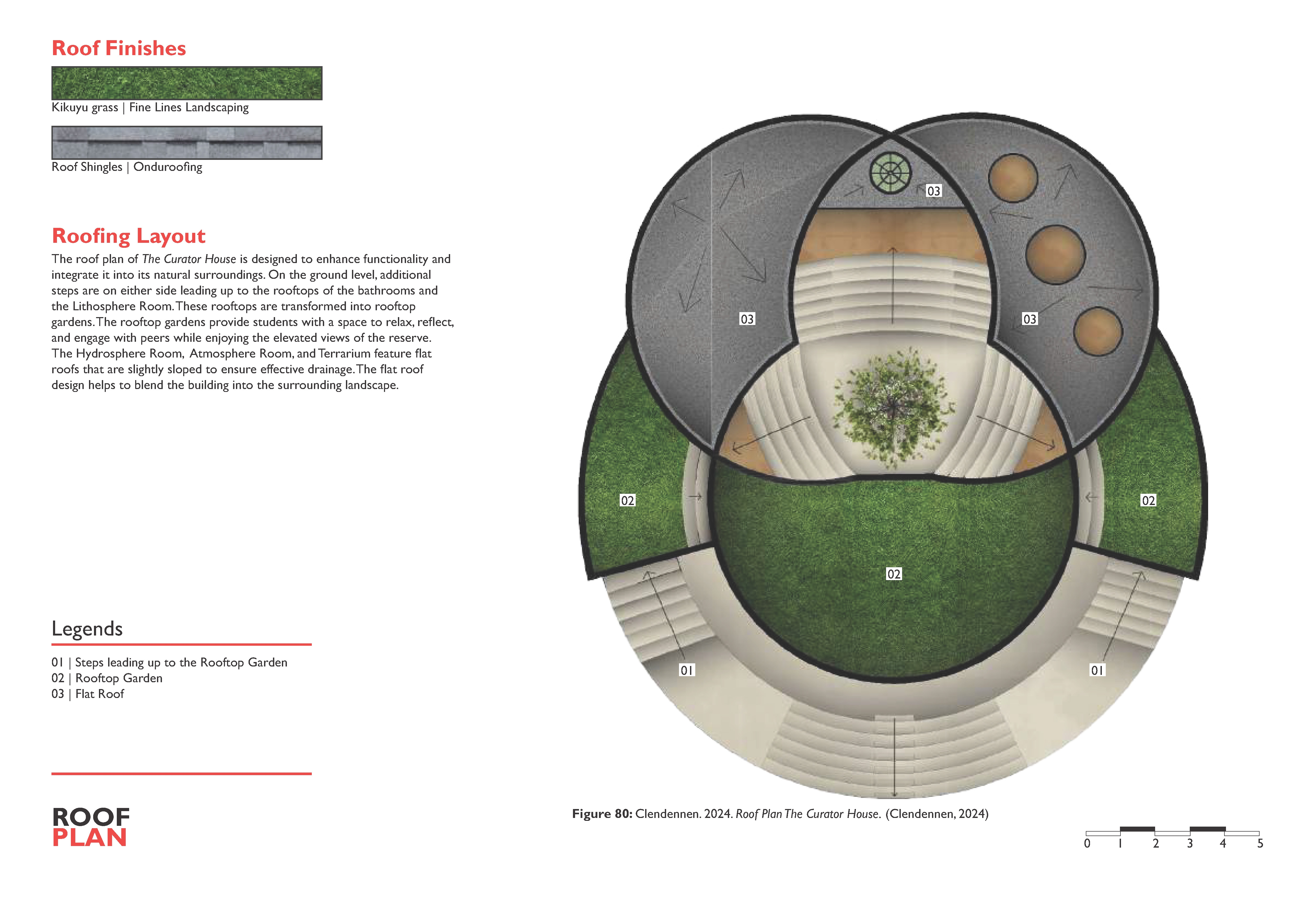
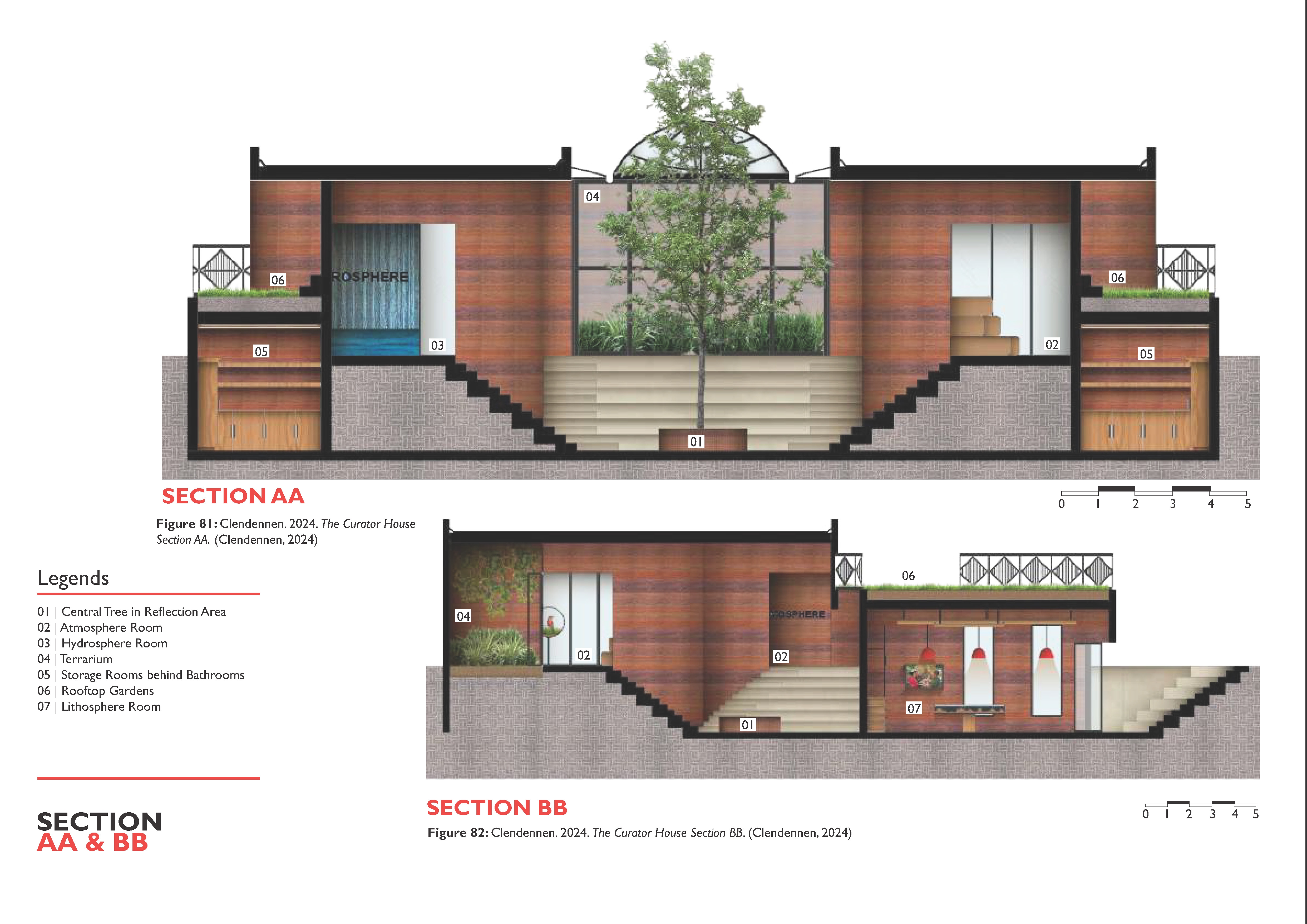
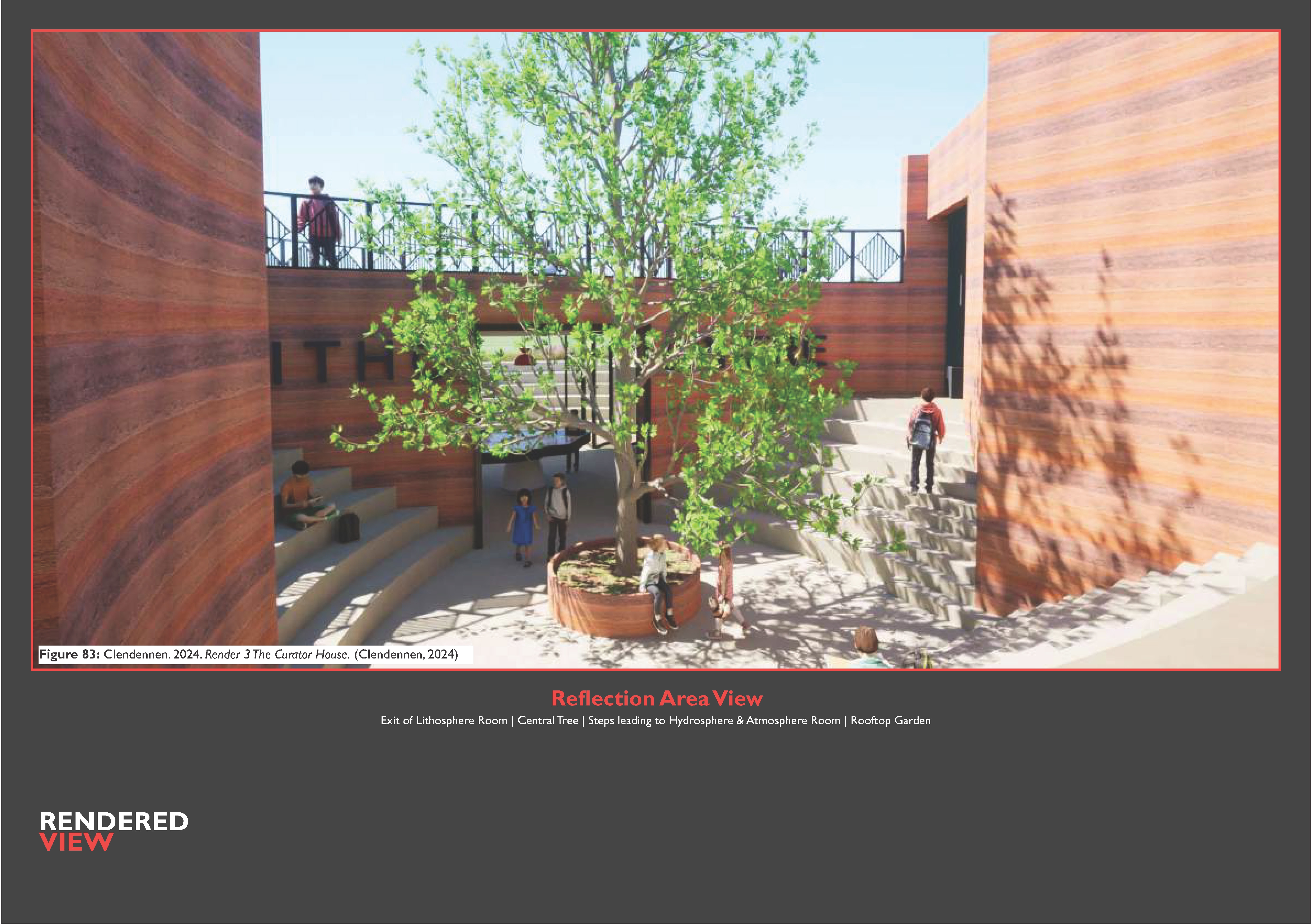
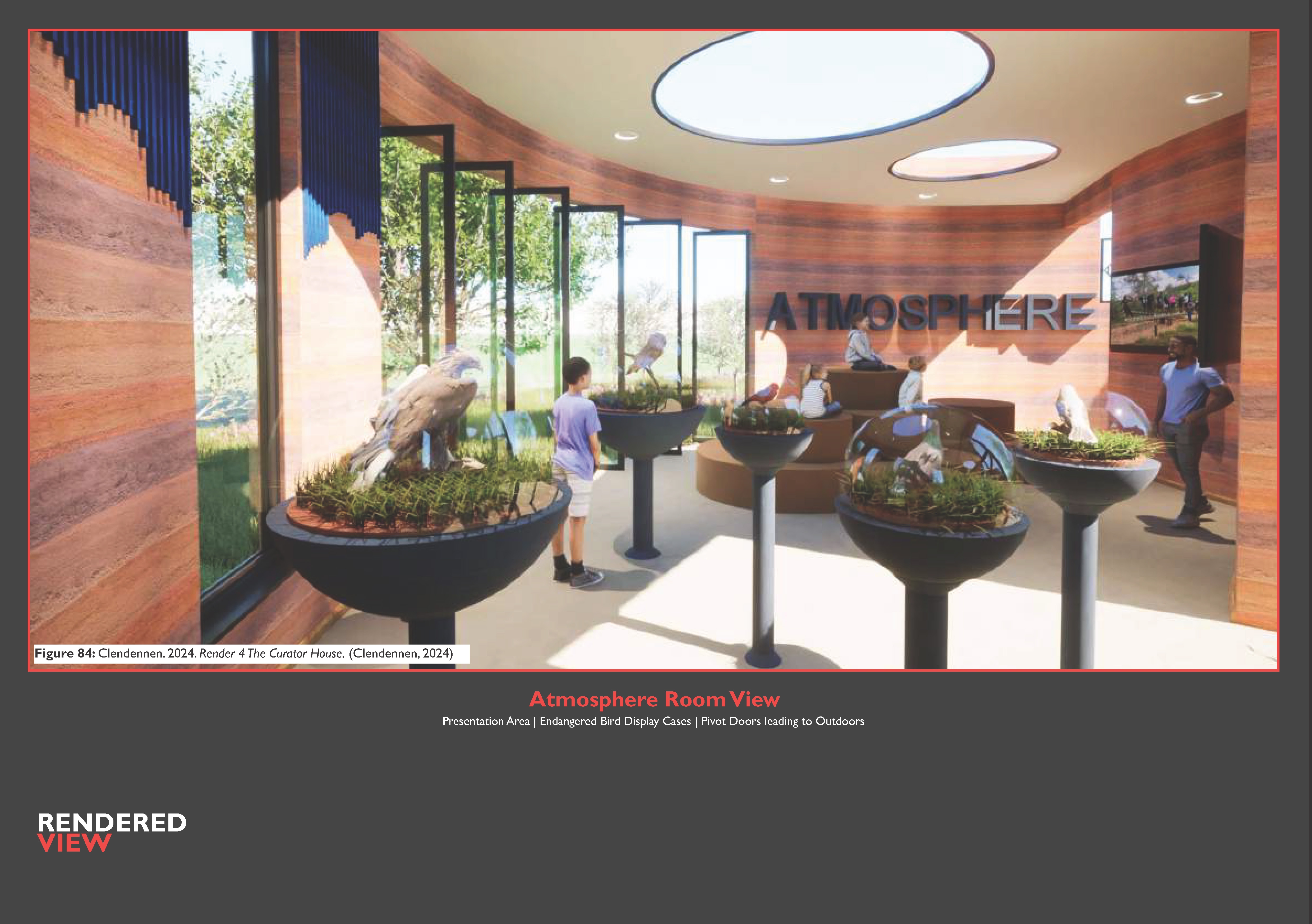
Situated in the Lapalala Reserve, The Curator House is an eco-conscious design inspired by the biosphere diagram. As the new home of the Lapalala Wilderness School, it marks the central hub of where environmental education will take place. Each room within the building embodies a different natural layer: the lithosphere, atmosphere, and hydrosphere. These rooms are created to immerse the student in their educational experience. Upon entering, students are greeted with a central terrarium which symbolizes the biosphere harmony of each natural layer. The rooftop garden overlooks Lapalala’s Reserve showcasing its vast landscapes. The Curator House blends its architecture and interior design with its surrounding nature, enhancing the student’s connection to the environment.
Situated in the Lapalala Reserve, The Curator House is an eco-conscious design inspired by the biosphere diagram. As the new home of the Lapalala Wilderness School, it marks the central hub of where environmental education will take place. Each room within the building embodies a different natural layer: the lithosphere, atmosphere, and hydrosphere. These rooms are created to immerse the student in their educational experience. Upon entering, students are greeted with a central terrarium which symbolizes the biosphere harmony of each natural layer. The rooftop garden overlooks Lapalala’s Reserve showcasing its vast landscapes. The Curator House blends its architecture and interior design with its surrounding nature, enhancing the student’s connection to the environment.
Project Innovation / Specification:
The Curator House emphasises a deep connection to nature. The incorporation of natural formations is mirrored throughout the interior spaces. Natural elements such as paw prints in the ground, binoculars to observe the wildlife and large openings that blend the indoor and outdoor spaces have been used in the design. The colour palette enhances this connection to nature, with earthy browns,and blues to mimic the sky and air, and a hint of red for contrast which adds vibrancy and visual interest.
The Curator House emphasises a deep connection to nature. The incorporation of natural formations is mirrored throughout the interior spaces. Natural elements such as paw prints in the ground, binoculars to observe the wildlife and large openings that blend the indoor and outdoor spaces have been used in the design. The colour palette enhances this connection to nature, with earthy browns,and blues to mimic the sky and air, and a hint of red for contrast which adds vibrancy and visual interest.
Project Sustainability Approach:
The Wilderness School at Lapalala exists to teach environmental stewardship and therefore uses sustainable, context responsive design. It is entirely off the grid for both electricity and water and wastewater management. The signature construction method is rammed earth walls made from soil excavated directly from the site, along with locally sourced timber, rock and clay brick. Spaces are arranged to maximise natural ventilation and daylight, minimising reliance on mechanical systems.
The Wilderness School at Lapalala exists to teach environmental stewardship and therefore uses sustainable, context responsive design. It is entirely off the grid for both electricity and water and wastewater management. The signature construction method is rammed earth walls made from soil excavated directly from the site, along with locally sourced timber, rock and clay brick. Spaces are arranged to maximise natural ventilation and daylight, minimising reliance on mechanical systems.
Local and Regional Impacts of the Project:
The school hosts environmental programmes attended by around 3 000 learners each year, many from local schools and rural communities in the Waterberg region. Children have participated in programmes that teach ecology, biodiversity, sustainable living, and conservation — often integrating with the national curriculum and sparking long-term interest in environmental careers. Staff take lessons into rural villages and schools, delivering workshops on biodiversity, human-wildlife coexistence, sustainable resource use and behavioural change that targets environmental stewardship. Programs identify and mentor promising young people from disadvantaged areas, equipping them with leadership, conservation knowledge and pathways toward tertiary study or careers in conservation science.
The school hosts environmental programmes attended by around 3 000 learners each year, many from local schools and rural communities in the Waterberg region. Children have participated in programmes that teach ecology, biodiversity, sustainable living, and conservation — often integrating with the national curriculum and sparking long-term interest in environmental careers. Staff take lessons into rural villages and schools, delivering workshops on biodiversity, human-wildlife coexistence, sustainable resource use and behavioural change that targets environmental stewardship. Programs identify and mentor promising young people from disadvantaged areas, equipping them with leadership, conservation knowledge and pathways toward tertiary study or careers in conservation science.