Caresphere
Prize(s):
WINNER 2026 Multimedia Design / Mobile & Web Application Design
School / University Name:Greenside Design Center
Lead Designer(s) Name(s):Shelby Nikles
Professor Name(s):Robin Turner, Caitlin Paige, Carla Saunders, Richardt Strydom
Project Location:South Africa
Design Status:Prototype
Video URL:View
Project Description:
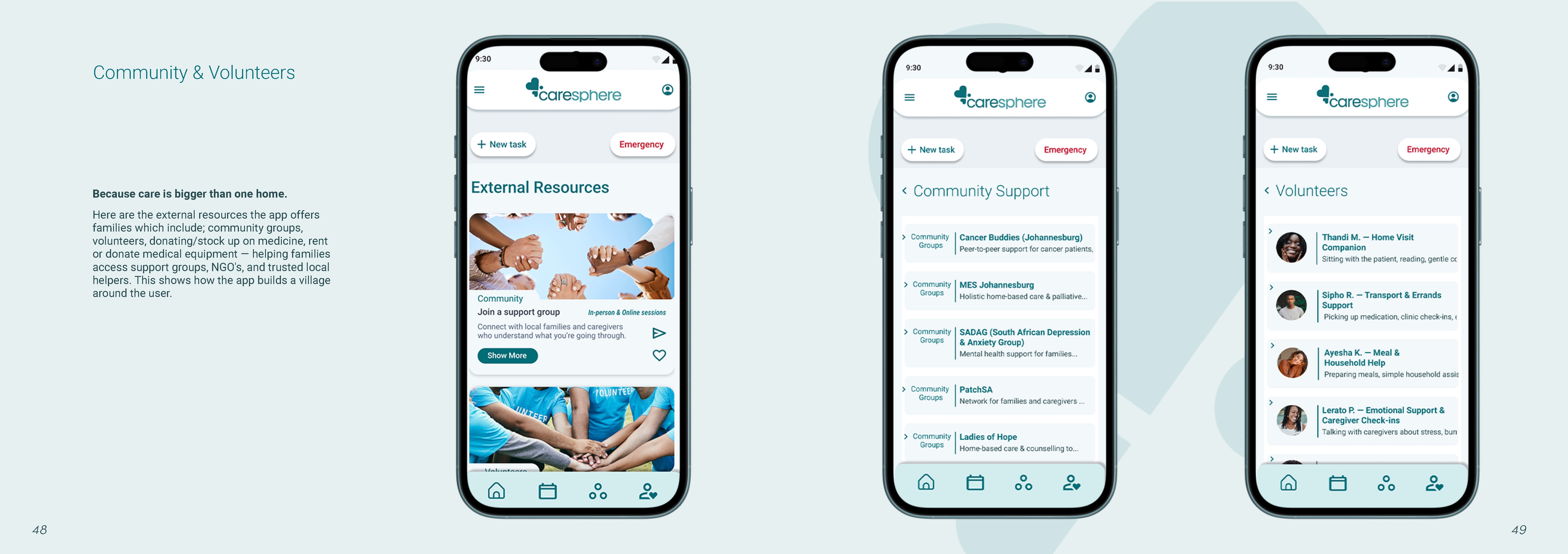
Care rarely begins in a crisis. It begins in ordinary moments: preparing meals, making phone calls, balancing work, and quietly worrying about what might come next. In many South African households, when illness enters the home, care often falls unevenly on one person, leading to emotional exhaustion and loss of dignity. Research into South Africa’s public healthcare system shows that hospitals are often overstretched and unable to provide long-term care. Even within public hospitals, extended stays are frequently unaffordable. As a result, many patients are discharged to spend their final days at home, shifting emotional and practical responsibility to families who are often unprepared. Circle of Care is a digital caregiving platform designed to make this care shared, visible, and emotionally safe. It brings families, volunteers, and community support into one coordinated space where care tasks, emotional check-ins, and medical information are clearly organised. Rooted in lived South African contexts, the system prioritises accessibility, low data use, shared devices, and culturally sensitive language. Circle of Care does not replace care; it strengthens it.
Care rarely begins in a crisis. It begins in ordinary moments: preparing meals, making phone calls, balancing work, and quietly worrying about what might come next. In many South African households, when illness enters the home, care often falls unevenly on one person, leading to emotional exhaustion and loss of dignity. Research into South Africa’s public healthcare system shows that hospitals are often overstretched and unable to provide long-term care. Even within public hospitals, extended stays are frequently unaffordable. As a result, many patients are discharged to spend their final days at home, shifting emotional and practical responsibility to families who are often unprepared. Circle of Care is a digital caregiving platform designed to make this care shared, visible, and emotionally safe. It brings families, volunteers, and community support into one coordinated space where care tasks, emotional check-ins, and medical information are clearly organised. Rooted in lived South African contexts, the system prioritises accessibility, low data use, shared devices, and culturally sensitive language. Circle of Care does not replace care; it strengthens it.
Project Innovation / Specification:
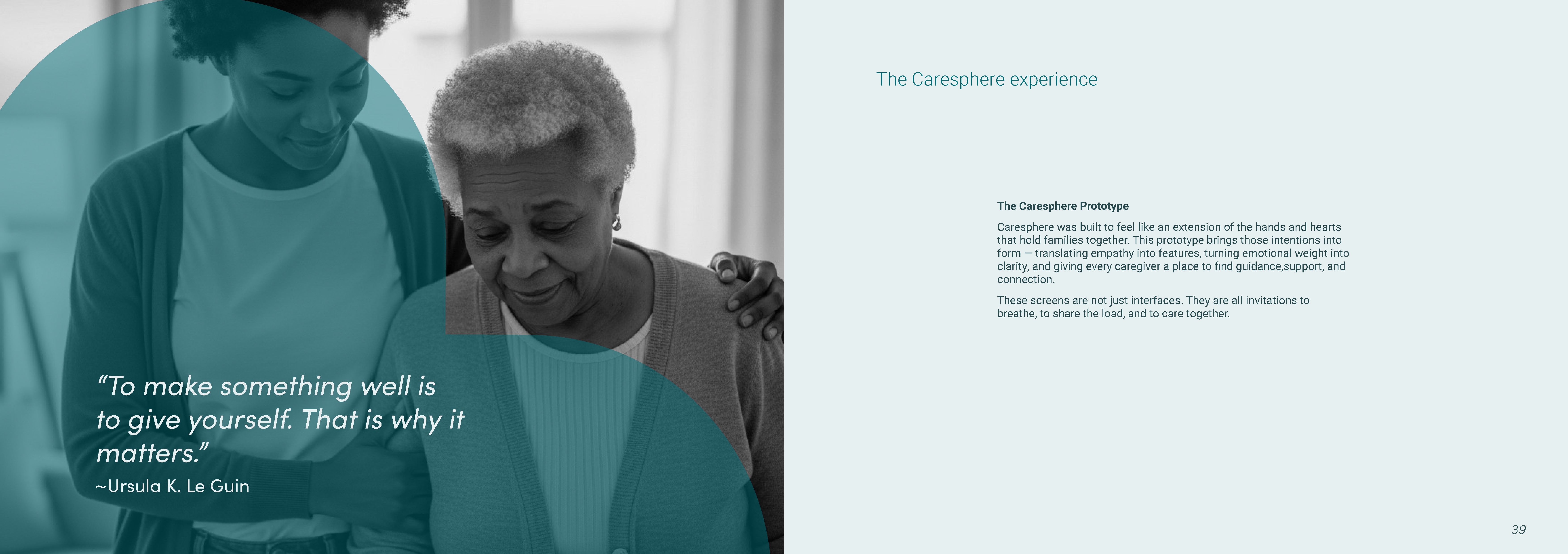
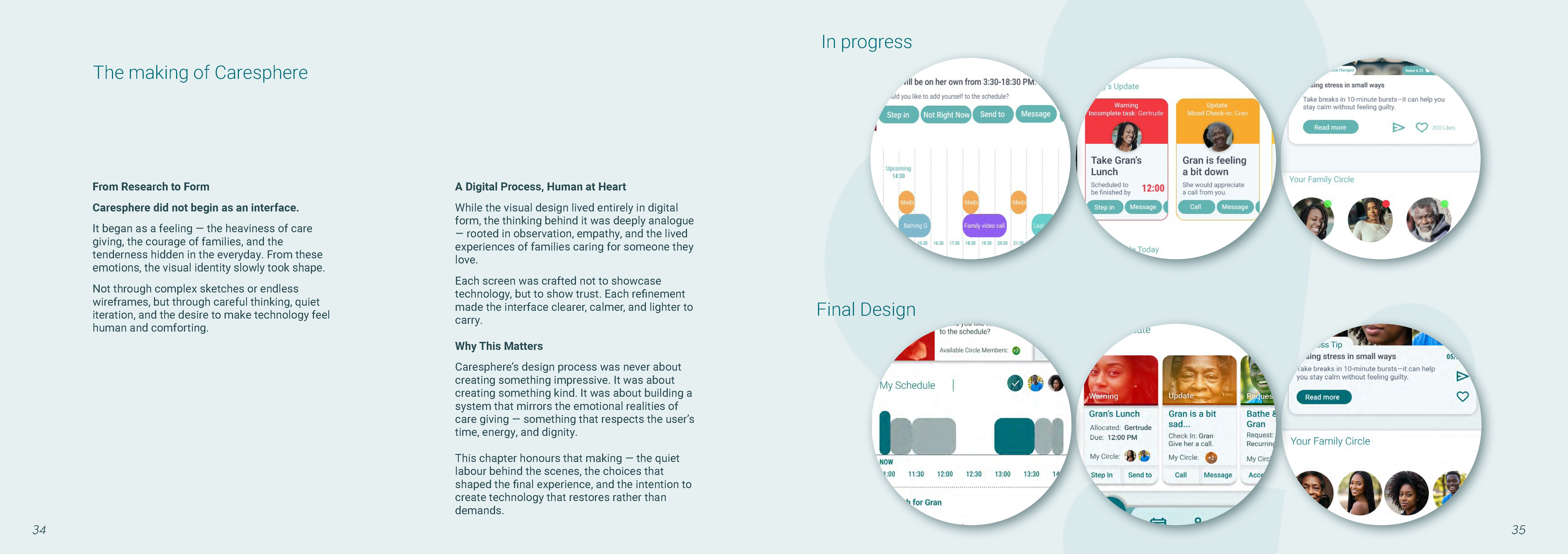
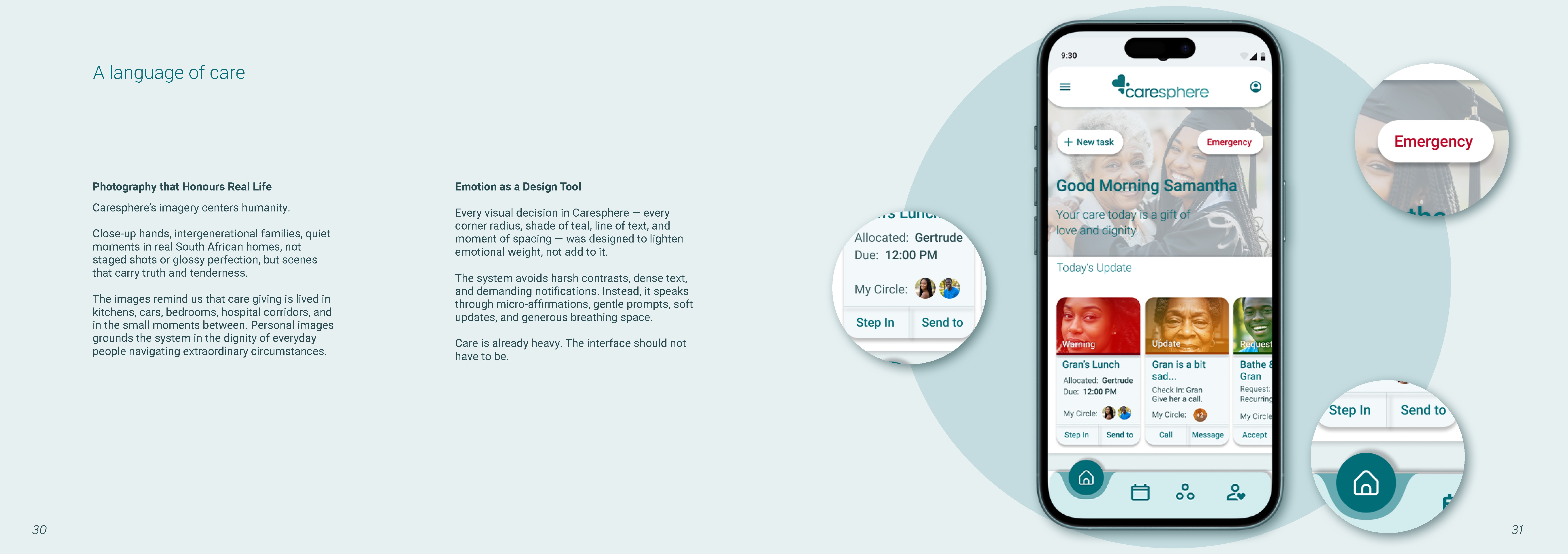
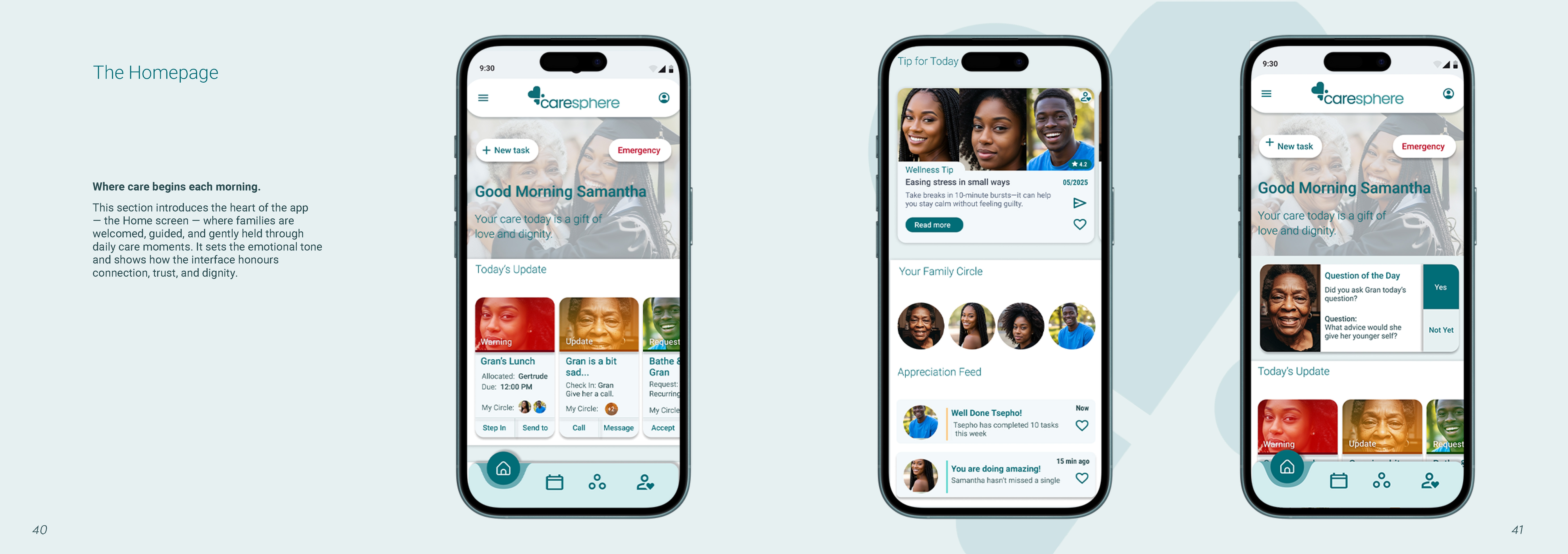
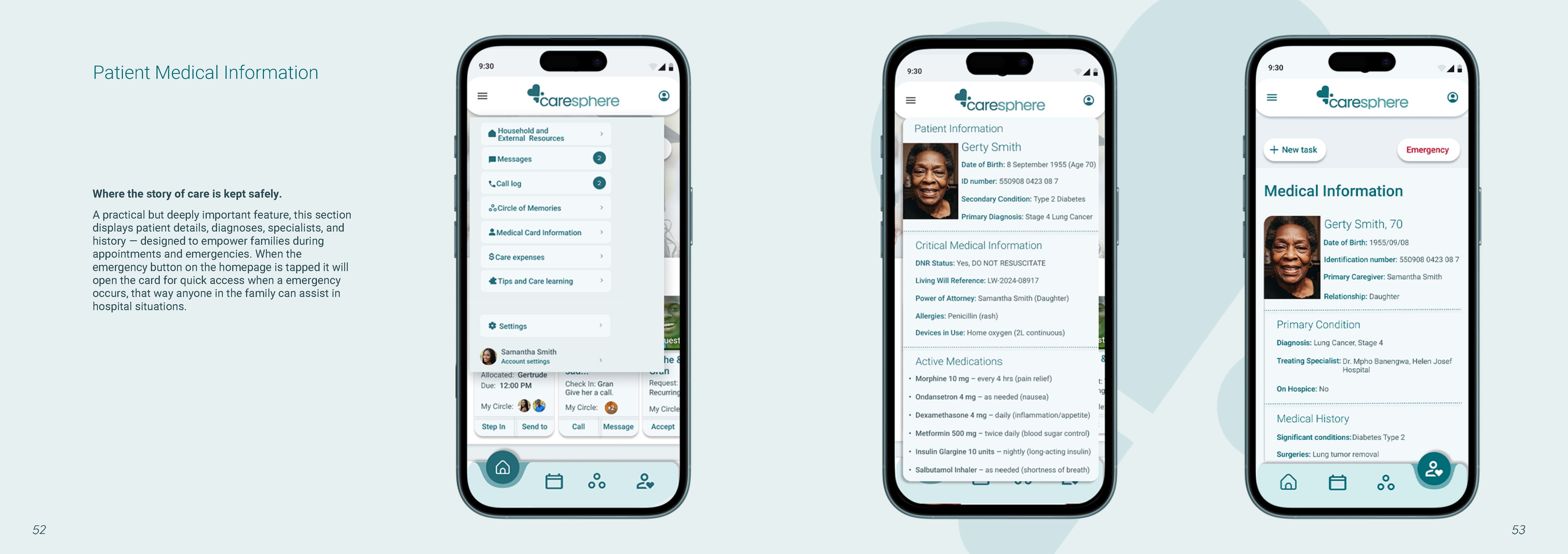
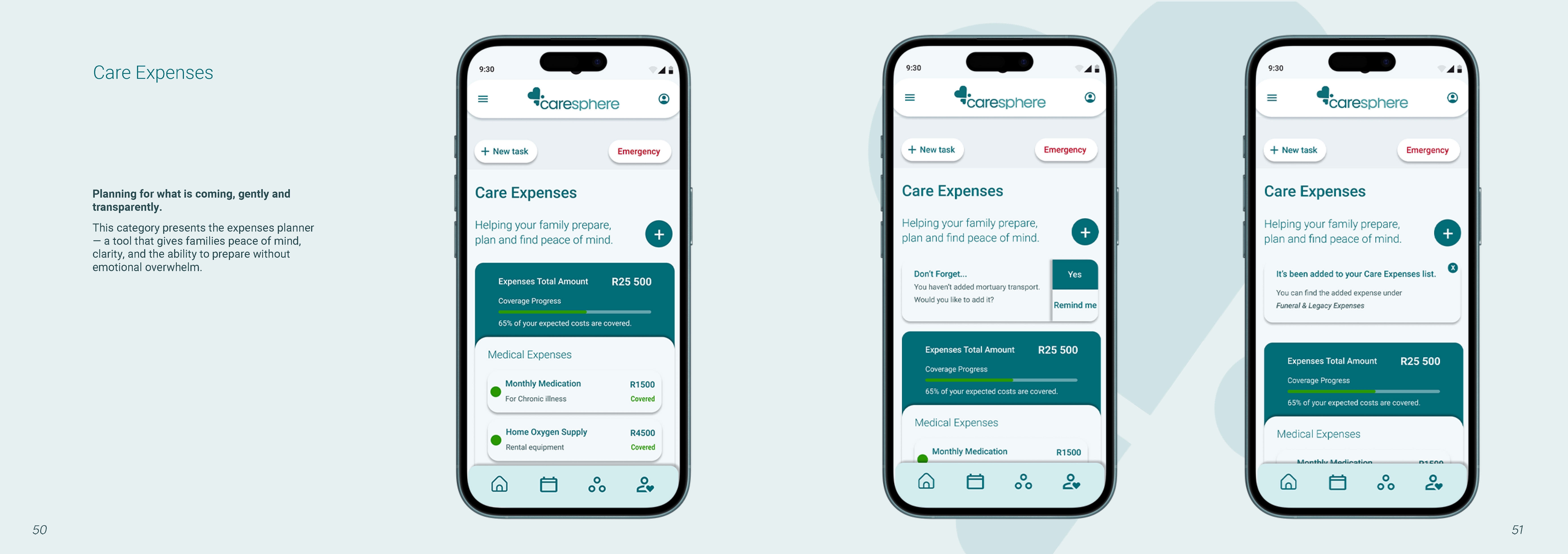
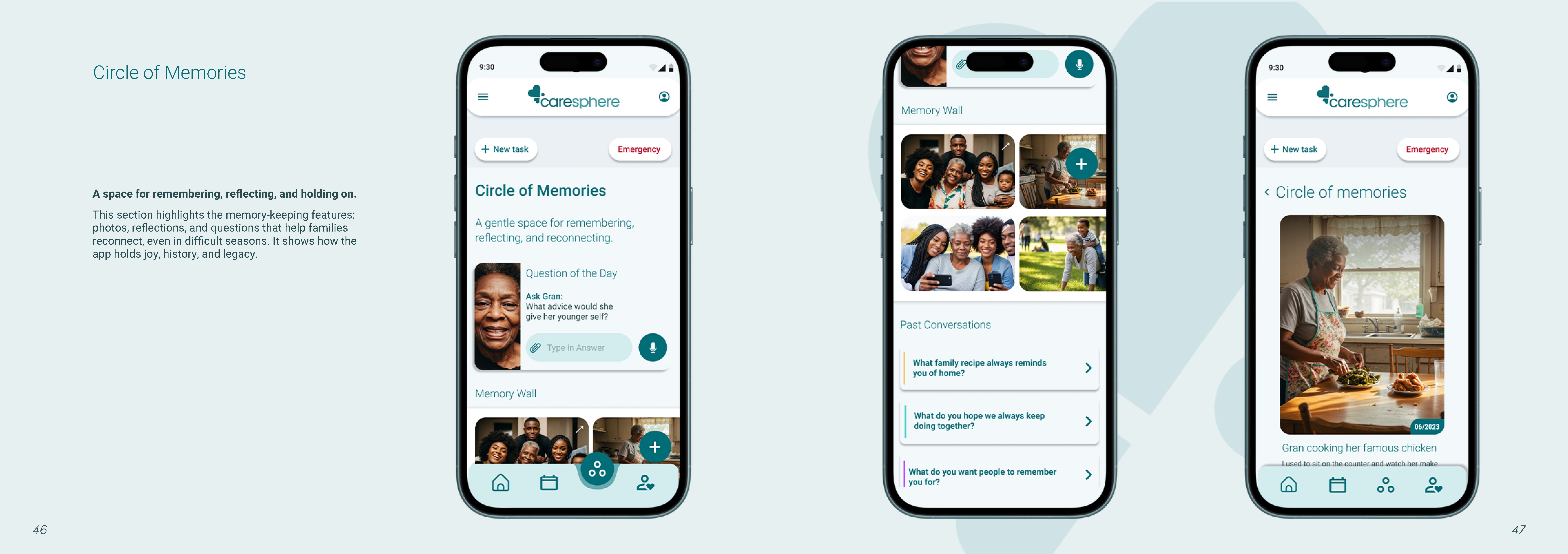
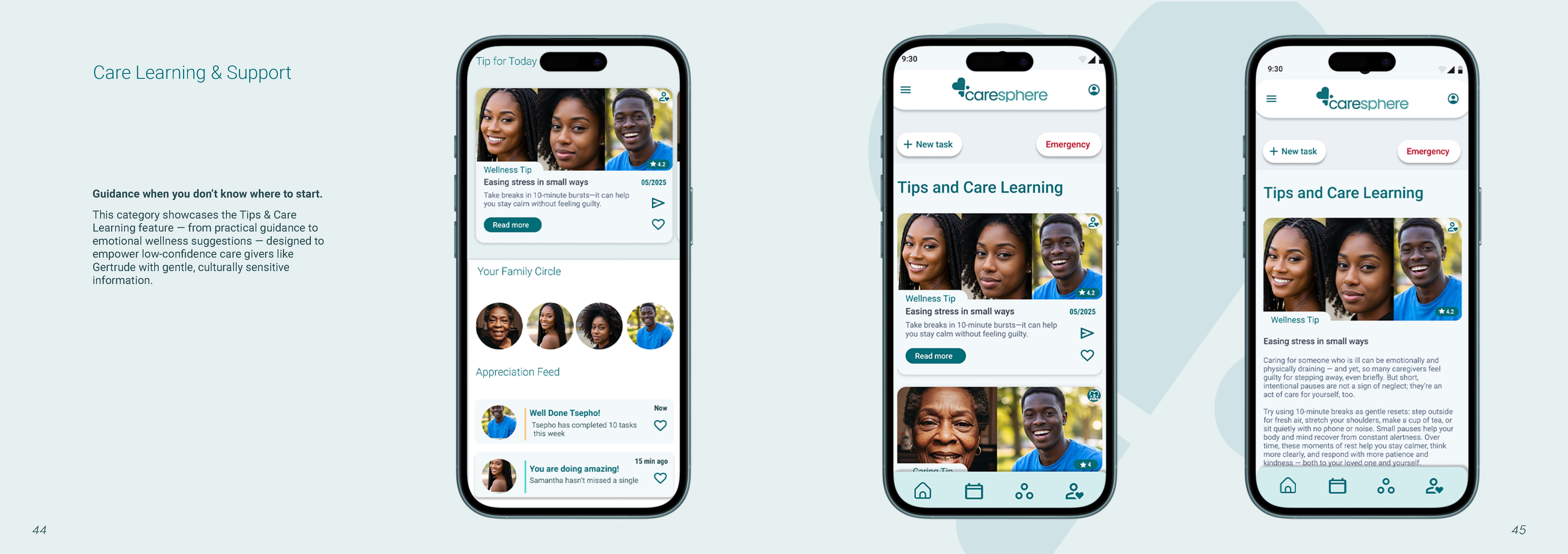
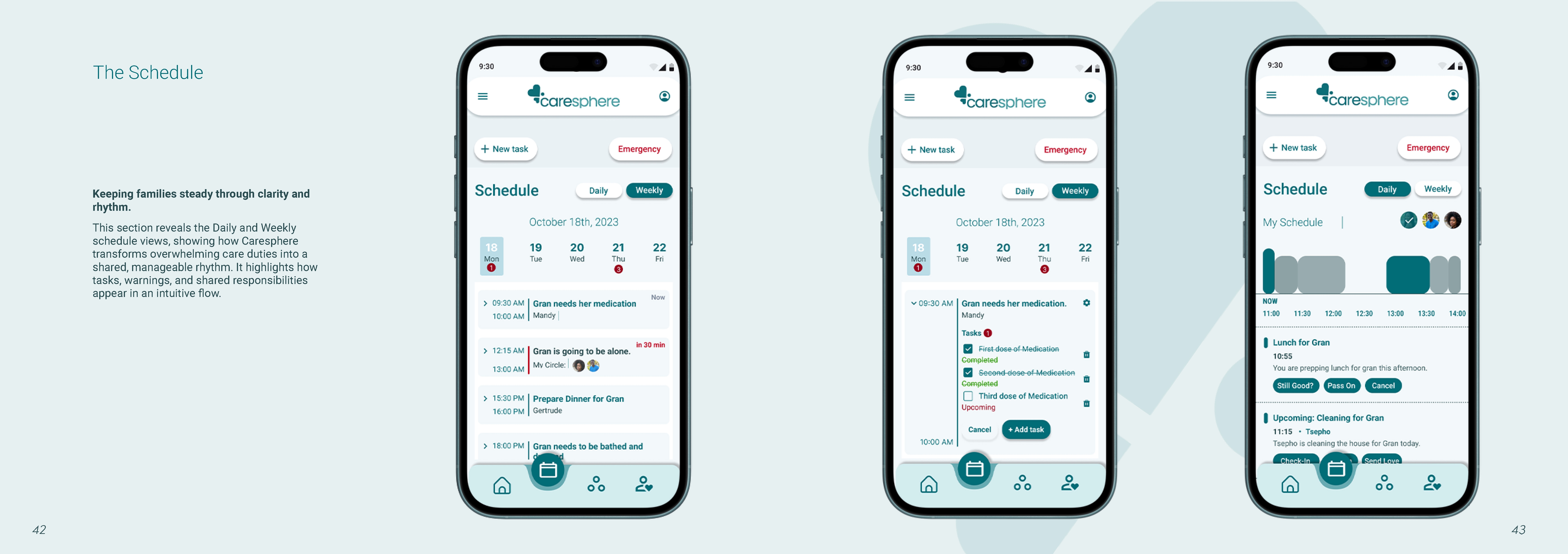
Circle of Care is innovative in its recognition that emotional strain is central to caregiving. While many health platforms prioritise efficiency or clinical neutrality, this project treats dignity, emotional safety, and human connection as core system requirements. A key innovation lies in the use of real imagery of family members as a central interface element. Instead of abstract icons or stock visuals, the platform foregrounds familiar faces and memories, allowing the experience to feel closer to a shared family album than a clinical care tool. The shared care schedule makes invisible labour visible, allowing families to see where support is needed and step in naturally, with real-time updates as responsibilities shift. Tasks can be accepted, passed on, or rescheduled through a dignity-preserving flow that recognises fluctuating energy, work commitments, and emotional limits without guilt. Care learning content offers gentle guidance, while the Circle of Memories supports reflection and identity beyond illness. Emergency access to medical information enables confident action when it matters most.
Circle of Care is innovative in its recognition that emotional strain is central to caregiving. While many health platforms prioritise efficiency or clinical neutrality, this project treats dignity, emotional safety, and human connection as core system requirements. A key innovation lies in the use of real imagery of family members as a central interface element. Instead of abstract icons or stock visuals, the platform foregrounds familiar faces and memories, allowing the experience to feel closer to a shared family album than a clinical care tool. The shared care schedule makes invisible labour visible, allowing families to see where support is needed and step in naturally, with real-time updates as responsibilities shift. Tasks can be accepted, passed on, or rescheduled through a dignity-preserving flow that recognises fluctuating energy, work commitments, and emotional limits without guilt. Care learning content offers gentle guidance, while the Circle of Memories supports reflection and identity beyond illness. Emergency access to medical information enables confident action when it matters most.
Project Sustainability Approach:
Sustainability in Circle of Care is designed around access, equity, and long-term social value. The platform is intended to remain free for families and caregivers, ensuring that emotional and practical support is never limited by income, data availability, or device ownership. Rather than monetising users, the system is sustained through ethical partnerships with clinics, NGOs, community organisations, and medical aid providers. These partners contribute a small fee to connect their services to the platform, allowing them to reach families who actively need support while strengthening existing care networks. This model creates shared value: families gain clearer access to trusted, local support, while organisations engage meaningfully with the communities they already serve. Care decisions remain family-led, with partnerships designed to support, not influence, caregiving choices. By embedding sustainability within existing healthcare and community structures, Circle of Care avoids reliance on paid features or constant growth.
Sustainability in Circle of Care is designed around access, equity, and long-term social value. The platform is intended to remain free for families and caregivers, ensuring that emotional and practical support is never limited by income, data availability, or device ownership. Rather than monetising users, the system is sustained through ethical partnerships with clinics, NGOs, community organisations, and medical aid providers. These partners contribute a small fee to connect their services to the platform, allowing them to reach families who actively need support while strengthening existing care networks. This model creates shared value: families gain clearer access to trusted, local support, while organisations engage meaningfully with the communities they already serve. Care decisions remain family-led, with partnerships designed to support, not influence, caregiving choices. By embedding sustainability within existing healthcare and community structures, Circle of Care avoids reliance on paid features or constant growth.
Local and Regional Impacts of the Project:
Circle of Care reflects caregiving realities across South Africa, where families often manage illness without professional support, reliable transport, or clear guidance. By creating shared visibility and emotionally safe communication, the platform reduces isolation and caregiver burnout. At a local level, it enables families to coordinate care more confidently, supports volunteers through clear roles, and allows calmer responses during medical emergencies. Regionally, the project demonstrates how emotionally intelligent digital systems can help address gaps in healthcare without replacing human connection. By centring dignity, accessibility, and shared responsibility, Circle of Care offers a scalable model for caregiving support that strengthens families and communities alike.
Circle of Care reflects caregiving realities across South Africa, where families often manage illness without professional support, reliable transport, or clear guidance. By creating shared visibility and emotionally safe communication, the platform reduces isolation and caregiver burnout. At a local level, it enables families to coordinate care more confidently, supports volunteers through clear roles, and allows calmer responses during medical emergencies. Regionally, the project demonstrates how emotionally intelligent digital systems can help address gaps in healthcare without replacing human connection. By centring dignity, accessibility, and shared responsibility, Circle of Care offers a scalable model for caregiving support that strengthens families and communities alike.