Beyond the Western Canon
Prize(s):
WINNER 2026 Print & Digital / Book and Magazine
Lead Designer(s) Name(s):Amandine Forest-Aguié
Client Name:University / research project
Photo Credit:Amandine Forest-Aguié
Project Location:London
Design Status:Concept
Website: View
Project Description:
Rethinking our understanding of written language, typography, and layout through Indigenous African design systems. This project critically examines language, cultural identity, and the materiality of language in relation to Africa and its diasporas. Grounded in the concept of Sankofa, the project positions African design systems as valid and generative frameworks for design, moving beyond the Western canon. The work foregrounds the importance of reconnecting with cultural identity and re-evaluating what it means to be African or Afro-descendant across design disciplines. It is directed both toward Afro-descendants seeking deeper engagement with history and self—and designers, particularly within graphic design, who wish to expand their field of reference and engage with underrepresented histories of design. The project asserts that non-Western ways of designing are not ‘primitive’, and hold intrinsic value. Developed without reliance on Western design canons, it advocates for culturally rooted research as a transformative design methodology. Its significance lies equally in its process: an intentional engagement through sustained dialogue between research, archives and discussions
Rethinking our understanding of written language, typography, and layout through Indigenous African design systems. This project critically examines language, cultural identity, and the materiality of language in relation to Africa and its diasporas. Grounded in the concept of Sankofa, the project positions African design systems as valid and generative frameworks for design, moving beyond the Western canon. The work foregrounds the importance of reconnecting with cultural identity and re-evaluating what it means to be African or Afro-descendant across design disciplines. It is directed both toward Afro-descendants seeking deeper engagement with history and self—and designers, particularly within graphic design, who wish to expand their field of reference and engage with underrepresented histories of design. The project asserts that non-Western ways of designing are not ‘primitive’, and hold intrinsic value. Developed without reliance on Western design canons, it advocates for culturally rooted research as a transformative design methodology. Its significance lies equally in its process: an intentional engagement through sustained dialogue between research, archives and discussions
Project Innovation / Specification:
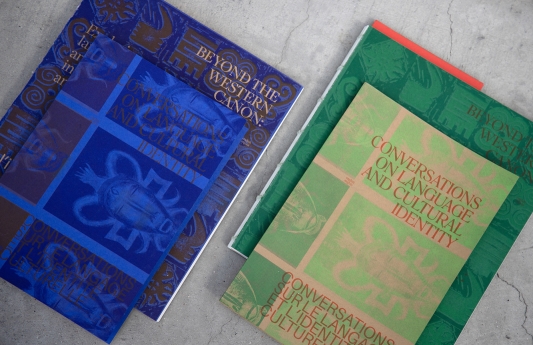
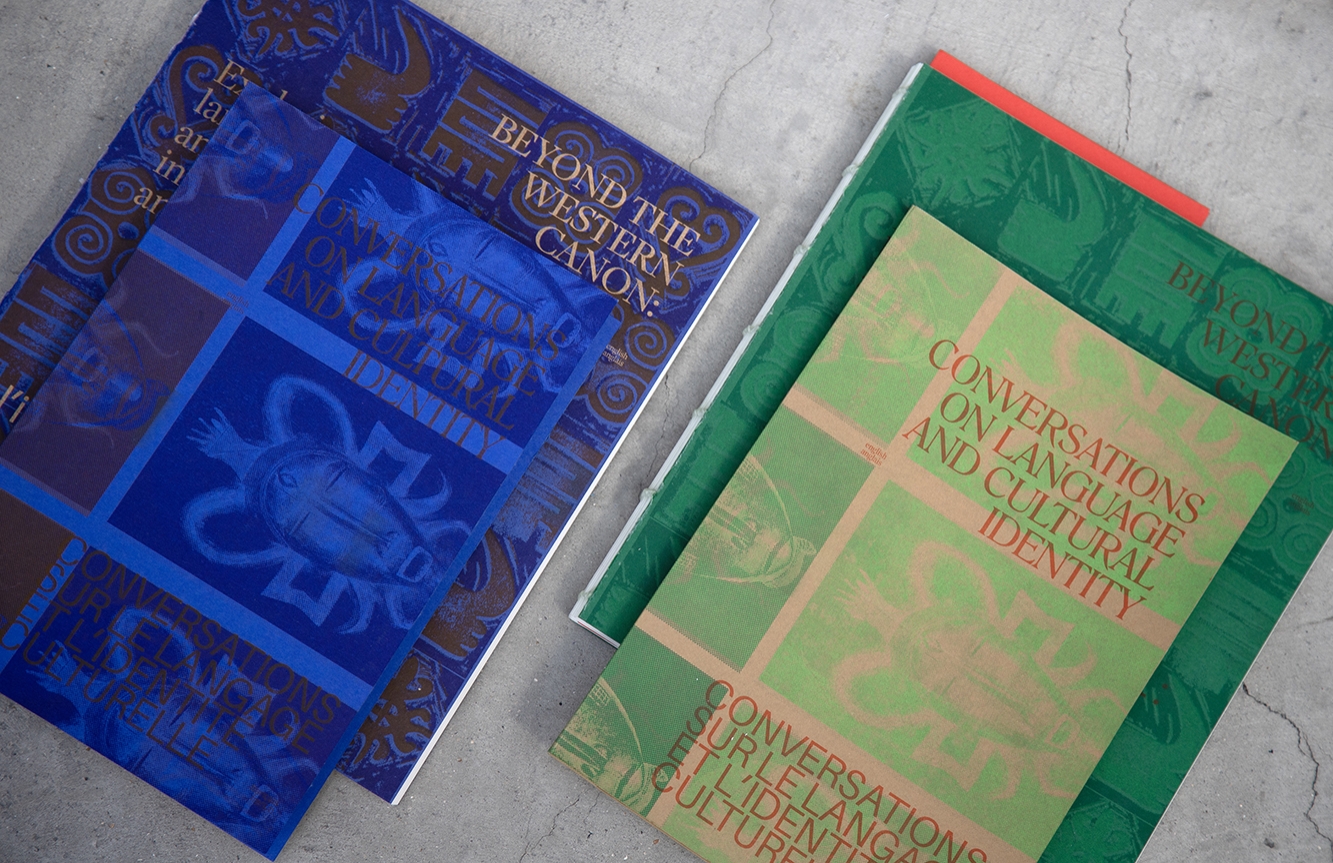
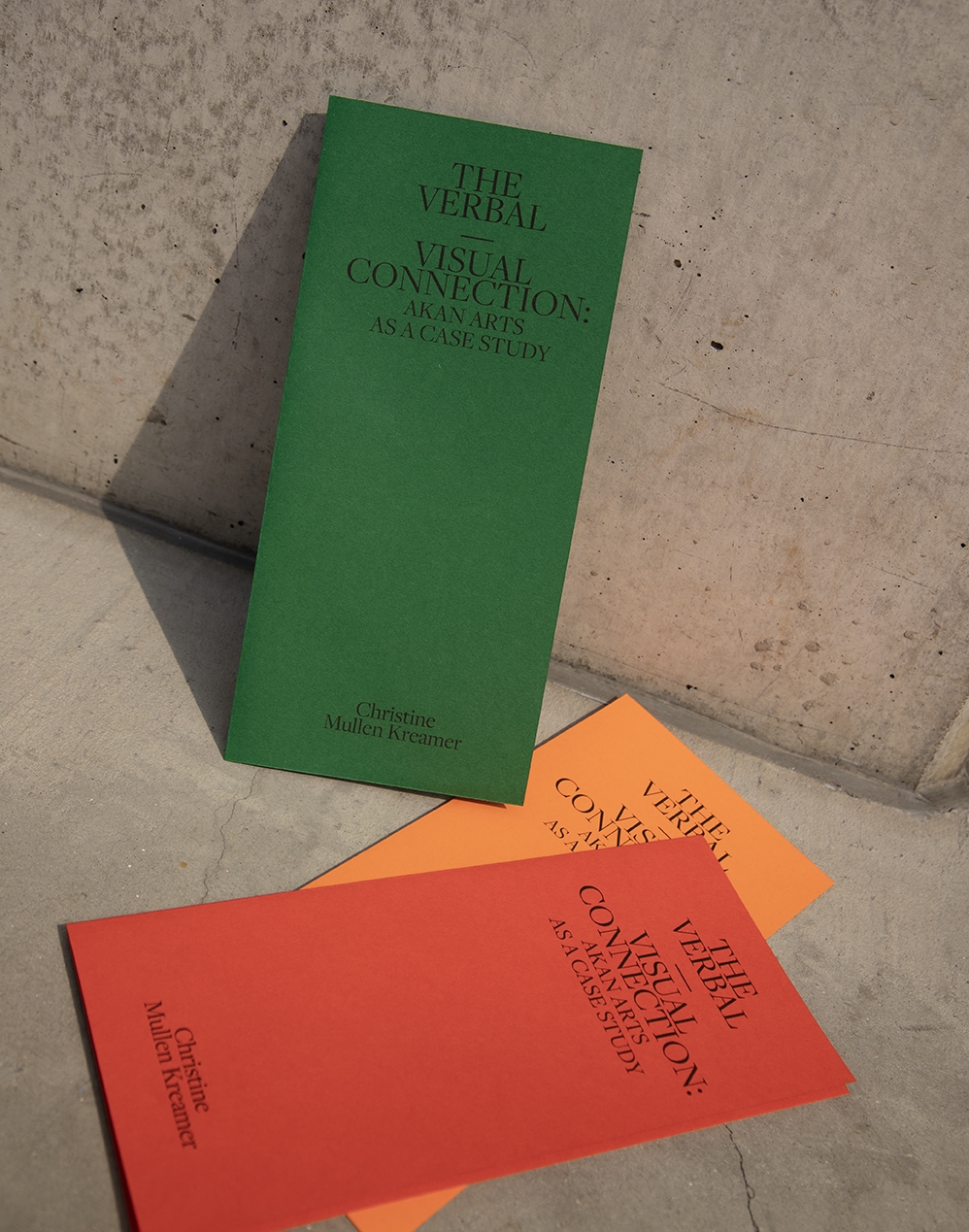
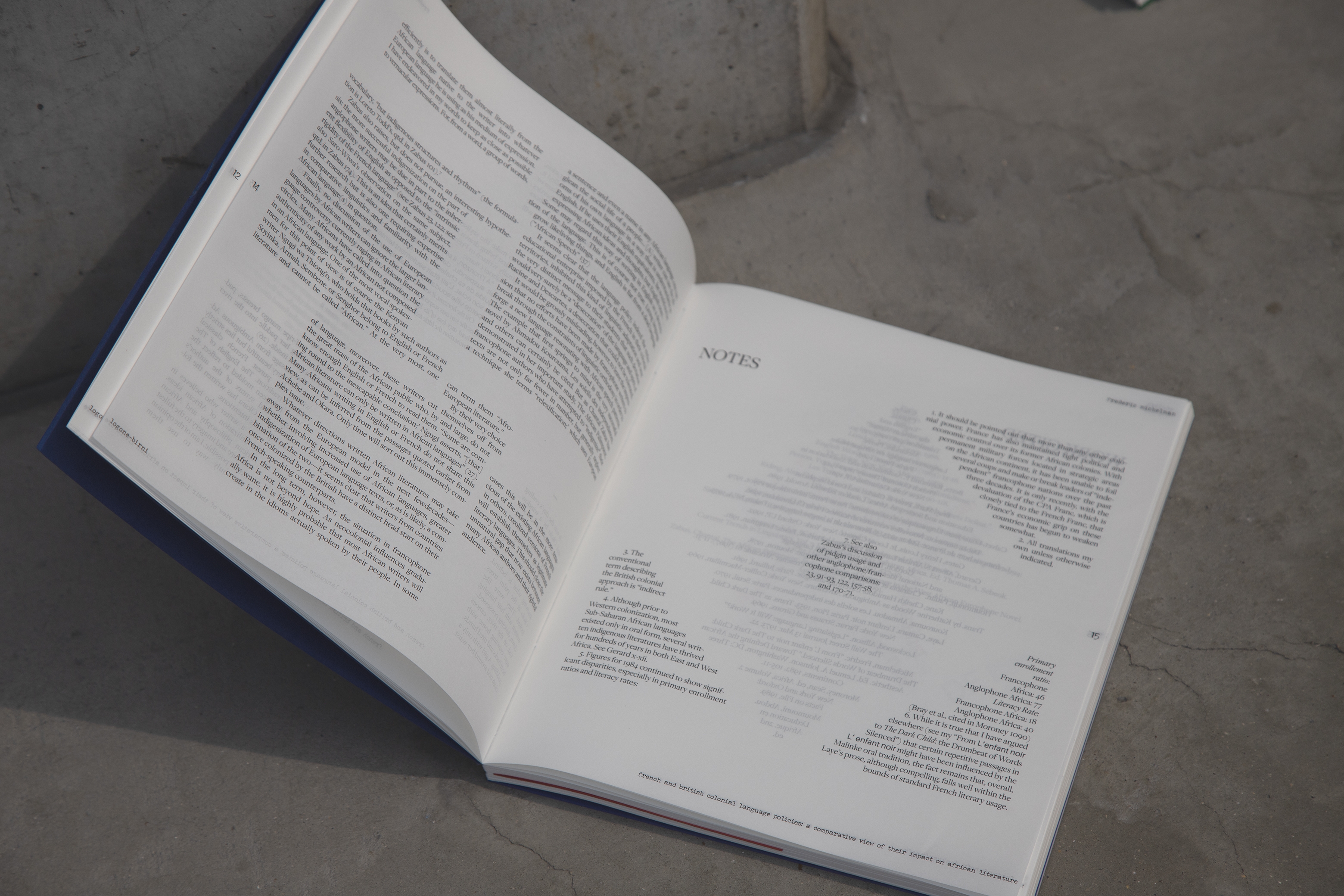
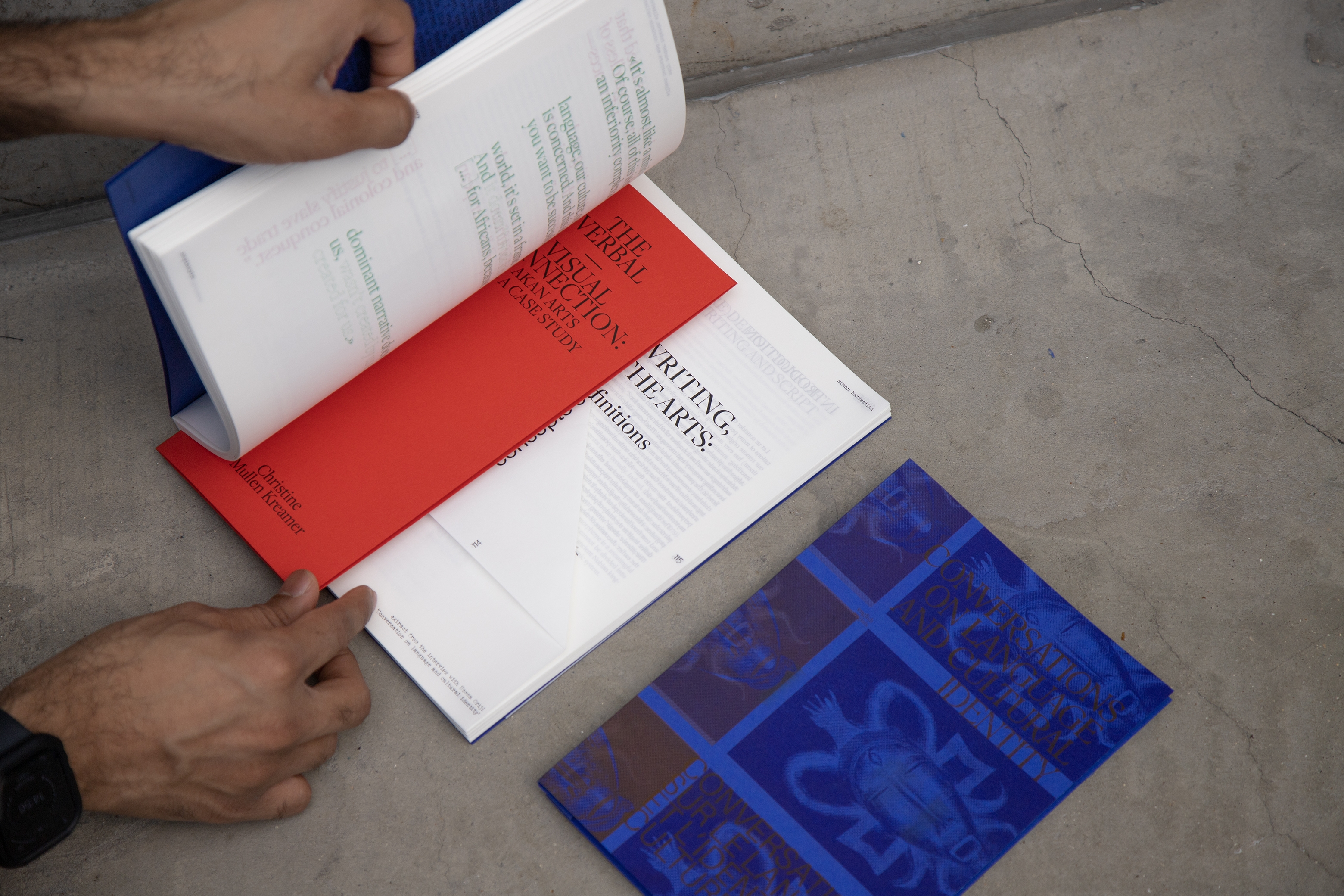
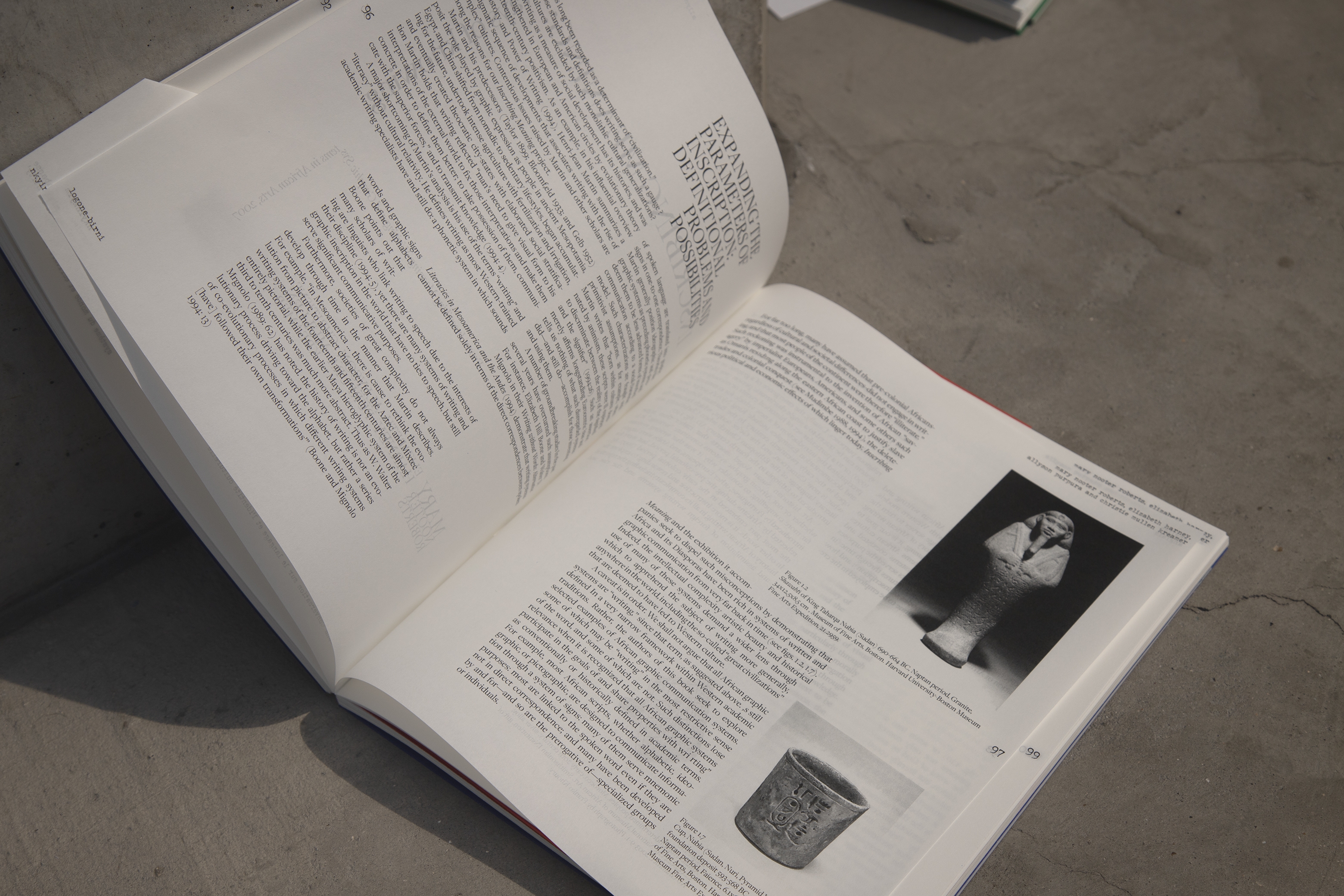
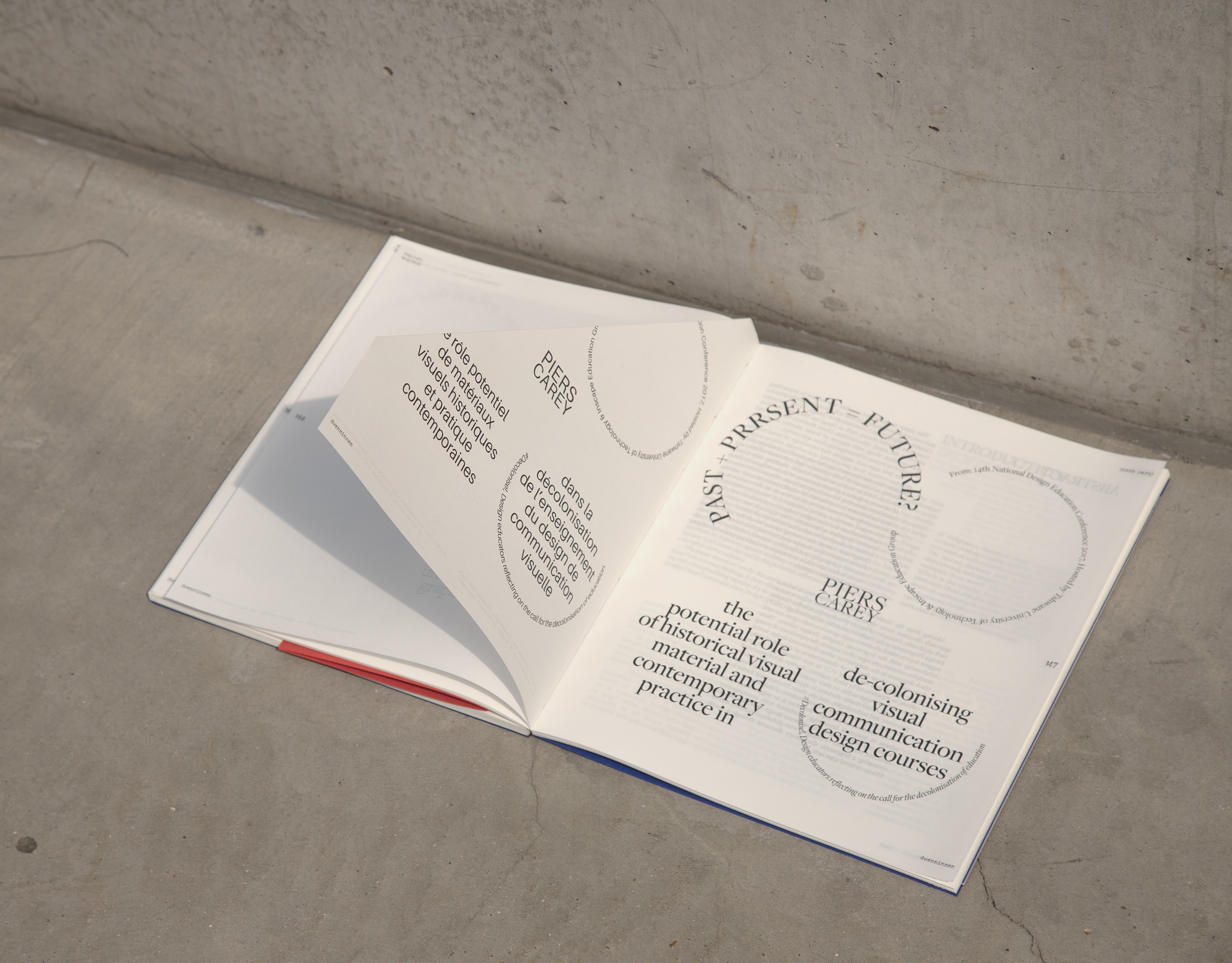
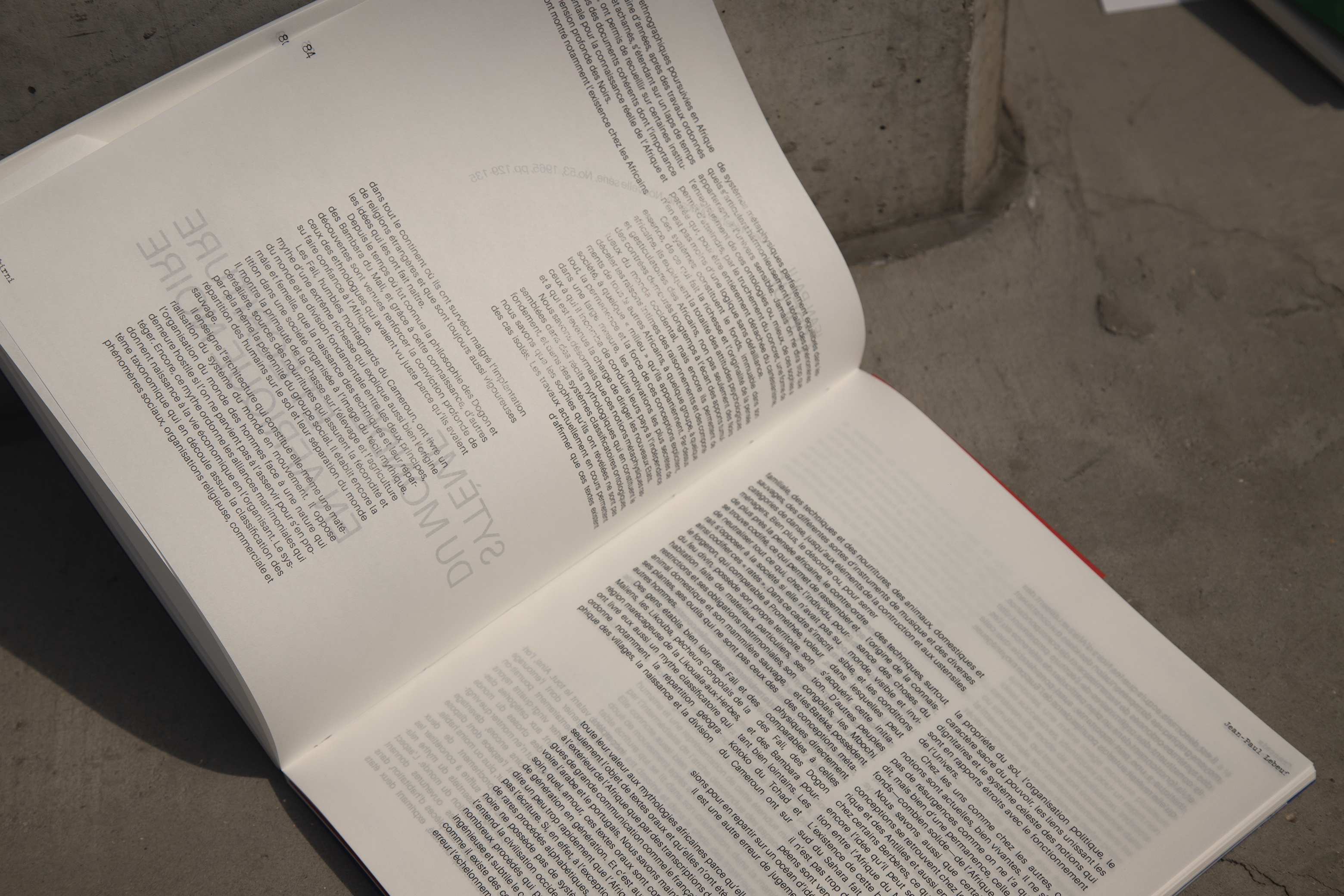
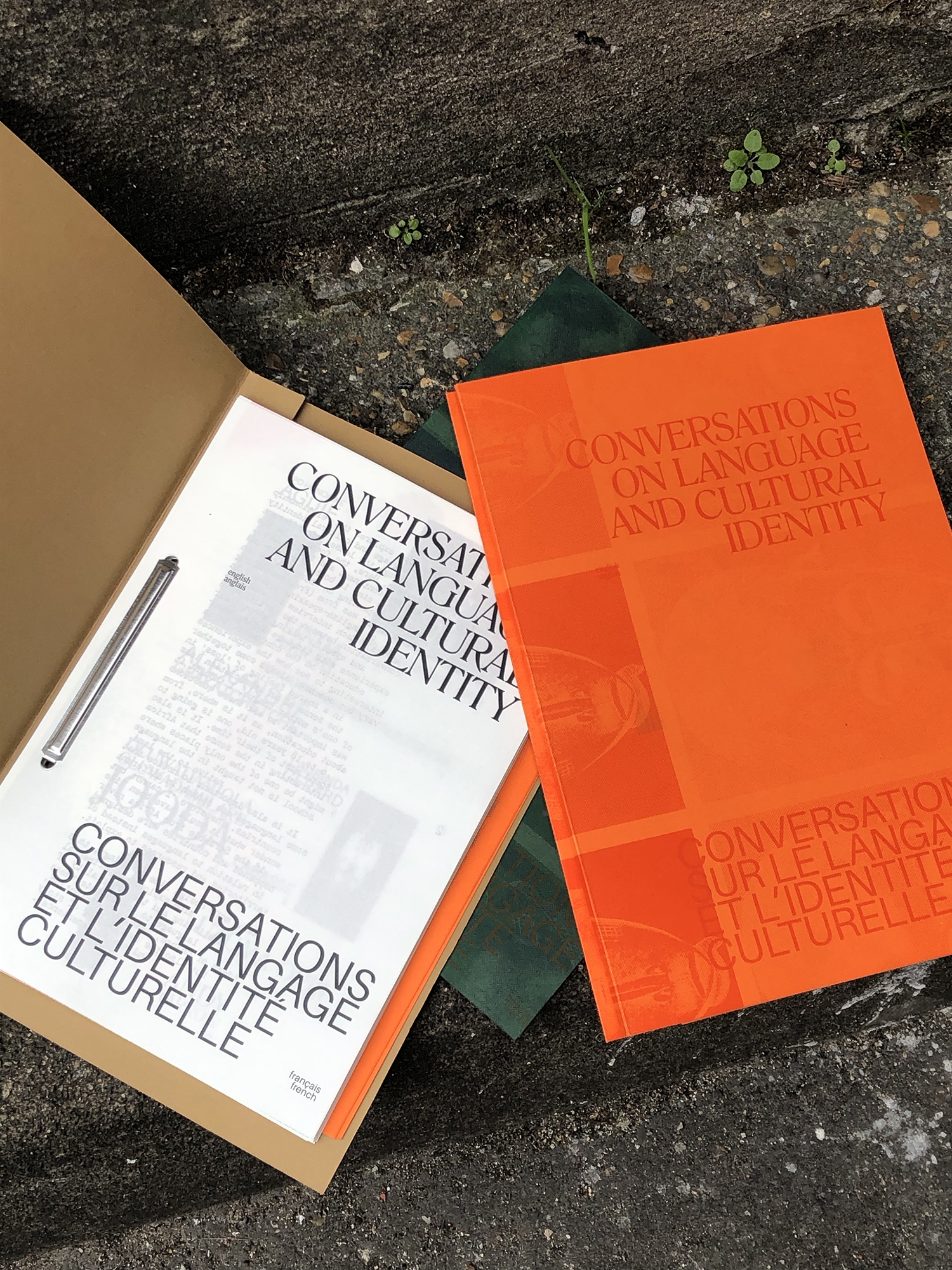
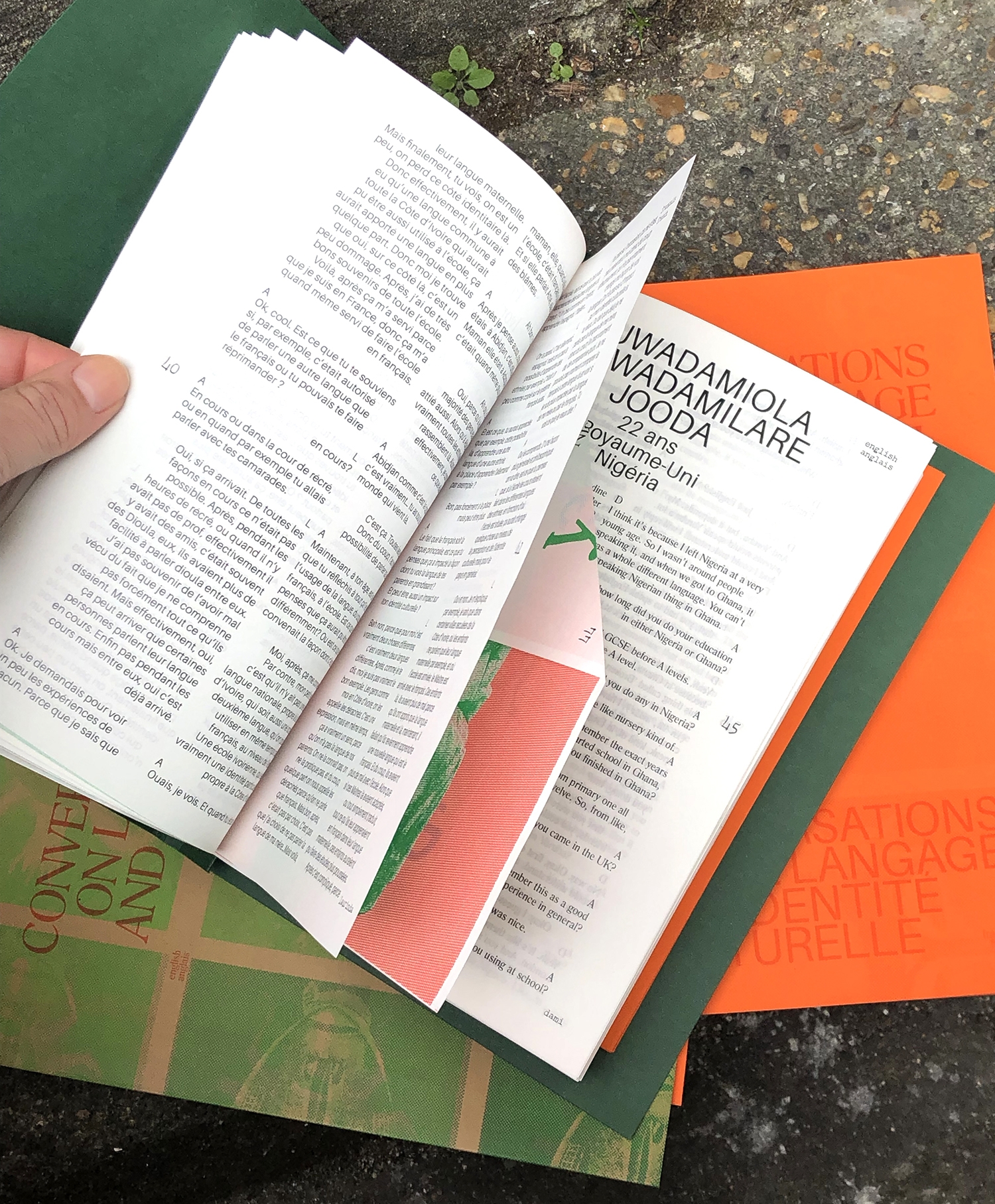
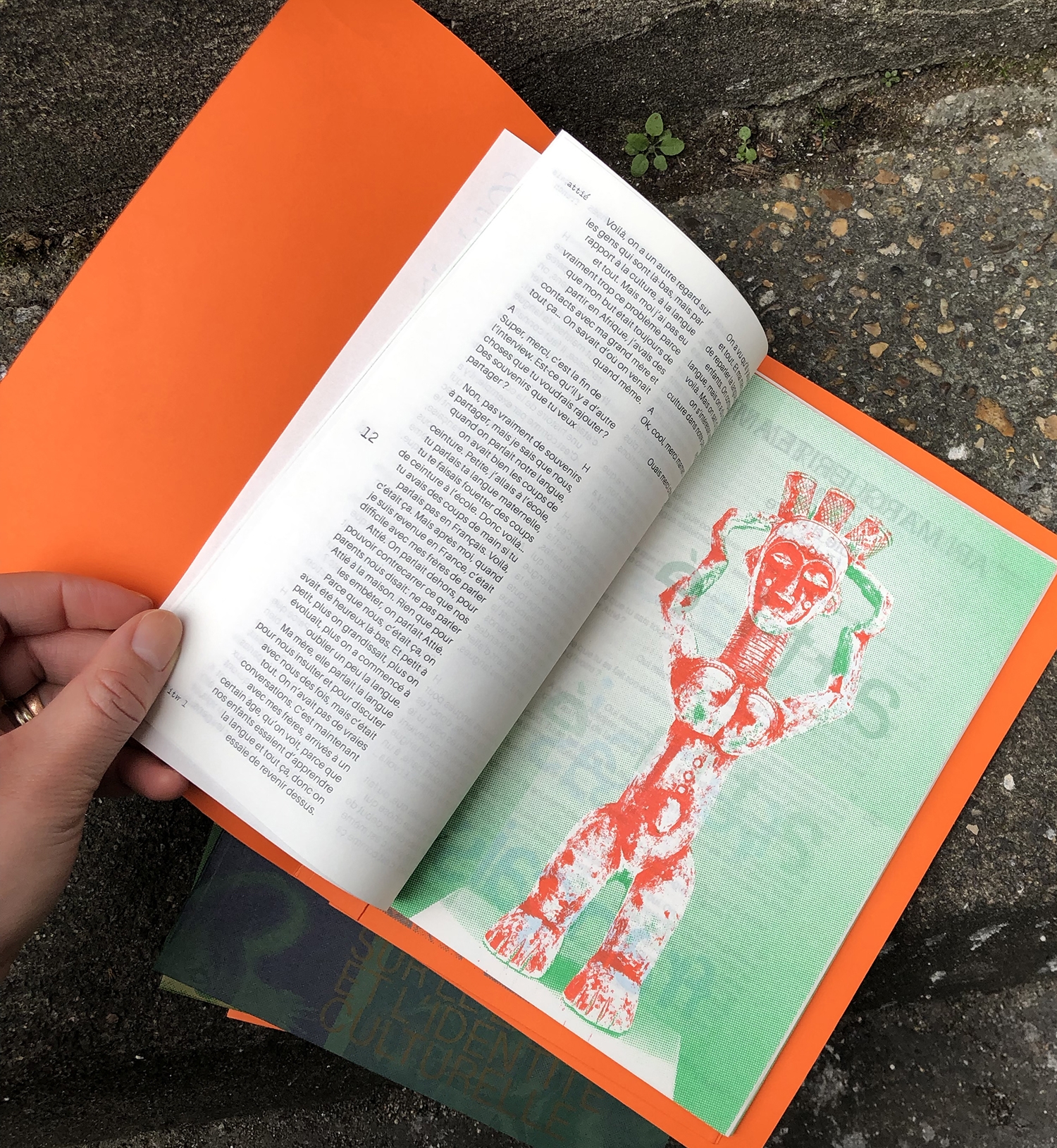
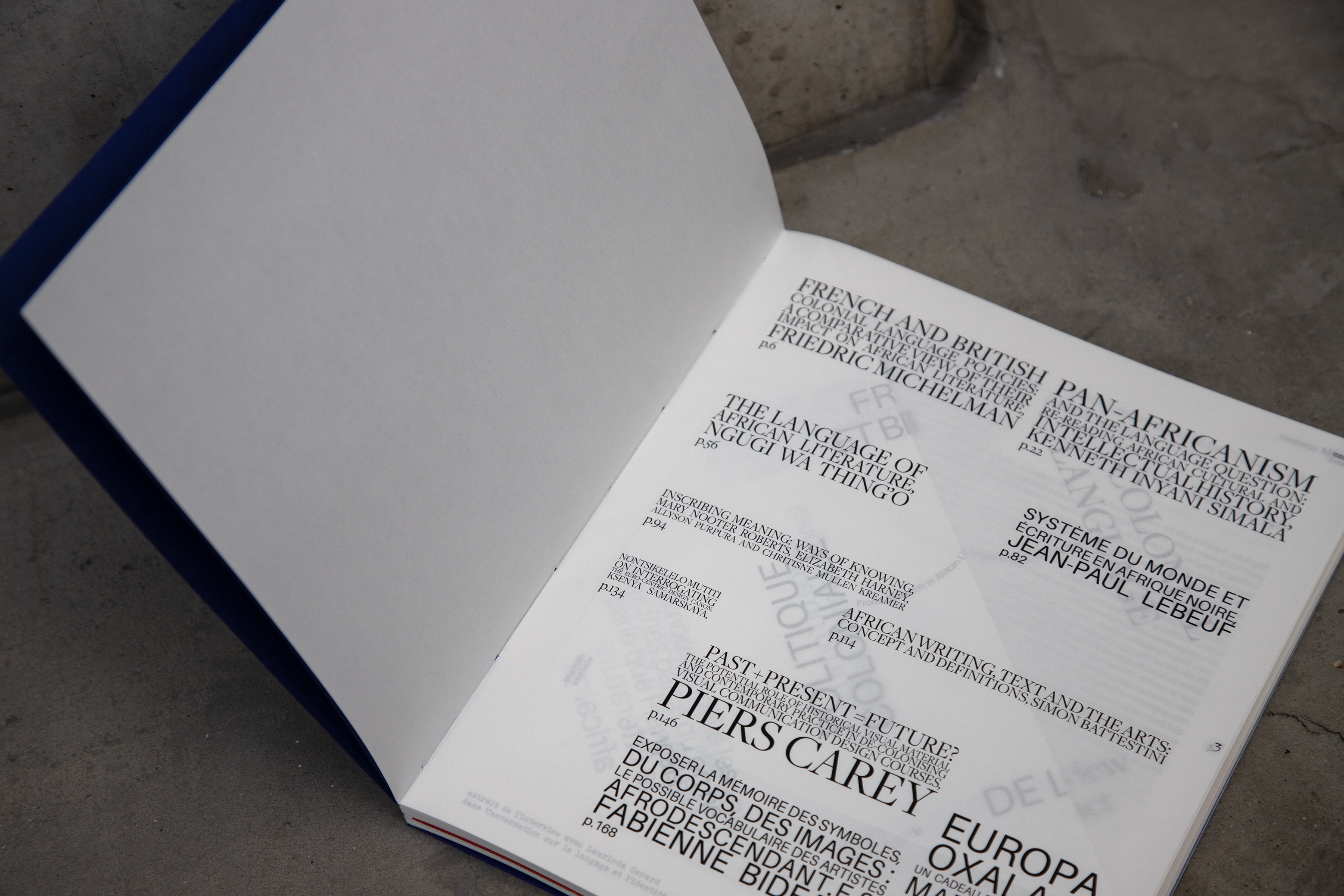
The zine was the starting point of the project, gathering conversations with people from different generations and across African countries, reflecting on language and its relationship to cultural identity. The main publication is composed of three interconnected parts. Beyond the Western Canon is the core book, featuring texts and essays by scholars and designers exploring language, colonialism, identity, writing, and their intersections with graphic design. It also highlights a new generation of Afro-descendant artists reclaiming and celebrating cultural narratives. The body text is structured using the African fractal grid of Logone-Birni, named after a town in Cameroon. Chapter pages reference grids derived from specific Adinkra symbols, selected in relation to their meanings and accompanying texts. Printed on semi-transparent paper, the book emphasizes interconnection, fluidity, and dialogue between content, structure, and meaning. The Akan Booklet provides cultural context, introducing the Akan people and their writing systems. The Grid Booklet, printed on tracing paper, reveals the publication’s grid systems and layout structures, offering an interactive insight into process
The zine was the starting point of the project, gathering conversations with people from different generations and across African countries, reflecting on language and its relationship to cultural identity. The main publication is composed of three interconnected parts. Beyond the Western Canon is the core book, featuring texts and essays by scholars and designers exploring language, colonialism, identity, writing, and their intersections with graphic design. It also highlights a new generation of Afro-descendant artists reclaiming and celebrating cultural narratives. The body text is structured using the African fractal grid of Logone-Birni, named after a town in Cameroon. Chapter pages reference grids derived from specific Adinkra symbols, selected in relation to their meanings and accompanying texts. Printed on semi-transparent paper, the book emphasizes interconnection, fluidity, and dialogue between content, structure, and meaning. The Akan Booklet provides cultural context, introducing the Akan people and their writing systems. The Grid Booklet, printed on tracing paper, reveals the publication’s grid systems and layout structures, offering an interactive insight into process
Project Sustainability Approach:
The sustainability of this project is embedded in both its material choices and production methods. Conceived as a long-term reference object rather than a disposable publication, it prioritises durability, reuse, and relevance over short-term consumption. Printing decisions were guided by intention. Risograph printing was used selectively for colour pages due to its low energy consumption and minimal ink waste. Existing riso test prints and experimental outputs generated during the research phase were repurposed for the cover, reducing paper waste while embedding process directly into the final object. Lightweight, semi-transparent papers were chosen to limit material use and ink coverage while reinforcing conceptual ideas of layering, interconnection, and dialogue. The modular structure—combining a core publication with companion booklets—allows components to circulate independently, extending the life of the content beyond a single format. Sustainability is also embedded in process: by centring Indigenous African design systems and culturally rooted research, the project supports the ethical transmission of knowledge often marginalised within Western design frameworks.
The sustainability of this project is embedded in both its material choices and production methods. Conceived as a long-term reference object rather than a disposable publication, it prioritises durability, reuse, and relevance over short-term consumption. Printing decisions were guided by intention. Risograph printing was used selectively for colour pages due to its low energy consumption and minimal ink waste. Existing riso test prints and experimental outputs generated during the research phase were repurposed for the cover, reducing paper waste while embedding process directly into the final object. Lightweight, semi-transparent papers were chosen to limit material use and ink coverage while reinforcing conceptual ideas of layering, interconnection, and dialogue. The modular structure—combining a core publication with companion booklets—allows components to circulate independently, extending the life of the content beyond a single format. Sustainability is also embedded in process: by centring Indigenous African design systems and culturally rooted research, the project supports the ethical transmission of knowledge often marginalised within Western design frameworks.
Local and Regional Impacts of the Project:
The primary impact of this project has been within Western academic and educational contexts. As a research-led practice, it has informed lectures, talks, and discussions on language, identity, and non-Western design systems, contributing to critical discourse beyond Eurocentric frameworks. Within universities in London, the project has served as a pedagogical tool, encouraging students—particularly from diasporic backgrounds—to integrate their cultural heritage into their design process. It supports moving beyond culture as content, toward using it as a visual, structural, and systematic framework. The project has also helped students rethink the role of references, shifting focus from aesthetic borrowing to engaging with core values, concepts, and ways of thinking.
The primary impact of this project has been within Western academic and educational contexts. As a research-led practice, it has informed lectures, talks, and discussions on language, identity, and non-Western design systems, contributing to critical discourse beyond Eurocentric frameworks. Within universities in London, the project has served as a pedagogical tool, encouraging students—particularly from diasporic backgrounds—to integrate their cultural heritage into their design process. It supports moving beyond culture as content, toward using it as a visual, structural, and systematic framework. The project has also helped students rethink the role of references, shifting focus from aesthetic borrowing to engaging with core values, concepts, and ways of thinking.
Lead Designer(s) Name(s):Amandine Forest-Aguié