
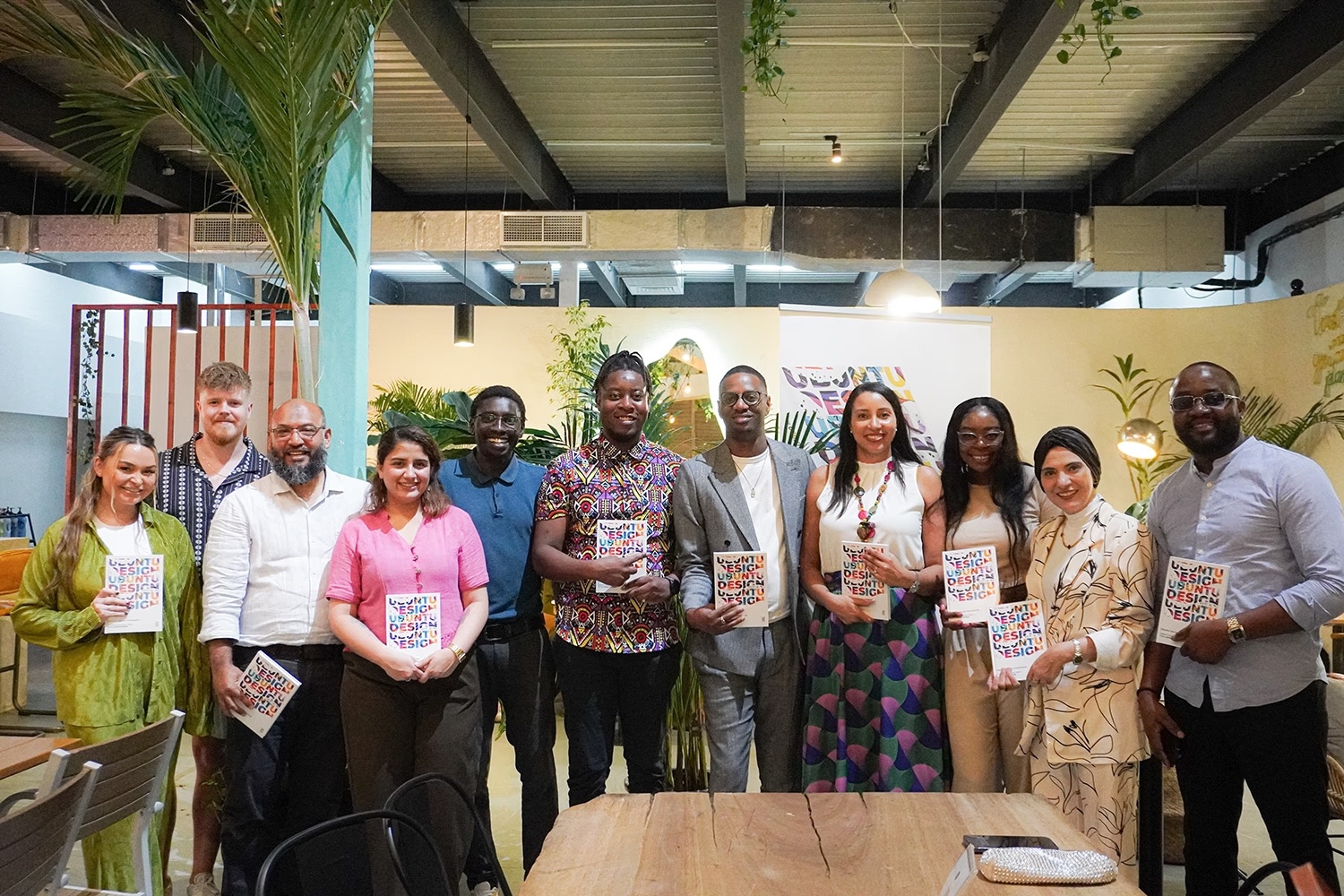
Ubuntu Design Framework
Prize(s):
WINNER 2026 Print & Digital / Book and Magazine
Lead Designer(s) Name(s):Batsirai Madzonga
Project Location:Dubai
Design Status:Commercialized
Website: View
Project Description:
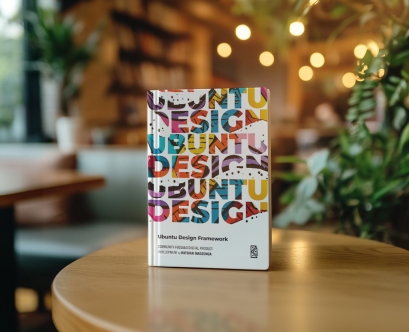
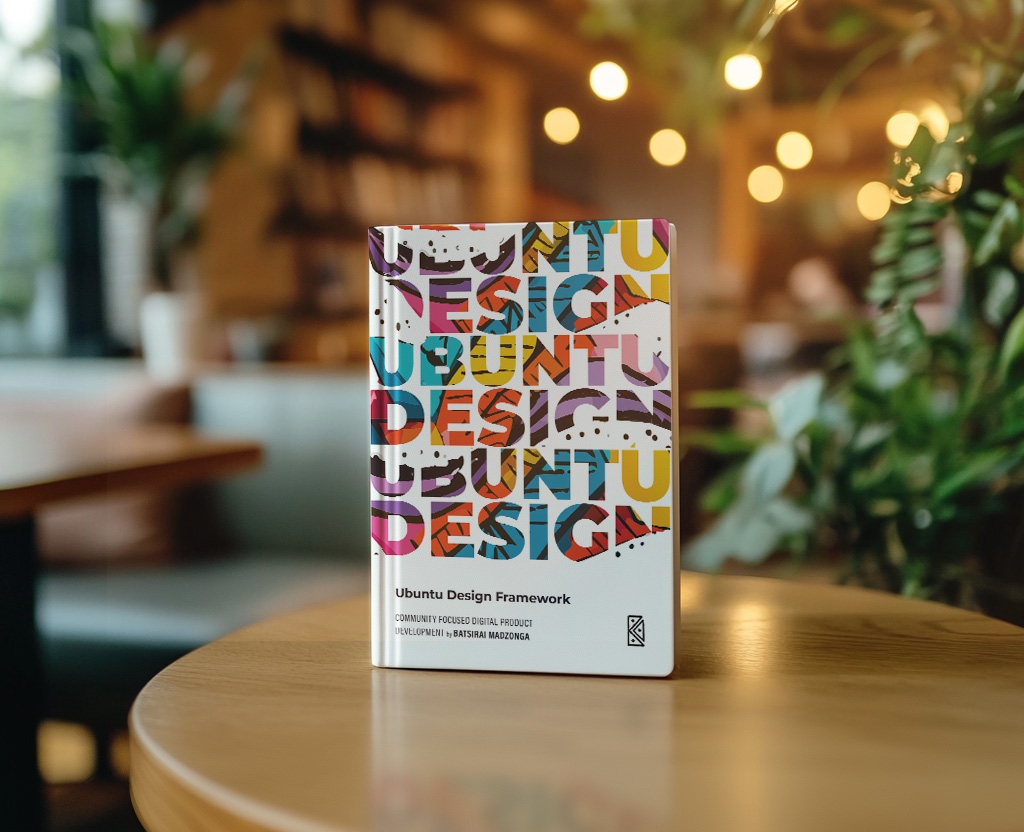
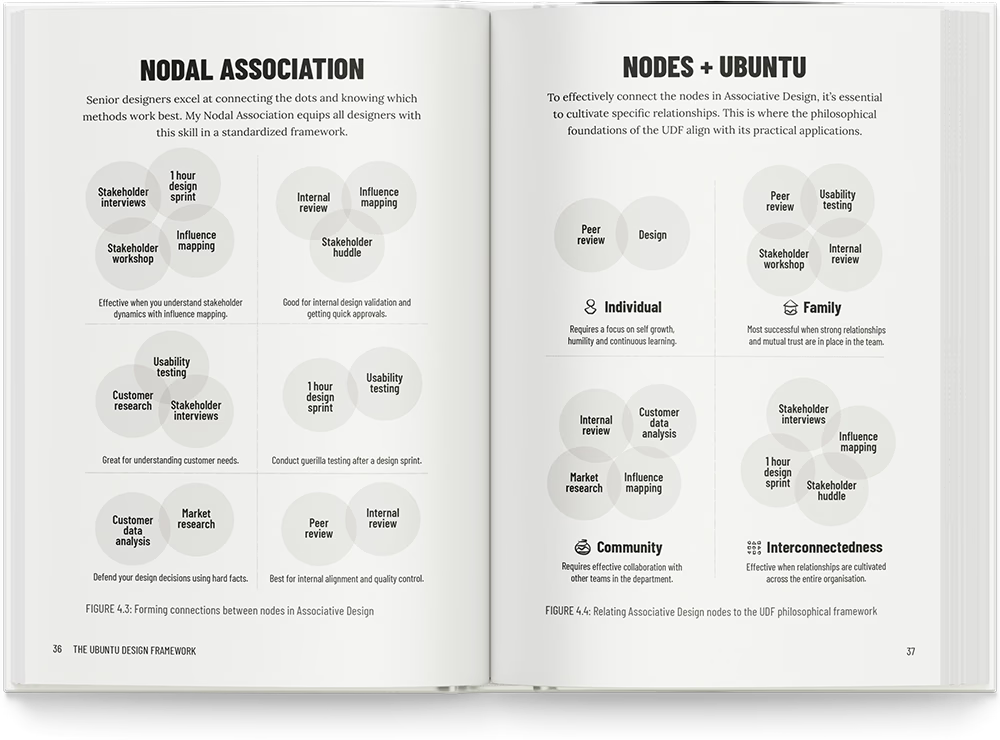
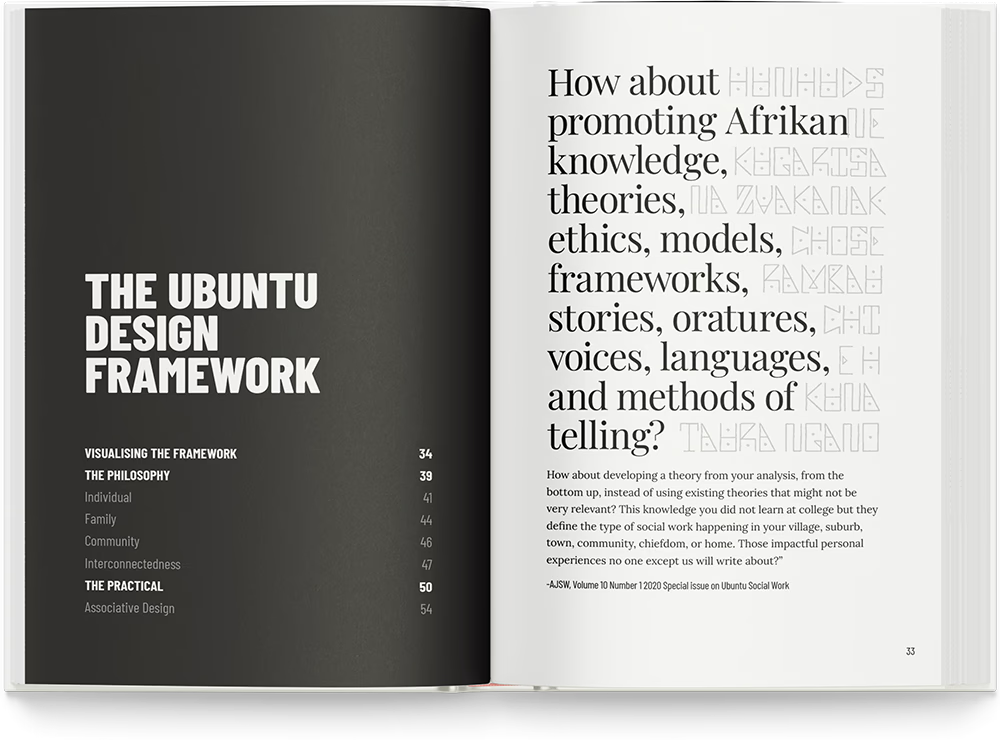
The Ubuntu Design Framework re-imagines how we design products, by mirroring how we build communities. The Ubuntu Design Framework (UDF) takes a humanist approach to product design, emphasizing that a fulfilled individual enhances the product development process. "You are what you design," and this idea extends to every level within an organization, from the individual to the team, department, and ultimately the company. The UDF's four pillars—individual, family, community, and interconnectedness—guide progression through these levels, each with its own traditions and needs. This is crucial because customers and businesses are interdependent: customers thrive when business needs are met, and businesses succeed when they meet customer needs. Product design requires balancing business outcomes with user needs, involving stakeholders, customers, and research to find mutually beneficial solutions.
The Ubuntu Design Framework re-imagines how we design products, by mirroring how we build communities. The Ubuntu Design Framework (UDF) takes a humanist approach to product design, emphasizing that a fulfilled individual enhances the product development process. "You are what you design," and this idea extends to every level within an organization, from the individual to the team, department, and ultimately the company. The UDF's four pillars—individual, family, community, and interconnectedness—guide progression through these levels, each with its own traditions and needs. This is crucial because customers and businesses are interdependent: customers thrive when business needs are met, and businesses succeed when they meet customer needs. Product design requires balancing business outcomes with user needs, involving stakeholders, customers, and research to find mutually beneficial solutions.
Project Innovation / Specification:
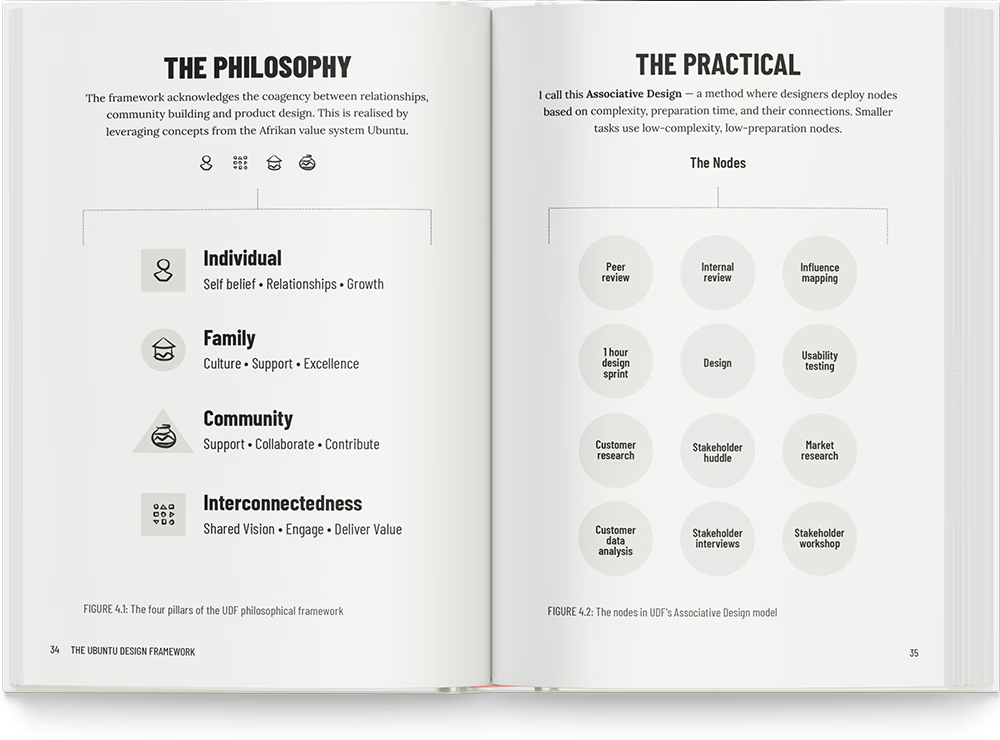
The Ubuntu Design Framework (UDF) reimagines product design by aligning how we build products with how we build communities. Rooted in the Afrikan philosophy of Ubuntu, it positions personal growth, team cohesion, and organizational alignment as core drivers of product excellence. The framework is structured around four pillars: Individual, Family, Community, and Interconnectedness. It operates across two verticals, Philosophical and Practical. The Practical vertical introduces the Associative Design Process, built on Node Complexity, Preparation Time, and Association, creating consistency without sacrificing creativity.
The Ubuntu Design Framework (UDF) reimagines product design by aligning how we build products with how we build communities. Rooted in the Afrikan philosophy of Ubuntu, it positions personal growth, team cohesion, and organizational alignment as core drivers of product excellence. The framework is structured around four pillars: Individual, Family, Community, and Interconnectedness. It operates across two verticals, Philosophical and Practical. The Practical vertical introduces the Associative Design Process, built on Node Complexity, Preparation Time, and Association, creating consistency without sacrificing creativity.
Project Sustainability Approach:
UDF embeds sustainability at a human and organizational level. It prioritizes mental well-being, relational trust, and shared purpose as foundations for long-term performance. By strengthening individuals, teams, and departments progressively, the framework builds resilient design cultures capable of sustained impact. The Associative Design Process reduces inefficiencies and undocumented workflows, ensuring continuity across projects of varying scale. Sustainable products, in this model, are the result of sustainable teams and aligned systems.
UDF embeds sustainability at a human and organizational level. It prioritizes mental well-being, relational trust, and shared purpose as foundations for long-term performance. By strengthening individuals, teams, and departments progressively, the framework builds resilient design cultures capable of sustained impact. The Associative Design Process reduces inefficiencies and undocumented workflows, ensuring continuity across projects of varying scale. Sustainable products, in this model, are the result of sustainable teams and aligned systems.
Local and Regional Impacts of the Project:
Locally and regionally, UDF contributes to a more inclusive and culturally grounded design narrative by centering Afrikan philosophy within modern product strategy. It validates indigenous knowledge systems in global innovation spaces and provides emerging designers with a structured, context-relevant model for leadership and collaboration. By encouraging organizations to design in alignment with community realities, the framework strengthens trust between businesses and customers, supporting healthier regional design ecosystems.
Locally and regionally, UDF contributes to a more inclusive and culturally grounded design narrative by centering Afrikan philosophy within modern product strategy. It validates indigenous knowledge systems in global innovation spaces and provides emerging designers with a structured, context-relevant model for leadership and collaboration. By encouraging organizations to design in alignment with community realities, the framework strengthens trust between businesses and customers, supporting healthier regional design ecosystems.

Lead Designer(s) Name(s):Batsirai Madzonga
Profile Description:
Batsirai Madzonga is a design leader with 17+ years of experience building digital products across Africa and the Middle East. With a background in Computer Science from the University of Cape Town, he started his career by launching a design agency, developing deep expertise in software, strategy, and product design. He has led design leadership in the Middle East banking industry, scaling teams, embedding design into business strategy, and building user-centered financial products at enterprise level. His focus is simple: make complex systems feel clear, useful, and human.
Batsirai Madzonga is a design leader with 17+ years of experience building digital products across Africa and the Middle East. With a background in Computer Science from the University of Cape Town, he started his career by launching a design agency, developing deep expertise in software, strategy, and product design. He has led design leadership in the Middle East banking industry, scaling teams, embedding design into business strategy, and building user-centered financial products at enterprise level. His focus is simple: make complex systems feel clear, useful, and human.