PACE Programme Book
Prize(s):
WINNER 2026 Print & Digital / Book and Magazine
Lead Designer(s) Name(s):Vian Roos
Client Name:Pan-African Creative Exchange
Photo Credit:Images used by PACE: “We respect creatives. All visuals are owned by their original artists.”
Project Location:South Africa
Design Status:Commercialized
Project Description:
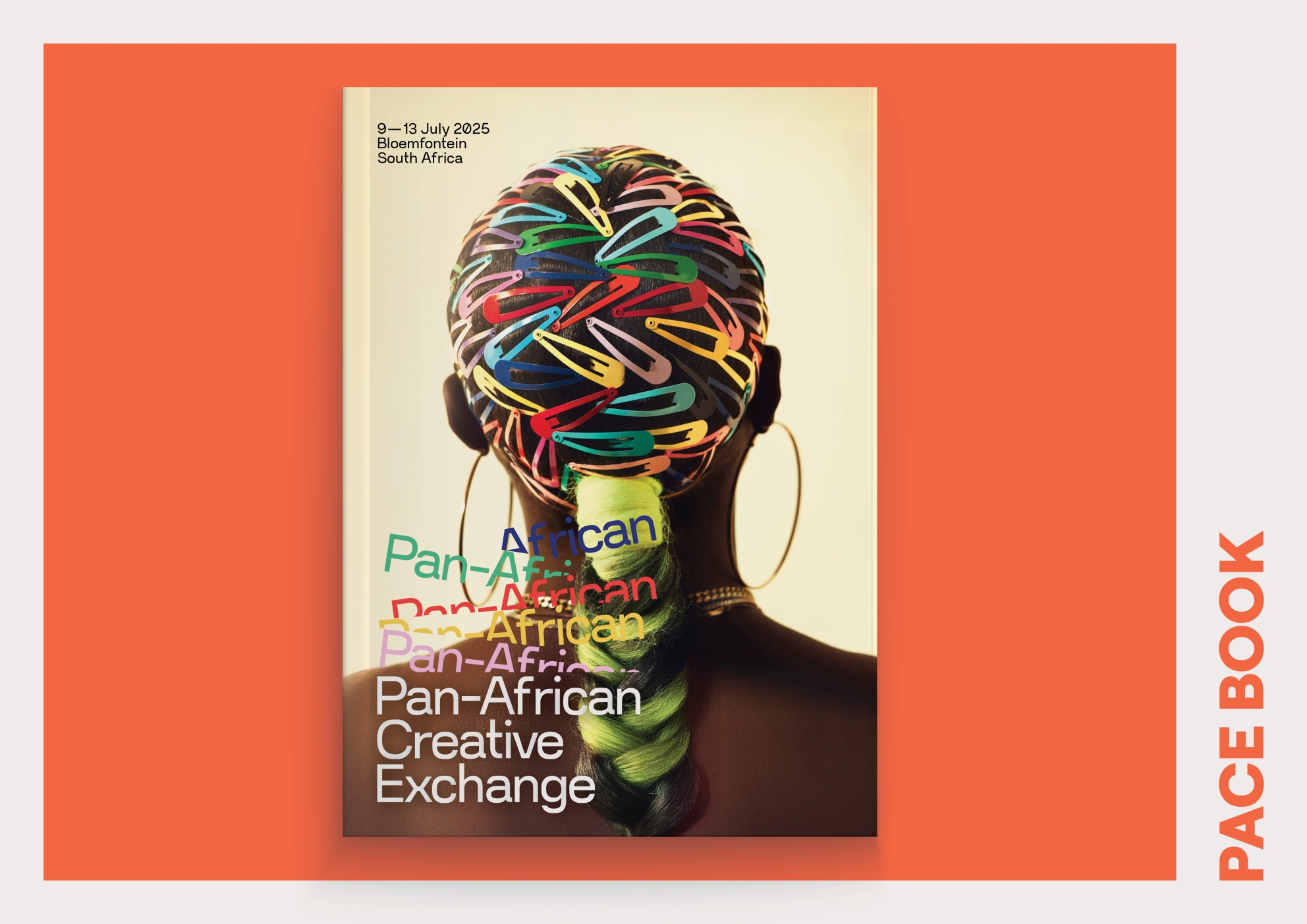
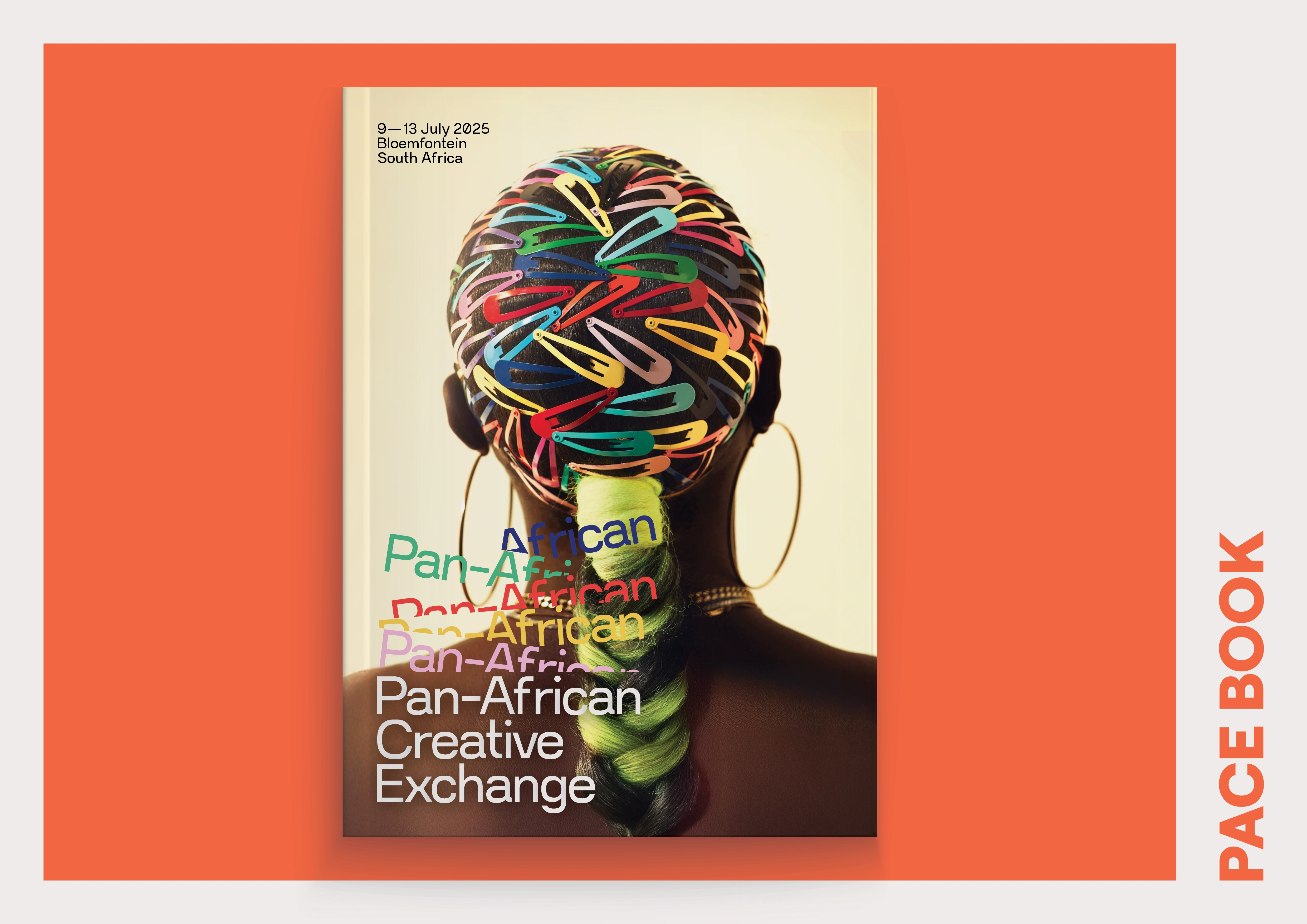
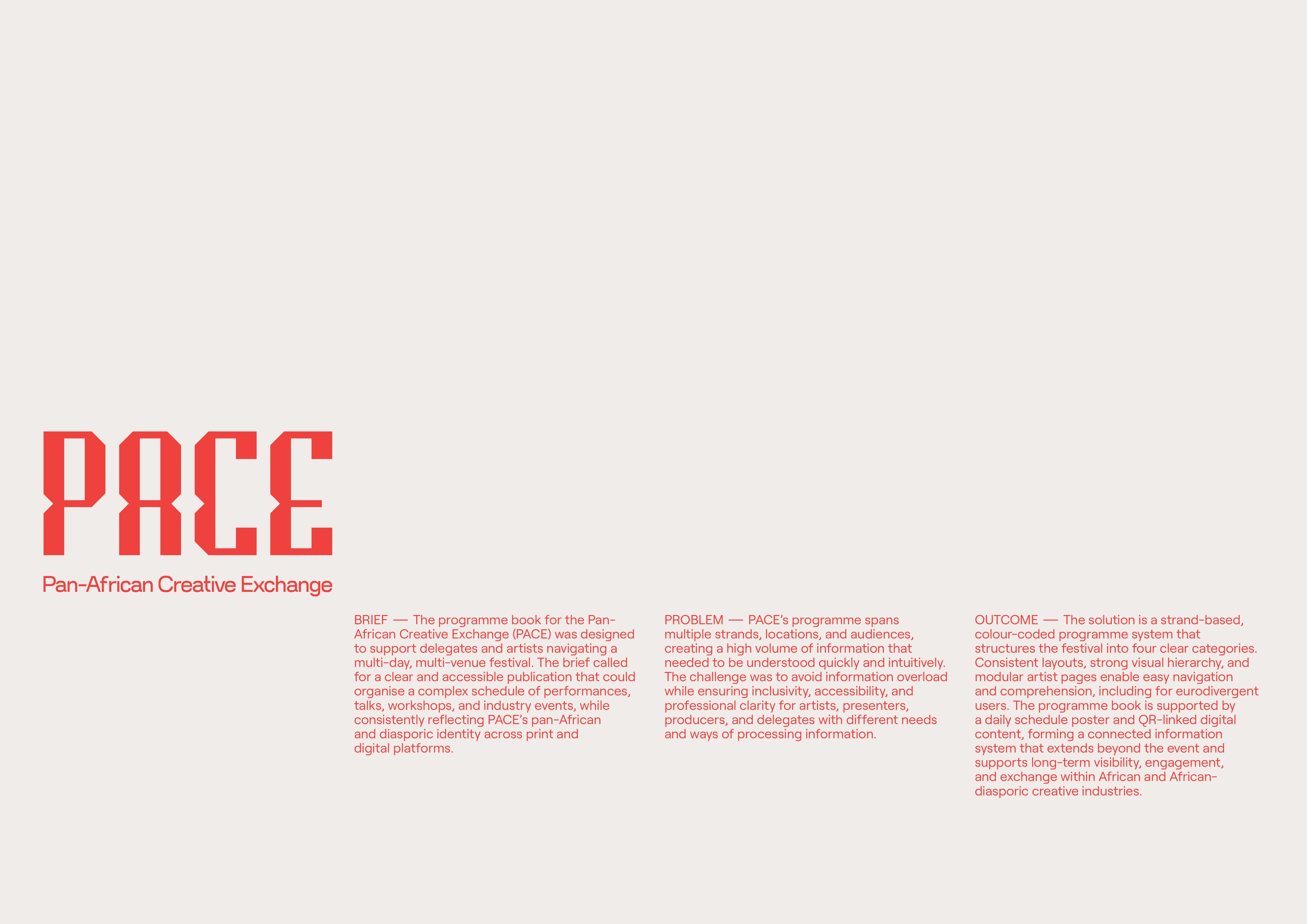
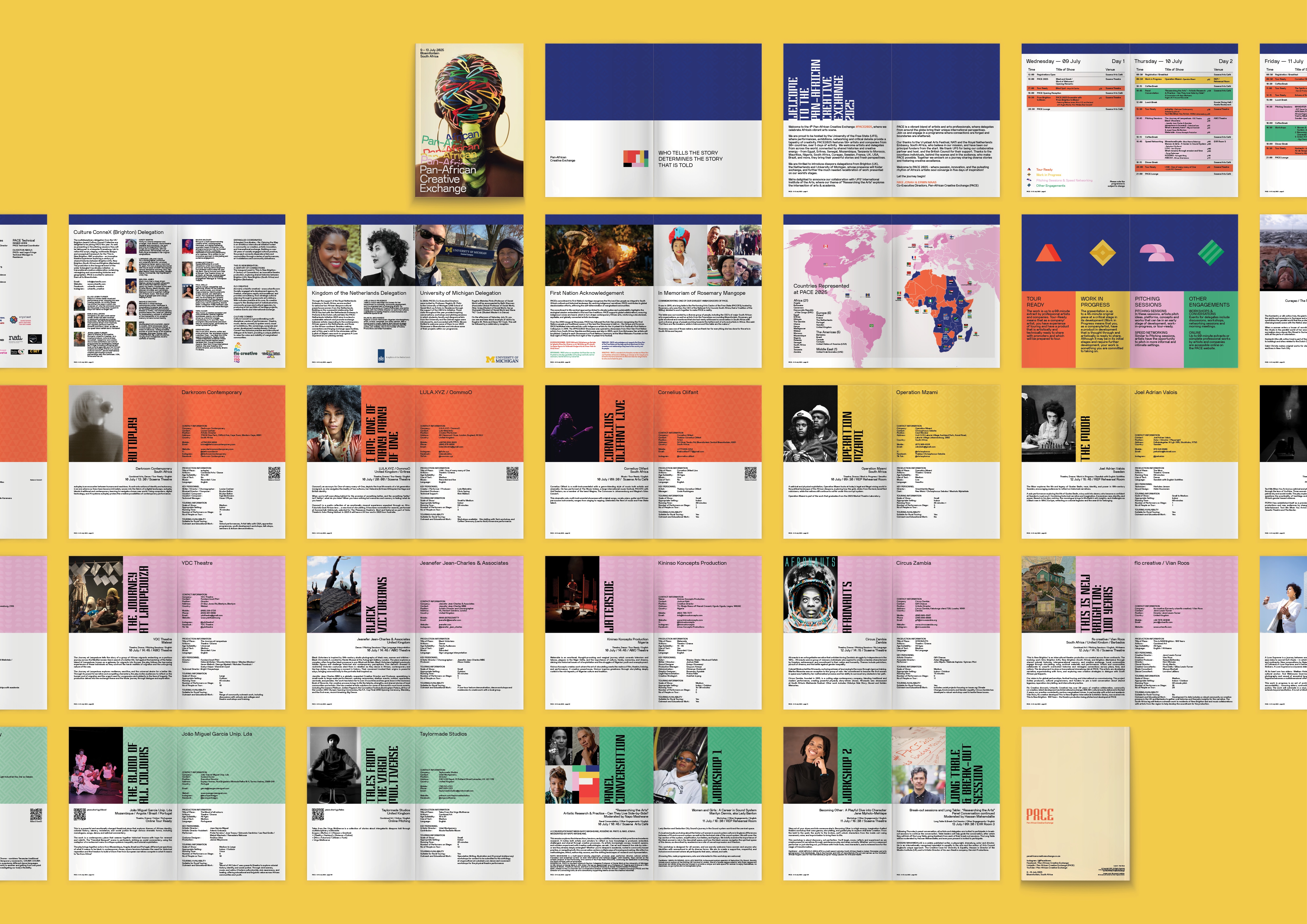
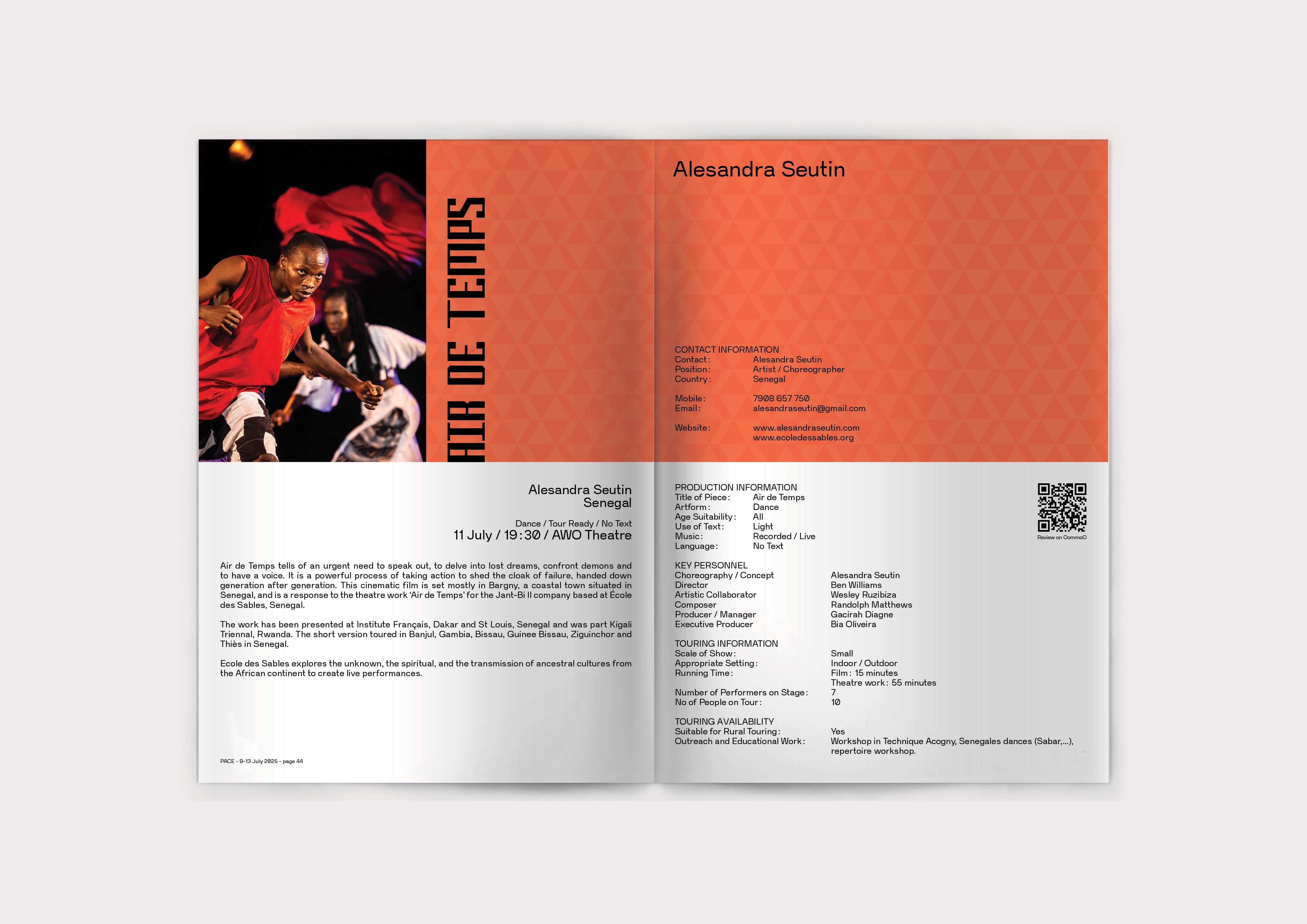
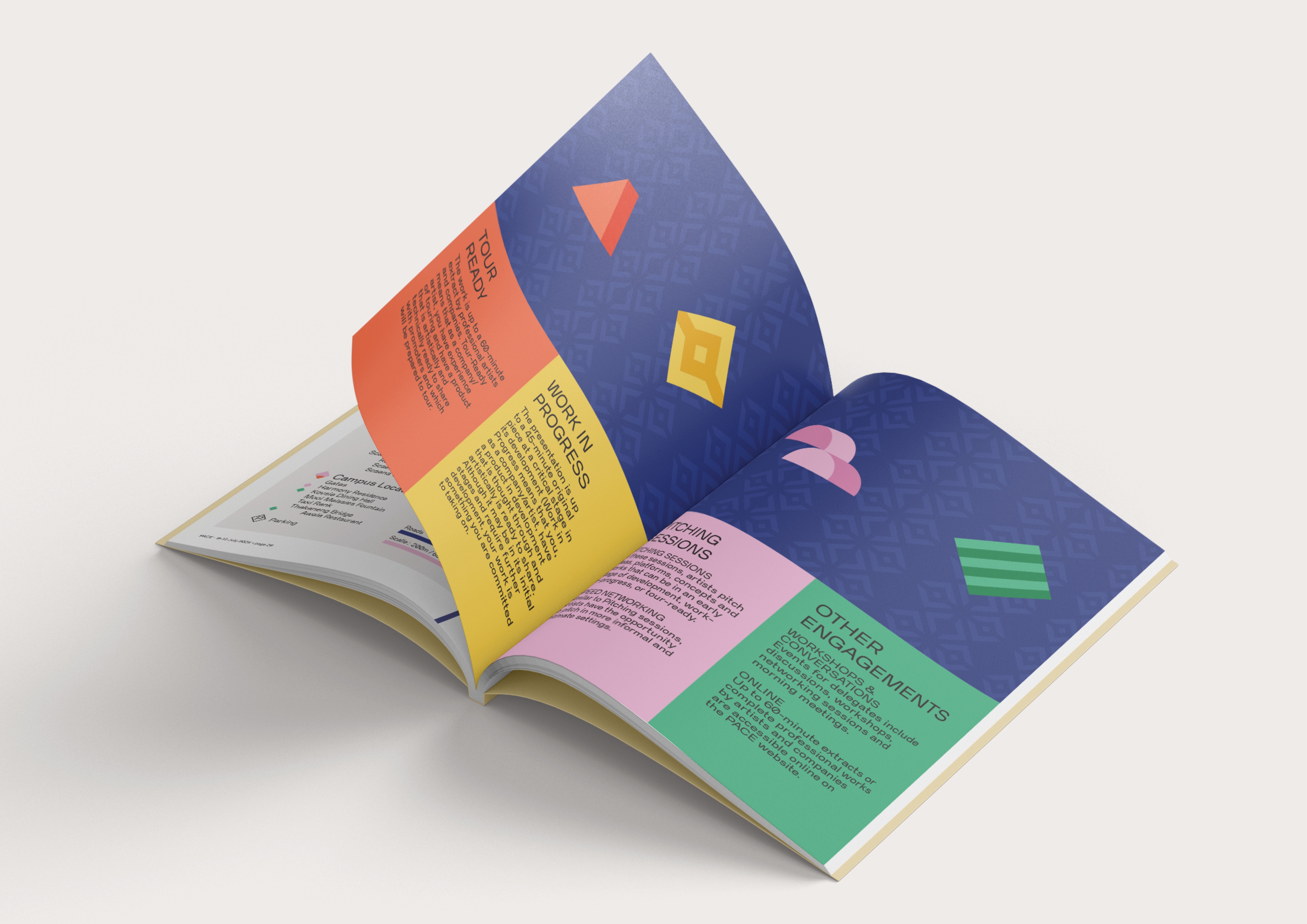
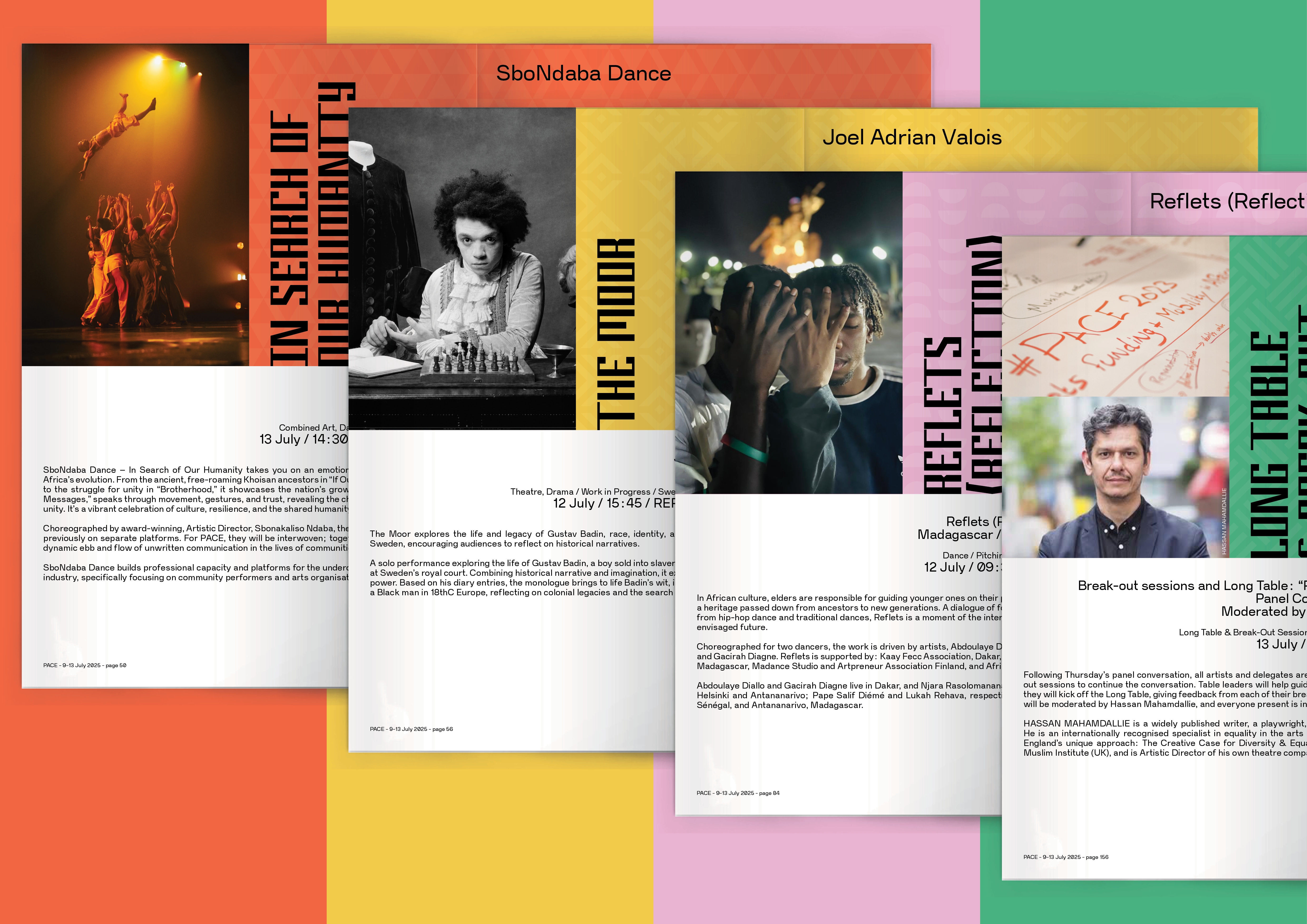
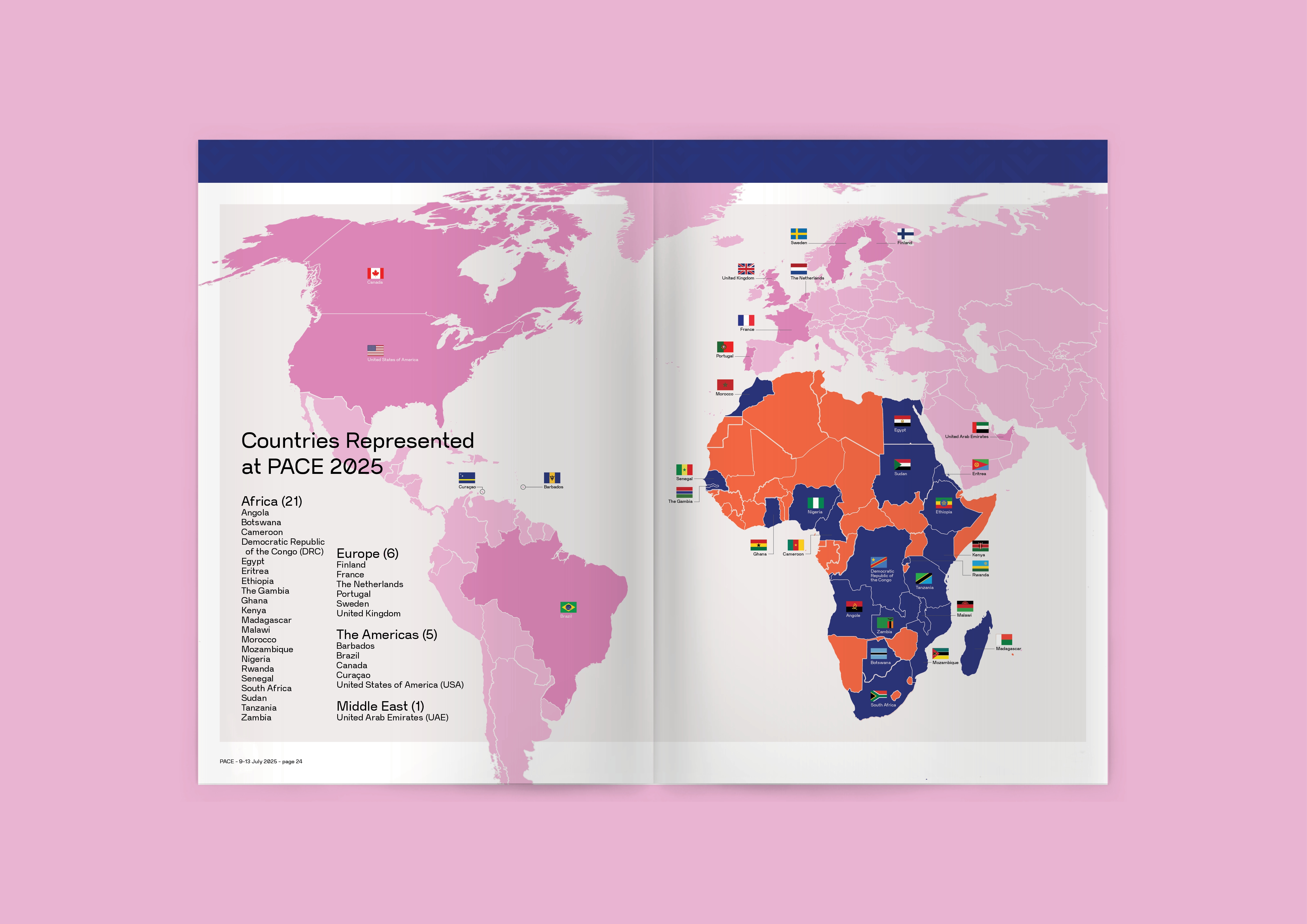
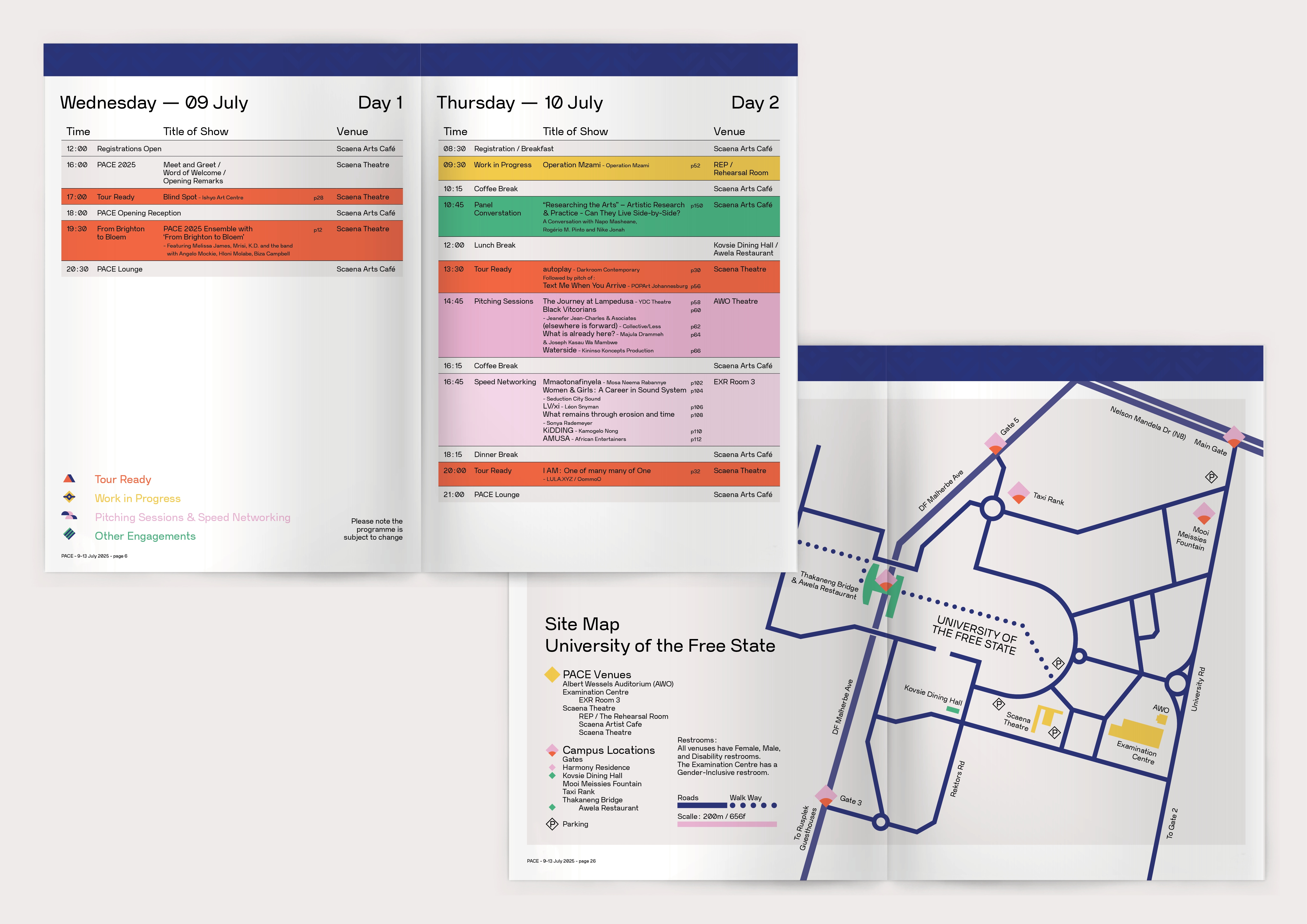
The Pan-African Creative Exchange (PACE) programme book was designed to support delegates and artists navigating a five-day, multi-venue festival of performances, talks, workshops, and industry events. With diverse audiences, the publication needed to communicate complex information clearly while embodying PACE’s pan-African and diasporic identity. PACE is structured into four programme strands: Tour Ready, Work in Progress, Pitching Sessions, and Other Engagements. Each is represented by a colour. This strand-based system is applied consistently across the programme book, overview pages, daily poster, and digital touchpoints, allowing users to quickly identify event types and plan their schedules. The book opens with essential attendee information, a world map reflecting PACE’s international footprint, and festival grounds maps. Artist pages follow a clear, repeatable structure, using strong titles, imagery, and colour to organise biographies, performance descriptions, and technical information. The result is a vibrant publication that supports navigation for creative, professional, local, and international audiences alike.
The Pan-African Creative Exchange (PACE) programme book was designed to support delegates and artists navigating a five-day, multi-venue festival of performances, talks, workshops, and industry events. With diverse audiences, the publication needed to communicate complex information clearly while embodying PACE’s pan-African and diasporic identity. PACE is structured into four programme strands: Tour Ready, Work in Progress, Pitching Sessions, and Other Engagements. Each is represented by a colour. This strand-based system is applied consistently across the programme book, overview pages, daily poster, and digital touchpoints, allowing users to quickly identify event types and plan their schedules. The book opens with essential attendee information, a world map reflecting PACE’s international footprint, and festival grounds maps. Artist pages follow a clear, repeatable structure, using strong titles, imagery, and colour to organise biographies, performance descriptions, and technical information. The result is a vibrant publication that supports navigation for creative, professional, local, and international audiences alike.
Project Innovation / Specification:
The key innovation of the programme book is its strand-based structure, which turns a dense and varied festival programme into an easy-to-use guide. Colour is used as a practical tool to differentiate between event types, allowing users quickly understand how each event fits into the overall programme. The publication was also designed with neurodivergent users in mind, reflecting PACE’s focus on inclusion and accessibility. Information hierarchy, consistent layouts, and page structures reduce cognitive overload and support different ways of processing information. Visual cues such as colour, spacing, and typographic contrast are used intentionally to aid focus and navigation. Each artist and event page follows a consistent structure, allowing different types of content to be presented clearly. This approach supports both flexibility and clarity, making the book useful for delegates. The digital programme book is supported by a printed daily programme poster that provides a quick overview of each day’s schedule. QR codes link to the website, giving access to additional information and updates.
The key innovation of the programme book is its strand-based structure, which turns a dense and varied festival programme into an easy-to-use guide. Colour is used as a practical tool to differentiate between event types, allowing users quickly understand how each event fits into the overall programme. The publication was also designed with neurodivergent users in mind, reflecting PACE’s focus on inclusion and accessibility. Information hierarchy, consistent layouts, and page structures reduce cognitive overload and support different ways of processing information. Visual cues such as colour, spacing, and typographic contrast are used intentionally to aid focus and navigation. Each artist and event page follows a consistent structure, allowing different types of content to be presented clearly. This approach supports both flexibility and clarity, making the book useful for delegates. The digital programme book is supported by a printed daily programme poster that provides a quick overview of each day’s schedule. QR codes link to the website, giving access to additional information and updates.
Project Sustainability Approach:
Sustainability in the PACE programme book is addressed through editorial ease of use and cultural impact. The programme book functions as a centralised information hub that reduces redundancy while accommodating user needs throughout the event. Digital integration extends the life of the publication beyond the festival itself. QR codes link readers to online content, allowing for programme updates and expanded artist information without the need for reprinting. At a cultural level, the project supports sustainability by enhancing the long-term visibility, circulation, and professional positioning of African and African-diasporic creative practices.
Sustainability in the PACE programme book is addressed through editorial ease of use and cultural impact. The programme book functions as a centralised information hub that reduces redundancy while accommodating user needs throughout the event. Digital integration extends the life of the publication beyond the festival itself. QR codes link readers to online content, allowing for programme updates and expanded artist information without the need for reprinting. At a cultural level, the project supports sustainability by enhancing the long-term visibility, circulation, and professional positioning of African and African-diasporic creative practices.
Local and Regional Impacts of the Project:
The programme book functions as a lasting artefact for PACE during and after the event, helping to increase the visibility and accessibility of African and African-diasporic creative practices within the Free State and beyond. By presenting artists and events within a clear and professional publication, it supports engagement between local and international delegates, fostering opportunities for exchange and future development.
The programme book functions as a lasting artefact for PACE during and after the event, helping to increase the visibility and accessibility of African and African-diasporic creative practices within the Free State and beyond. By presenting artists and events within a clear and professional publication, it supports engagement between local and international delegates, fostering opportunities for exchange and future development.

Lead Designer(s) Name(s):Vian Roos
Profile Description:
I am a South African visual designer and lecturer who explores African narratives, identity, and contemporary visual culture. My work focuses on design research, branding, and visual storytelling, challenging design frameworks and foregrounding African aesthetics and lived experiences. Through academic research, teaching, and practice, I aim to contribute to the shaping of how African design thinking is defined, communicated, and positioned.
I am a South African visual designer and lecturer who explores African narratives, identity, and contemporary visual culture. My work focuses on design research, branding, and visual storytelling, challenging design frameworks and foregrounding African aesthetics and lived experiences. Through academic research, teaching, and practice, I aim to contribute to the shaping of how African design thinking is defined, communicated, and positioned.
Environmental Practices:
My designs prioritise sustainable thinking through responsible material choices. I integrate sustainability into teaching and research, encouraging students to consider lifecycle design, ethical production, and cultural sustainability. I advocate for design solutions rooted in local contexts that balance environmental responsibility with social and cultural impact.
My designs prioritise sustainable thinking through responsible material choices. I integrate sustainability into teaching and research, encouraging students to consider lifecycle design, ethical production, and cultural sustainability. I advocate for design solutions rooted in local contexts that balance environmental responsibility with social and cultural impact.
Previous Awards Won:
Merit Award Winner, Sasol New Signatures Art Competition – 2025 Finalist, Sasol New Signatures Art Competition – 2024, & 2023 Recognised for Media, Mail & Guardian’s 200 Young South Africans – 2018 Top honours student, The Design School Southern Africa – 2016 Designer of the Year, Caxton Magazines Excellence Awards – 2014
Merit Award Winner, Sasol New Signatures Art Competition – 2025 Finalist, Sasol New Signatures Art Competition – 2024, & 2023 Recognised for Media, Mail & Guardian’s 200 Young South Africans – 2018 Top honours student, The Design School Southern Africa – 2016 Designer of the Year, Caxton Magazines Excellence Awards – 2014