Stitched with Cheer
Prize(s):
WINNER 2026 Multimedia Design / Brand Identity
Company Name:Dentsu Creative Kenya & South Africa
Lead Designer(s) Name(s):Alwine Nel, Josie Gailey, Caroline Michie, Brandt Botes
Design Team / Other designer(s):Cute Circuit
Other Contributor(s):Maxwell Ngari, Michelle Marais, Michael Zylstra, Merle Bennet, Joel Rao, Rukiya Ramad, Olive Wangai
Client Name:Tusker Lager
Photo Credit:Cute Circuit
Project Location:Kenya
Design Status:Commercialized
Video URL:View
Project Description:
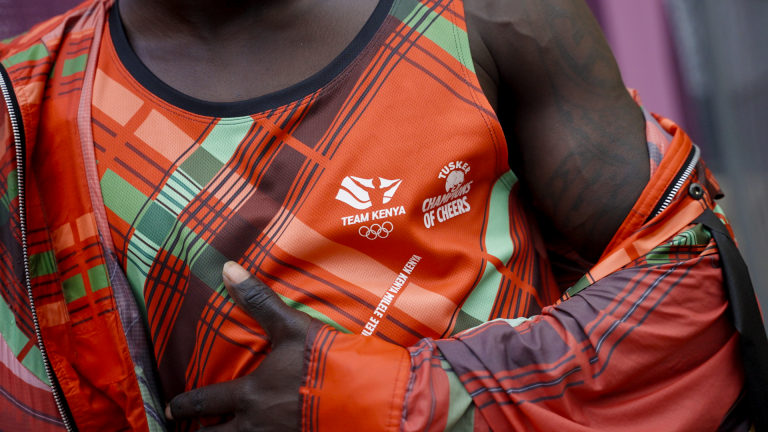
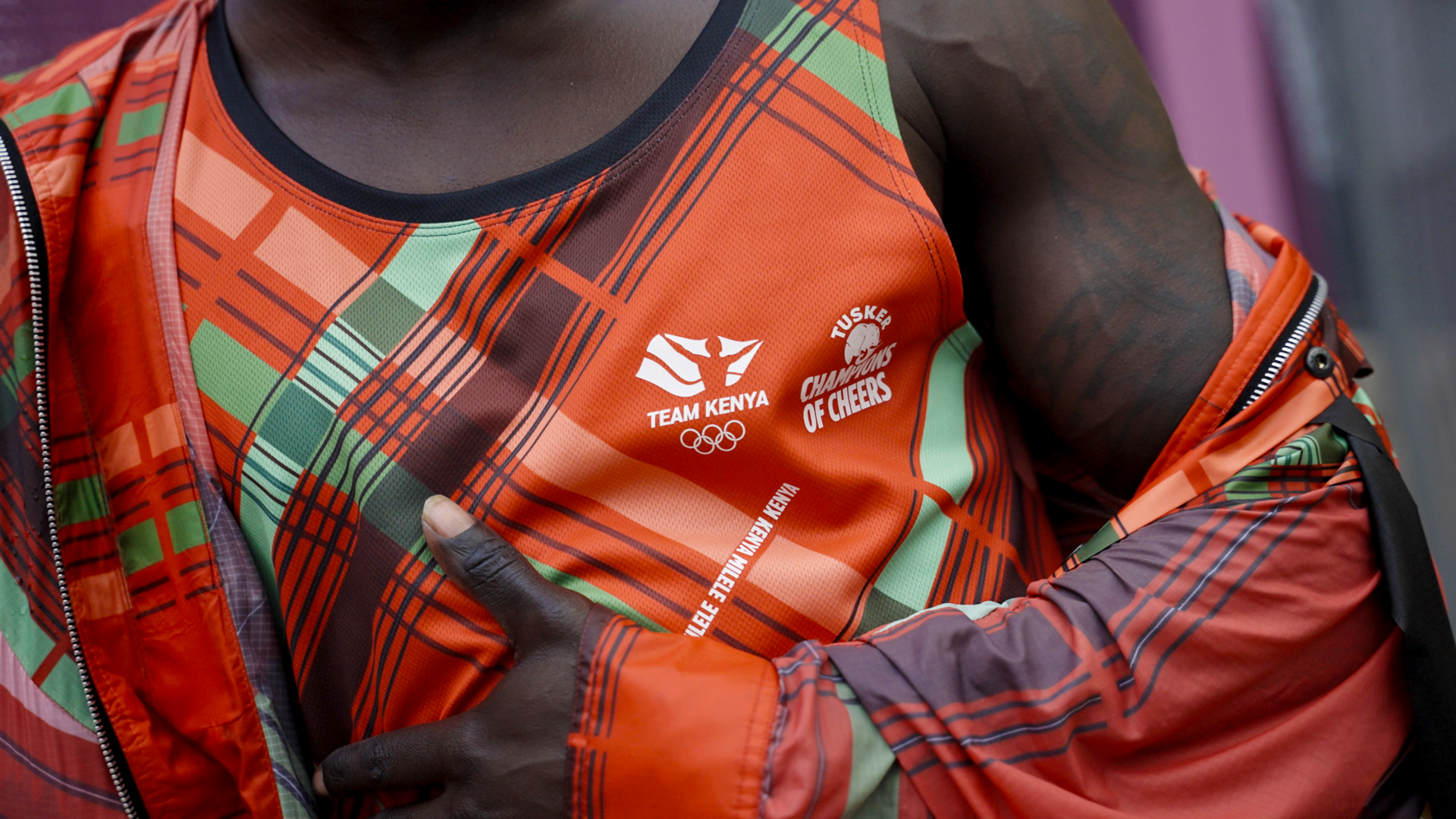
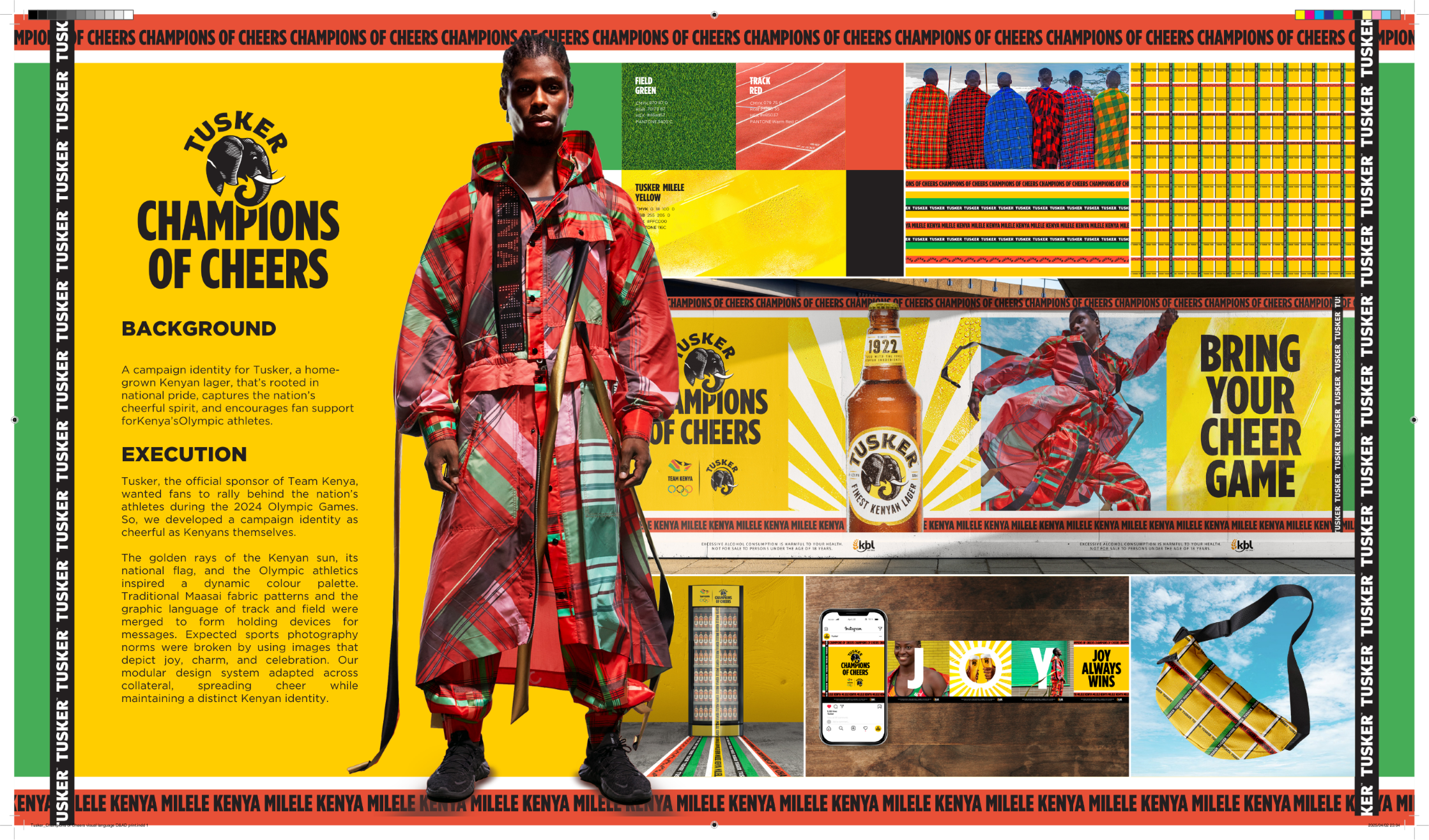
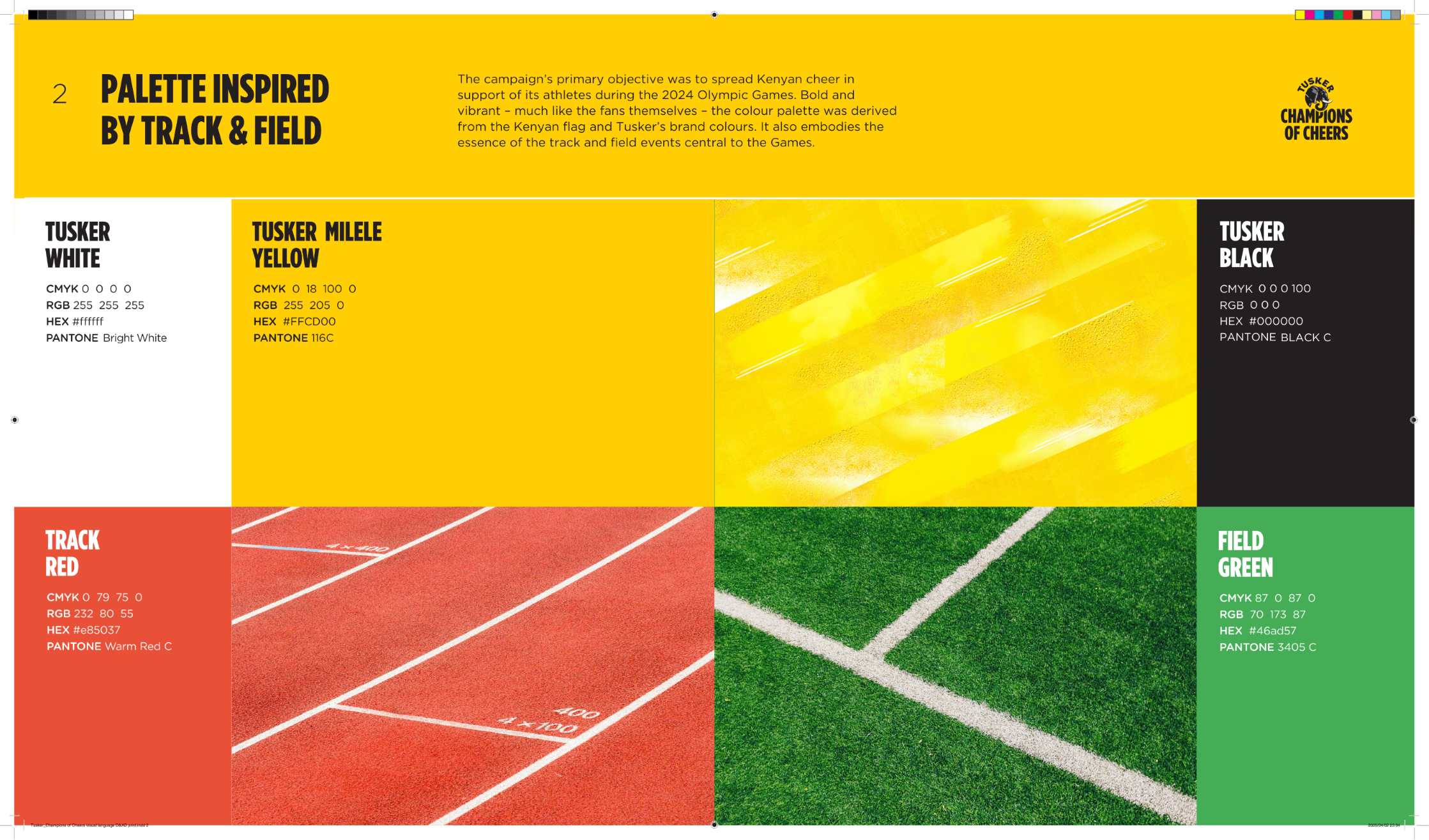
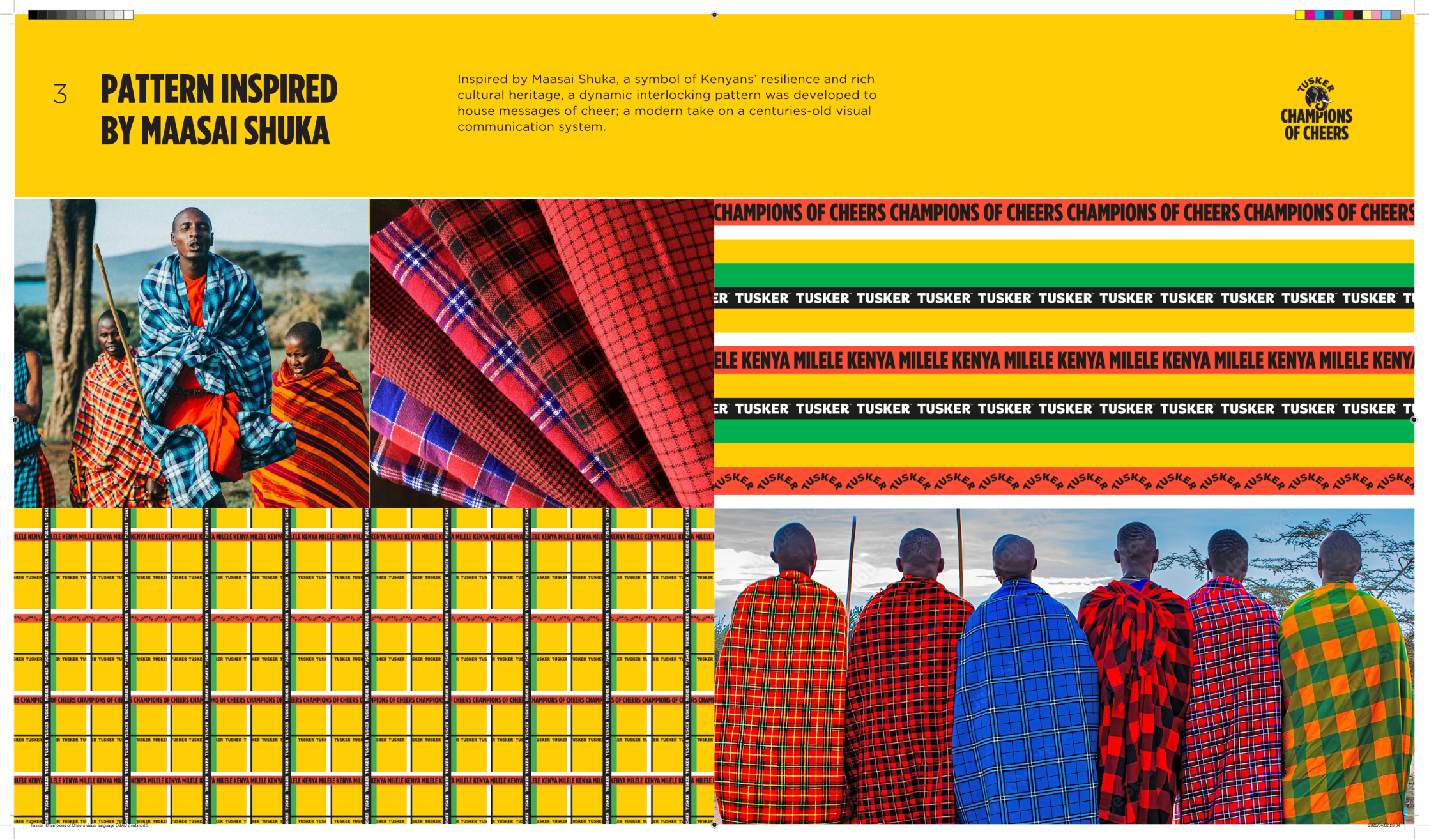
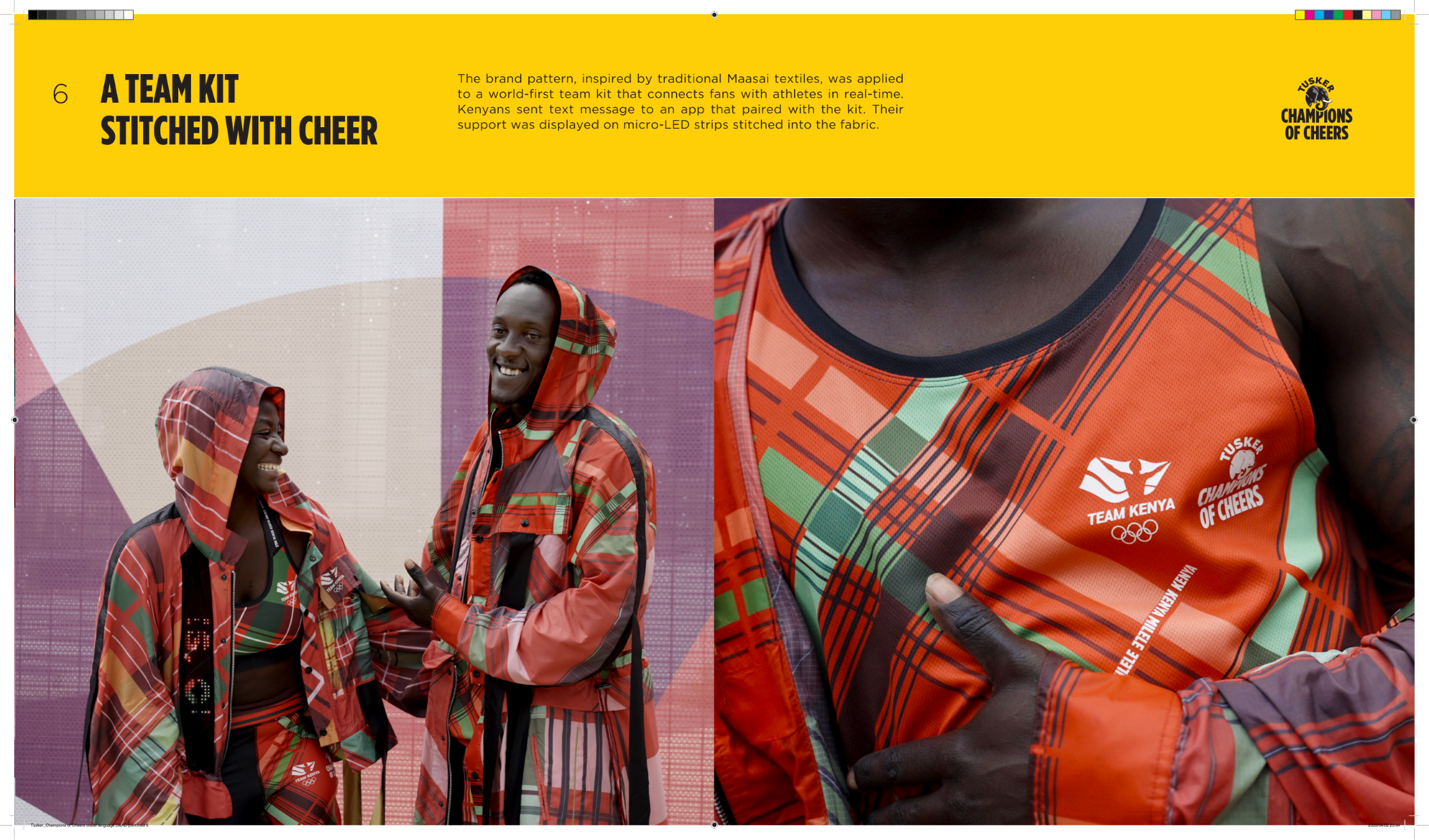
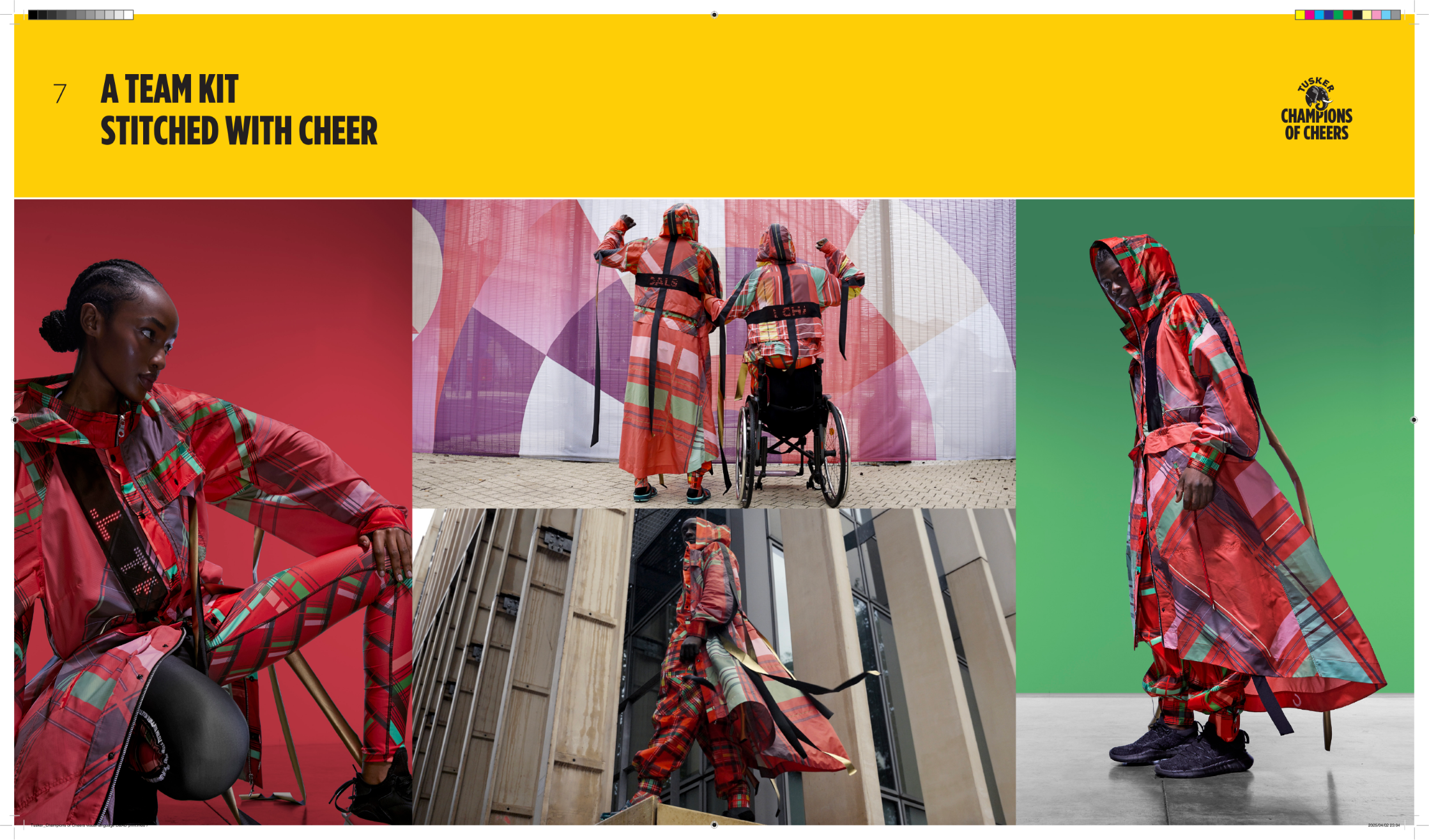
Stitched with Cheer is a culturally rooted campaign identity for Tusker, Kenya’s national beer and official sponsor of Team Kenya. Created in a moment when Paralympians received just 1% of national media attention, the project sought to restore pride and mobilise meaningful fan support. Inspired by Maasai shuka textiles and the graphic language of athletics, the identity fused heritage patterns with dynamic track forms to create a modular system for messages and celebration. Imagery rejected high-performance tropes in favour of joy, unity and national charm. The system extended into a bespoke Paralympic kit that live-streamed real-time fan messages via accessible USSD technology, transforming passive spectators into active participants. More than a campaign, it became a visible act of solidarity — stitching national pride directly into the fabric of sport.
Stitched with Cheer is a culturally rooted campaign identity for Tusker, Kenya’s national beer and official sponsor of Team Kenya. Created in a moment when Paralympians received just 1% of national media attention, the project sought to restore pride and mobilise meaningful fan support. Inspired by Maasai shuka textiles and the graphic language of athletics, the identity fused heritage patterns with dynamic track forms to create a modular system for messages and celebration. Imagery rejected high-performance tropes in favour of joy, unity and national charm. The system extended into a bespoke Paralympic kit that live-streamed real-time fan messages via accessible USSD technology, transforming passive spectators into active participants. More than a campaign, it became a visible act of solidarity — stitching national pride directly into the fabric of sport.
Project Innovation / Specification:
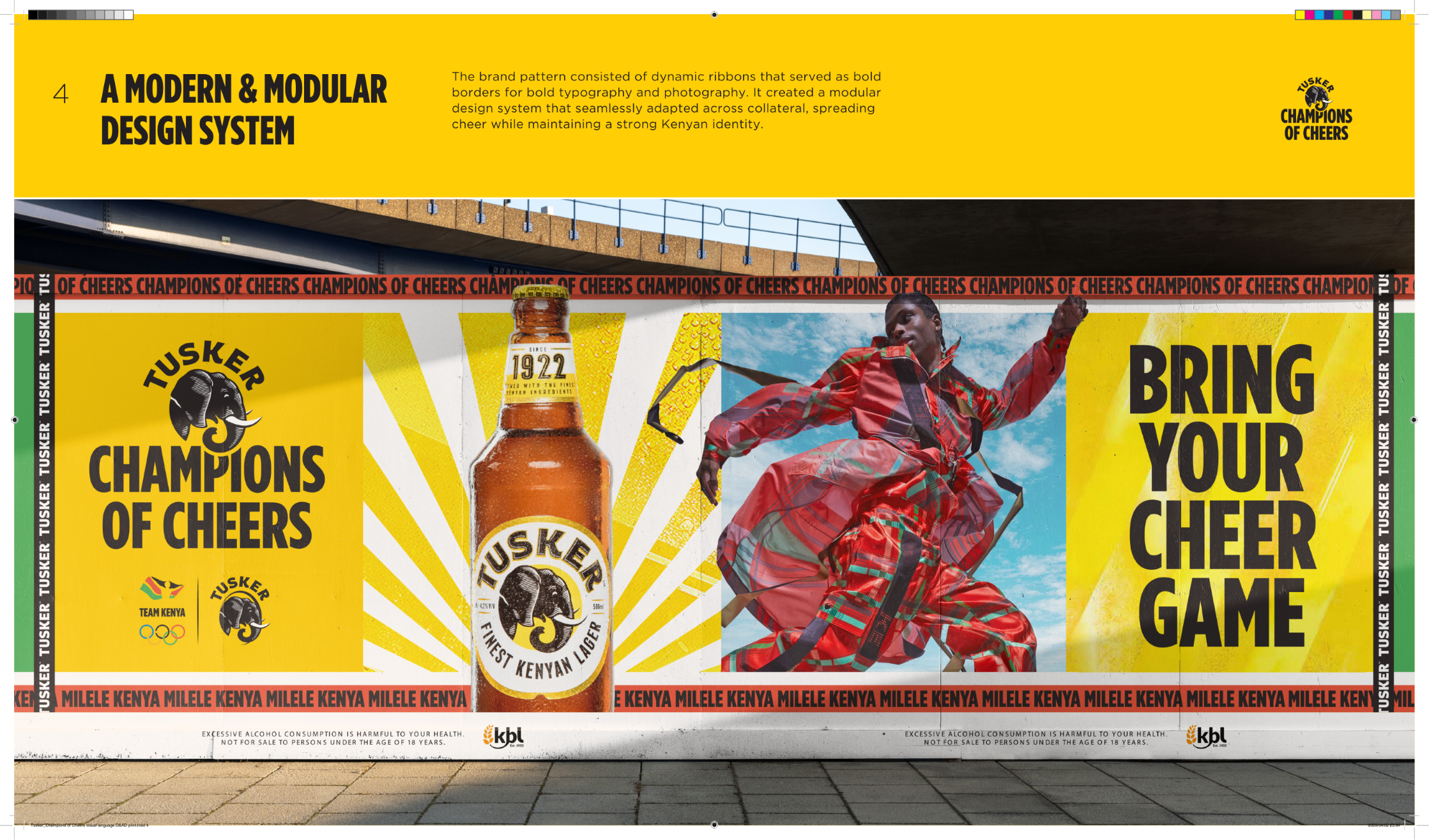
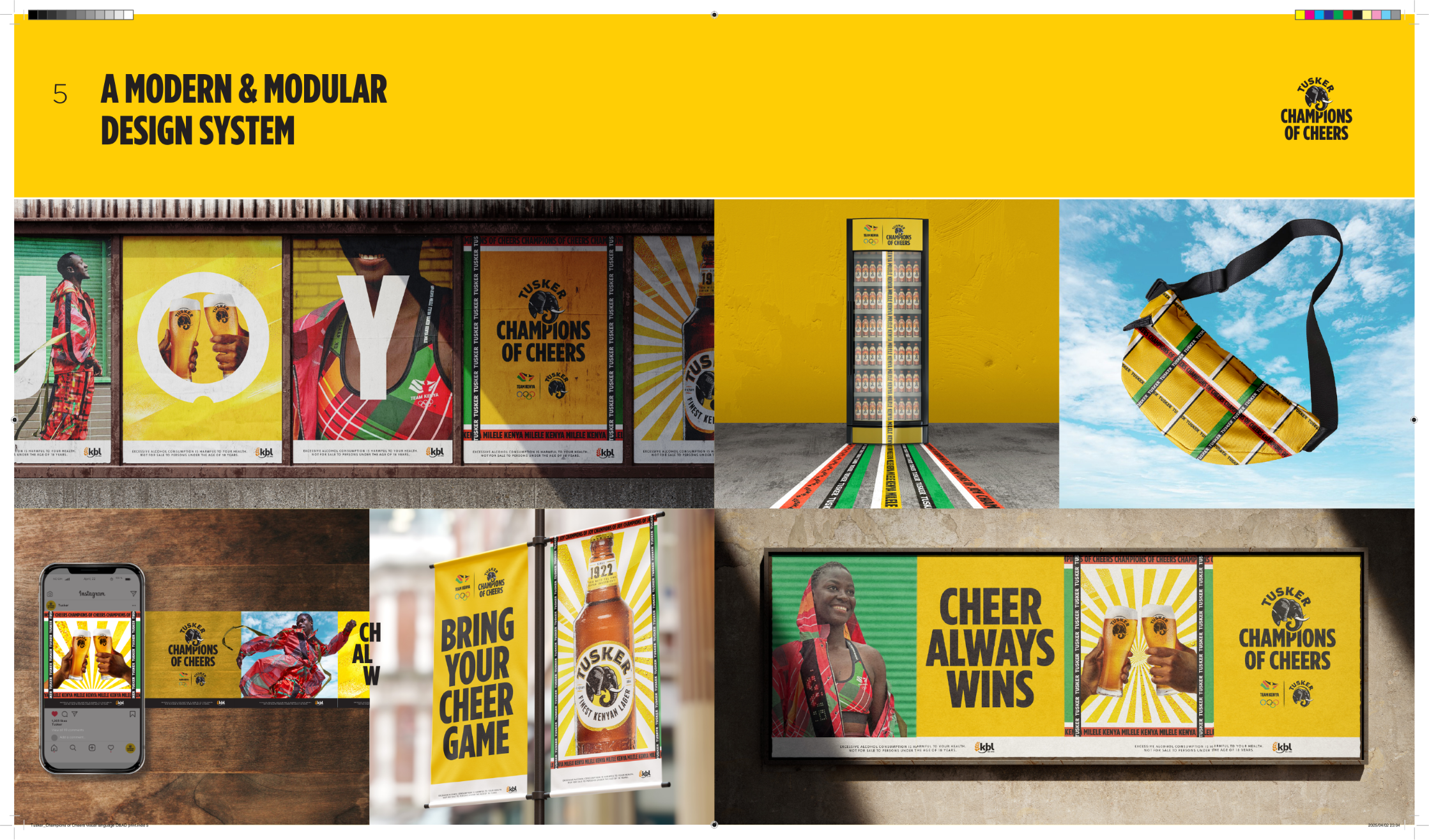
The innovation lay in merging cultural heritage, inclusive technology and modular design thinking. Traditional Maasai checkered textiles — historically used as visual communication — were reinterpreted as structured holding devices for headlines and fan messages. These were fused with the linear language of athletics tracks to form a scalable identity system adaptable across retail, broadcast, OOH and digital. The hero execution extended the system into a bespoke Paralympic kit embedded with micro-LED strips, transforming the garment into a live media surface. Fans sent real-time messages via USSD — a ubiquitous, low-barrier mobile platform aligned with Kenyan behaviour. By turning clothing into communication and sponsorship into solidarity, the work redefined how national pride can be designed, activated and experienced.
The innovation lay in merging cultural heritage, inclusive technology and modular design thinking. Traditional Maasai checkered textiles — historically used as visual communication — were reinterpreted as structured holding devices for headlines and fan messages. These were fused with the linear language of athletics tracks to form a scalable identity system adaptable across retail, broadcast, OOH and digital. The hero execution extended the system into a bespoke Paralympic kit embedded with micro-LED strips, transforming the garment into a live media surface. Fans sent real-time messages via USSD — a ubiquitous, low-barrier mobile platform aligned with Kenyan behaviour. By turning clothing into communication and sponsorship into solidarity, the work redefined how national pride can be designed, activated and experienced.
Project Sustainability Approach:
Sustainability was addressed through both bespoke craftsmanship and systemic efficiency. While the Paralympic kit was custom-engineered, the broader identity was built as a modular design system, reducing repetitive asset production and minimising material redundancy across touchpoints. Final garments and textiles were produced in collaboration with local manufacturers and weavers, supporting Kenyan craftsmanship and keeping economic value within regional supply chains. Local production reduced transport impact while reinforcing cultural authenticity. The use of USSD — a low-data, widely accessible technology — ensured inclusive participation without requiring high-bandwidth infrastructure. By rooting the work in enduring cultural symbolism rather than short-term trends, the system was designed for longevity beyond a single event — balancing innovation, economic sustainability and long-term brand equity.
Sustainability was addressed through both bespoke craftsmanship and systemic efficiency. While the Paralympic kit was custom-engineered, the broader identity was built as a modular design system, reducing repetitive asset production and minimising material redundancy across touchpoints. Final garments and textiles were produced in collaboration with local manufacturers and weavers, supporting Kenyan craftsmanship and keeping economic value within regional supply chains. Local production reduced transport impact while reinforcing cultural authenticity. The use of USSD — a low-data, widely accessible technology — ensured inclusive participation without requiring high-bandwidth infrastructure. By rooting the work in enduring cultural symbolism rather than short-term trends, the system was designed for longevity beyond a single event — balancing innovation, economic sustainability and long-term brand equity.
Local and Regional Impacts of the Project:
The project restored national pride at a critical moment, responding to public dissatisfaction with Olympic representation and the marginalisation of Paralympians. It generated over 4,000 fan messages, $1.2M in earned media and a 1100% uplift in brand engagement — while contributing to increased media coverage for Paralympic sport. By elevating Maasai visual language within a contemporary activation, the work demonstrated how African brands can lead global conversations through culturally grounded, technologically progressive design.
The project restored national pride at a critical moment, responding to public dissatisfaction with Olympic representation and the marginalisation of Paralympians. It generated over 4,000 fan messages, $1.2M in earned media and a 1100% uplift in brand engagement — while contributing to increased media coverage for Paralympic sport. By elevating Maasai visual language within a contemporary activation, the work demonstrated how African brands can lead global conversations through culturally grounded, technologically progressive design.