Passive Cooling in African Architecture: Courtyards, Shade and Ventilation
In Rwanda and Chad, two projects recognised by the Africa International Design Awards show how designing for thermal comfort can help create welcoming spaces for learning and community life.
At the Komera Leadership Center in Rwanda, gaps between timber ceiling boards help warm air escape. In N’Djamena, Chad, Afrostudio’s proposal for the Bet Al Nadja association centres on a patio where people could gather, with roof overhangs designed to provide shade.
Komera Leadership Center makes room for learning and gathering
Designed by BE_Design, the completed Komera Leadership Centern Rwinkwavu, Rwanda, offers health, education and mentorship programmes for young women. It also hosts family initiatives and community activities.
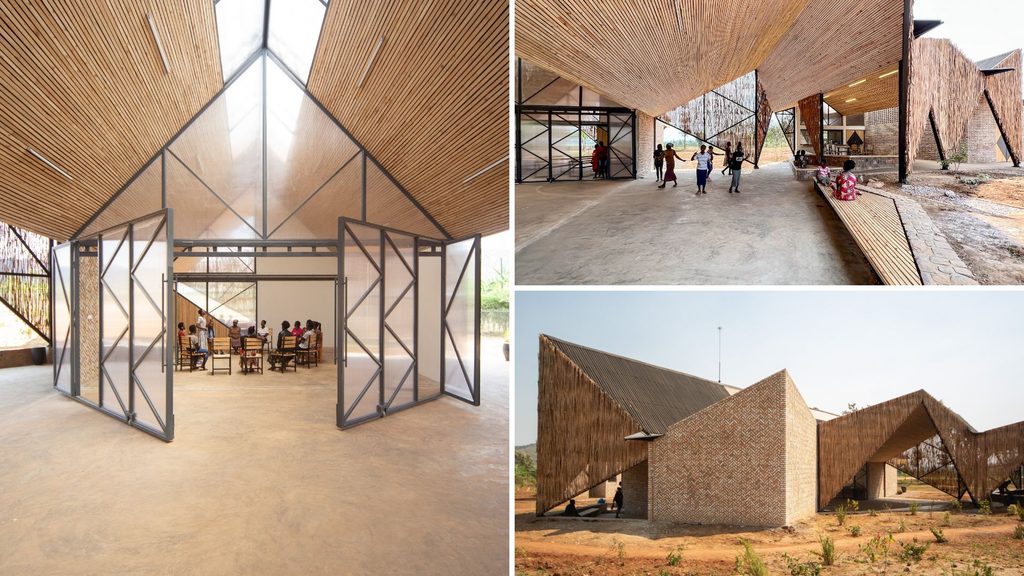
Locally milled pine boards form a ceiling with gaps that let warm air rise into the roof cavity and escape through vents along the ridge. The recycled-cellulose roofing helps limit heat from the sun.
Local craft also shapes the building’s appearance. Its forms and brick patterns draw on the region’s Imigongo art, while the woven eucalyptus screens echo the shape of the Agaseke peace basket. The references give the centre a character rooted in the community it serves.
Bet Al Nadja proposes a sheltered place for community
In N’Djamena, Chad, Afrostudio’s concept for the Bet Al Nadja association headquarters takes inspiration from the surrounding neighbourhood and the symbolic “Bet” house. The central patio would give people a place to meet and help air move through the building.
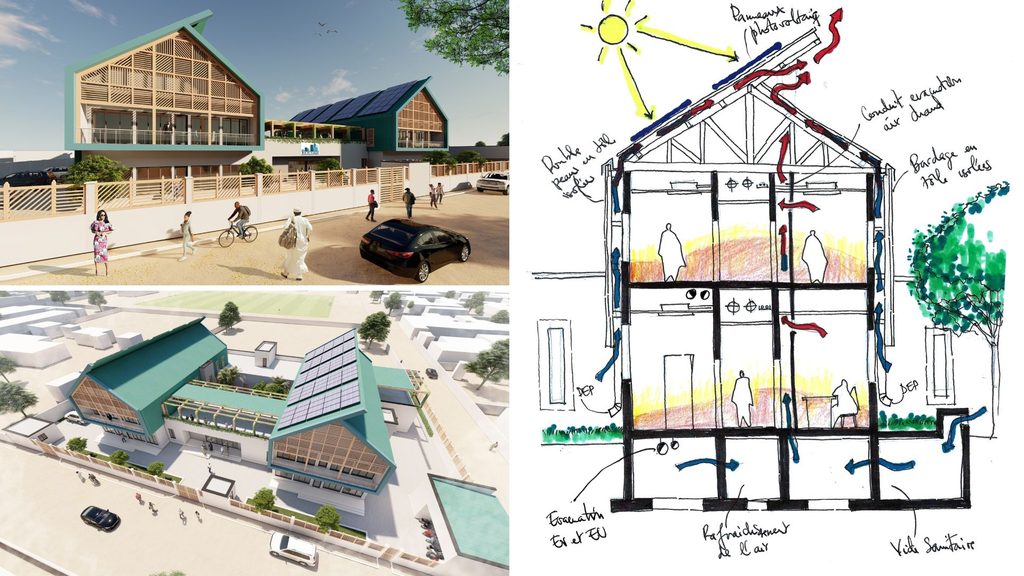
Roof overhangs would shade parts of the building from direct sun. Ventilated façades and carefully placed openings would help air circulate and bring daylight inside.
In Rwinkwavu, the completed centre makes ventilation part of the rooms where learning and mentorship take place. In N’Djamena, the proposed patio brings airflow and gathering into the same space. Both projects show how passive cooling can be designed around the ways people use a building.