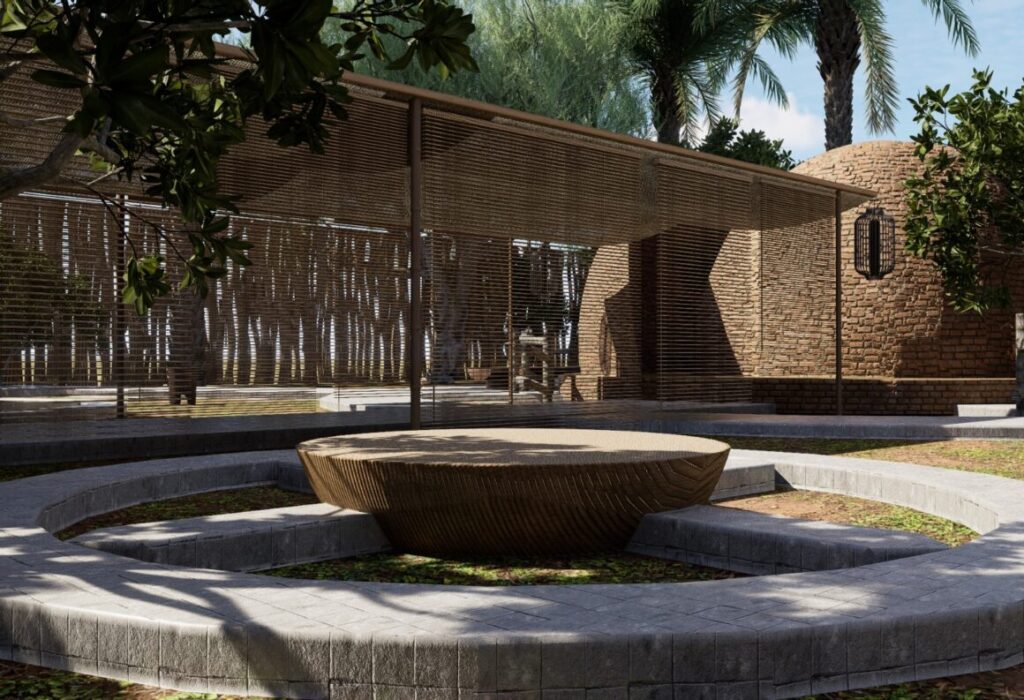
Reimagining Heritage Through Contemporary Architecture, interview of the students behind Ogoun – Goddess of Iron and Courage.
OGOUN – Goddess of Iron and Courage is a concept for a Vodun temple in Benin developed by a student from Africa Design School in Cotonou, François Abatan. Produced alongside Sanny Axelle and Gnimadi Carol, under Professor Exaucé Koutempa, the project was recognised at the inaugural Africa International Design Awards, where it received the “Emerging Architect of the Year 2026” award and won the “Religious & Spiritual Building Architecture” category.
We spoke with the designers about their creative journey, the cultural significance behind the project, and their vision for the future of African architecture and spatial design.
As student designers, what first drew you towards architecture and spatial design? Tell us a bit about your background.
“We have always been fascinated by the way spaces influence people’s experiences, emotions, and behaviours. Growing up in Benin, we became increasingly aware of the richness of our cultural heritage and the potential of design to preserve and reinterpret it for contemporary society. Our academic journey in design has allowed us to explore how creativity, functionality, and cultural identity can come together to create meaningful spaces.”
What inspired you to create a contemporary temple dedicated to Ogoun, and why did this specific subject feel important to explore?
“This project began as an academic exercise focused on exploring Benin’s cultural and spiritual heritage through architecture. As part of our research, we visited several traditional worship spaces in Ouidah to better understand their spatial organisation, symbolism, and role within the community.
Among the many Vodun divinities we studied, we chose Ogoun because of the powerful values associated with him: strength, protection, craftsmanship, and transformation. These themes offered rich architectural possibilities and resonated strongly with our design interests. Through this project, we wanted to explore how a traditional sacred space could be reinterpreted in a contemporary way while preserving its cultural and spiritual essence. The project became an opportunity to bridge heritage and modern architecture.”
What helped you express the spiritual and cultural meaning of Ogoun through architecture?
“The project was informed by field research conducted in Ouidah, where we observed traditional Vodun worship spaces and learned about their rituals, symbolism, and relationship to the community. This experience provided valuable insights into how spirituality is expressed through space.
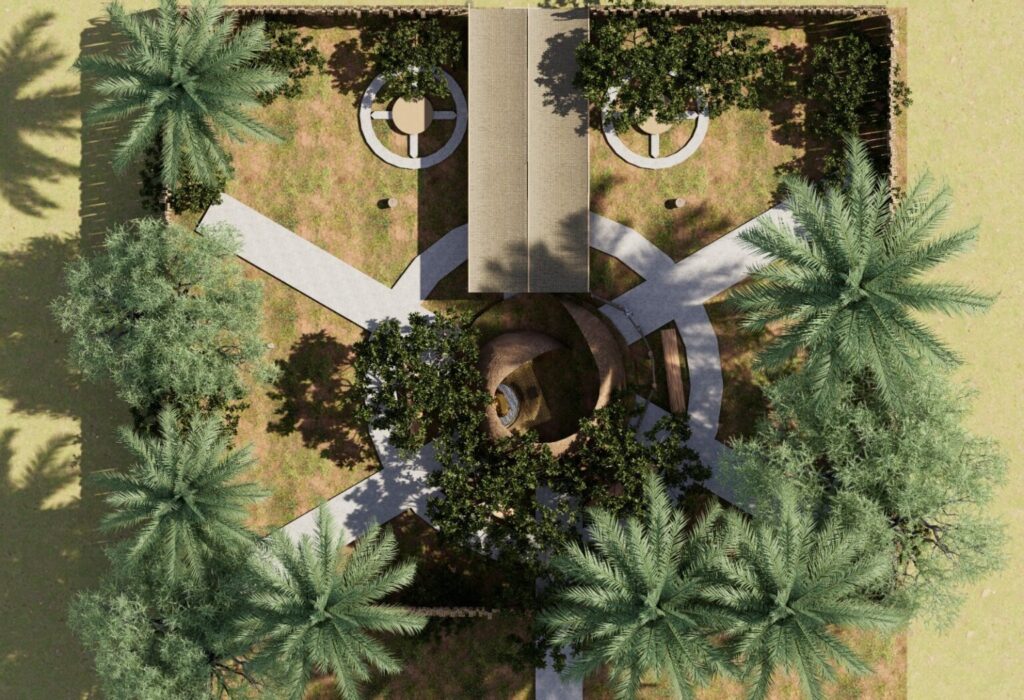
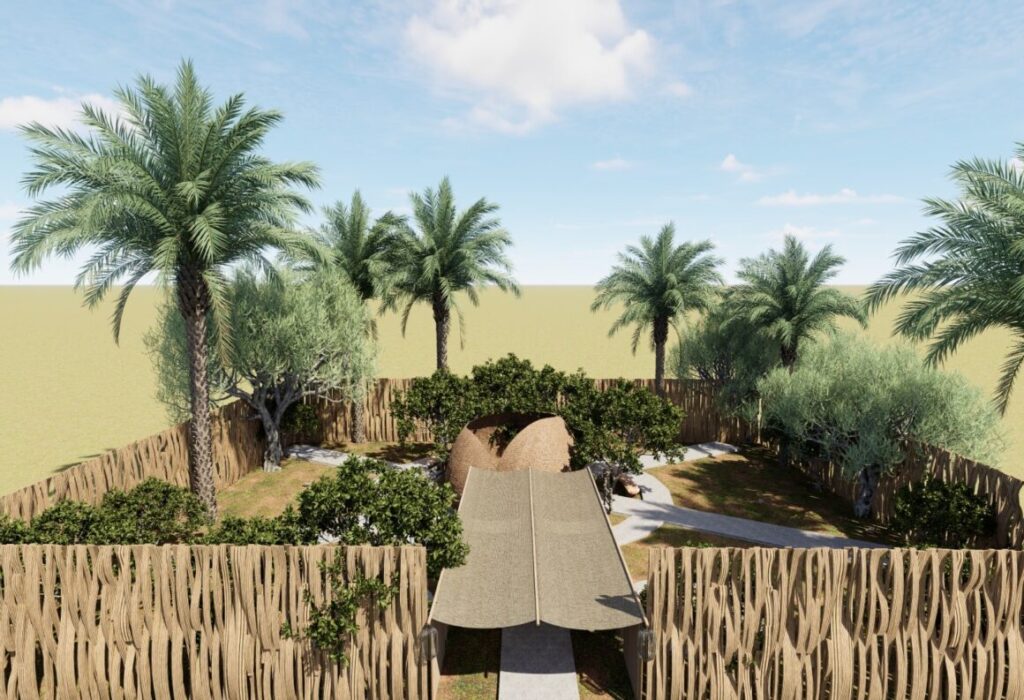
We translated these observations into a contemporary architectural language by focusing on spatial sequences, symbolism, and materiality. The central sanctuary reflects the importance of the divinity, while the circular organisation and spiral-inspired geometry create a sense of progression towards the sacred space. Natural light, openness, and carefully framed views were used to evoke reflection and spiritual connection. Our goal was not to reproduce traditional architecture, but to reinterpret its core values through a contemporary design.”
Why did you decide to organise the temple around a central circular sanctuary? How do you imagine people moving through your space?
“The circular organisation came from both symbolic and spatial considerations.
Symbolically, the circle represents unity, continuity, and the connection between the spiritual and human worlds. The central sanctuary emphasises the presence of Ogoun as the spiritual heart of the project.
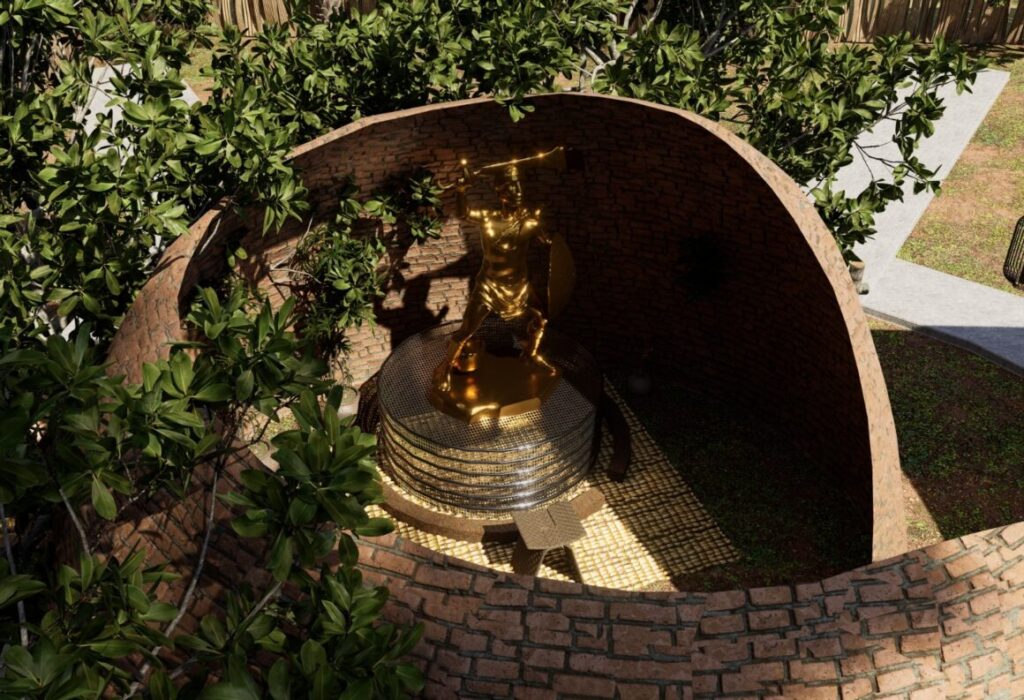
The design is also inspired by the golden ratio and organic spiral formations found in nature, expressed through the use of clay bricks. This approach creates harmony and structural efficiency while guiding movement naturally through the space. Visitors follow a progressive journey towards the sanctuary, experiencing moments of reflection, gathering, and spiritual preparation before reaching the sacred core. The movement is designed as an experience rather than a direct path.
At the centre of the sanctuary, the statue of Ogoun is placed within an open-air space. This deliberate choice creates a symbolic connection between the earth and the sky, reinforcing the spiritual dimension of the project. The opening allows natural light, air, and the elements to interact with the sacred space, emphasising the relationship between humanity, nature, and the divine.”
What does it mean to receive AIDA Awards recognition at this early stage in your design career?
“Receiving recognition from the AIDA Awards is both an honour and a source of motivation. As students in design, it validates the research, dedication, and creativity invested in the project. It also demonstrates that African cultural narratives have an important place within contemporary design conversations. This recognition encourages us to continue exploring innovative solutions that are both culturally meaningful and socially relevant.”
Why do you think a platform like the AIDA Awards is important now for young designers and for the future of design in Africa?
“Platforms like the AIDA Awards are essential because they provide visibility to emerging talent and create opportunities for dialogue across the continent and beyond. Africa possesses an extraordinary diversity of cultures, traditions, and design perspectives that deserve greater international recognition. By celebrating innovation and creativity, AIDA encourages young designers to develop solutions that respond to local realities while contributing to global design discussions. It helps build confidence in a new generation of African creators.”
Looking ahead, what kind of spaces and ideas do you hope to explore as you progress in your journey?
“Moving forward, we hope to continue exploring projects that connect culture, community, and innovation. We are particularly interested in public spaces, cultural institutions, hospitality projects, and community-centred environments that enhance people’s quality of life. We also want to investigate how African traditions, craftsmanship, and local knowledge can inspire contemporary architecture and design solutions. Our goal is to create spaces that are functional, meaningful, and deeply connected to their context.”